

The morning started like any other. A middle-aged office worker finished breakfast, kissed the family goodbye, and stepped into the usual commute. Mild pressure in the chest had come and gone for weeks, dismissed as indigestion or stress. Then, without warning, the pressure became crushing. Breathing grew shallow. Sweat poured. Time compressed into a race for help.
That pattern, ordinary day turning into sudden crisis, repeats across continents every day. It is the lived face of ischaemic heart disease, the single largest contributor to global death.
According to the World Health Organization and Global Burden of Disease analyses, ischaemic heart disease remains the leading individual cause of death worldwide. Roughly nine million people die from it each year. Cardiovascular diseases as a group account for about one in three of all global deaths, and ischaemic heart disease drives a large share of that total. Absolute numbers keep rising even as age-standardised rates fall in many higher-resource settings, because populations grow and age.
Table of Contents
The Silent Beginning
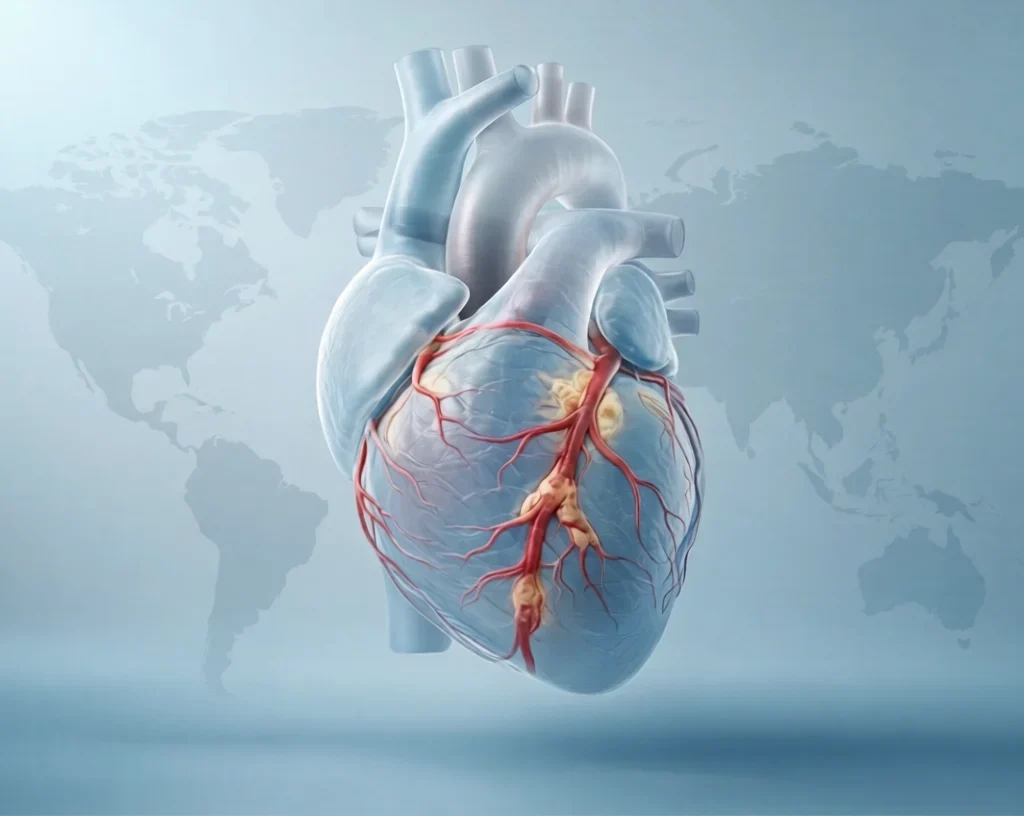
Ischaemic heart disease develops when blood flow to the heart muscle is reduced, usually by atherosclerosis. Fatty plaques build inside coronary arteries. Over years the arteries narrow. When a plaque ruptures or a clot forms, blood supply drops sharply. Heart muscle is starved of oxygen. The result can be angina, heart attack, or sudden death.
The process is often quiet for a long time. People feel well until the moment they do not. That silence is part of why the condition remains so lethal.
A Global Pattern
The burden is not evenly shared. More than three quarters of cardiovascular deaths occur in low- and middle-income countries. In places with limited emergency care, delayed diagnosis, and weaker control of blood pressure, cholesterol, and diabetes, the same disease carries higher fatal consequences. Population ageing, urbanisation, and the spread of processed foods add further pressure. High-income regions have seen steeper declines in age-adjusted death rates through better prevention, faster treatment, and widespread use of medicines. The gap between settings is one of the clearest illustrations of how health systems shape outcomes.
Why the Risk Grows
Scientific evidence points to a cluster of well-documented drivers. High blood pressure damages artery walls. Elevated low-density lipoprotein cholesterol fuels plaque formation. Diabetes accelerates vascular injury. Smoking injures the endothelium and promotes clotting. Physical inactivity and excess body weight worsen metabolic risk. Unhealthy dietary patterns, high in salt, sugar, and processed fats, compound the problem. Air pollution, especially fine particulate matter, is an established environmental contributor.
Age and family history matter and cannot be changed. Yet research consistently shows that the majority of cardiovascular burden is linked to modifiable factors. Nearly four fifths of CVD disability-adjusted life years are attributable to risks that individuals and societies can influence.
Modern life amplifies several of these. Desk-bound work, long hours, easy access to calorie-dense food, and chronic stress create conditions in which risk accumulates quietly. The threat is not inevitable, but it is widespread.
Who Feels It Most
Men tend to develop clinical disease earlier. Risk rises steeply after middle age for everyone. People with multiple risk factors, those living in areas with poor air quality or limited healthcare access, and those whose conditions go untreated face the highest danger. Socioeconomic disadvantage often clusters with higher smoking rates, poorer diets, and later presentation to care. Vulnerability is shaped by biology, behaviour, and environment together.
A Composite Educational Example
Consider a composite picture drawn from common clinical patterns. A person in their fifties carries mild hypertension for a decade, occasionally skips medication, and maintains a diet heavy in processed foods. Cholesterol sits above recommended levels. Activity is limited to short walks. Occasional chest tightness appears after climbing stairs and is attributed to being out of shape. One day the discomfort does not ease. Emergency care reveals a significant coronary blockage. The event was not sudden in origin; it was the visible endpoint of years of gradual narrowing. The lesson is straightforward: risk rarely arrives overnight. Early recognition and consistent management change the trajectory.
The Warning Signs
Chest pressure, pain radiating to the arm, jaw or back, unexplained shortness of breath, cold sweat, nausea, or sudden fatigue deserve immediate attention. Symptoms can be subtler in women and older adults. Any new or worsening pattern should prompt professional evaluation rather than self-diagnosis. Early recognition and rapid treatment of acute events save heart muscle and lives.
What Can Change
Prevention works. Evidence from the American Heart Association, Centers for Disease Control and Prevention, and WHO shows that controlling blood pressure, lowering harmful cholesterol, stopping tobacco, increasing physical activity, improving diet quality, and managing diabetes reduce events. Even modest, sustained changes produce measurable protection.
At the individual level the actions are practical: know your numbers, discuss them with a clinician, move regularly, choose foods that support vascular health, and seek help promptly for warning symptoms. At the community and policy level, cleaner air, accessible primary care, affordable medicines, and environments that make healthy choices easier amplify the effect.
A Preventable Future
Ischaemic heart disease does not have to claim the lives it currently does. The same scientific evidence that quantifies the global burden also maps the path out of it. Knowledge reveals hidden risk. Consistent action, both personal and collective, alters outcomes.
Return to that ordinary morning. The pressure that was once dismissed becomes a signal rather than a surprise. The race against time becomes a race that many more people win. Prevention is not abstract. It is the daily accumulation of informed choices that protect the heart muscle and the people who depend on it.
When readers finish this article they should carry one clear conviction: the leading cause of global death is also one of the most preventable. Understanding the threat is the first step. Acting on it is the lasting one.
FAQ
What is ischaemic heart disease?
It is reduced blood flow to the heart muscle, most often caused by narrowed or blocked coronary arteries from atherosclerosis. It can produce angina or heart attack.
Why is ischaemic heart disease a major cause of global death?
It accounts for roughly nine million deaths annually and remains the single largest individual cause of mortality worldwide, driven by both rising case numbers and uneven access to prevention and care.
What are the major risk factors?
High blood pressure, high LDL cholesterol, diabetes, smoking, physical inactivity, unhealthy diet, obesity, age, family history, and air pollution are among the established contributors. Many are modifiable.
Can ischaemic heart disease be prevented?
A large share of risk can be reduced through lifestyle measures, blood pressure and cholesterol control, smoking cessation, and timely medical care. Not every case is preventable, but many are.
What warning signs should never be ignored?
Chest pressure or pain, pain radiating to arm, jaw or back, sudden shortness of breath, cold sweat, nausea, or unusual fatigue. Seek emergency care without delay.
Does physical activity reduce cardiovascular risk?
Yes. Regular moderate activity improves blood pressure, cholesterol, weight, and insulin sensitivity and is linked to lower rates of ischaemic heart disease.
When should someone seek medical help?
For any new or worsening chest symptoms, unexplained breathlessness, or if existing risk factors remain poorly controlled. Routine checks with a healthcare professional allow early intervention.
1 thought on “Why Ischaemic Heart Disease Still Claims 9 Million Lives: 5 Urgent Truths”