

Introduction:
Every time you switch on a GPS‑driven map app, board a long‑haul flight, or scroll through a satellite‑guided e‑commerce delivery feed, you are touching the invisible yet powerful hand of aviation and space technology. These two sectors no longer live only in the pages of science fiction; they are quietly rewriting global trade routes, investment flows, and everyday mobility. From the way airlines buy fuel and schedule fleets to the way governments monitor borders or telecoms beam internet to remote villages, the aviation and space industries are creating deep, lasting market impacts that ripple across every corner of the economy.
This article unpacks how aviation and space are converging into a single, trillion‑dollar innovation engine, what that means for jobs, investments, and national competitiveness, and how one pioneering company has already transformed the rules of the game. If you care about future‑proof careers, smart investing, or simply understanding the forces shaping the next decade, this is where the runway begins.
1. Why Aviation and Space Are Becoming Economic Engines
For decades, airplanes were seen as “only” a transportation tool. Rockets were viewed as national‑pride projects reserved for governments. Today both are powerful economic engines driving global GDP, jobs, and digital infrastructure. Commercial aviation alone supports millions of roles worldwide, from pilots and engineers to software‑based routing and maintenance analytics platforms.
At the same time, the space economy is projected to grow from about 630 billion USD in 2023 to roughly 1.8 trillion USD by 2035, according to McKinsey and the World Economic Forum. This expansion includes not only satellites and launchers but also “reach” applications such as precision agriculture, financial‑transaction timing, and real‑time logistics tracking. Together, aviation and space are creating a new layer of infrastructure‑as‑a‑service, delivering data, connectivity, and logistics capabilities that enable entire industries to operate more efficiently.
2.How Commercial Aviation Shapes Global Trade and Travel
Modern commercial aviation is the backbone of a hyper‑connected global economy. Airlines transport not only passengers but also high‑value cargo, organ transplants, and time‑sensitive electronics that power global supply chains. When airlines order new fuel‑efficient fleets from manufacturers such as Boeing and Airbus, the ripple market impacts include factory investments, supplier contracts, and long‑term airport‑modernization projects.
The International Air Transport Association (IATA) estimates that aviation supports over 4% of global GDP and facilitates billions of trips and trillions of dollars in cargo each year. When demand surges in emerging middle‑class markets, airlines respond with new routes, which in turn drives tourism, hospitality, and local services. This is classic network‑effect economics: one extra flight route can unlock dozens of small‑business opportunities along the way.
3. How Space Is Quietly Powering Everyday Life
If you have ever checked the weather, used a ride‑hailing app, or watched a live global sports broadcast, you have already benefited from space‑based infrastructure. Earth observation satellites provide data for disaster response, agriculture, and insurance; communications satellites underpin global TV, voice, and broadband services; and positioning systems like GPS enable everything from fleet‑tracking to mobile‑payment location verification.
NASA’s decades of Earth‑observation and navigation programs have laid the foundation for many commercial models now used by startups and established firms. Today, governments and private companies are launching thousands of small satellites to build constellations that deliver faster, cheaper, and more resilient connectivity. These developments are changing the market impacts of space from “nice‑to‑have” to mission‑critical, because so many terrestrial industries depend on space‑based data and timing.
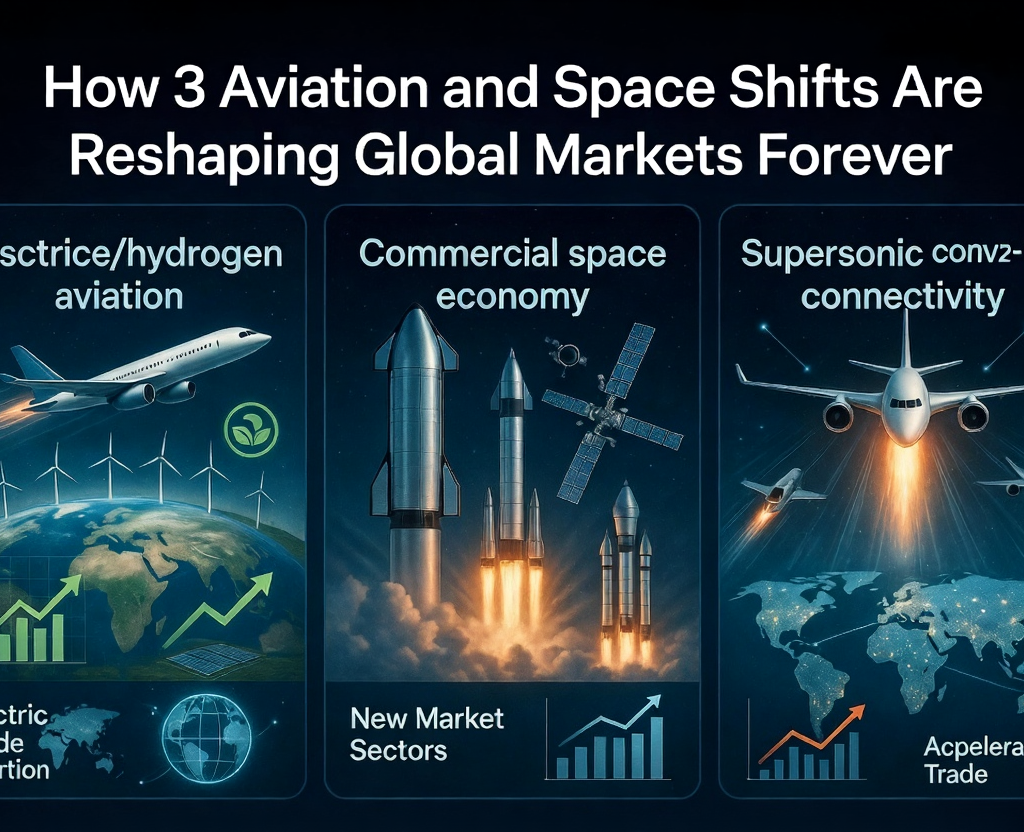
4. Case Study: How SpaceX Transformed Market Impacts
One of the clearest examples of how innovation reshapes market impacts is SpaceX. When Elon Musk founded the company, most launch providers were slow, expensive, and heavily reliant on government contracts. SpaceX challenged that model by vertically integrating its production, aggressively reusing rockets, and driving down launch costs.
The result was a dramatic shift in satellite economics. Lower launch prices enabled a wave of small‑satellite startups, new Earth‑observation constellations, and global broadband proposals such as Starlink. Suddenly entire industries—agriculture, logistics, finance, and telecom—could access space‑based data at a fraction of the previous cost. This is textbook “disruptive innovation”: SpaceX did not just capture a larger slice of the old market; it expanded the market itself and created entirely new business models across the global economy.
5. Sustainability, Technology, and Investment Opportunities
- Aircraft‑fleet modernization and maintenance‑tech platforms linked to Boeing and Airbus orders.
- Satellite‑based analytics and Earth‑observation services built on data from NASA, ESA, and commercial constellations.
- Sustainable aviation fuel and new‑energy propulsion startups responding to FAA and IATA‑aligned decarbonization goals.
These opportunities are not limited to Silicon Valley. Emerging markets such as India, through bodies like IN‑SPACe, are actively inviting private investment into space manufacturing, launch services, and downstream applications, aiming for a multi‑billion‑dollar domestic space economy by the 2030s.
6. Future Trends and How They Will Redefine Market Impacts
Looking ahead, several trends will deepen the market impacts of aviation and space:
- Urban Air Mobility (UAM): Electric vertical‑takeoff and landing (eVTOL) aircraft could reshape short‑distance logistics and city transportation, opening new service and infrastructure markets.
- In‑orbit servicing and on‑orbit manufacturing: Repairing or upgrading satellites in space, or even producing specialized materials in microgravity, could create circular‑economy‑like models for the space sector.
- AI‑driven operations: From predictive maintenance of aircraft engines to AI‑assisted satellite constellation management, automation will squeeze efficiency gains out of every flight and orbit.
These trends will not only change how companies compete but also how governments design regulations, tax schemes, and infrastructure budgets. For example, the Federal Aviation Administration (FAA) and other regulators are already working on frameworks for advanced air mobility and routine space‑based operations, which will directly shape licencing, safety standards, and investment risk.
FAQ About Aviation, Space, and Market Impacts
1. How big is the global space economy today?
The global space economy reached about 630 billion USD in 2023 and is projected to touch roughly 1.8 trillion USD by 2035, driven by both satellite infrastructure and indirect applications such as finance, logistics, and agriculture.
2. What role does aviation play in global GDP?
The International Air Transport Association estimates that aviation supports more than 4% of global GDP, including jobs, tourism, trade, and infrastructure.
3. How does SpaceX change market impacts for other industries?
By cutting launch costs and enabling reusable rockets, SpaceX has made satellite deployment far more affordable, unlocking new markets in broadband, Earth observation, and disaster monitoring for sectors like telecom, insurance, and agriculture.
4. Are aviation and space industries shifting toward sustainability?
Yes. Aviation is investing in sustainable aviation fuel, new airframe designs, and efficiency‑driven fleets, supported by guidance from IATA and studies from organizations like NASA and the World Economic Forum. Space agencies and firms are also adopting debris‑mitigation and “zero debris” standards to protect long‑term access to orbits.
5. How can individuals or startups benefit from aviation and space trends?
Entrepreneurs and investors can tap into satellite data analytics, drone‑based logistics, eVTOL mobility services, and space‑enabled software‑as‑a‑service platforms, often partnering with established players such as Boeing, Airbus, and government agencies.
Call To Action
The aviation and space industries are no longer niches; they are core architects of the future global economy. If you are an investor, entrepreneur, policymaker, or simply a curious learner, the time to understand these market impacts is now. Explore how satellite data, smarter aircraft, and innovative launch systems can reshape your business, your community, and your career.
1 thought on “How 3 Aviation and Space Shifts Are Reshaping Global Market Impacts Forever”