
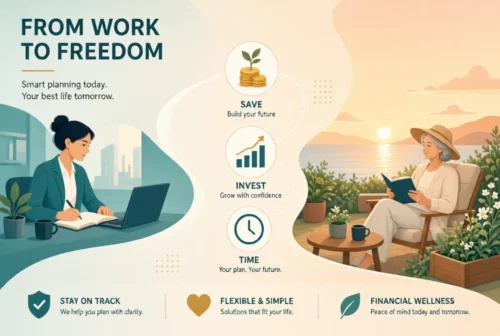
The evening train home had carried Ananya through three decades of promotions, corporate audits, and client presentations. At 57, she was three years away from stepping out of her role as an operations director. Her home loan was cleared, her children were settled abroad, and her provident fund statement reflected a reassuring figure: ₹82 lakh. In everyday conversations with colleagues, that number sounded like an ironclad guarantee of comfort.
Then she sat down with her utility bills, private health insurance premiums, and municipal maintenance invoices to audit her true household cash outflow.
Her monthly living expenses stood at ₹85,000. When she factored in a standard 6 percent annual rate of inflation, the math delivered an unsettling reality. By age 67, purchasing the exact same groceries, medical checkups, and electricity units would demand ₹1.52 lakh each month. By age 77, that requirement would escalate past ₹2.7 lakh every month.
Her ₹82 lakh balance, parked in safe bank deposits returning around 6.5 percent before taxes, would deplete completely before her 73rd birthday.
The realization brought a heavy silence to the room: What happens when the monthly salary stops, but life’s expenses never stop?
Ananya’s situation is a realistic composite of working professionals worldwide. Many assume that continuous employment naturally guarantees a secure post-work life. In reality, surviving and thriving after your career requires structured Retirement Planning that protects your purchasing power, absorbs medical shocks, and protects your personal dignity long after your regular salary ceases.
Table of Contents
What Is Retirement Planning?
Retirement planning is the active management process of structuring your cash flow, investments, living expenses, and personal contingencies so that you can live independently when active employment concludes. It is not an administrative chore saved for the final few months before your farewell party. Rather, it is a deliberate, lifelong operational system that aligns your current career earnings with your long-term independence.
┌─────────────────────────────────────────────────────────────┐
│                 THE FINANCIAL SPECTRUM                      │
├─────────────────┬───────────────────────────────────────────┤
│ Earning Income  │ Generating cash flow through work         │
│ Saving Money    │ Preserving liquid cash for near-term use  │
│ Investing       │ Deploying capital to beat inflation       │
│ Retirement Plan │ Orchestrating cash flow for 30+ years     │
└─────────────────┴───────────────────────────────────────────┘
Many professionals treat earning, saving, investing, and retirement planning as interchangeable terms, but their practical roles are distinct:
- Earning Income is the generation of revenue through active employment or professional practice.
- Saving Money is simply withholding money from current spending and holding it in liquid accounts for short-term needs.
- Investing is deploying capital into assets such as equities, bonds, or real estate to generate returns.
- Retirement Planning is the comprehensive management blueprint that ties these parts together. It forecasts future lifestyle expenses, manages tax liabilities, buffers against health crises, and sets up predictable income streams across twenty to forty non-earning years.
Why Retirement Planning Matters
Retirement dynamics have shifted fundamentally over the last generation. The combination of medical advancements, inflation, and changing family dynamics means old assumptions can leave retirees exposed.
         ACTIVE CAREER PHASE (Age 25 to 60)
  ┌──────────────────────────────────────────────┐
  │  Accumulation: EPF, NPS, Equity, Cash Buffer │
  └──────────────────────┬───────────────────────┘
                         │ Sustained Compounding
                         ▼
        DISTRIBUTION PHASE (Age 60 to 85+)
  ┌──────────────────────────────────────────────┐
  │  Drawdowns: Systematic SWPs, Debt Yields,    │
  │  Dedicated Health Funds & Family Wealth      │
  └──────────────────────────────────────────────┘
Longevity Risk and Extended Lifespans
Studies by international organizations such as the World Bank and the International Labour Organization (ILO) show that life expectancy across developing and emerging economies has steadily increased. A healthy 60-year-old today can realistically expect to live past 85. Longevity risk, which is the possibility of outliving your accumulated assets, is one of the most significant challenges retirees face today.
The Erosion of Purchasing Power
Inflation acts as a persistent drag on static savings. At a standard 6 percent annual inflation rate, the real purchasing power of money is cut in half approximately every twelve years. A nest egg that appears substantial today will buy only half as many goods and services a decade from now if it is not invested for real, inflation-beating growth.
Rising Medical and Healthcare Costs
Healthcare inflation consistently runs ahead of general retail inflation, frequently reaching 10 to 12 percent annually. A routine hospitalization or ongoing chronic care can quickly deplete an unmanaged fixed deposit. Depending on an employer health policy that expires the moment you surrender your corporate badge leaves you vulnerable to sudden medical costs.
Shifting Family Structures
Traditional family networks historically provided an informal safety net for retired parents. Today, career mobility, global migration, and rising housing costs mean adult children often manage heavy financial commitments of their own. Preparing for your own post-work life ensures you remain fully self-reliant and free to direct your daily choices.
A Practical Retirement Framework
Constructing a solid post-work plan does not require complex financial engineering. It relies on a logical framework executed consistently over time.
┌──────────────────────────────────────────────────────────────────┐
│              STEP-BY-STEP RETIREMENT BLUEPRINT                  │
├─────────────────────┬────────────────────────────────────────────┤
│ 1. Time Horizon     │ Identify target retirement age             │
│ 2. Expense Audit    │ Map essential vs. discretionary outflows   │
│ 3. Inflation Math   │ Compound expenses forward at 6% to 7%      │
│ 4. Asset Inventory  │ Catalog provident funds, savings, and debt │
│ 5. Emergency Fund   │ Keep 12 to 24 months in liquid accounts    │
│ 6. Health Cover     │ Maintain independent family health cover   │
│ 7. Asset Mix        │ Combine growth assets with income buffers  │
│ 8. Drawdown System  │ Set up sustainable, tax-smart withdrawals  │
│ 9. Periodic Check   │ Review and rebalance annually              │
└─────────────────────┴────────────────────────────────────────────┘
- Define Your Target Horizon: Establish the age at which you plan to step down from active corporate or business life.
- Audit Essential Outflows: Split your household budget into core non-negotiable living costs (groceries, utilities, insurance, maintenance) and discretionary expenses (travel, dining, entertainment).
- Factor In Inflation: Project your essential costs forward to your projected retirement age using a realistic annual rate of 6 percent.
- Audit Current Resources: Catalog your assets, including employer provident funds, public savings schemes, mutual funds, and fixed deposits.
- Build a Liquid Safety Reserve: Maintain 12 to 24 months of essential living expenses in high-liquidity instruments to avoid liquidating long-term investments during market pullbacks.
- Secure Independent Health Protection: Secure personal health insurance well before leaving employment so that preexisting condition waiting periods are cleared while you are healthy.
- Balance Growth with Stability: Allocate capital so that one part beats inflation through equities, while another preserves capital through debt and fixed income.
- Structure a Drawdown Mechanism: Determine how you will withdraw money systematically from your portfolio to minimize tax impact while generating reliable cash flow.
- Conduct an Annual Review: Revisit your financial strategy annually or whenever major life transitions occur.

Comparing Retirement Investment Options
Building an all-weather retirement portfolio requires understanding how different asset classes operate under guidance from regulators such as the Pension Fund Regulatory and Development Authority (PFRDA), the Employees’ Provident Fund Organisation (EPFO), and the Securities and Exchange Board of India (SEBI).
| Option | Risk Level | Liquidity | Returns Mechanism | Tax Treatment | Strategic Role |
| Employees’ Provident Fund (EPF) | Low | Restricted until retirement or job change | Annual declared rate by EPFO | Exempt-Exempt-Exempt (Subject to annual contribution limits) | Core debt foundation for formal sector employees |
| Public Provident Fund (PPF) | Low | 15-year lock-in with partial loan windows | Sovereign-backed quarterly rate | Fully exempt (EEE) up to ₹1.5 lakh annually | Guaranteed, tax-free defensive allocation |
| National Pension System (NPS) | Moderate to High | Locked until age 60 | Market-linked across Equity, Corporate, and Government bonds | 60% lump sum tax-free; remainder purchases taxable annuity | Low-cost dedicated pension engine |
| Equity Mutual Funds | High (Short term) | High (T+2 settlement) | Market-linked capital appreciation | Long-Term Capital Gains (LTCG) taxed above exemption thresholds | Essential engine to outpace long-term inflation |
| Fixed Deposits & Small Savings | Low | High (Early exit charges apply) | Guaranteed fixed interest | Taxed at personal income tax slabs | Immediate cash liquidity and near-term security |
| Life Annuities | Very Low | Locked capital | Contractual recurring payout from life insurer | Periodic payouts taxed at regular income tax slabs | Longevity floor ensuring baseline monthly income |
No single asset class solves every retirement goal. A balanced portfolio blends the growth of equity mutual funds with the stability of provident funds and sovereign savings.
Starting Early vs Starting Late
Time is the most valuable variable in retirement planning. Compounding produces minimal noticeable differences in the early years, but accelerates significantly over multiple decades.
Total Portfolio at Age 60 (Saving ₹15,000 Monthly at 10% Annual Return)
─────────────────────────────────────────────────────────────────────────
Starting at Age 25 (35 Years) : ■■■■■■■■■■■■■■■■■■■■ ₹5.70 Crore
Starting at Age 35 (25 Years) : ■■■■■■■■ ₹1.99 Crore
Starting at Age 45 (15 Years) : ■■ ₹62.7 Lakh
─────────────────────────────────────────────────────────────────────────
Consider three professionals who each invest ₹15,000 every month into an identical asset mix delivering an illustrative 10 percent annualized return:
- Investor A starts at age 25: Contributing across 35 years, their personal capital input equals ₹63 lakh. By age 60, their portfolio reaches approximately ₹5.70 crore.
- Investor B starts at age 35: Contributing across 25 years, their personal capital input equals ₹45 lakh. By age 60, their portfolio reaches approximately ₹1.99 crore.
- Investor C starts at age 45: Contributing across 15 years, their personal capital input equals ₹27 lakh. By age 60, their portfolio reaches approximately ₹62.7 lakh.
Investor A contributed only ₹18 lakh more than Investor B, yet accumulated nearly three times as much total capital. Starting late forces an individual to save significantly larger sums each month, accept unnecessary speculative risk, or push back their retirement date. While compounding does not eliminate market risk, starting early gives your investments the time needed to ride out market corrections.
Practical Calculation: An Illustrative Example
To see how these concepts function in practice, consider this transparent projection for a fictional family:
- Current Age: 40
- Target Retirement Age: 60 (20 years of accumulation)
- Current Monthly Household Outflow: ₹60,000
- Assumed Annual Inflation: 6 percent
- Retirement Lifespan Horizon: 25 years (Planning up to age 85)
Step 1: Calculate Living Costs at Retirement
Using the future value formula:
$$\text{Future Cost} = \text{Current Cost} \times (1 + r)^n$$
$$\text{Future Cost} = 60,000 \times (1 + 0.06)^{20} \approx ₹1,92,428$$
At age 60, maintaining their baseline standard of living will require approximately ₹1.92 lakh per month, or ₹23.1 lakh per year.
Step 2: Establish Total Capital Required
To support an annual post-retirement spend of ₹23.1 lakh for 25 years, assuming an ongoing portfolio return of 8 percent against a 6 percent inflation rate (a 2 percent real rate of return), this household requires a capital base of approximately ₹4.56 crore at age 60.
Step 3: Assess the Shortfall and Strategy
- Current accumulated savings: ₹35 lakh
- Value of current savings at age 60 (compounding at 8.5 percent annually): ~₹1.79 crore
- Corpus Shortfall: ₹4.56 crore – ₹1.79 crore = ₹2.77 crore
To bridge this ₹2.77 crore gap over the next 20 years at an assumed portfolio return of 10.5 percent, the household must invest ₹36,200 per month. If that initial outlay is tight, they can start at ₹22,000 per month and step up their contributions by 10 percent annually as their career compensation increases.
Expert Insights and Risk Management
Even an accurate mathematical calculation can stumble if underlying operational risks are left unaddressed.
       ESSENTIAL RETIREMENT RISKS
┌───────────────────────┬───────────────────────────────┐
│ Sequence Risk         │ Severe market downturns       │
│                       │ early in retirement           │
├───────────────────────┼───────────────────────────────┤
│ Inflation Risk        │ Gradual loss of purchasing    │
│                       │ power over decades            │
├───────────────────────┼───────────────────────────────┤
│ Concentration Risk    │ Tying too much wealth into    │
│                       │ illiquid property             │
├───────────────────────┼───────────────────────────────┤
│ Behavioral Shift      │ Psychological resistance to   │
│                       │ spending accumulated capital  │
└───────────────────────┴───────────────────────────────┘
Sequence of Returns Risk
The timing of market returns is critical once you transition to the withdrawal phase. Experiencing a sharp market drop in the first three years of retirement forces you to sell assets at a loss to fund daily expenses, permanently eroding your principal.
To mitigate sequence of returns risk, use a Three-Bucket System:
- Bucket 1: 1 to 2 years of living expenses held in liquid accounts and short-term debt instruments.
- Bucket 2: 3 to 5 years of expenses invested in conservative hybrid assets to replenish Bucket 1.
- Bucket 3: The remainder invested in diversified equity assets to generate long-term inflation-beating growth.
The Problem with Concentration in Real Estate
Many professionals over-allocate to residential property, hoping rental income will cover their post-work expenses. However, residential rental yields in major urban centers typically sit between 2 and 3.5 percent, which lags behind headline inflation. Real estate is also illiquid, incurs ongoing maintenance costs, and is exposed to tenant vacancies. Holding too much property can leave you asset-rich but cash-poor when unexpected medical bills arrive.
The Shift from Accumulation to Distribution
Shifting from thirty years of saving to an era of spending down assets requires a major mental adjustment. Many retirees feel anxiety watching their primary bank balance fall, leading them to cut back unnecessarily on basic comforts. Creating predictable cash inflows through systematic withdrawal plans (SWPs) from mutual funds or steady annuity payouts simulates the security of a regular paycheck and eases spending anxiety.
For additional perspectives on long-term career planning and personal systems, read our companion guides on workplace management frameworks and strategic life management principles.
Evaluating Advantages and Limitations
A balanced retirement plan requires clear-eyed appraisal of both its benefits and practical challenges:
Advantages
- Guaranteed Autonomy: Preserves your independence and keeps you from relying on family support.
- Insulation from Inflation: Protects your lifestyle against price increases in food, energy, and medical care.
- Lower Emotional Stress: Replaces worry over market fluctuations with a clear, rules-based plan.
- Personal Freedom: Provides the capital to travel, consult, mentor, or pursue creative passions without financial pressure.
Inherent Limitations
- Evolving Assumptions: Inflation, interest rates, and tax policies change over decades, requiring ongoing updates.
- Uncontrollable Health Events: Sudden health diagnoses can strain your planned drawdowns.
- Market Fluctuations: Market downturns require patience and steady rebalancing rather than panic selling.
Common Retirement Planning Misconceptions
1. “Retirement planning only matters after age 50.”
Waiting until your fifties leaves you with a short compounding runway. Over half of your eventual retirement fund should ideally come from compound returns rather than direct out-of-pocket savings.
2. “A fully paid-off house means you are financially secure.”
A home provides shelter, but it cannot pay grocery bills, utility invoices, or medical costs. Unless you downsize or use a reverse mortgage, residential property remains completely illiquid.
3. “Fixed deposits carry no financial risk.”
While bank deposits carry minimal default risk within regulatory limits, they carry significant inflation risk. When inflation runs at 6 percent and a deposit yields 6.5 percent before taxes, your real purchasing power declines after accounting for tax deductions.
4. “High investment returns make up for poor savings discipline.”
Chasing high returns through speculative trading or volatile instruments to make up for late savings usually leads to heavy losses. Long-term security comes from consistent savings and disciplined asset allocation, not speculative bets.
5. “Planning ends on the day you leave the workplace.”
Managing your distribution strategy is just as vital as the wealth accumulation phase. You must continue to adjust withdrawal rates, balance tax liabilities, and reallocate capital throughout retirement.
What Readers Should Do Next: Practical Action Checklist
Take practical steps to secure your post-work life using this structured action checklist:
- [ ] Organize Your Accounts: Gather all provident fund balances, investment accounts, fixed deposit receipts, and policy documents into one secure digital repository.
- [ ] Calculate Real Living Costs: Review bank and card statements from the past three months to establish an accurate monthly expense baseline.
- [ ] Review Personal Health Insurance: Confirm that you hold an independent health insurance policy outside of your employer coverage, with adequate coverage and an affordable super top-up policy.
- [ ] Automate Monthly Investments: Set up automated monthly investments into diversified equity and debt funds on your payday.
- [ ] Consolidate Legacy Provident Funds: Link old provident fund accounts to your Universal Account Number (UAN) to keep your interest earnings intact.
- [ ] Update Nominees and Prepare a Will: Verify nominee details on all active bank, depository, and insurance accounts, and prepare a registered will.
- [ ] Set an Annual Calendar Review: Mark an annual review date to evaluate portfolio allocations, check your spending, and adjust for major life events.
Frequently Asked Questions
1. What is retirement planning and why is it important?
Retirement planning is the proactive management of your income, expenses, investments, and health buffers to secure your living standards after full-time work ends. It ensures you have sufficient ongoing funds to cover living expenses, medical care, and personal goals without relying on children or external support.
2. When should someone start retirement planning?
The most effective time to start is with your first steady professional paycheck. Beginning in your twenties allows compounding to do the heavy lifting over multiple market cycles. However, individuals beginning in their forties or fifties can still build a dependable cushion by increasing their savings rate, paying down debt, and trimming discretionary costs.
3. How much money is needed for retirement?
There is no single number that suits every household. A common starting guideline is to target 25 to 30 times your estimated annual expenses at your retirement date, assuming you maintain a balanced portfolio designed to outpace inflation.
4. How does inflation affect retirement savings?
Inflation steadily erodes purchasing power over time. At an annual inflation rate of 6 percent, an expense of ₹100 today will exceed ₹320 in twenty years. If your savings sit in instruments that fail to match inflation, your real wealth declines year after year.
5. Is EPF or NPS sufficient for retirement?
For most urban professionals, relying exclusively on EPF or NPS leaves a noticeable funding gap. While EPF provides a dependable debt base and NPS offers low-cost, tax-advantaged retirement accounts, they should be paired with diversified equity mutual funds to beat long-term inflation.
6. How can someone plan for retirement without a pension?
Professionals without formal corporate pensions can build their own income streams. By investing consistently in the National Pension System (NPS), Public Provident Fund (PPF), and diversified mutual funds, you can build a portfolio that supports systematic monthly withdrawals and stable annuity payouts.
7. How should healthcare expenses be included in a retirement plan?
Do not depend solely on corporate health plans that lapse when employment ends. Secure an independent individual or family-floater policy early to clear waiting periods. Complement that coverage with a dedicated emergency medical fund in liquid instruments to handle out-of-pocket treatments and non-hospitalization expenses.
8. Can someone start retirement planning after the age of 50?
Yes. Although the compounding runway is shorter, you can build a stable plan by directing a higher percentage of your income toward savings, eliminating high-interest debt, cutting discretionary expenses, and exploring consulting or flexible part-time work past traditional retirement age.
Retirement should never be a period of financial anxiety after decades of professional effort. It should be a chapter defined by freedom, dignity, and peace of mind. Achieving financial independence does not depend on market timing or speculative windfalls; it is built through the disciplined management steps you take today.
Take your next step right now: audit your household budget, review your existing provident fund accounts, and automate your next investment transfer today.