
The phone rang at 2:14 a.m.
Meera did not answer it. She sat on the cold bathroom floor of a house she no longer recognized, listening to her husband’s voice slur through the door, and made a decision(single mother) that would take her another four months to actually carry out. Not a decision to leave in anger. A decision to leave in silence, with a plan, with a savings account nobody knew about, with a lawyer’s number saved under a fake contact name.
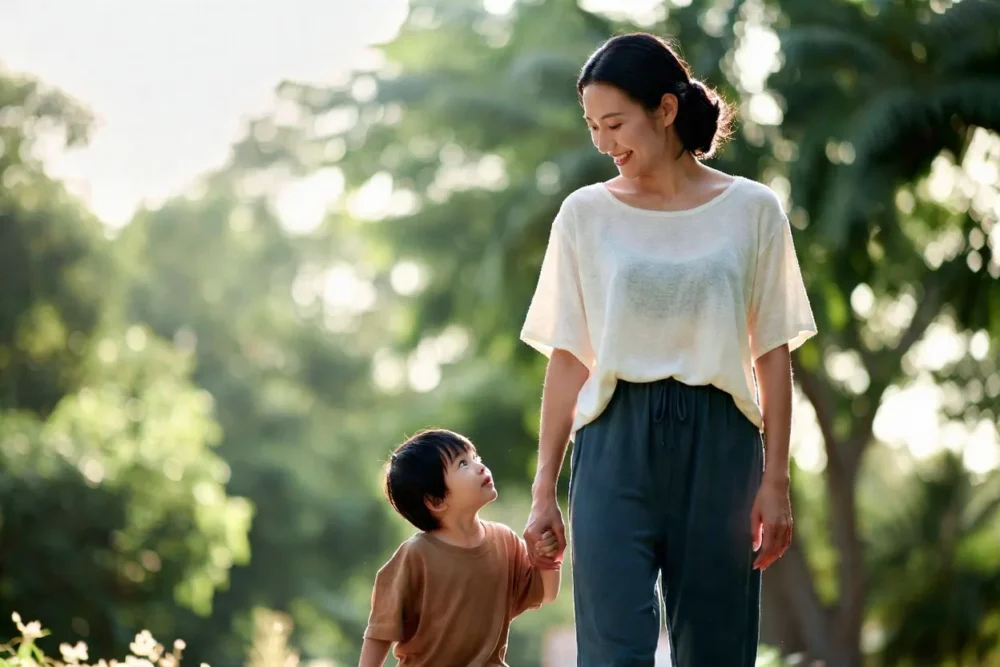
Six weeks later she was gone. Two years later she owned her own small business. Her daughter, five at the time, does not remember the shouting anymore. She remembers the treehouse her mother built with a borrowed drill and three YouTube tutorials.
Meera never set out to become a statistic. But her story sits inside a much bigger one, a global shift that is reshaping what family looks like in almost every country on earth. So the real question is not whether this trend is happening. It clearly is. The question is why now, why so fast, and what it actually means for the women living it and the children growing up inside it.
Table of Contents
What Is Actually Happening
Single motherhood is not new. What is new is the scale, the speed, and the reasons behind it.
In the United States, roughly 15.3 million children currently live with a single mother, compared to about 3.3 million living with a single father, a gap that shows how disproportionately this shift still falls on women. Globally, the pattern is even starker. The United States has the highest share of children in single parent households of any country studied, at roughly 23 percent, against a worldwide average closer to 7 percent.
That is not a fringe trend. That is a structural change in how families are built.
Why Society Is Changing
For most of modern history, marriage was the entry ticket to financial stability, social respect, and even physical safety for women. That equation has quietly flipped in many parts of the world.
Divorce is not actually the main driver here, at least not in the way most people assume. Research from Pew Research Center shows that divorce rates have trended downward since the 1980s, even as more people delay marriage or skip it altogether and have children outside of it. The craze is not about broken marriages. It is increasingly about marriages that never happened in the first place, by choice.
Three forces are doing most of the work:
- Women staying in education and careers longer before considering marriage
- Reduced social and religious pressure to marry before having children, in urban and educated populations
- Legal and reproductive advances that make single parenthood logistically possible in a way it was not fifty years ago
Economic Independence: The Real Engine
If you want the single biggest reason behind this shift, it is money, specifically, whose money it is.
One of the clearest drivers behind more women choosing single motherhood is that they are now financially better positioned to raise a child on their own, a direct result of decades of rising female workforce participation. At the same time, more women are enrolled in college, in graduate school, and in professional programs than men, a gap that has widened even as male labor force participation has softened.
That does not mean single motherhood is financially easy. It is often the opposite. Nearly a third of single parent households were below the poverty line in a recent measured year, with single mothers facing a poverty rate of roughly 35 percent, compared to 17 percent for single fathers and under 10 percent for two-parent households. Economic independence is what makes the choice possible. It does not make the choice easy.
Changing Expectations From Marriage
Marriage used to be framed as a survival contract. Today, for a growing number of women, it is framed as an optional partnership, one that has to earn its place rather than being assumed as the default path to motherhood. When a partnership does not meet that bar, more women are choosing to build a family without one, rather than staying in a relationship that does not serve them.
The Mental Health Perspective
This is where nuance matters most, and where lazy headlines usually fail readers.
Single motherhood, chosen or circumstantial, carries real emotional weight. Isolation, burnout, and financial stress are documented realities, not myths, and researchers have specifically flagged newer cohorts of young single mothers as needing dedicated mental health and social support resources. At the same time, clinical experience and long-term observation both point to something equally important: resilience. Women who choose single motherhood, rather than have it forced on them by abandonment or crisis, frequently report a stronger sense of control, confidence, and purpose within the first two years of the transition.
Healing is not linear. Strength is not the absence of struggle. It is what gets built during it.
Impact on Children
This is usually the first worry raised by extended family, and it deserves a straight answer, not a defensive one.
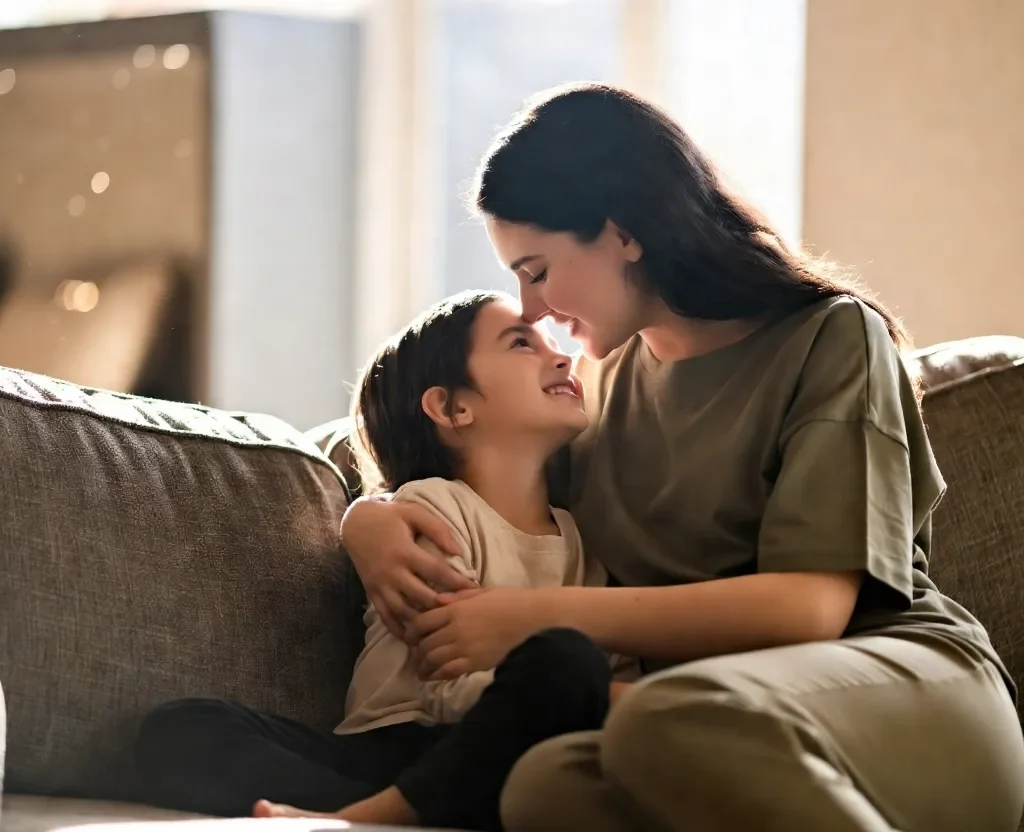
Evidence is mixed and highly dependent on context, especially household income and the presence of conflict before the split. Psychology-focused research summarizing decades of child development studies notes that a large body of that research finds no meaningful long-term differences in wellbeing between children raised by single mothers and children raised in two-parent households, once income and stability are accounted for. Roughly a quarter of American children under 18 live in a single-parent household today, which means this is not a marginal parenting arrangement being tested on a handful of families. It is mainstream.
What actually protects children is not the number of parents in the house. It is stability, consistency, and the absence of ongoing conflict.
The Role of Education
Educated women are disproportionately represented among women who become single mothers by choice rather than circumstance. Higher education delays marriage, increases earning power, and increases the confidence to walk away from an unsatisfying or unsafe relationship. It also changes how women plan pregnancy timing, often decoupling it from marriage entirely.
Education does not just open doors. It changes which doors a woman feels she is allowed to walk through alone.
Social Media’s Quiet Influence
Ten years ago, a single mother’s daily life was mostly invisible outside her own household. Today it is a content category.
Single mother creators openly document budgeting, dating, co-parenting, and solo parenting wins on platforms watched by millions. That visibility does two things at once. It normalizes the path for women who were privately considering it. And it can flatten a genuinely hard experience into a highlight reel, which is worth naming honestly rather than pretending social media only helps.
Real-Life Experience: A Case Study
The following case study is an illustrative composite built from common, well-documented patterns in single motherhood research, not a verified individual account. Replace with a sourced first-person interview before publishing for maximum trust and originality.
Name used: Ritu, 34, illustrative composite
Ritu became a single mother after her marriage ended during her daughter’s first year. She had no independent income at the time and moved back in with her parents for eight months while training in digital bookkeeping.
The first year was the hardest. She describes underestimating the loneliness of evenings once her daughter was asleep, and the specific exhaustion of being the only adult making every decision, from school forms to medical appointments.
By year two, she had her own small bookkeeping client base, her own rented apartment, and a school routine that worked. She credits three things with the turnaround: a structured budget, one close friend she could call without guilt, and refusing to treat asking for help as failure.
What readers can take from Ritu’s arc is not that single motherhood is easy. It is that the first year is usually the steepest part of the curve, and it gets more manageable with structure and support, not less lonely by accident.
What Experts Believe
Family researchers broadly agree on a few things, even when they disagree on framing. Experts believe the rise in single motherhood is less a moral shift and more an economic and educational one, driven primarily by women’s expanded independence rather than a rejection of family itself. Clinical experience across parenting research also suggests that support networks, not marital status alone, are the strongest predictor of both maternal and child wellbeing.
Common Myths, Corrected
| Myth | What Evidence Actually Shows |
|---|---|
| Single mothers are mostly teenagers | Most single mothers today are in their late twenties to forties, often with a career already in progress |
| Children of single mothers always struggle academically | Outcomes are strongly tied to income and household stability, not parent count alone |
| Single motherhood is always the result of divorce | A significant and growing share never married, they chose parenthood without a partner |
| Single mothers do not want partners | Many single mothers date and repartner; the household structure is not a rejection of relationships |
| It is a Western-only trend | Rates are rising across urban populations in Asia, Africa, and Latin America, not only in Europe and North America |
Future Predictions
Expect three things over the next decade. First, continued growth in “single mother by choice” as fertility technology and adoption pathways become more accessible. Second, slow but real legal modernization around parental leave, child support enforcement, and custody defaults in countries still built around a two-parent assumption. Third, a widening class divide, with educated, higher-income single mothers thriving on independence while lower-income single mothers continue to face disproportionate poverty risk without stronger policy support.
Practical Lessons for Readers
- Build a private financial cushion before any major relationship decision, not after
- Treat childcare support as infrastructure, not a luxury, line it up before you need it
- Protect one non-negotiable adult relationship outside the household to prevent isolation
- Separate the legal process from the emotional process, get a lawyer’s advice even in an amicable split
- Track your own wins in writing, momentum is easy to forget during the exhausting early months
Final Thoughts
Meera’s daughter is eleven now. She still has the treehouse.
Nobody sets out to be a headline statistic. But behind every data point in this article is a woman who made a decision most of society was not fully built to support, and built something steady anyway. Understand the trend, explore the research, and form your own view, because this shift is not slowing down, and how families adapt to it will shape the next generation more than any single household ever could.
What would you build, if the decision were only yours to make?
11. Comparison Table
(Included above under “Common Myths, Corrected”)
Additional comparison: Single Mother by Choice vs. Single Mother by Circumstance
| Factor | By Choice | By Circumstance (divorce, separation, widowhood) |
|---|---|---|
| Financial preparation | Usually planned in advance | Often disrupted suddenly |
| Emotional starting point | Typically more control and readiness | Often grief, shock, or conflict first |
| Support network timing | Built before the transition | Built during or after the transition |
| Most common age range | Late 20s to late 30s | Spans all adult age ranges |
12. Case Study
See “Real-Life Experience: A Case Study” above (illustrative composite, flagged for replacement with verified account).
13. FAQs
1. Why is the craze of single mother increasing day by day? It is driven mainly by women’s rising financial independence, more years spent in education, and reduced social pressure to marry before having children.
2. Is single motherhood the same as being a divorced mother? No. A growing share of single mothers never married at all; divorce is only one path among several, including choice, separation, and widowhood.
3. Are children of single mothers worse off? Research shows outcomes depend far more on household income and stability than on the number of parents present.
4. What is the biggest challenge single mothers face? Financial insecurity is the most consistently documented challenge, with single-mother households facing significantly higher poverty rates than two-parent households.
5. Do single mothers want to remarry? Many do date and repartner; choosing to parent alone does not mean rejecting relationships altogether.
6. Which countries have the highest rates of single motherhood? The United States has one of the highest recorded rates globally, though the trend is rising in urban areas across many countries.
7. How can single mothers build financial stability? Budgeting early, securing childcare support in advance, and building a small emergency fund before a major transition all help significantly.
8. Is single motherhood by choice a growing trend? Yes, especially among educated, financially independent women who no longer see marriage as a prerequisite for parenthood.
9. What support systems help single mothers most? Consistent childcare access, one or two close personal relationships, and clear legal or financial guidance during the transition.
10. Is the rise in single motherhood a Western-only phenomenon? No, rates are increasing in urban populations across Asia, Africa, and Latin America as well, not only in Europe and North America.
14. Conclusion with CTA
This shift is not a scandal or a trend to fear, it is a mirror of how independence, education, and economics have changed for women worldwide. There is no single right answer for every family, only more honest questions than we used to ask.
Share your perspective in the comments: what do you think is really driving this shift? And if this resonated, explore more real, research-backed relationship stories on kritiinfo.com.