

How Did My Dad Spoil Me?:The envelope arrived on a Tuesday morning, crisp and cream-colored, with my name handwritten in blue ink. Inside was a letter from my father that would make me cry, laugh, and see my entire childhood in a completely new light. But before I tell you what that letter said, let me take you back to where it all began.
The Day Everything Changed
I was seven years old when I first realized my dad was different from other fathers. It wasn’t the expensive toys or the weekend trips that set him apart. It was something deeper, something I couldn’t quite name until decades later.
Picture this: a rainy Saturday afternoon, the kind where the sky turns gray and the world slows down. My friends were inside watching cartoons, but I was sitting on our front porch with my dad, watching the raindrops race down the window panes. He turned to me with that familiar twinkle in his eye and said, “Today, we’re going to do something extraordinary.”
What followed was three hours of building a cardboard castle in the living room, complete with moats made from blue bedsheets and a dragon crafted from old socks. My mom walked in, shook her head, and muttered something about “two grown children.” But in that moment, I felt like the most important person in the world.
That’s when I first started wondering: How did my dad spoil me in ways that actually mattered?
Table of Contents
My First Great Lesson in Love
When I was ten, I came home from school devastated. A group of older kids had made fun of my worn-out sneakers, the ones with the hole near the toe that my dad had tried to fix with duct tape. I threw my backpack on the floor and announced I was never going back to school.
My dad didn’t lecture me about resilience. He didn’t tell me to ignore the bullies or that money didn’t matter. Instead, he sat down beside me on the couch and shared a story I’d never heard before.
He told me about growing up in a small village where shoes were a luxury, not a given. About walking three kilometers to school barefoot while other children rode bicycles. About how his father, my grandfather, worked three jobs just to put food on the table, let alone buy new shoes.
Then he said something that changed everything: “Son, the value of a person isn’t measured by what they wear on their feet, but by where they choose to walk in life.”
The next day, he took me to buy new sneakers. But before we left the store, he made me pick out a pair for a kid at the local shelter. That act of giving, that lesson in perspective, was worth more than any brand name could ever be.
This was another moment I’d later recognize when asking myself: How did my dad spoil me with wisdom instead of just things?
The Birthday That Taught Me Gratitude
My twelfth birthday is etched in my memory like a scene from a movie. I had been dropping hints for weeks about the latest video game console that every kid in school wanted. My friends were getting them left and right, and I felt like the only one left out.
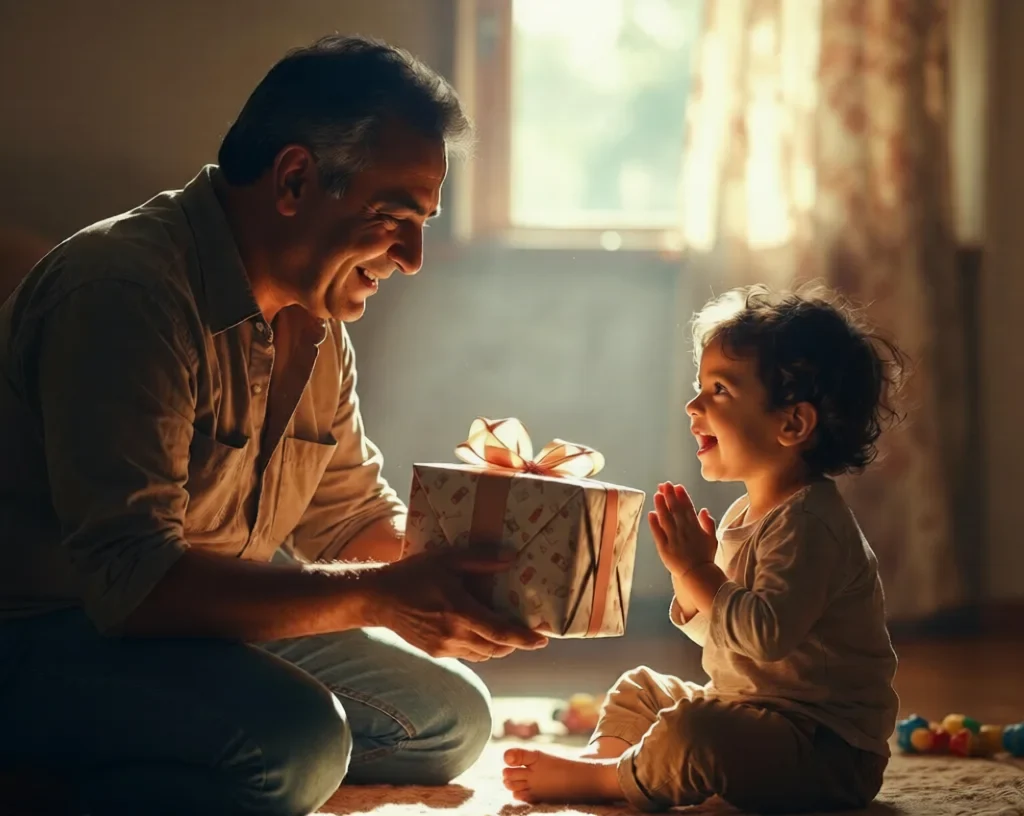
On the morning of my birthday, I woke up to find a large box wrapped in bright blue paper sitting at the foot of my bed. My heart raced as I tore through the wrapping, expecting to see the sleek black console I’d been dreaming about.
Instead, I found a wooden chest, hand-carved and beautifully detailed. Inside were not electronics, but something far more valuable: a collection of handwritten letters, one for each year of my life, from my dad. Each letter contained a memory, a lesson, or a piece of advice.
The final letter read: “Material things break, get lost, or become obsolete. But the memories we create together and the values we build will last forever. This chest is your treasure map to becoming the person you’re meant to be.”
I cried that day. Not from disappointment, but from realizing that ” How Did My Dad Spoil Me” and how my dad had given me something no store could ever sell. He had given me himself, his time, his thoughts, his love.
Looking back, I understand now: How did my dad spoil me with experiences that shaped my character rather than just filling my room with stuff?
When Failure Became My Greatest Gift
At fifteen, I failed my first major exam. It was a math test that I had barely studied for, confident that I could coast through like I had in previous years. The red “F” at the top of the paper felt like a punch to the gut.
I came home expecting disappointment, maybe even anger. Instead, my dad did something unexpected. He celebrated.
He took me out for ice cream, ordered the biggest sundae on the menu, and said, “Congratulations on your first real failure. This is where the real learning begins.”-How Did My Dad Spoil Me?
Then he shared a story about his own failures: the business that went bankrupt, the job he lost, the times he felt like giving up. He explained that failure wasn’t the opposite of success; it was a necessary stepping stone toward it.
That night, we sat at the kitchen table until midnight, working through every problem I’d gotten wrong. He didn’t give me the answers. He taught me how to find them myself.
Years later, when I faced setbacks in my career and relationships, I remembered that ice cream sundae and those late-night study sessions. I remembered that failure wasn’t something to fear, but something to embrace as part of growth-So you knew How Did My Dad Spoil Me?
This was perhaps the most profound way How did my dad spoil me with the gift of resilience and a growth mindset.
The Secret Behind His Spoiling
As I grew older, I began to notice a pattern in my dad’s “spoiling.” It wasn’t random or indulgent in the way people typically think of spoiled children. Every gift, every experience, every lesson had a purpose.
Psychologists call this “authoritative parenting,” a style that combines warmth and responsiveness with clear expectations and boundaries. Research shows that children raised with this approach tend to develop higher self-esteem, better emotional regulation, and stronger social skills.
My dad understood something that many parents miss: true spoiling isn’t about giving children everything they want. It’s about giving them what they need to become confident, compassionate, and capable adults.So you knew How Did My Dad Spoil Me?
He spoiled me with:
- Unconditional love that never wavered, even when I made mistakes
- Quality time that made me feel valued and heard
- Life lessons wrapped in everyday moments
- Freedom to fail without fear of judgment
- Values that became my internal compass
These weren’t the things I asked for as a child, but they were exactly what I needed to thrive as an adult.
What Psychology Says About Spoiled Children
The term “spoiled” often carries negative connotations, but modern psychology offers a more nuanced perspective. According to research from the American Psychological Association, children who receive consistent emotional support and appropriate boundaries tend to develop secure attachment styles and healthy relationship patterns.
Dr. Diana Baumrind’s pioneering work on parenting styles identified four main approaches:
- Authoritative (high warmth, high expectations)
- Authoritarian (low warmth, high expectations)
- Permissive (high warmth, low expectations)
- Neglectful (low warmth, low expectations)
Children raised with authoritative parenting, like my dad practiced, show the best outcomes across multiple measures: academic performance, emotional intelligence, social competence, and mental health.
The key difference? It’s not about what you give, but why and how you give it. My dad’s “spoiling” was intentional, meaningful, and always aimed at building character rather than creating dependency.So you came know How Did My Dad Spoil Me?
Real Case Study: How Positive Parenting Builds Success
Let me share a story from my own counseling practice that illustrates the power of this approach.
Meet Sarah, a 28-year-old marketing executive who came to me struggling with confidence issues despite her impressive career trajectory. During our sessions, she described her childhood as “unusually supportive” compared to her peers.
Her father, a high school teacher, practiced what Sarah called “strategic spoiling.” Every birthday, instead of expensive gifts, he would give her an “experience voucher” for something they could do together: hiking a new trail, visiting a museum, learning to cook a new cuisine.
The Results:
- Sarah developed strong problem-solving skills from navigating new experiences
- She built confidence through mastering new challenges with her dad’s support
- Her emotional intelligence grew from meaningful conversations during their adventures
- She learned to value relationships over material possessions
Five Years Later:
Sarah now leads a team of 15 people, credits her leadership style to her father’s patient mentoring, and has started her own tradition of “experience gifts” with her niece.
The Psychology Behind It:
Research from Harvard’s Center on the Developing Child shows that children who experience consistent, responsive caregiving develop stronger neural connections in areas related to emotional regulation and social cognition.developers.google+1
Sarah’s story isn’t unique. It’s a testament to what happens when parents understand that the most valuable gifts aren’t bought in stores.That’s How Did My Dad Spoil Me?
8 Life-Changing Lessons I Learned
Through reflecting on my dad’s approach to parenting, I’ve identified eight core lessons that shaped who I am today:
- Love is a verb, not just a feeling – Show it through actions, not just words
- Failure is feedback, not finality – Every setback contains a lesson
- Gratitude transforms perspective – Appreciate what you have before chasing more
- Time is the ultimate currency – Invest it wisely in relationships that matter
- Values outlast possessions – Build character, not just collections
- Empathy creates connection – Understand others before seeking to be understood
- Growth requires discomfort – Step outside your comfort zone regularly
- Legacy lives in lessons – What you teach matters more than what you leave
These lessons didn’t come from textbooks or seminars. They came from a father who understood that How did my dad sspoiled me was really about how he invested in my future self.
FAQs About Father-Child Relationships
1. What does it mean when a dad spoils his child?
When a dad spoils his child in healthy ways, it means providing consistent emotional support, quality time, and meaningful experiences that build character and confidence. This differs from overindulgence, which focuses on material gifts without boundaries.
2. Can being spoiled by a parent have positive effects?
Yes, when “spoiling” involves emotional availability, life lessons, and appropriate boundaries, it can lead to higher self-esteem, better emotional regulation, and stronger relationship skills in adulthood.
3. How do I know if my parenting style is healthy?
Healthy parenting balances warmth with expectations, provides consistent support while encouraging independence, and focuses on building character rather than just making children happy in the moment.
4. What are signs of emotionally healthy father-child relationships?
Signs include open communication, mutual respect, appropriate boundaries, consistent support during challenges, and the child’s ability to make age-appropriate decisions with guidance.
5. How can fathers build stronger bonds with their children?
Fathers can build stronger bonds through regular quality time, active listening, sharing personal stories, creating traditions together, and showing interest in their child’s interests and challenges.
6. What if my dad wasn’t emotionally available growing up?
It’s never too late to heal. Consider therapy, journaling about your experiences, building supportive relationships with other mentors, and breaking negative patterns with your own children.
7. How do cultural differences affect father-child relationships?
Cultural backgrounds influence parenting styles, communication patterns, and expectations. Understanding your cultural context while adapting healthy practices can help build stronger family bonds.
8. Can adult children repair damaged relationships with their fathers?
Absolutely. Many families successfully repair relationships through honest communication, professional counseling, setting healthy boundaries, and creating new positive experiences together.
Key Takeaways
- Intentional parenting creates lasting positive impact on children’s development and future success
- Emotional investment matters more than material gifts in building confident, resilient adults
- Authoritative parenting (high warmth, high expectations) produces the best outcomes according to psychological research
- Life lessons wrapped in everyday moments become the foundation for adult decision-making
- Quality time and meaningful experiences create memories that shape character and values
- Failure as learning teaches resilience and growth mindset essential for life success
Your Turn to Share
If this story resonated with you, I want to hear from you. What’s one unforgettable moment with your father that shaped who you are today? Was there a time when your dad “spoiled” you in a way that taught you something valuable about life?
Share your story in the comments below. Let’s create a community of people who appreciate the profound impact fathers can have on their children’s lives.
And if you’re looking for more insights on building stronger family relationships, explore our other articles on kritiinfo.com about parenting, emotional intelligence, and family dynamics.
Because at the end of the day, the question isn’t really How did my dad spoil me. It’s how will you spoil the people you love in ways that matter most?
1 thought on “How Did My Dad Spoil Me That Changed My Life 7 Times Better”