
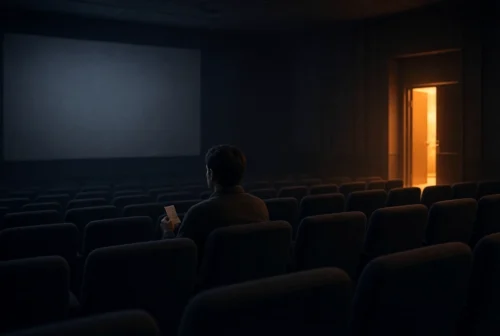
At 9:40 p.m., the lights were still on at Meridian Foods. The delivery app had taken two years to build. Launch dates had slipped three times. Downloads were flat, and customers were leaving.
“We cannot stop now,” said the CEO. “Two years of work would be wasted.”
The finance head turned her laptop around. “Another six months of budget, and the numbers still say we will not break even.”
Nobody spoke. Then a junior analyst asked one quiet question: “If we had spent nothing so far, would we fund this today?”
Nobody answered. That silence is the sunk cost effect at work, and that question is how smart managers break it.
Table of Contents
What Is the Sunk Cost Effect?
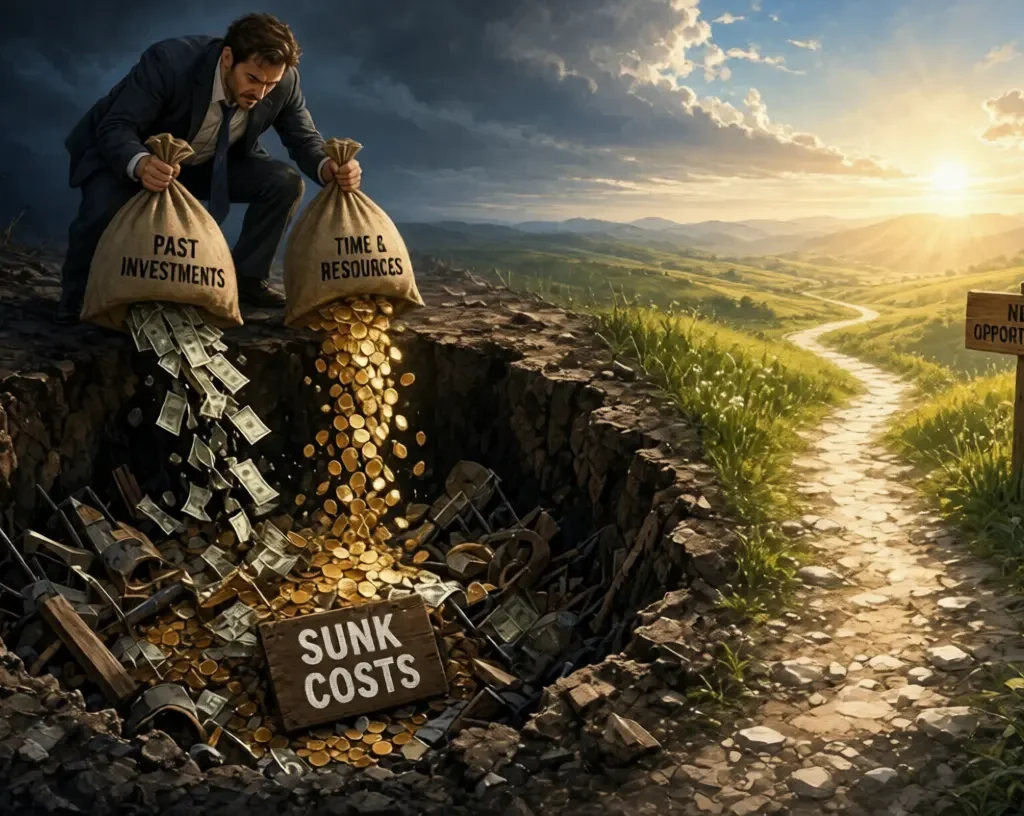
A sunk cost is money, time, or effort already spent that you cannot get back. The sunk cost effect is the pull to keep investing in something because of what you have already put in, even when the future looks poor.
People often use “effect” and “fallacy” as if they mean the same thing. They are close, but not identical. The effect is the behaviour we observe. The fallacy is the faulty thinking behind it: treating the past as a reason, when only future costs and benefits change with your choice. Sometimes past spending carries real information or legal obligations, so continuing is not always a fallacy.
Why Smart People Fall for It
- Loss aversion. Losses hurt more than equal gains please us (Kahneman and Tversky, 1979). Stopping turns a hopeful plan into a visible loss.
- Commitment escalation. Once we back a decision publicly, we defend it.
- Confirmation bias. We notice one good sales week and forget six bad ones.
- Fear of admitting error. The person who approved a project is often the one asked to judge it.
- Dislike of waste. Arkes and Blumer (1985) tied the effect to the wish not to look wasteful.
- Team pressure. Months of weekend work make stopping feel like betrayal.
Finishing a poor film because you paid for the ticket is the same trap, only smaller.
Trapped Manager vs Objective Manager
| Question | Trapped manager | Objective manager |
|---|---|---|
| Main question | “How much have we spent?” | “What will more spending buy?” |
| Evidence | Selective, supports the old choice | Latest data, including bad news |
| Past spending | A reason to continue | A lesson to learn from |
| Stopping feels like | Admitting failure | A resource decision |
| Reviews | Rare, run by the owner | Scheduled, with an outside voice |
| Result | Bigger losses, slower learning | Faster pivots, protected resources |
The RESET Decision Framework
Use these five steps before approving any more money.
- Recognise. Name the bias aloud. When you hear “we have come too far,” pause. Meridian’s CEO said “wasted” three times in one meeting.
- Evaluate. Judge the project by the last 90 days, not the original plan. Check customers, cost, and speed.
- Separate. Make two columns. Put only future costs and benefits in the first. Put everything already spent in the second, labelled “learn from this.”
- Estimate. Write best, likely, and worst cases. Ask what must be true for success, and have someone outside the team test it.
- Take action. Choose to continue, change direction, pause, or stop. Set a tripwire in advance: “If repeat orders are below our target by March, we stop.”
Stopping is not the automatic answer. If the future numbers justify more investment, continue.
Three Everyday Traps
Illustrative examples, not real cases.
Business. A company has spent heavily on developing and advertising a new snack. Sales disappoint, yet leaders say, “We have spent too much on ads to quit.” A better test: what are today’s repeat purchase rate and cost to win one customer?
Workplace. A manager keeps a failing sales process because the team trained on it for six months. A better move: run the alternative with one small group for four weeks and compare results. The training cost is gone either way.
Personal. Someone keeps paying for a two year course they no longer value. The better question is whether the next six months of effort and fees will return more than other uses of the same time. If the certificate still matters to them, finishing may be right.
What the Research Shows
Arkes and Blumer (1985), published in Organizational Behavior and Human Decision Processes, ran several experiments. In one, people imagined being an airline president whose $10 million radar blank plane project was 90% complete when a rival launched a faster, cheaper plane. Of those told about the earlier spending, 85% said they would invest the final $1 million. Of those given the same choice with no past spending, only 17% said yes (figures as reported by Tan and Yates, 1995).
In their ski trip question, 33 people chose the $100 trip and 28 chose the $50 trip, although they were told they expected to enjoy the cheaper one more.
What it means: the information about the future was the same, yet the past changed the answer.
Limits: these were hypothetical scenarios, not real company decisions. Later work argued that “amount invested” and “nearly finished” are mixed together in the plane scenario. Arkes and Ayton (1999) reviewed the evidence in Psychological Bulletin. A 2021 study by Ronayne and colleagues, as summarised by BehavioralEconomics.com, suggests more reflective thinkers show the effect less.
Experienced managers are not immune. Seniority often raises the stakes, because reputation is attached to the decision. Knowing a project is failing is easy. Acting on it takes courage.
Putting It to Work
- Projects and budgets: review at fixed points, and release funds in stages.
- Strategy and product development: write exit criteria before launch.
- Technology investment: ask what you would buy today, ignoring the old system’s cost.
- Hiring: judge an employee by current fit, not by how long you searched.
- Marketing: compare each campaign with the best alternative use of its next rupee or dollar.
- Change programmes: invite an independent reviewer who has nothing to defend.
Advantages and Limits
Seeing the sunk cost effect helps you use resources better, decide more objectively, avoid needless losses, learn faster, and stay flexible.
It has limits. A struggling project may carry strategic value, learning benefits, or contract duties. Sunk cost thinking is a tool for clear decisions, not an excuse to drop everything difficult.
Three Misconceptions
- “Every failing project should be dropped.” No. Continue when expected future value beats the next best use of the money.
- “Continuing always means poor management.” No. Continuing on fresh evidence is good management.
- “Past spending is always irrelevant.” Not quite. It should not be a reason to continue, but it can hold lessons, contracts, and customer commitments.
Your Next Step: A Quick Checklist
Before approving more spending, ask:
- Would I approve this today if nothing had been spent?
- What do the latest facts say?
- What are the realistic future costs and benefits?
- What alternatives exist?
- What evidence would make me stop, and what would make me continue?
FAQ
What is the sunk cost effect in management? It is the tendency to continue a project because of past investment instead of future value.
What is the difference between sunk cost and the sunk cost fallacy? A sunk cost is spending you cannot recover. The fallacy is letting it drive your next decision.
Why do managers continue failing projects? Loss aversion, reputation, team loyalty, and the wish to avoid looking wasteful.
How can organisations overcome it? Set exit criteria early, hold regular reviews, and use independent assessors.
Should a business abandon a project after heavy investment? Only if future costs outweigh future benefits. Heavy past spending alone is not the test.
What is an everyday example? Sitting through a bad film, or repairing an old car again, because of what you already paid.
Conclusion
Back at Meridian, the analyst’s question hung in the air. Suppose the CEO answered it honestly, ran the RESET steps, and found the numbers did not hold. A hard decision that night would have saved far more than another six months of spending.
The money already spent cannot be recovered by making another poor decision. The future, however, can still be managed wisely.