
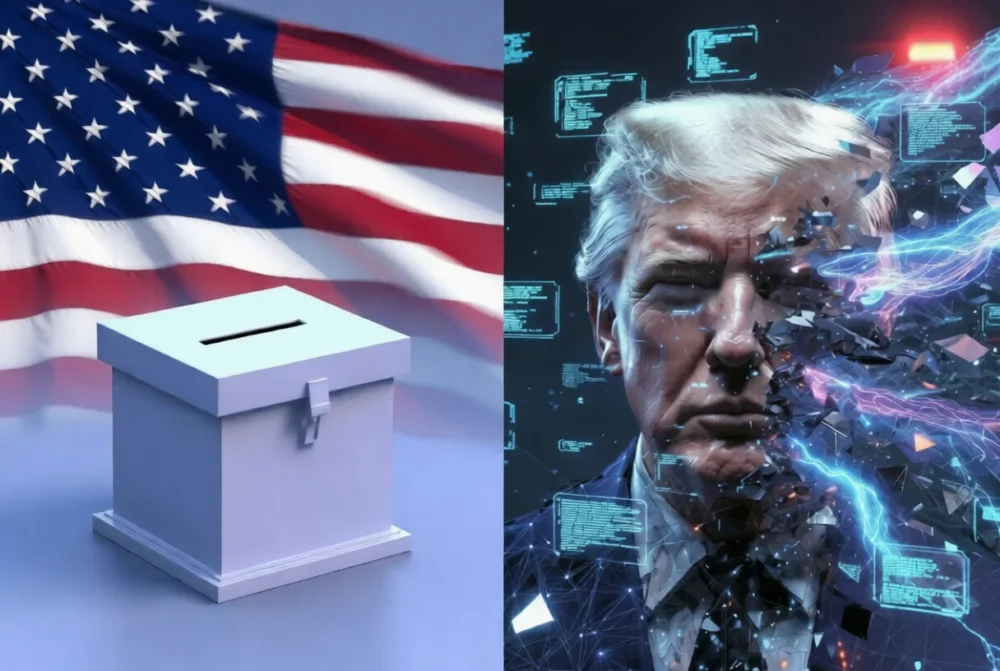
Election Deepfake :Millions of citizens are watching the results pour in. Journalists are refreshing their feeds, tracking early exit polls, and preparing their evening broadcasts. Campaign headquarters are buzzing with nervous energy.
Then a video appears.
It looks entirely authentic. The leading candidate stares directly into the camera, looking exhausted, and announces a sudden withdrawal from the race following a massive financial scandal. Within four minutes, the video spreads across three major social media platforms. Within ten minutes, political commentators are analyzing the fallout on live television. Financial markets react instantly, sending currency values dropping. Polling stations report mass confusion as voters wonder if they should even cast their ballots.
Before digital forensics teams can intervene, the damage is done. But the candidate never filmed that message. The scandal does not exist. The video was completely synthetic.
This is not a script for a political cyber thriller. It is the exact scenario keeping election officials and national security experts awake at night. As artificial intelligence makes digital deception cheap and scalable, the threat landscape has fundamentally shifted. The most urgent question facing governments today is how democracies budget for and insure against synthetic media deepfake campaigns.
Financial protection against digital deception is no longer a theoretical debate. It is a critical requirement for national security.
Table of Contents
The Election Deepfake That Moves Faster Than Truth
Algorithmic election disruption involves using artificial intelligence, automated bot networks, and highly realistic synthetic media to manipulate public perception. Unlike traditional cyberattacks that target databases or voting machines, these campaigns target human belief.
Synthetic media includes AI generated audio, video, images, and text designed to mimic reality. An election deepfake takes this technology and weaponizes it for political gain. The danger lies in the speed of distribution. A perfectly forged audio clip of an election official claiming voting machines are broken can reach a million voters before authorities even realize the audio exists.
During an election, speed is the ultimate weapon. Truth requires verification, forensic analysis, and careful communication. A deepfake only requires an algorithm and a willing audience. This asymmetry creates massive vulnerabilities that traditional cybersecurity measures simply cannot resolve alone.
Why Elections Are Becoming a Risk Market
When a major cyber incident occurs, organizations rely on cybersecurity insurance to cover data recovery, legal fees, and business interruption. But traditional policies are rarely equipped for algorithmic political disruption. If a foreign adversary releases a synthetic video that causes a city to deploy emergency police to polling stations, who pays for the overtime? If a fake audio recording forces a campaign to spend millions on emergency advertising to correct the record, how is that financial exposure mitigated?
Elections are increasingly viewed as risk markets. The financial and institutional consequences of AI generated political deception are staggering. Public trust is an economic asset. When it fractures, the cost to repair it drains public funds. Recognizing this reality changes the conversation from purely technological defense to strategic financial resilience.
How Democracies Budget for the Election Deepfake
Estimating financial exposure for an event that has never fully materialized is incredibly difficult. Yet, this is precisely how democracies budget for and insure against synthetic media deepfake campaigns. Governments must anticipate the operational costs of a sudden crisis.
Budgeting for these incidents requires establishing dedicated emergency reserve funds. Election commissions need immediate access to capital to deploy rapid response communication strategies. They cannot wait for bureaucratic approval while a deepfake goes viral. Furthermore, governments must invest heavily in proactive digital provenance systems and threat monitoring software to detect synthetic content the moment it appears online.
What Could Election Deepfake Insurance Cover?
Algorithmic election disruption insurance is an emerging concept designed to absorb the financial shock of synthetic media crises. While exact coverage depends on policy design and jurisdiction, potential coverage areas include:
- Emergency response: Funding for immediate crisis intervention and rapid deployment of fact checking teams.
- Digital forensics: Hiring elite cybersecurity investigators to trace the origin of the deepfake and prove its synthetic nature.
- Public communication: Covering the massive costs of emergency advertising across television, radio, and social platforms to correct the narrative.
- Reputation management: Engaging crisis public relations firms to stabilize public confidence.
- Technology recovery: Restoring any digital infrastructure compromised alongside the misinformation campaign.
- Legal expenses: Managing the complex litigation that often follows election disruption.
- Election continuity operations: Funding alternative voting methods or extended polling hours if a deepfake physically disrupts voting locations.
The Price of One Viral Lie
A single synthetic media incident can create catastrophic cascading costs. Imagine a deepfake targeting a specific minority community, falsely claiming their local polling stations have been closed due to a security threat.
The immediate cost involves deploying election officials to correct the misinformation. The secondary cost involves emergency broadcasts. The tertiary cost involves potential civil rights investigations and legal challenges regarding voter suppression. The final cost is the long term erosion of confidence in democratic institutions. When governments explore how democracies budget for and insure against synthetic media deepfake campaigns, they are actually trying to price the preservation of truth itself. Prevention is always cheaper than crisis management.
A Realistic Election Deepfake Case Study
To understand the operational consequences of this threat, consider a hypothetical case study involving a coordinated deepfake campaign.
7:14 PM: Polls have two hours left until closing in a highly contested district. An audio clip begins circulating on a popular encrypted messaging app. The audio appears to feature the head of the election commission secretly instructing poll workers to destroy ballots from specific neighborhoods.
7:22 PM: The audio breaches public social media networks. Automated bot accounts amplify the clip using algorithmic amplification techniques.
7:45 PM: Outraged citizens begin gathering at polling locations. Local police are dispatched to maintain order, incurring immediate emergency response costs.
8:10 PM: The government activates its algorithmic election disruption insurance protocol. Emergency funds are released instantly to a preapproved digital forensics firm.
8:27 PM: The forensics team confirms the audio is AI generated, identifying synthetic artifacts in the vocal rendering.
8:55 PM: Utilizing their emergency communications budget, the election commission launches a massive, targeted alert to all mobile phones in the district, confirming the audio is a proven deepfake.
Because the jurisdiction had a plan for how democracies budget for and insure against synthetic media deepfake campaigns, they accessed emergency capital immediately. They contained a disaster that could have delegitimized the entire regional vote. The incident still cost millions in emergency response and forensic analysis, but the insurance and reserve funds absorbed the shock.
Insurance Cannot Save a Weak Democracy
While financial protection is necessary, insurance cannot replace election security. A policy can pay for crisis communications, but it cannot force a polarized public to believe the truth. Resilient democratic institutions require a comprehensive approach encompassing prevention, detection, response, and recovery.
Insurers and reinsurers will increasingly demand that governments and political organizations implement strict safeguards before offering coverage. If a campaign fails to use basic authentication protocols for their official media, insurers may refuse to cover their deepfake related losses.
5 Smart Ways to Reduce Deepfake Risk
Protecting the integrity of the vote requires actionable strategies across all levels of society.
- Deploy cryptographic watermarking: Governments and media organizations must adopt verifiable digital provenance standards, allowing citizens to instantly check if an image or video is officially authentic.
- Establish rapid verification teams: Election commissions must retain independent digital forensics experts on standby, ready to deploy within minutes of a suspicious media report.
- Build emergency communication networks: Authorities need direct, unmediated channels to reach voters instantly when a major deepfake operation is detected.
- Adopt algorithmic election disruption insurance: Political organizations and governments must secure specialized financial policies that trigger immediate capital for crisis response.
- Strengthen media literacy: Public education campaigns must teach voters how to identify synthetic anomalies and encourage them to pause before sharing sensational content.
The Future of Election Risk
The landscape of political deception is changing rapidly. We are entering an era of AI versus AI, where deepfake generation tools battle automated detection algorithms in real time. The role of cybersecurity companies, journalists, fact checking organizations, and social media platforms will become even more deeply intertwined.
Regulatory frameworks will eventually require digital platforms to label synthetic content instantly. But until those systems are perfected, the financial burden of managing this chaos will fall on the public sector. Understanding how democracies budget for and insure against synthetic media deepfake campaigns will transition from a niche risk management topic to a central pillar of global governance.
FAQ
What is algorithmic election disruption insurance? It is a specialized form of risk management designed to cover the operational, legal, and communication costs associated with a coordinated synthetic media or deepfake attack during an election.
How can democracies budget for synthetic media risks? Governments can budget for these risks by establishing dedicated emergency response funds, investing in proactive AI detection software, and purchasing specialized insurance policies to offset the costs of a massive public misinformation crisis.
Can insurance cover losses caused by election deepfakes? Yes, depending on the policy. Coverage typically focuses on the tangible costs of the crisis, such as hiring digital forensics experts, funding emergency public relations campaigns, and covering legal liabilities. It does not cover the loss of an election itself.
Why are AI generated political videos difficult to control? They are difficult to control because they spread through social media algorithms designed to prioritize outrage and engagement. By the time human fact checkers verify that a video is synthetic, millions of voters have already consumed and shared the deceptive content.
Can deepfake insurance replace election cybersecurity? Absolutely not. Insurance is a financial safety net designed for recovery. It must be paired with robust cybersecurity measures, digital authentication protocols, and proactive threat monitoring to truly protect democratic institutions.
Final Verdict
The intersection of artificial intelligence and political stability has created an unprecedented vulnerability for governments worldwide. Relying solely on technology platforms to filter out fake content is a failing strategy. The reality of modern governance requires acknowledging that breaches of public trust will happen, and they will be expensive.
The conversation around how democracies budget for and insure against synthetic media deepfake campaigns is ultimately about safeguarding the legitimacy of the vote. It is about preparing financially, technologically, institutionally, and psychologically for the moment when synthetic media attempts to rewrite reality.
Governments, political organizations, and cybersecurity leaders must act now to evaluate their financial exposure to digital deception. The best time to calculate the cost of a catastrophic deepfake crisis is long before the polls open. Prepare your defenses, secure your digital assets, and ensure that when the truth is challenged, you have the resources ready to defend it.
1 thought on “How 6 Powerful Strategies Stop Election Deepfake Chaos”