

Introduction
Picture this: It’s Monday morning, and your star developer walks into your office, resignation letter in hand. You’ve poured resources into training her, but she’s burned out, feeling unseen amid endless deadlines. This isn’t uncommon—I’ve seen it derail teams I led early in my career. Traditional top-down leadership often misses the human side, leading to quiet quitting and high churn.
Enter empathetic leadership: a style that prioritizes understanding employees’ emotions, needs, and perspectives. It transforms managers into allies, directly boosting employee retention by fostering loyalty and reducing turnover. Studies show companies with empathetic cultures see 50% less voluntary exits (check Harvard Business Review on empathy’s ROI).
In this post, you’ll uncover what empathetic leadership really means, why it supercharges employee retention, seven battle-tested secrets with real examples, practical steps to implement it, a transformation case study, common pitfalls, and long-term wins. Whether you’re a team lead or executive, these insights will equip you to build a thriving workplace culture. Ready to turn retention into your competitive edge? Let’s dive in.
What is Empathetic Leadership
Empathetic leadership means stepping into your team’s shoes—genuinely grasping their challenges, joys, and motivations to guide with compassion alongside competence.
Unlike traditional command-and-control styles, where leaders dictate from afar, empathy builds bridges. Think of it as emotional intelligence in action: not just “How’s the project?” but “How are you holding up with the project?” This shift humanizes team management.
In my consulting days at kritiinfo.com, I worked with a sales team crushed by quotas. Their manager barked orders; empathy flipped that. He started asking about personal hurdles, sparking open dialogues. Result? Skyrocketed morale and stronger employee retention. It’s simple: empathy tunes leaders into the workforce’s heartbeat. For more on foundational leadership skills, check our in-depth guide.
Why Empathetic Leadership Matters for Employee Retention
Employee retention hinges on trust—employees stay where they feel valued. Empathetic leadership delivers that by addressing psychological needs like belonging and purpose.
When leaders show they care, engagement soars. Gallup data reveals empathetic managers boost daily engagement by 20%, directly tying to loyalty. Without it, resentment brews; talented folks bolt for cultures that “get” them.
Organizationally, it cuts costs—replacing an employee runs 1.5–2x their salary (Forbes on turnover economics). Empathy fosters psychological safety, where ideas flow and retention strengthens. In toxic setups, dread turnover; with empathy, you cultivate keepers. It’s the glue for sustainable employee retention.
7 Powerful Empathetic Leadership Secrets
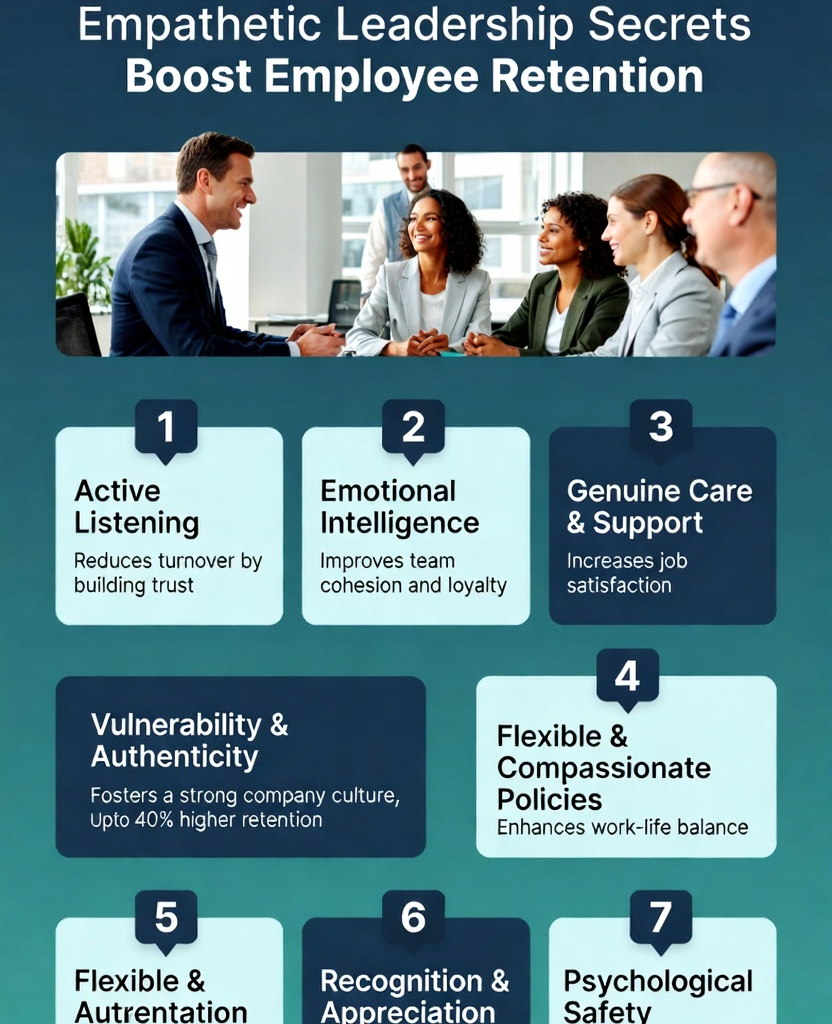
These secrets, drawn from years coaching executives, pack real examples and takeaways. Implement one, watch employee retention climb.
<1>Master Active Listening in Leadership
Tune out distractions; truly hear. Example: A project manager I mentored ignored a team’s burnout signals. Switching to undivided listening—repeating back concerns—uncovered root issues. Takeaway: Schedule “listening hours” weekly; paraphrase to confirm understanding. Boosts trust, anchors employee retention.
<2>Hone Emotional Intelligence in Decision-Making
Sense emotions before acting. During a merger I led, anxiety peaked. I paused, acknowledged fears, then explained impacts—calming the storm. Takeaway: Use EI self-assessments (like this HBR tool); factor feelings into choices. Enhances employee retention via felt security.
<3>Personalize Employee Engagement
Tailor support to individuals. One client customized check-ins: remote workers got virtual coffees, parents flexible hours. Engagement jumped 30%. Takeaway: Map team needs quarterly; adjust perks. Personal touch cements employee retention.
<4>Build Trust Through Transparency
Share the “why” behind decisions. In a restructuring, I openly discussed trade-offs, easing fears. Turnover dipped. Takeaway: Host “no-BS” town halls monthly. Transparency fuels loyalty, strengthening employee retention.
<5>Support Mental Well-Being
Prioritize health over hustle. Post-pandemic, I introduced mental health days; usage revealed hidden struggles, addressed proactively. Takeaway: Offer EAP resources; check in privately. Well teams stick around, improving employee retention
<6>Recognize Employee Contributions
Celebrate wins authentically. A overlooked coder shone after public shoutouts—motivation exploded. Takeaway: Use “kudos boards” or peer awards weekly. Recognition drives retention gold.
<7>Create a Safe Communication Culture
Encourage vulnerability without judgment. My teams thrived with anonymous feedback channels, surfacing issues early. Takeaway: Train on non-defensive responses; model openness. Safety nets employee retention.
Practical Strategies to Implement Empathy at Work
Start small for big impact. Here’s a four-step framework:
Self-Assess Daily: Journal reactions—am I reacting or responding empathetically? Build emotional intelligence habits.
Routine Check-Ins: Weekly 1:1s focused 70% on personal/professional well-being, 30% tasks. Tools like 15Five streamline.
Team Rituals: Empathy workshops or “share circles” foster workplace culture. Avoid mistake: faking it—authenticity matters.
Measure and Iterate: Track engagement surveys; tweak based on feedback. Common pitfalls: over-empathizing into inaction—balance with accountability.
Link this to our productivity strategies post for amplified results. These routines make empathy scalable, locking in employee retention.
Case Study: Tech Firm’s Retention Turnaround
Meet Alex, CEO of a 50-person SaaS startup facing 25% annual churn—employee retention was bleeding cash.
Before: Micromanaging culture bred resentment. Developers quit mid-project, citing “no one listens.”
Alex adopted our seven secrets: active listening via town halls, personalized perks, transparency on pivots. He supported well-being with therapy stipends and recognized wins publicly.
After Six Months: Engagement scores rose 40%; voluntary turnover fell to 8%. One engineer said, “Finally, I feel seen.” Revenue grew 22% from retained talent’s innovations. Employee retention became their superpower—proof empathy pays.
Challenges in Practicing Empathetic Leadership
Empathy isn’t effortless. Time squeezes leaders—solution: batch empathy into rituals like 15-minute check-ins.
Some fear it signals weakness. Counter: Pair with firm boundaries; Forbes notes empathetic leaders outperform.
Balancing empathy and performance? Use data-driven feedback: “I see your struggle; here’s targeted support.” These fixes make empathy resilient, safeguarding employee retention.
How Empathetic Leadership Builds Long-Term Organizational Success
Empathy crafts enduring cultures where innovation blooms—teams experiment freely, unhindered by fear.
Productivity surges as engaged employees deliver 21% more (Gallup). It sparks creativity, turning challenges into breakthroughs.
Above all, it slashes turnover, tying directly to employee retention. Loyal teams scale businesses; empathetic ones dominate. Explore our team management guide for more.
Conclusion
Empathetic leadership isn’t a buzzword—it’s the retention revolution workplaces need. From active listening to safe cultures, these seven secrets, backed by real transformations, show how understanding fuels loyalty, engagement, and growth.
Imagine your team thriving, innovations flowing, turnover a relic. You’ve got the tools: start with one secret today. Reflect on your style—what’s one empathetic shift you’ll make? Implement now, and watch employee retention—and your leadership legacy—soar. For personalized coaching, drop a comment or visit kritiinfo.com‘s leadership resources.
FAQ
What is empathetic leadership in simple terms?
It’s leading with heart and head—understanding employees’ feelings to guide effectively, blending compassion with results.
How does empathetic leadership improve employee retention?
By building trust and engagement, it makes employees feel valued, reducing the urge to leave for indifferent cultures.
Can empathy reduce employee turnover?
Absolutely—empathetic environments cut turnover by fostering loyalty, as seen in high-engagement firms.
Is empathetic leadership effective in corporate environments?
Yes, even in high-stakes corps; it boosts morale without sacrificing performance, per HBR research.
How can managers develop empathy?
Practice active listening, seek feedback, and use EI tools daily—small habits yield big shifts in team management.
Does empathetic leadership clash with accountability?
No—true empathy holds people accountable kindly, balancing support with clear expectations for workplace culture.
What’s the first step for better employee retention via empathy?
Start with personalized 1:1 check-ins to uncover needs and build genuine connections.
2 thoughts on “How 7 Powerful Empathetic Leadership Secrets Boost Employee Retention”