

A senior executive walks into a critical board meeting absolutely certain the company understands its modern consumers. Millions of dollars have been spent on market research. The presentation is flawless. The strategy looks unbeatable on paper.
Then a junior frontline employee from the retail division asks a single unexpected question.
That one simple observation exposes a massive blind spot that senior leadership completely missed. The room falls dead silent. The executives realise their expensive data missed the actual reality happening on the shop floor.
How could someone at the very lowest level of the organisational hierarchy see something that highly paid senior decision makers could not?
The answer is proximity. Frontline workers touch the real world every single day. And this exact moment of realisation is where Reverse Mentoring becomes an incredibly powerful tool for business survival.
Table of Contents
What Is Reverse Mentoring?
The traditional workplace operates on a very simple assumption. Wisdom always trickles down from the top. Senior managers guide junior employees, and years of experience dictate company strategy.
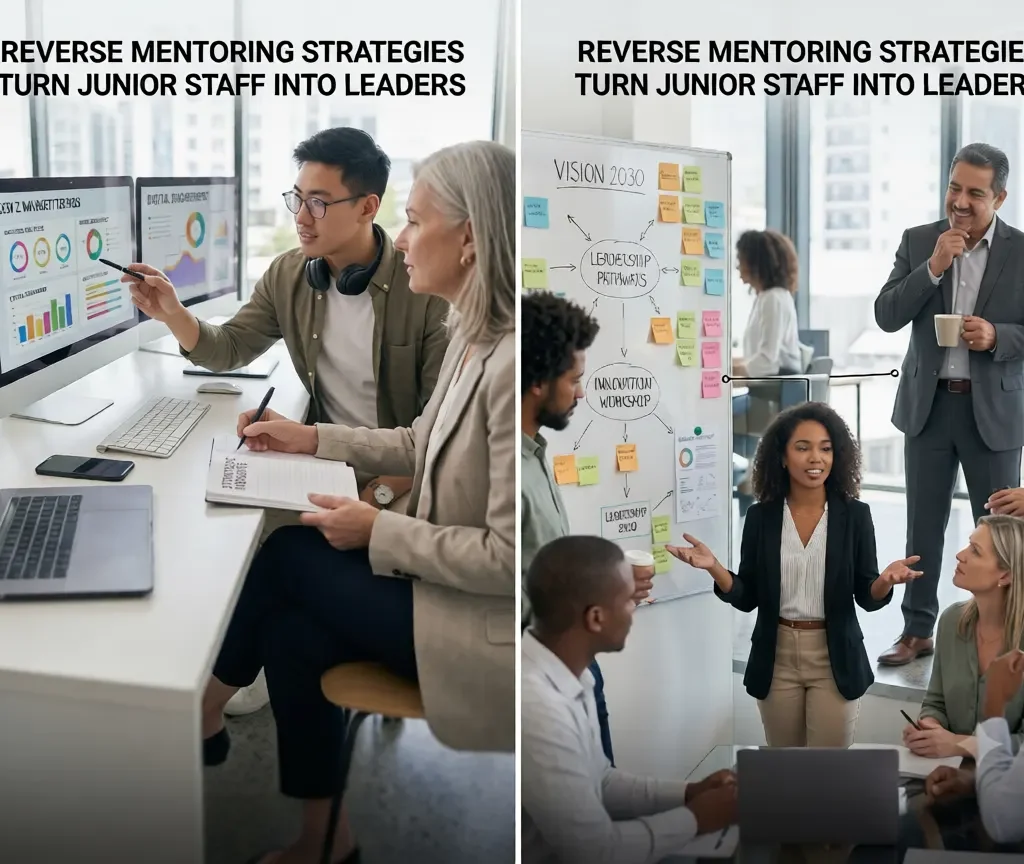
Reverse Mentoring completely flips this outdated model on its head. It is a structured practice where younger or less experienced team members mentor senior leaders. The goal is to create a dynamic exchange of knowledge.
Experience still moves downward, but fresh knowledge moves upward. This approach acknowledges that a young digital native might understand emerging technology much better than a seasoned executive. It builds a bridge across generational divides.
When organisations implement Reverse Mentoring effectively, they stop guessing about the future. They start learning directly from the people who are already living it.
Why Junior Frontline Staff See What Leaders Miss
The higher you climb in any organisation, the further you get from the daily work. Executives spend their time looking at spreadsheets, financial projections, and high level strategy reports.
Meanwhile, junior frontline staff are dealing with real customers. They are navigating the latest workplace tools. They see changing digital behaviour long before it becomes a statistic in an annual report.
This creates a dangerous knowledge gap for leadership. Senior managers might assume a new software system is working perfectly. The junior employees are the ones finding the bugs, creating workarounds, and experiencing the daily frustration.
Listening to these junior voices provides immediate, unfiltered intelligence. They hold the missing pieces to the strategic puzzle.
How Reverse Mentoring Changes Workplace Power
Knowledge is a form of power. In traditional corporate structures, power is strictly hierarchical. You listen to the person above you.
Reverse Mentoring shifts this dynamic toward genuine collaboration. It flattens the hierarchy just enough to let good ideas surface. When a CEO sits down to learn about social trends from a twenty two year old associate, the power dynamic changes from commanding to listening.
This creates immense psychological safety. Junior employees learn that their voices actually matter. Senior leaders learn how to ask questions without feeling insecure about their lack of modern digital skills.
The entire organisational culture transforms. It becomes a space where learning is continuous and everyone has something valuable to teach.
5 Powerful Ways It Helps Organisations
Implementing this strategy provides measurable advantages for modern businesses. KritiInfo always recommends looking at the practical evidence before changing management tactics. Here are five undeniable benefits.
Better Digital Awareness Senior leaders gain hands on understanding of new platforms, emerging technology, and digital communication patterns. They stop fearing digital transformation and start understanding it.
Stronger Employee Engagement When junior staff feel heard, their loyalty skyrockets. Being trusted to advise a senior leader builds tremendous confidence and deepens their connection to the company.
Faster Feedback Decisions made in boardrooms often fail on the frontline. A two way mentoring relationship allows leaders to test ideas early and get honest feedback before rolling out expensive mistakes.
Better Customer Understanding Younger employees often reflect the exact demographic companies are desperately trying to reach. Their insights into changing customer expectations are pure gold for product development.
More Adaptive Leadership Leaders who practice Reverse Mentoring become more agile. They learn to pivot quickly because they are constantly receiving fresh information from the ground level.
The Real Story That Changed the Conversation
This concept is not just management theory. It has transformed some of the most established legacy brands in the world. Consider the famous transformation at The Estée Lauder Companies.
The Situation In 2015, Estée Lauder was a highly successful but aging cosmetics giant. CEO Fabrizio Freda wanted to ensure the company remained relevant for decades to come.
The Hidden Problem Senior executives had decades of traditional retail experience. However, they were completely disconnected from how millennials and Gen Z were discovering beauty products through social media and digital influencers.
The Junior Voice Freda launched a formal Reverse Mentoring programme. He paired highly experienced senior executives with younger, digitally savvy junior employees.
The Leadership Response Instead of dismissing the young staff, executives actively listened. The CEO himself participated, learning about digital shopping habits directly from young digital natives.
The Turning Point The executives realised their marketing strategy was entirely outdated for the modern consumer. The junior mentors taught them how influencers, authentic digital content, and seamless mobile experiences were driving actual sales.
The Result Estée Lauder completely overhauled its marketing budget. They shifted massive resources into digital and social media channels. According to Harvard Business Review, this willingness to learn upward helped the company achieve record breaking sales and dominate the digital beauty space.
What Managers Can Learn Experience is valuable, but relevance is mandatory. If you do not understand the modern landscape, you must learn from the junior frontline staff who do.
How Managers Can Start Reverse Mentoring
Launching this initiative requires intention. You cannot simply force two people into a room and expect magic.
First, establish clear objectives. Decide whether you want leaders to learn about new technology, diversity, or changing customer habits.
Second, select the right participants. Look for junior employees who possess high emotional intelligence and strong communication skills. Find senior leaders who are genuinely curious and willing to set their ego aside.
Third, provide training for both sides. The junior mentor needs to know how to share feedback professionally. The senior leader needs to know how to listen without becoming defensive.
Finally, schedule regular sessions. Make it a formal commitment, just like any other vital business meeting. [Internal Link Opportunity: KritiInfo guide to structuring effective workplace meetings]
What Junior Staff Should Bring to the Table
Being asked to mentor a senior executive is a massive opportunity. Junior employees must approach it with specific skills to make the relationship work.
Confidence is essential. You must believe that your daily observations hold real strategic value.
Honesty matters even more. You cannot simply tell the executive what they want to hear. If a new company policy is causing massive frustration on the frontline, you need the courage to explain why.
Always bring evidence. Do not just share opinions. Share real workplace examples, customer interactions, and practical observations. Respectful disagreement is the foundation of genuine business innovation.
What Senior Leaders Must Learn
For senior leaders, the biggest challenge is unlearning their instinct to teach. When you sit in the learner seat, you must turn off your executive commands.
Listen without formulating an immediate rebuttal. Create a comfortable environment where the junior employee feels safe telling you the uncomfortable truth.
Ask clarifying questions. Say things like, “Tell me more about how that tool slows down your daily work.” Showing genuine curiosity builds trust faster than any corporate team building exercise ever could.
The Dangerous Mistake Companies Make
The quickest way to destroy employee engagement is to ask for frontline feedback and then completely ignore it.
When leaders treat junior employees only as followers, the organisation stagnates. If you implement a Reverse Mentoring programme simply to look progressive, your staff will see right through the facade.
If a junior mentor points out a glaring operational flaw and leadership does absolutely nothing to fix it, trust is broken permanently. Accountability is required. If you ask for their insight, you must be prepared to act on it.
7 Questions Leaders Should Ask Junior Frontline Staff
If you are a manager looking to tap into this knowledge, start by asking these specific questions over coffee:
- What is the most frustrating part of interacting with our current digital tools?
- What do our customers complain about most often that leadership never sees?
- How do you and your peers prefer to receive company communications?
- What is one trend in our industry that you feel we are completely ignoring?
- If you had my job for one week, what is the very first policy you would change?
- What takes up too much of your time on a daily basis?
- How can we make this company a place where your generation actually wants to build a career?
FAQ
What is Reverse Mentoring? It is a professional development strategy where younger or junior employees mentor senior leaders. It helps transfer modern digital skills and fresh perspectives upward through the organisational hierarchy.
How can junior employees mentor senior leaders? They share their firsthand knowledge of frontline operations, modern technology, emerging social trends, and changing customer expectations that executives often overlook from the boardroom.
Why is Reverse Mentoring important for frontline staff? It empowers them. It gives them a direct voice to leadership, builds their confidence, increases their visibility within the company, and vastly improves overall employee engagement.
What are the benefits of Reverse Mentoring? Companies gain better digital awareness, faster operational feedback, improved generational understanding, stronger loyalty, and highly adaptive leadership teams.
How can companies start a Reverse Mentoring programme? Define clear learning goals, carefully pair curious senior leaders with articulate junior employees, provide communication training for both sides, and schedule consistent confidential meetings.
Can Reverse Mentoring improve employee engagement? Yes. When frontline workers realise their insights can actually influence company strategy, their emotional investment in the organisation increases significantly.
What mistakes should managers avoid? Managers must avoid acting defensive, talking too much, ignoring the feedback they receive, or treating the sessions as a superficial public relations exercise.
Final Takeaway
The most dangerous phrase in any business is, “This is how we have always done it.”
Your junior frontline staff are not just an operational expense. They are a massive, untapped reservoir of strategic intelligence. They see the warning signs before the data team does. They understand the customer because they are talking to the customer right now.
True leadership is not about having all the answers. It is about knowing exactly where to look for them. Sometimes, the most brilliant insight your company needs is sitting quietly in the breakroom, just waiting to be asked.
1 thought on “How 5 Reverse Mentoring Strategies Turn Junior Frontline Staff Into Strategic Leaders”