
The Mirror Never Lies
You catch yourself in the mirror one morning. Nothing dramatic. Just a line near your eye that wasn’t there last month, or skin that looks a bit tired even after a full night’s sleep.
Most people brush it off. But something has actually been happening under your skin for years, quietly, without you noticing. It’s not one single thing. It’s a mix of things: your skin making less collagen, small amounts of daily sun damage adding up, stress and pollution wearing down your skin’s natural defenses.
None of this means your skin is “failing.” It just means your skin is doing what skin does over time. The good news? Dermatologists have spent decades studying which ingredients actually help, and which ones are mostly marketing. This article walks you through the best anti-aging ingredients that deliver real results, according to dermatologists, in plain language, with realistic expectations.
Table of Contents
1. What Actually Changes Your Skin With Age?
Before we talk about products, it helps to know what’s really going on.
Collagen and elastin drop off. These are the proteins that keep skin firm and bouncy. Your body makes less of both as you get older, which is why skin starts to look looser and lines become more visible.
Skin holds less water. Younger skin is plump because it holds moisture well. Older skin loses this ability, so it can look duller and drier.
Old damage shows up late. Sun exposure from your twenties can quietly show up as dark spots or wrinkles in your forties. Dermatologists often call this cumulative sun damage. It’s one reason sunscreen matters more than almost anything else.
Skin cells renew more slowly. Young skin sheds old cells and replaces them fast. This slows down with age, which is part of why skin can look dull.
Stress inside the body adds up too. Oxidative stress (basically, wear and tear at the cellular level) and low grade inflammation both play a role in how skin ages.
None of this is one villain acting alone. It’s a slow, combined process. But the same reason it’s complicated is also good news: there are several real, separate ways to fight back.
2. The Anti-Aging Ingredients Dermatologists Actually Talk About
Not every product on a shelf earns a dermatologist’s trust. These ones generally do, based on real research. Keep in mind results vary from person to person, and skin type matters a lot.
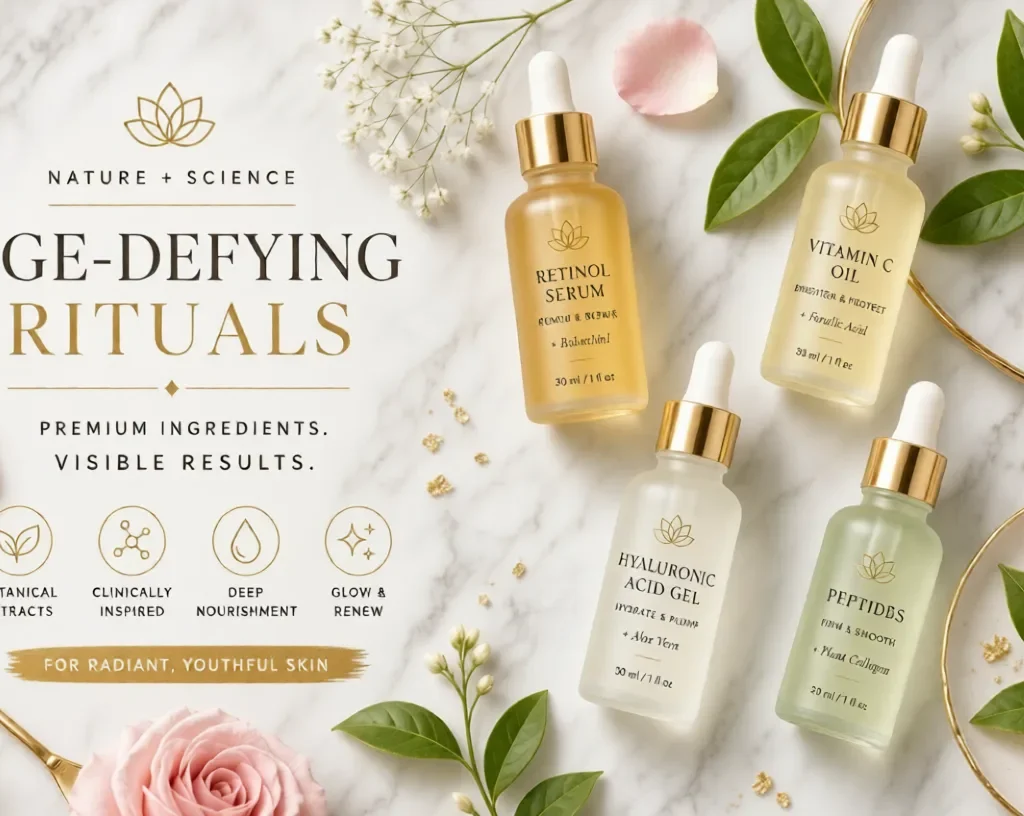
Retinoids These come from vitamin A and are one of the most studied ingredients in skincare. They speed up cell turnover and boost collagen production. Retinoids can help with fine lines, rough texture, and dark spots.
Realistic timeline: most people need 8 to 12 weeks before seeing a real difference, and results build slowly after that. Common mistake: using too much, too often, right away. This usually leads to redness and peeling instead of faster results. Start slow, a few nights a week, and build up.
Vitamin C A well known antioxidant that helps protect skin from daily damage caused by sun and pollution, and can gradually brighten dull or uneven skin tone.
It works best in the morning, under sunscreen. It’s not a quick fix. Visible brightening usually takes several weeks of steady use. People with sensitive skin sometimes need a gentler formula to avoid irritation.
Broad Spectrum Sunscreen If you only add one thing to your routine, dermatologists will almost always say this one. Sunscreen doesn’t just prevent sunburn. It’s the single biggest thing you can do to slow visible skin aging, because it stops new damage from happening.
The catch is consistency. Sunscreen only works if you actually wear it, every day, rain or shine, and reapply during long outdoor hours. Most people underestimate how often they skip it.
Niacinamide A form of vitamin B3 that helps calm irritation, support the skin barrier, and even out tone. It’s gentle enough for most skin types and works well alongside other actives like retinoids.
Peptides Small chains of amino acids that may help signal skin to produce more collagen. Evidence is promising but still developing compared to retinoids. Peptides tend to be gentler, which makes them a reasonable option for people who can’t tolerate stronger actives.
Alpha Hydroxy Acids (AHAs) Ingredients like glycolic or lactic acid gently exfoliate the surface of the skin, helping with texture, dullness, and mild sun damage. Overuse can cause dryness or sensitivity, so more isn’t better here.
Hyaluronic Acid Not an anti-aging ingredient in the collagen boosting sense, but it holds water in the skin, which plumps it up temporarily and makes fine lines less visible. Good for hydration, not a replacement for the ingredients above.
Azelaic Acid Often used for redness, mild breakouts, and uneven skin tone. It’s gentler than many other actives, which makes it a good option for sensitive or reactive skin.
For a closer look at ingredients dermatologists recommend, this Today.com roundup covers several expert picks worth understanding before you shop.
3. The Real Results Test Of Anti-Aging Ingredients
Here’s something worth being honest about: no cream reverses aging. What these ingredients can do is improve the appearance of skin, things like texture, tone, and fine lines. That’s different from turning back your biological clock.
Marketing language often blurs this line. Words like “erase wrinkles” or “reverse aging” sound exciting, but they’re not medically accurate. Real, evidence based skincare works slowly and produces visible, but modest, improvement. Expecting a dramatic transformation in two weeks usually leads to disappointment, or to skin irritation from overdoing it.
4. The Skincare Mistake Almost Everyone Makes
If there’s one mistake dermatologists mention again and again, it’s inconsistent sunscreen use. People buy expensive serums but skip sunscreen on cloudy days or when they’re staying “mostly indoors.”
A close second: introducing too many active ingredients at once. Starting retinoids, vitamin C, and an exfoliating acid all in the same week is a common way to end up with red, irritated skin. Add one new active at a time, wait a few weeks, and watch how your skin responds.
5. Case Study: The 90 Day Skin Experiment Of Anti-Aging Ingredients
The following is a fictional, composite case study created for illustration purposes. It does not describe a real patient, and results shown are not guaranteed for any individual.
Meet “Priya,” a 40 year old marketing professional. She noticed uneven pigmentation, some dullness, and fine lines starting to form around her eyes. Rather than buying ten new products, she made a few focused changes.
Weeks 1 to 4: Daily broad spectrum sunscreen, a gentle cleanser, and a basic moisturizer. She added a low strength retinoid three nights a week. Early on, she noticed mild dryness and a bit of flaking, which is common.
Weeks 5 to 8: Her skin adjusted. The flaking stopped. She added vitamin C in the morning. Texture started to feel slightly smoother, though pigmentation hadn’t changed much yet.
Weeks 9 to 12: Dark spots looked a little less noticeable. Skin appeared more even and slightly more radiant. Fine lines around her eyes hadn’t disappeared, but looked softer.
Priya’s story isn’t a miracle transformation. It reflects what’s realistic: gradual, modest improvement with consistent habits, not overnight change.
6. The Hidden Truth About Youthful Skin & Anti-Aging Ingredients
Here’s what doesn’t get said enough: youthful looking skin isn’t only about which product you buy. It’s shaped by daily habits that have nothing to do with a shopping cart.
Sleep matters, because skin repairs itself overnight. Not smoking matters, since smoking accelerates collagen breakdown. Managing stress matters too, since chronic stress contributes to inflammation. Basic nutrition and staying hydrated support skin from the inside. And a healthy skin barrier, meaning skin that isn’t constantly irritated or over exfoliated, is what allows any of these ingredients to actually work.
Expensive products can’t outrun bad basics. Cheaper routines built on consistency often outperform expensive ones used sporadically.
7. When Skincare Should Become a Dermatology Conversation For Anti-Aging Ingredients
Most skin concerns are cosmetic and manageable at home. But certain signs deserve professional attention rather than another online purchase.
See a dermatologist if you notice a mole or spot that changes shape, size, or color, persistent irritation that doesn’t improve, sudden or severe pigmentation changes, or a reaction that seems more serious than typical dryness. A qualified dermatologist can assess your specific skin, medical history, and recommend a personalized plan, something no article can safely do for you.
Frequently Asked Questions
What are the most effective anti-aging skincare ingredients? Retinoids and sunscreen have the strongest evidence behind them, followed by vitamin C, niacinamide, and peptides.
Which ingredient is best for fine lines? Retinoids are generally considered the most well studied option for improving the appearance of fine lines over time.
Can vitamin C really improve skin appearance? Yes, with consistent use over weeks, it can help brighten tone and offer some protection against daily environmental damage.
Is sunscreen more important than expensive anti-aging products? For most dermatologists, yes. Sunscreen prevents new damage, which matters more long term than any single treatment product.
At what age should someone start an anti-aging skincare routine? There’s no fixed age. Sunscreen and basic skin care are useful at any age, while stronger actives like retinoids are often introduced later, depending on skin needs.
Can too many active ingredients damage the skin barrier? Yes. Introducing several strong actives at once is a common cause of irritation and barrier damage. Add one at a time.
How long does it take to see skincare results? Most ingredients need 8 to 12 weeks of consistent use before visible change appears. Some take longer.
Should retinoids be used by everyone? No. Pregnant individuals and people with certain skin conditions should consult a dermatologist first, since retinoids aren’t suitable for every situation.
Conclusion
Go back to that mirror moment. The line, the dullness, the slower bounce back after a rough night. None of that means something is wrong with you. It means your skin has been quietly aging the way all skin does, shaped by collagen loss, sun exposure, and time.
Youthful looking skin isn’t about chasing a miracle in a bottle. It’s about understanding what’s really happening beneath the surface, protecting your skin daily, choosing ingredients that actual evidence supports, and giving the process the time it genuinely needs.
Before buying anything new, take a look at your current routine. Are you wearing sunscreen every day? Are you overloading your skin with too many products at once? Sometimes the most useful next step isn’t a purchase. It’s a pause, and a plan.