
The Wellness Mystery Nobody Talks About
Nutritional Psychiatry Gaps :In 2017, a team of Australian researchers led by Professor Felice Jacka at Deakin University published something that quietly unsettled a lot of assumptions about depression treatment. Their study, known as the SMILES trial, took adults with moderate to severe depression, most of whom were already receiving standard care such as therapy or medication, and asked a simple question. What happens if a clinical dietitian sits down with them for seven sessions and helps them eat better?
No new drug. No intensive therapy protocol. Just food, taught patiently, over twelve weeks.
The results, published in BMC Medicine, showed a significantly greater reduction in depression symptoms among the group that received dietary support compared with a social support control group. About a third of the dietary intervention group met criteria for remission, several times the rate seen in the control group.
That finding should not have been surprising. And yet, for most people building a wellness plan today, food and mood still live in separate boxes. Exercise gets a plan. Sleep gets a plan. Stress gets an app. Nutrition, when it shows up at all, is treated as a matter of waistlines rather than wellbeing.
This is where the mystery begins. If the connection between what we eat and how we feel is real enough to be measured in a randomized controlled trial, why does it remain so absent from the wellness plans most of us actually follow? The answer lives in a set of nutritional psychiatry gaps that researchers, clinicians, and everyday wellness culture have not yet closed, gaps in evidence, personalization, access, and everyday practice that this article will examine one by one.
Table of Contents
What Is Nutritional Psychiatry?
Nutritional psychiatry is an emerging field that studies how dietary patterns, individual nutrients, and the gut microbiome relate to mental health conditions such as depression and anxiety. It sits at the intersection of psychiatry, nutrition science, immunology, and microbiology.
The core idea is not that food replaces treatment. It is that diet is a modifiable factor, alongside sleep, movement, and stress, that may influence mood, resilience, and even how the brain responds to existing therapies. Harvard Health has described this relationship through the gut brain axis, the two way communication system between the digestive tract and the central nervous system, connected in part through the vagus nerve.
Understanding nutritional psychiatry means holding two truths at once. The evidence is genuinely promising. And it is still incomplete in ways that matter for anyone trying to build a real wellness plan. Recognizing the nutritional psychiatry gaps behind that incompleteness is the first step toward closing them.
7 Nutritional Psychiatry Gaps
1. Evidence Versus Popular Claims
Social media wellness culture has raced far ahead of the science. Claims that a specific supplement or elimination diet can cure anxiety are common online and rarely supported by rigorous trials. The SMILES trial and similar studies show promise for structured dietary patterns like the Mediterranean diet, not for miracle ingredients. This gap between what circulates online and what has actually been tested is one of the clearest nutritional psychiatry gaps facing the public.
2. Individual Differences
Depression and anxiety are not uniform conditions, and neither are people’s bodies. Genetics, existing health conditions, medications, gut microbiome composition, and life circumstances all shape how someone might respond to dietary change. A pattern that helped participants in a controlled trial will not necessarily help every reader in the same way.
3. Lack of Personalization
Most wellness plans, whether from an app or a magazine article, offer generalized advice. Few incorporate a person’s specific mental health history, nutrient status, or relationship with food. Personalized nutrition is still a young field, and personalized nutrition for mental wellbeing is younger still.
4. Limited Clinical Integration
Despite encouraging trial data, dietary counseling is rarely a standard part of psychiatric or psychological treatment. Most mental health providers receive little formal training in nutrition, and most dietitians receive limited training in mental health conditions. The result is a structural gap where two relevant fields rarely collaborate directly in a patient’s care.
5. Access and Affordability
A twelve week program with a qualified clinical dietitian, of the kind used in the SMILES trial, is not equally available to everyone. Cost, insurance coverage, geographic access to specialists, and time all shape who can realistically act on nutritional psychiatry findings. A wellness plan that assumes unlimited access to fresh food and professional guidance overlooks the reality many people live in.
6. Long Term Evidence Limitations
Many nutritional psychiatry studies, including SMILES, are relatively short in duration and modest in size. Researchers themselves have called for larger, longer trials before treating dietary intervention as a mainstream, standalone treatment. Emerging evidence is encouraging, but it is not yet the same as established, long term proof at scale.
7. The Gap Between Research and Everyday Wellness Plans
Perhaps the most practical gap is the simplest one. Even where solid research exists, it rarely makes its way into the wellness plans people actually use each day. Fitness apps track steps and sleep cycles in detail while treating meals as an afterthought or a calorie count. The translation from peer reviewed journal to daily habit has been slow and inconsistent.
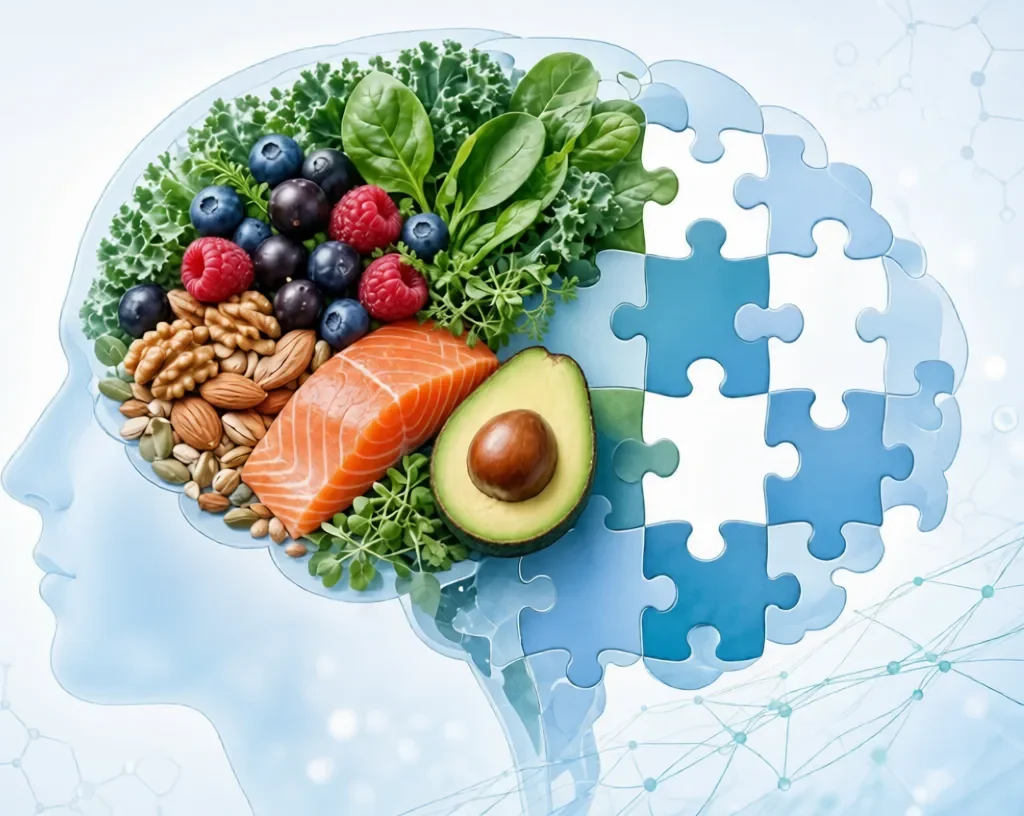
Why Wellness Plans Often Miss Nutritional Psychiatry Gaps
Most commercial wellness plans were built around measurable, trackable behaviors: steps taken, hours slept, minutes meditated. Nutrition is harder to quantify in a way that feels motivating, and mental wellbeing is harder still. So the two get separated, or nutrition gets reduced to weight management, stripped of its connection to mood, cognition, and emotional resilience.
This is not necessarily intentional neglect. It reflects how wellness products are usually designed by fitness or productivity teams rather than clinicians who understand nutritional psychiatry. The frustrating result is a plan that looks thorough while quietly leaving out one of the more evidence supported levers available.
The Brain Gut Connection
The gut is sometimes called the body’s second brain, and for good reason. It contains its own extensive network of neurons and produces a significant portion of the body’s serotonin. According to Harvard Health, disruption in the balance of gut bacteria has been linked to conditions including depression and anxiety, and the vagus nerve provides a direct anatomical pathway of communication between gut and brain.
Diet shapes the gut microbiome, which in turn appears to influence inflammation, neurotransmitter activity, and stress signaling. This does not mean any single food fixes mood. It means the food we eat regularly is one of the inputs the brain is constantly responding to, alongside sleep, movement, relationships, and genetics.
Case Study: When the Plan Looked Complete
Consider the participants in the SMILES trial before the study began. Many were already following what most people would call a reasonable approach to depression, engaging with therapy, taking prescribed medication, attending appointments. On paper, their care looked complete.
What the trial revealed was that adding structured dietary support, delivered by a trained professional rather than a generic diet sheet, produced a measurably greater improvement in depression symptoms than social support alone. The missing piece was not effort or willpower. It was a systematic gap in how their wellness and treatment plans were structured.
This is precisely the pattern nutritional psychiatry keeps surfacing: care that looks thorough by conventional standards, with a specific, testable, actionable nutritional psychiatry gap hiding in plain sight.
How to Build a Smarter Wellness Plan
A wellness plan that takes nutritional psychiatry gaps seriously does not need to be complicated. It needs to be honest about what is currently missing, and it needs to treat closing those gaps as an ongoing process rather than a one time fix.
- Prioritize balanced nutrition built around whole foods, vegetables, quality protein, and healthy fats rather than restrictive rules
- Keep meals regular enough to support stable energy and mood rather than skipping meals under stress
- Maintain adequate hydration, since even mild dehydration can affect concentration and mood
- Protect consistent sleep, which interacts closely with both appetite regulation and emotional resilience
- Include regular physical activity, which has its own independent evidence base for mental wellbeing
- Build active stress management practices rather than treating stress as background noise
- Maintain social connection, a factor repeatedly linked to mental health outcomes
- Seek professional guidance, from a doctor, registered dietitian, or mental health provider, when symptoms are significant or persistent
- Treat any dietary change as one part of a broader plan, never a replacement for appropriate mental health treatment
None of this promises a cure. It reflects a wellness plan that recognizes food as one meaningful, evidence aware piece of a larger picture.
What Research Still Cannot Tell Us
Honesty about uncertainty is part of responsible wellness communication. Researchers still cannot say precisely which dietary patterns work best for which individuals, how long benefits last, or how dietary intervention compares directly with established treatments across large, diverse populations. Much of the strongest evidence, including SMILES, comes from relatively small trials that require replication.
Nutritional psychiatry is a genuinely promising field, not a settled one. Readers deserve to know the difference.
The Future of Personalized Wellness
Researchers in the field, including those affiliated with the International Society for Nutritional Psychiatry Research, have called for larger trials, better integration between dietitians and mental health providers, and more attention to individual variation, including genetics and the microbiome. As personalized nutrition tools mature, wellness plans may eventually be able to account for a person’s specific biology rather than offering one size fits all advice.
For now, the most responsible approach is a wellness plan built on established principles, informed by emerging research, and open about what remains unknown.
FAQ( Nutritional Psychiatry Gaps )
What are nutritional psychiatry gaps? They are the current limitations in research, clinical practice, personalization, and public awareness that prevent nutrition from being fully integrated into mental health care and everyday wellness plans.
Is nutritional psychiatry backed by real research? Yes. Trials such as the SMILES study, published in BMC Medicine in 2017, found that structured dietary support led to significantly greater improvement in depression symptoms compared with a control group. The field is still developing, and more large scale research is needed.
Can diet replace therapy or medication for depression? No. Current evidence supports diet as a complementary, adjunctive factor alongside standard mental health treatment, not a replacement for therapy or prescribed medication.
What is the gut brain connection? It refers to the two way communication system between the digestive tract and the central nervous system, involving the vagus nerve, the immune system, and the gut microbiome, which together may influence mood and cognition.
Why do most wellness plans overlook nutrition and mental health together? Many wellness products are built around easily trackable metrics like steps or sleep hours, and are often designed without direct input from professionals trained in nutritional psychiatry, leaving food and mood treated as separate categories.
How can I start building nutrition into my own wellness plan? Begin with consistent, balanced meals, adequate hydration, and regular sleep and movement, then involve a doctor or registered dietitian if you are managing a diagnosed mental health condition, so any dietary change fits safely alongside your existing care.
Is personalized nutrition for mental health available yet? It is still an emerging area. Individual factors like genetics, gut microbiome composition, and existing health conditions are known to matter, but tools for truly personalized recommendations are early in development.
Conclusion
The participants in the SMILES trial were not lacking discipline or awareness. Their care looked complete because it followed the conventional shape of treatment. What was missing was structural, a gap in how food and mood had been separated by habit rather than by evidence.
A wellness plan is not complete simply because it includes exercise, sleep, and diet advice as separate checkboxes. The deeper work is in recognizing where nutrition, mental wellbeing, individual biology, access, and scientific evidence actually intersect, and building a plan honest enough to work within real uncertainty rather than around it.
If your own wellness plan has never asked how your meals relate to your mood, that is worth examining, ideally with a qualified professional who can help you personalize the answer. KritiInfo.com will keep tracking this evolving research so you can build a wellness plan grounded in evidence, not trends.
1 thought on “How 7 Nutritional Psychiatry Gaps Undermine Wellness Plans”