

At 7:40 p.m., the kitchen is noisy. Nine-year-old Aarav has not started homework, his younger sister is crying over a broken crayon, and their mother has asked the same question three times: “Why is your school bag still unpacked?” Aarav shouts, “You always blame me!” The room feels tense. Everyone wants cooperation, but nobody feels heard.
This is a common child management challenge: adults need structure, while children need respect, connection, and age-appropriate independence. The solution is not stricter control. It is thoughtful leadership at home and school.
That is where Henri Fayol’s 14 Core Principles can help. Fayol created his 14 principles for managing organizations, not children. Still, when adapted carefully, they offer parents and teachers a useful lens for creating calm routines, fair boundaries, teamwork, and responsibility. Modern child development knowledge must always come first: children learn best through warm relationships, predictable routines, clear expectations, and discipline that teaches rather than shames.
Table of Contents
What Are Henri Fayol’s 14 Core Principles?
Henri Fayol was a French mining engineer and executive. In General and Industrial Management, first published in 1916, he described 14 principles intended to improve how organizations were planned, organized, and led.
His ideas include dividing work sensibly, matching authority with responsibility, maintaining discipline, giving clear direction, treating people fairly, encouraging initiative, and building team spirit.
These principles were designed for workplaces. Children are not employees, and families and classrooms are not factories. But many management ideas translate well when adults use them to create safety, consistency, and growth rather than obedience for its own sake.
The 14 Principles of Child Management
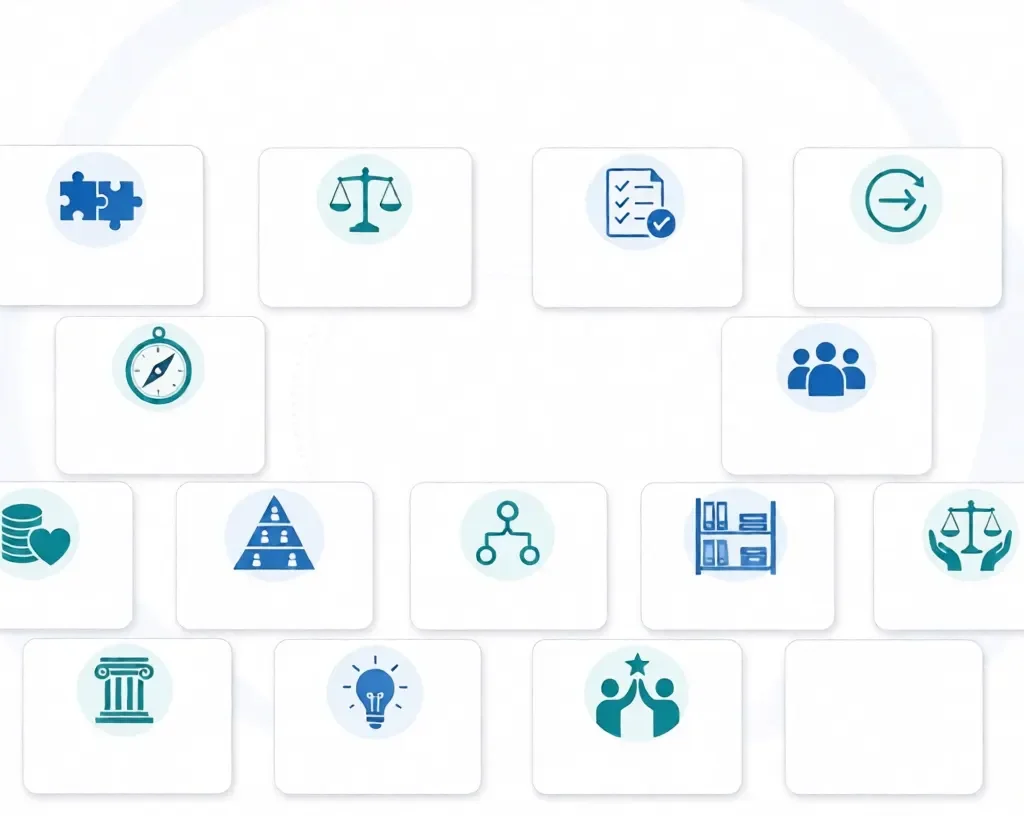
The 14 principles of child management below adapt Fayol’s ideas to the real needs of children.
1. Division of Work
In management, dividing work means assigning suitable tasks to suitable people. At home or school, it means giving children responsibilities they can realistically handle.
A five-year-old can put toys in a basket. A ten-year-old can pack part of their school bag. A teenager can plan their own study schedule with adult support. Age-appropriate tasks build competence and reduce the feeling that adults must do everything.
2. Authority and Responsibility
Fayol linked authority with responsibility: the right to direct should come with accountability.
For children, this means adults provide guidance and boundaries, while children take responsibility for manageable choices. A parent may decide that screens go off at 8 p.m., while the child chooses whether to read, draw, or help prepare tomorrow’s clothes afterward.
3. Discipline
Fayol saw discipline as clear agreements and fair consequences. In child management, discipline should mean teaching, not punishment.
UNICEF describes positive discipline as setting expectations around behaviour while building a healthy relationship with the child. Instead of “You are so careless,” try: “The rule is that toys go back in the box before dinner. Let’s do it together today, and tomorrow you can try independently.”
4. Unity of Command
In Fayol’s model, a person should receive directions from one superior to avoid confusion.
Children need something similar: consistent messages from the adults caring for them. If one parent says bedtime is 9 p.m. and another says 10 p.m., the child may test the inconsistency. Adults should discuss rules privately and present a united, respectful approach.
5. Unity of Direction
Fayol argued that activities with the same goal should follow one plan.
At home, this could mean one shared morning routine: wake up, brush teeth, breakfast, pack bag, leave. At school, it could mean teachers, parents, and counsellors agreeing on the same support plan for a child who struggles with attention or anxiety.
6. General Interest First
Fayol believed individual interests should not override the common good. With children, this principle needs balance.
A child’s feelings matter, but so do the needs of siblings, classmates, and the family. For example, a child may want to play loudly while a sibling studies. The goal is not to silence the child, but to teach: “Your play matters. Quiet time matters too. Let’s find a solution that respects both.”
7. Fair Remuneration
In workplaces, fair remuneration means reasonable pay. For children, it means meaningful recognition—not bribes or rewards for every small action.
Praise effort and progress specifically: “You waited patiently while I finished the call,” or “You kept trying even when the maths problem was hard.” UNICEF recommends noticing and praising positive behaviour as part of positive discipline.
8. Centralization
Centralization refers to how much decision-making power stays with leaders. In child management, adults should retain decisions related to safety, health, and major boundaries.
However, children should have increasing decision-making power as they mature. A young child may choose between two healthy snacks; an older child may help decide weekend activities, study methods, or how to repair a friendship.
9. Scalar Chain
Fayol’s scalar chain is the clear line of authority from top to bottom. In a family or school, this should not become a rigid hierarchy where children are never allowed to speak.
Instead, create respectful communication channels. A child should know whom to approach when they feel unsafe, confused, or treated unfairly. Teachers can also ensure parents receive clear, timely communication rather than mixed messages.
10. Order
Fayol’s principle of order means “a place for everything and everything in its place.”
For children, order creates predictability. A labelled homework shelf, a consistent bedtime routine, and a visible weekly schedule reduce daily conflict. Predictable routines, warmth, and clear household rules are also highlighted by the CDC as effective parenting practices.
11. Equity
Equity means kindness and justice. For children, this is essential.
Fair does not always mean identical. A younger child may need more help with bedtime, while an older child may have more freedom. Explain differences calmly: “You both matter. Your needs are different right now.”
12. Stability of Personnel
Fayol valued stability in staffing so people could build trust and continuity. Children benefit from the same stability.
Frequent changes in caregivers, teachers, or rules can make children feel insecure. When change is unavoidable, prepare the child, maintain familiar routines where possible, and reassure them that trusted adults remain available.
13. Initiative
Fayol encouraged initiative and energy. This is one of the most valuable principles for raising capable children.
Let children propose solutions. If a child forgets homework, ask, “What could help you remember tomorrow?” rather than immediately taking over. Initiative grows when children are allowed to try, make small mistakes, and learn from them.
14. Team Spirit
Fayol called this esprit de corps: a spirit of teamwork.
Families and classrooms thrive when children feel they belong. Use “we” language: “Our family cleans up after dinner,” or “Our class helps everyone feel safe.” Team spirit does not mean forced harmony; it means teaching children that their actions affect others and that cooperation is valuable.
Traditional Management vs Respectful Child Management
| Traditional management approach | Modern respectful child management |
|---|---|
| Focuses on obedience and control | Focuses on guidance, connection, and self-regulation |
| Uses fear, punishment, or shame | Uses clear expectations, empathy, and calm consequences |
| Adults make every decision | Adults provide safety while children gain age-appropriate choices |
| Mistakes are treated as defiance | Mistakes are treated as learning opportunities |
| One-way communication | Listening, validation, and collaborative problem-solving |
| Success means compliance | Success includes confidence, responsibility, and healthy relationships |
The difference matters. Positive discipline aims to prevent behaviour problems by teaching appropriate behaviour through routines, understanding, and support. It is firm, but it is also kind.
A Simple CARE Framework
Parents and teachers can use the CARE framework to apply these ideas immediately:
- Clarify: State the expectation simply. “Homework begins at 6 p.m.”
- Allow choice: Offer acceptable options. “Would you like to start with reading or maths?”
- Respond calmly: Acknowledge feelings before correcting behaviour. “You are frustrated. Let’s take three breaths, then begin.”
- Evaluate together: Afterward, ask what worked and what could improve tomorrow.
This framework uses Fayol’s structure without turning childhood into a workplace.
Illustrative Example: The Homework Battle
Return to Aarav. Instead of repeating commands, his mother pauses and says, “You seem upset. I want homework done, and I also want you to feel respected.”
She clarifies the routine: homework starts at 6 p.m. She offers a choice: begin with the easiest subject or take a ten-minute movement break first. Aarav chooses the break, then starts with reading.
When he complains again, she does not argue. She says, “The expectation is to complete two pages tonight. You can decide the order. If you need help after ten minutes, I will sit with you.”
Later, they review the evening. Aarav admits the timer helped. His mother praises his effort, not just the result. The conflict becomes a lesson in planning, responsibility, and cooperation.
Benefits and Limitations
Fayol’s principles can help adults become more consistent, fair, and organized. They encourage clear roles, predictable routines, shared goals, and recognition of effort—all useful in raising responsible children.
But they have limits. Fayol’s model was created for industrial organizations, where hierarchy and efficiency were central. Children are developing human beings with emotions, developmental needs, and rights. A management lens should never justify harsh authority, emotional suppression, or punishment. The CDC emphasizes warmth, sensitivity, predictable responses, and discipline without harshness.
Use Fayol as a checklist for adult leadership, not as a child development formula.
Common Misconceptions
- “Child management means controlling children.” It means guiding children toward self-management.
- “Strict rules create disciplined children.” Consistency matters, but fear can damage trust and communication.
- “Fair treatment means identical treatment.” Fairness responds to each child’s age, needs, and circumstances.
- “Rewards must be material.” Attention, appreciation, extra responsibility, and quality time are often more meaningful.
- “Children should never question adults.” Respectful questions help children learn judgement, communication, and problem-solving.
FAQs
1. Can Fayol’s principles really help parents?
Yes, as a reflection tool. They help adults think about clarity, fairness, routines, and teamwork. They should be combined with modern, respectful child development practices.
2. What is the most important principle for children?
Equity and team spirit are especially important. Children need to feel safe, valued, and connected before they can cooperate consistently.
3. How do I discipline without punishment?
Set clear expectations, acknowledge feelings, offer choices, and use calm, related consequences. UNICEF recommends positive discipline that teaches children what to do rather than focusing only on punishment.
4. Should siblings receive the same rules?
Not always. Rules should be fair and developmentally appropriate. A teenager may have later bedtime privileges, while a younger child may need closer supervision.
5. How can teachers use these principles?
Teachers can create clear classroom routines, give students suitable responsibilities, communicate consistently with families, recognize effort, and involve students in solving classroom problems.
Conclusion
The 14 principles of child management are not a rulebook for controlling children. They are a practical way for parents and teachers to lead with clarity, fairness, patience, and purpose.
Start small. Choose one principle this week: create a predictable routine, give your child a meaningful responsibility, or replace one harsh reaction with a calm conversation. Over time, these small changes help children develop responsibility, confidence, empathy, and independence—the qualities that prepare them for a better future.