

The summer afternoon seemed entirely ordinary. Seven-year-old Leo had spent the warm hours chasing his sheepdog through the tall, sun-baked grass behind his family’s rural home. That evening, while washing his hair, his mother felt a tiny, hard bump right at the nape of his neck. Under the bathroom light, it looked like a tiny, greyish pebble, but a closer look revealed tiny legs. It was an embedded tick.
For most families, finding a tick brings a sigh of annoyance and a search for fine tweezers. In many regions, the chief concern might be Lyme disease. Yet across vast stretches of Eastern Europe, the Mediterranean, Central Asia, and Africa, a far rarer and much more aggressive pathogen lurks in specific tick populations: the virus responsible for Crimean-Congo Haemorrhagic fever (CCHF).
While CCHF sounds like a terrifying medical mystery, knowledge strips away panic. Understanding what this infection is, how it spreads, and how pediatric cases behave empowers parents to protect their children without keeping them locked indoors.
Table of Contents
What Is Crimean-Congo Haemorrhagic Fever?
Crimean-Congo Haemorrhagic fever is a severe viral disease caused by a Nairovirus (belonging to the family Nairoviridae). The condition takes its dual name from its history: first recognized clinically in Crimea in 1944, researchers discovered decades later that it was identical to an illness documented in the Congo basin in 1956.
The virus circulates within natural ecosystems involving wild vertebrates, livestock (such as cattle, sheep, and goats), and hard ticks, primarily those belonging to the genus Hyalomma.
[Infected Hyalomma Tick]
       │
       ├─► Bites Wild Animals / Livestock (Animals stay mostly asymptomatic)
       │
       ├─► Bites Humans directly (Primary infection route)
       │
       └─► Blood/Tissue Exposure (Secondary route: Slaughtering, clinical care)
For adults, Crimean-Congo Haemorrhagic fever carries a high potential fatality rate, historically ranging from 10% to 40% according to global public health registries like the World Health Organization (WHO).
In children, however, medical researchers have noted an interesting paradox: while pediatric cases can still turn dangerous, documented pediatric cohorts often present with milder or atypical symptoms compared to adults. Nevertheless, because children have delicate physiological reserves, rapid clinical assessment remains critical whenever this pathogen is suspected.
How the Virus Spreads: Vectors and Vulnerabilities
Children do not contract CCHF simply by being near an infected animal or playing in an ordinary city playground. Transmission requires specific exposure pathways:
1. The Bite of an Infected Hyalomma Tick
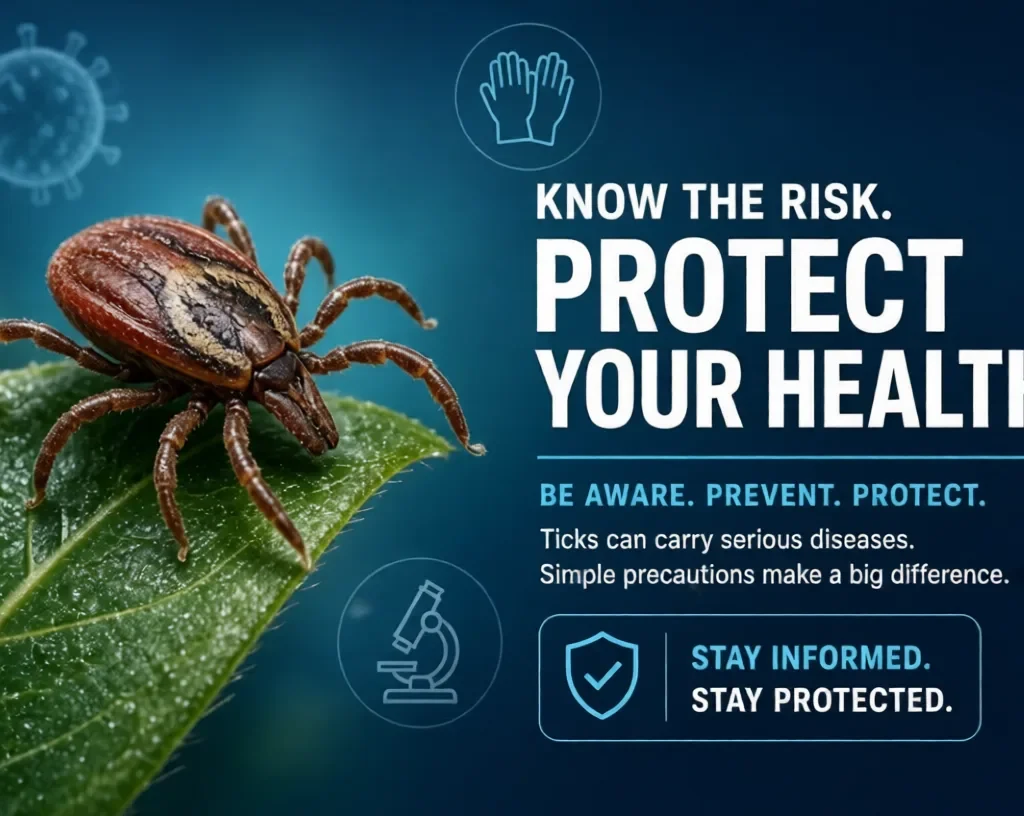
The primary vector is the Hyalomma tick, recognizable by its banded legs and large size. When an infected nymph or adult tick feeds on a human host, it transfers the virus via saliva. Because tick bites are painless, a child may host a feeding tick for hours or days without noticing.
2. Contact with Infected Animal Fluids or Tissues
Livestock—cattle, sheep, goats, and camels—act as amplifying hosts for the virus. While these animals rarely show clinical signs of illness, their blood, bodily fluids, and freshly harvested meat contain high viral loads during the viremic phase. Children who help with livestock slaughter, shearing, or processing fresh animal tissues on family farms face genuine risk.
3. Person-to-Person Transmission
Direct contact with the blood, secretions, or bodily fluids of an infected, symptomatic patient can transmit the virus. This transmission mode is most common in healthcare settings lacking strict barrier nursing, but it can occur within a household if caregivers nurse a bleeding family member without protective equipment.
Symptoms and Warning Signs: What Parents Must Watch For
The incubation period depends directly on the exposure route. Following a tick bite, symptoms usually emerge within 1 to 3 days (rarely up to 9 days). Following direct contact with infected blood or tissue, the incubation period typically lasts 5 to 6 days (up to a maximum of 13 days).
Timeline of Typical CCHF Progression:
[Day 0: Exposure] ──► [Days 1–3: Incubation] ──► [Days 4–7: Sudden High Fever, Flu-like Pain] ──► [Days 8+: Resolution OR Bleeding Phase]
Early Phase (Pre-Haemorrhagic)
The illness begins abruptly. A child may be active in the morning and suddenly incapacitated by afternoon:
- Sudden high fever and chills
- Severe headache and photophobia (pain when looking at light)
- Generalized muscle aches, joint pain, and severe back stiffness
- Nausea, persistent vomiting, abdominal pain, and non-bloody diarrhea
- Flushed face, bloodshot eyes (conjunctival injection), or flushed skin over the neck and chest
Progression (Haemorrhagic Phase)
In severe cases, typically starting between days three and five of illness, signs of vascular instability and bleeding appear:
- Unexplained petechiae (pinpoint red or purple spots under the skin)
- Large bruises (ecchymoses) appearing without injury
- Bleeding from the gums or persistent nosebleeds (epistaxis)
- Blood in vomit, urine, or stool
- Lethargy, confusion, agitation, or extreme drowsiness
When to Seek Immediate Emergency Care:
If a child develops a sudden high fever accompanied by unexplained bruising, bleeding gums, pinpoint red skin spots, or extreme lethargy within two weeks of visiting an endemic rural area, seek emergency medical care immediately. Inform the triage nurse right away about travel history and potential tick exposures.
Differentiating CCHF from Common Childhood Illnesses
A common challenge for parents and clinicians alike is that pediatric viral infections are frequent. A sudden fever in a child usually points to common culprits like influenza, adenoviruses, or enteroviruses.
Symptoms alone cannot diagnose or rule out Crimean-Congo Haemorrhagic fever. Reliable confirmation requires laboratory testing via Reverse Transcriptase-Polymerase Chain Reaction (RT-PCR) or Enzyme-Linked Immunosorbent Assay (ELISA).
| Feature | Common Childhood Viruses (e.g., Flu, Parvovirus) | Crimean-Congo Haemorrhagic Fever |
| Onset | Gradual to rapid, often with runny nose, cough, or sore throat | Abrupt high fever, muscle ache, photophobia; respiratory signs are rare |
| Geographic Context | Universal worldwide occurrence | Focal rural presence in specific endemic zones |
| Exposure History | Exposure to peers at school or daycare | Exposure to livestock, pastures, or Hyalomma ticks |
| Skin Signs | Raised maculopapular rash, “slapped cheek” redness, or hives | Flat petechiae (pinpoint spots that don’t blanch) and unprovoked bruising |
| Laboratory Profile | Normal platelet count or mild transient drop | Profound thrombocytopenia (critically low platelets) and elevated liver enzymes |
Action Plan: What to Do After a Suspected Exposure
Consider this hypothetical scenario:
Twelve-year-old Maya returns from helping her uncle tend cattle in a rural valley known for tick activity. Three days later, her parents spot an attached tick behind her knee. The following evening, Maya spikes a sudden fever of 39.5°C (103.1°F) accompanied by vomiting and muscle aches.
Here is the exact step-by-step protocol Maya’s parents should follow:
[1. Safe Tick Removal] ──► [2. Disinfect & Preserve] ──► [3. Seek Immediate Care] ──► [4. Disclose Exposure History]
- Remove the Tick Safely: Use fine-tipped tweezers to grasp the tick as close to the skin’s surface as possible. Pull upward with steady, even pressure. Do not twist or jerk the tick, as mouthparts can break off.
- Never Squeeze or Suffocate the Tick: Avoid old home remedies like applying petroleum jelly, alcohol, butter, or hot matches. Squeezing or irritating the tick triggers regurgitation of infected fluids directly into the child’s bloodstream.
- Cleanse and Save: Wash the bite site thoroughly with soap and water or an alcohol-based rub. Place the tick in a sealed container or baggie; if symptoms escalate, showing the tick to health authorities can speed up vector identification.
- Present the Exposure History: When arriving at the emergency department or clinic, immediately inform the staff: “My child has a high fever and was exposed to cattle and a tick bite in an endemic rural region three days ago.” This alert allows clinicians to implement barrier nursing protocols and draw blood for RT-PCR testing without delay.
Common Misconceptions About CCHF in Children
- Myth 1: “Every tick bite in an endemic area leads to severe bleeding disease.”Fact: Even in known regions, only a fraction of ticks carry the virus. Furthermore, a significant number of infected individuals experience mild or subclinical illness.
- Myth 2: “If my child drinks raw milk from an infected cow, they will get CCHF.”Fact: The virus is fragile and inactivated by standard pasteurization and cooking. While handling raw animal tissues poses a proven risk, casual consumption of pasteurized dairy products carries no threat.
- Myth 3: “A child will always bleed profusely if infected.”Fact: The term “haemorrhagic” refers to the severe end of the disease spectrum. Many pediatric cases present with flu-like symptoms and fever without overt bleeding, which makes clinical suspicion and travel history far more useful than waiting for skin bruises to appear.
- Myth 4: “Standard mosquito repellent protects fully against Hyalomma ticks.”Fact: While insect repellents containing DEET provide temporary defense, Hyalomma ticks are active hunters (ground-questing) that track hosts by vibration and warmth. Repellents reduce risk, but physical barriers and tick checks remain essential.
Prevention and Protection: Benefits and Practical Limits
Effective protection relies on layered defense rather than relying on any single measure.
       ▲  [Layer 3: Environmental Awareness] (Stay on cleared paths, avoid pastures)
      ───
     ▲ ▲  [Layer 2: Daily Tick Checks] (Inspect scalp, armpits, groin, behind knees)
    ─────
   ▲ ▲ ▲  [Layer 1: Protective Clothing & Repellents] (Tucked pants, DEET/Permethrin)
Layer 1: Protective Clothing and Chemical Repellents
- Action: Dress children in light-colored clothing so ticks are easily visible. Tuck trousers into socks and shirts into waistbands. Apply an age-appropriate repellent containing DEET (20% to 30%) or Picaridin to exposed skin, avoiding hands, eyes, and mouth. Treat clothing and gear with 0.5% permethrin.
- Benefits: Creates a mechanical and chemical barrier that stops ticks before they find bare skin.
- Limitations: Repellents wear off with sweat and swimming. Children often pull up sleeves or untuck shirts during rough play. Permethrin should never be applied directly to bare skin.
Layer 2: Thorough Daily Tick Inspections
- Action: Perform a head-to-toe body check immediately after returning from fields, woods, or livestock pens. Check common hiding spots: behind ears, inside the navel, under arms, around the waist, between legs, and behind knees.
- Benefits: Prompt removal within a few hours drastically cuts transmission risk for vector-borne microbes.
- Limitations: Immature tick stages (nymphs) can be as small as a poppy seed and blend into freckles or natural skin marks.
Layer 3: Livestock and Rural Safety Rules
- Action: In known endemic areas, keep children away from livestock slaughtering zones, raw hide preparation, and contact with fresh animal fluids.
- Benefits: Eliminates secondary high-viral-load exposure pathways.
- Limitations: In farming families, agricultural interactions are part of everyday life. Strict hand hygiene and parent supervision are required.
Medical Assessment and Management
There is currently no universally approved, widely available vaccine for CCHF for the general public, though research into candidate vaccines continues.
When a diagnosis is confirmed or strongly suspected, medical management focuses on:
- Supportive Intensive Care: Maintaining fluid and electrolyte balance, monitoring blood volume, and providing red blood cell or platelet transfusions as needed.
- Antiviral Therapy: The antiviral drug ribavirin has been used extensively in both oral and intravenous formulations for adult and pediatric CCHF patients. Evidence from observational studies shows the greatest therapeutic benefit when initiated within the first five days of symptoms, highlighting the vital need for early medical evaluation.
- Strict Barrier Isolation: Standard, contact, and droplet precautions protect nursing personnel and family members from secondary transmission during inpatient care.
Awareness does not mean sheltering children from the joys of rural living, hiking, and outdoor discovery. By understanding Hyalomma tick habitats, performing quick body checks, and reacting swiftly if a sudden fever strikes, parents can ensure their children explore the outdoors safely.
Frequently Asked Questions (FAQs)
What geographical regions are considered endemic for CCHF?
Crimean-Congo Haemorrhagic fever is endemic across Africa, the Balkans, the Middle East, Central Asia, and regions of southern and eastern Europe (including Turkey and parts of Spain). Families living in or traveling to rural agricultural zones in these areas should maintain vigilant tick bite prevention.
Can pets carry CCHF into our home?
Dogs, cats, and birds can bring attached Hyalomma ticks inside on their coats, creating an indirect bite risk for children. Routine veterinary anti-tick treatments help keep vector populations off domestic pets.
Is CCHF contagious through casual contact or coughing?
No. CCHF does not spread through casual contact, normal conversation, or light touch. Transmission requires contact with infectious blood, body fluids, or contaminated medical equipment.