
Climate Change :On the afternoon of July 14, 2021, the narrow streets of the Ahr Valley in western Germany looked entirely normal. Vineyards clung quietly to the steep rocky cliffs. The river Ahr ran peacefully through postcard towns like Schuld and Bad Neuenahr Ahrweiler, carrying its usual summer depth of barely one meter.
Up in the atmosphere, however, an atmospheric low pressure system named Bernd had stalled. Blocked between high pressure areas, it sat motionless over Western Europe like a sponge held over a bucket. The European Flood Awareness System had already issued severe weather alerts. Rainfall predictions crossed 150 liters per square meter in twenty four hours, a volume rarely recorded in modern German history.
By late evening, the ground could not swallow a single extra drop. Water rushed off saturated slopes into the narrow gorge.
In Schuld, electricity cut out around 8:00 PM. Mobile phone towers collapsed soon after. Sirens wailed briefly before short circuiting under the torrent. As night fell, the Ahr rose not by inches, but by meters per hour, swelling past eight meters and ripping away historic stone bridges. Families gathered in living rooms, assuming the water would level off as it had in past generations. That assumption proved fatal. Whole foundations buckled in minutes, carrying houses, cars, and gas tanks into the roaring dark.
By morning, more than 130 people in the Ahr Valley were dead. Over 180 perished across Germany.
The catastrophe stunned meteorologists and civic leaders across Europe. How did one of the most technologically advanced nations on Earth, equipped with cutting edge satellite monitoring and trained emergency teams, get caught off guard?
The answer exposes an urgent reality: historical records are no longer a dependable playbook. Extreme events are breaking historical boundaries, forcing us to ask how our changing environment is altering the hazards we face.
Table of Contents
What Actually Turns a Natural Hazard into a Disaster?
We often use the terms hazard and disaster interchangeably, but science draws a clean, vital line between them.
A hazard is an environmental process that holds the potential to cause harm: heavy rain, high wind, ground shaking, or extreme heat. A storm brewing over an uninhabited patch of the ocean is a hazard.
A disaster happens only when that hazard collides with a human population that is exposed, unprepared, and unable to cope with the shock.
Disaster analysts express this through a simple relationship:
$$\text{Disaster Risk} = \text{Hazard} \times \text{Exposure} \times \text{Vulnerability}$$
- Hazard: The physical event itself, such as floodwaters or storm surges.
- Exposure: Who and what stands directly in the danger zone, including homes, schools, hospitals, and power plants.
- Vulnerability: The structural, social, and economic weaknesses that leave people defenseless. A concrete home built on raised stilts with back up power faces the same floodwaters as an unreinforced brick hut in a low income settlement, but their vulnerability is worlds apart.
Nature generates hazards. Human systems, decisions, and development patterns turn those hazards into disasters.
Where Climate Change Fits and Where It Does Not
Public discussions often jump between two unhelpful extremes: claiming every bad storm is caused directly by human activities, or denying that any link exists at all.
Science points to a more nuanced reality:
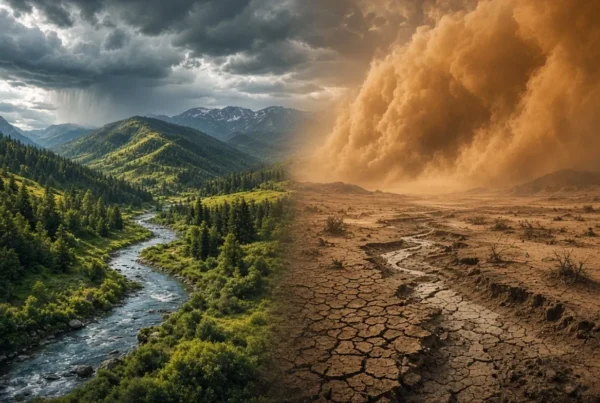
Climate change rarely creates disasters out of thin air. Instead, it alters the background physical conditions of our planet, changing the frequency, intensity, duration, and geographic footprint of specific weather hazards.
A warming atmosphere holds roughly 7 percent more moisture for every 1 degree Celsius increase in temperature, a fundamental rule of atmospheric physics known as the Clausius Clapeyron relationship. When heavy rain forms, the sky has substantially more water to drop.
Simultaneously, warmer ocean surface waters act as high octane fuel for tropical cyclones, allowing storms to intensify rapidly before making landfall. Shifts in the jet stream can cause weather patterns to stall over one place for days, turning a typical summer rainy spell into an overwhelming flood, or a routine warm stretch into a deadly, multi week heatwave.
Crucially, this influence does not apply to every hazard:
| Hazard Category | Influence of Climate Change | Primary Physical Mechanism |
| Extreme Heatwaves | Very High | Direct atmospheric warming, prolonged blocking weather patterns |
| Heavy Rainfall & Flash Floods | High | Increased atmospheric water vapor capacity |
| Agricultural Droughts | High | Elevated evaporation rates, shifting rain belts, early snowpack melt |
| Tropical Cyclones | Moderate to High | Warmer sea surfaces, rapid storm intensification, heavier rainfall |
| Wildfires | Moderate to High | Prolonged dry spells, desiccated forests, extended fire seasons |
| Earthquakes & Tsunamis | Negligible / None | Tectonic plate movements driven by deep Earth mantle dynamics |
When we talk about disaster risk today, we are studying how human vulnerability intersects with physical hazards that are moving outside historical baselines.
The Critical Difference: Climate Risk vs. Climate Change
To protect our communities, we must separate two distinct concepts:
- Climate change alone: The physical shift in global temperature, atmospheric greenhouse gas concentration, and seasonal weather patterns.
- Climate related risk: The real world likelihood of injury, death, hunger, and economic collapse when those physical shifts hit our society.
If a severe drought strikes an uninhabited desert, the physical event occurs, but the disaster risk is practically zero. If that same drought strikes an agricultural valley where farmers rely on depleted groundwater, have no crop insurance, and lack alternative income, the result is famine, displacement, and economic ruin.
Rising temperatures raise the stakes of the game, but the way we design our cities, allocate water, protect forests, and support vulnerable neighbors decides whether we endure or collapse.
Making Sense of the Numbers
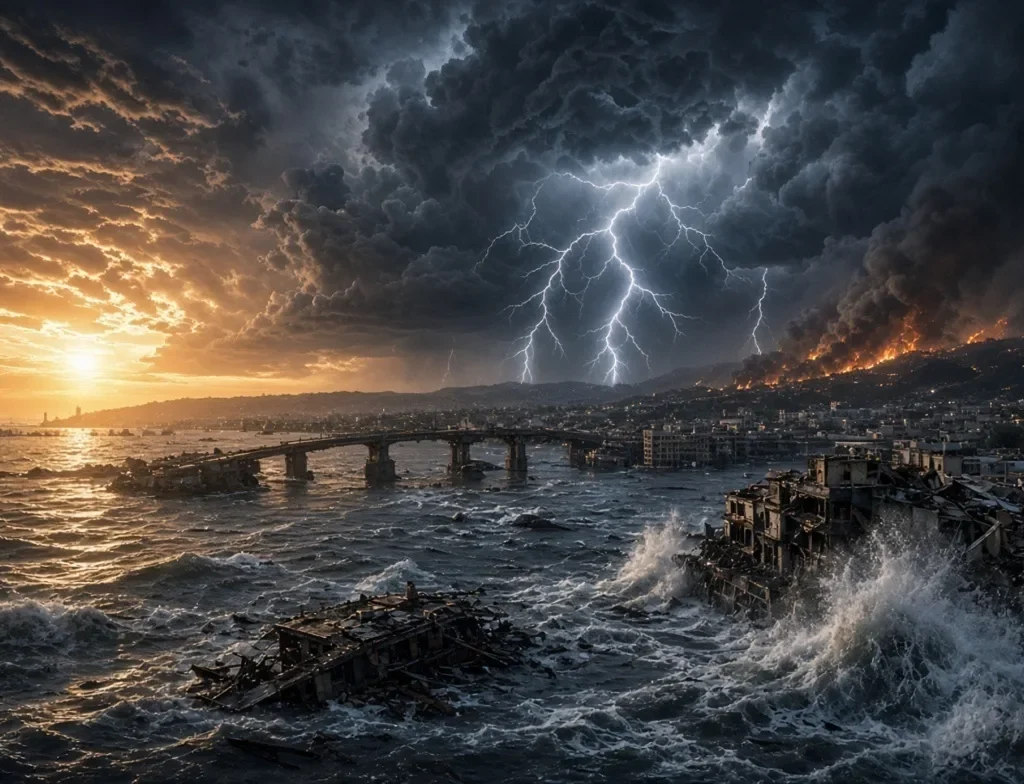
Global assessments provide clear data on this shift, but statistics only matter when we translate them into daily human realities:
- The World Meteorological Organization (WMO) documented that weather, climate, and water related hazards accounted for 50 percent of all recorded disasters between 1970 and 2019, causing 74 percent of all reported economic losses worldwide. For ordinary households, this means local insurance premiums are climbing, home repairs cost more, and tax dollars are increasingly diverted from schools and clinics into emergency repairs.
- The Intergovernmental Panel on Climate Change (IPCC) reports that roughly 3.3 to 3.6 billion people live in contexts that are highly vulnerable to climate impacts. That represents almost half of the human family living in places where a single severe storm or water shortage can wipe out a life’s work.
- The United Nations Office for Disaster Risk Reduction (UNDRR) highlights that while early warning systems have dramatically cut global fatalities over the past five decades, economic damages have multiplied by a factor of eight. We have become better at saving lives through forecasts, but our assets, highways, power grids, and homes remain dangerously exposed.
A Simple Framework for Real World Resilience
Disaster management should not be confined to academic manuals. Every family, business, and local council can organize its thinking around four practical stages:
[ Know the Risk ] → [ Prepare Early ] → [ Act Fast ] → [ Recover Smarter ]
- Know the Risk: Understand your specific surroundings. Are you located in a historic floodplain, a wildfire smoke corridor, or an urban heat island?
- Prepare Early: Build defenses before the sky turns gray. That means clearing storm drains, setting up backup emergency power, updating insurance, and keeping essential family records organized.
- Act Fast: When local officials issue a watch or evacuation warning, take it seriously. Delays of two hours can mean the difference between driving out calmly and swimming out through toxic water.
- Recover Smarter: Do not rebuild damaged property in the exact same vulnerable spot using the exact same weak materials. Upgrade structures to withstand the next event.
A Tale of Two Households: The Power of Readiness
Consider two families living on the same street in an inland river town. The weather bureau issues an orange level rainfall alert: eight inches of rain are forecast over thirty six hours.
Household A considers the forecast an inconvenience. They have lived there twenty years and have seen plenty of heavy rain. They keep their cars in the basement garage, leave outdoor furniture unsecured, and figure they will check the news again if the street starts to puddle. By 2:00 AM, flash runoff breaches the basement. Their vehicles are submerged, cutting off transport. The ground floor floods, ruining personal identification papers, medicines, and electronics. They escape to the roof in wet clothes, waiting hours for emergency rescue boats.
Household B takes the alert as an operational signal. Six hours before the storm hits, they park their vehicles on higher ground two blocks away. They move important documents, laptops, emergency medicines, and clean water supplies to the upper floor. They test their battery powered radio and charge all devices. When local authorities announce a voluntary evacuation at midnight, they lock their doors and drive to a relative’s house safely outside the valley.
Both families endured the exact same atmospheric hazard. Yet one suffered traumatic loss, while the other managed an orderly temporary disruption. Individual decisions do not solve every systemic crisis, but practical preparation drastically alters individual outcomes.
Why Nature Alone Does Not Cause Disasters
Disasters are not random punishments from nature. They are mirrors reflecting the quality of human governance, urban planning, and social solidarity.
When a city paves over wetlands to build luxury apartments, it destroys natural sponges that absorb storm runoff. When developers cut down hillside forests for new roads, they remove the root systems holding the soil, ensuring that the next heavy downpour triggers a devastating landslide. When low income workers can only afford housing near toxic industrial zones or on unzoned floodplains, inequality sets the stage for catastrophe.
Early warnings and engineering are vital, but environmental protection and fair urban planning are our primary shields. Conserving mangrove forests along coastlines absorbs wave energy far better than concrete seawalls alone. Protecting riverbanks allows waterways to spread out harmlessly into designated green parks instead of living rooms.
Resilience Across Society
Every corner of our communities plays a specific role in breaking the chain of disaster risk:
- Households: Maintain a simple emergency go bag with drinking water, dry food, flashlights, copies of identification, and life saving medications.
- Schools: Run realistic disaster drills and serve as climate safe emergency community shelters.
- Cities and Local Governments: Stop issuing construction permits on known floodplains. Keep drainage networks clear and expand urban tree canopies to lower extreme neighborhood temperatures.
- Farmers: Adopt diversified crop varieties that withstand dry periods and install drip irrigation systems that make every drop of water count.
- Businesses: Map supply chains to identify single point vulnerabilities and cross train staff for remote contingency work during crises.
- Elderly and Children: Establish neighborhood buddy networks to ensure those with limited mobility receive personal transport during rapid evacuations.
- Emergency Services: Integrate predictive meteorological models into their staging plans, placing rescue crews and equipment in place before roads wash out.
Evaluating Our Defense Tools: Strengths and Blind Spots
We possess more protective technology today than at any point in human history, but every tool comes with boundaries:
- Early Warning Systems: Satellites, radar, and smartphone alerts provide lifesaving lead time. However, if a community lacks reliable cell service, if warnings are delivered in bureaucratic jargon, or if residents have no safe route out, alerts accomplish little.
- Resilient Infrastructure: Constructing taller sea walls and reinforced stormwater tunnels protects valuable downtown centers. Yet hard engineering can produce a false sense of security, encouraging dangerous development right behind the barrier. Concrete barriers can also disrupt coastal marine ecosystems.
- Risk Mapping: High resolution computer maps pinpoint which streets will flood first. The limitation is political: local property owners and developers often lobby against publishing flood maps because they fear land values and insurance costs will change.
- Community Participation: Grassroots volunteer groups respond fast because they know their neighborhoods intimately. The limitation is funding: voluntary networks need sustained equipment, training, and logistical support from regional governments to stay effective.
One Dangerous Misconception: “It Was an Act of God”
The most dangerous myth surrounding disasters is that they are purely natural, unavoidable tragedies that humans can do nothing about.
Labeling an event an “unavoidable act of nature” lets poor planning off the hook. It excuses the municipality that ignored decades of drainage maintenance. It excuses developers who filled in flood plains for quick profits. It excuses leaders who underfunded emergency response teams.
Hazards are natural. An earthquake is a physical reality of the Earth’s crust. A storm is a natural part of atmospheric circulation. But living through a hazard without losing your home, your livelihood, or your family is a solvable challenge of human design, policy, and preparedness. Accepting the hazard is wisdom; accepting preventable destruction is neglect.
Practical Steps You Can Take This Week
You do not need to wait for national policies to begin building personal and community resilience:
- Locate Your Risk: Check your local government or disaster management website for regional hazard maps. Identify your home’s elevation relative to nearby water sources and determine your primary evacuation routes.
- Assemble an Emergency File: Keep digital and physical copies of passports, deeds, insurance policies, medical prescriptions, and family birth certificates in a water resistant, fire resistant pouch.
- Establish an Out of Town Contact: During local emergencies, local telephone lines often jam. Designate an out of town relative who can serve as a central communication link for separated family members.
- Store Basic Supplies: Keep at least three days worth of drinking water (one gallon per person per day), shelf stable food, a battery powered radio, a basic first aid kit, and an auxiliary phone power bank.
- Check on Your Neighbors: Know who on your street is elderly, lives alone, or relies on medical equipment requiring constant electricity. Resilience is a shared community effort, not an isolated household project.
The Path Forward
The tragedy in the Ahr Valley in 2021 proved that no amount of wealth or modern technology protects a community if its imagination remains stuck in the past. We can no longer build cities for yesterday’s weather.
Climate change has fundamentally shifted the baseline of environmental risk. It is taking ordinary natural hazards and raising their ceiling. But that reality is a call to action, not a cause for despair. By understanding how hazards, exposure, and human choices intersect, we gain the tools to safeguard our neighborhoods.
We cannot stop every storm from gathering, but we hold the power to decide what that storm encounters when it makes landfall: a fragile society caught off guard, or an aware, prepared, and resilient community ready to stand strong.