
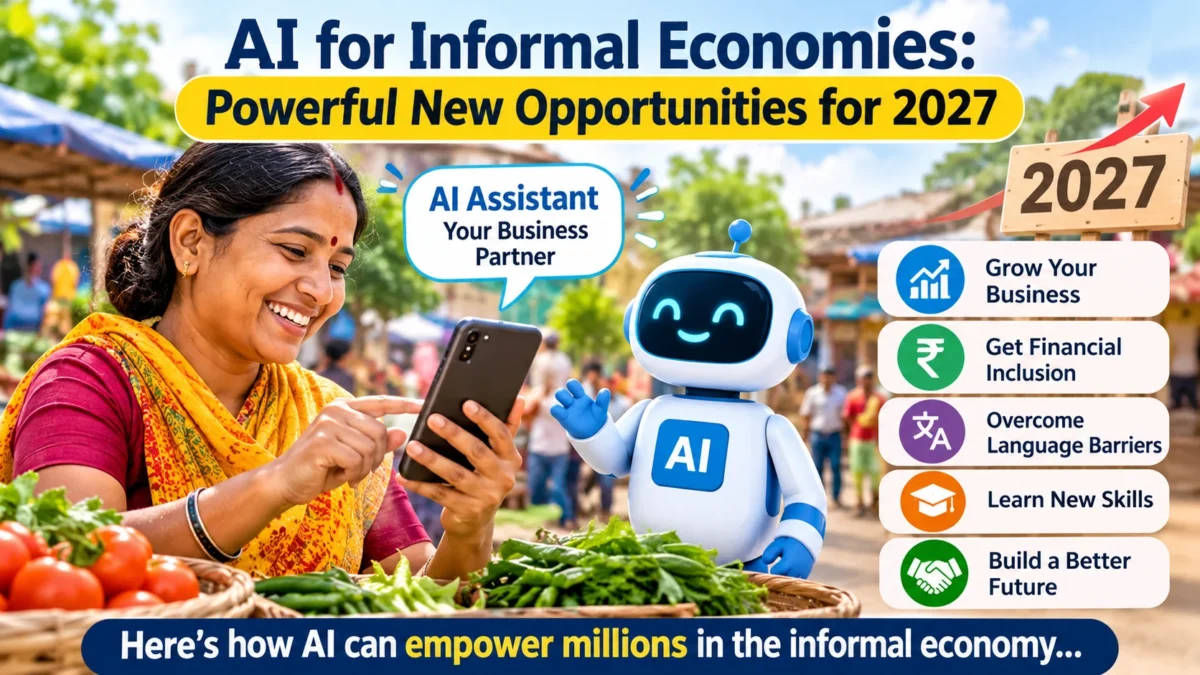
How artificial intelligence could help street vendors, small traders, farmers and millions of everyday workers build better businesses.
Introduction: A Small Business Meets a Big Idea
It is 5 a.m. in a small Indian town. Meena, a vegetable seller, is preparing her shop for the day.
She has several problems to solve. How many tomatoes should she buy? Which vegetables will sell quickly? How much money did she earn yesterday? Should she offer a discount before the vegetables become old?
She does everything herself. She has no accountant, no business manager and no expensive software.
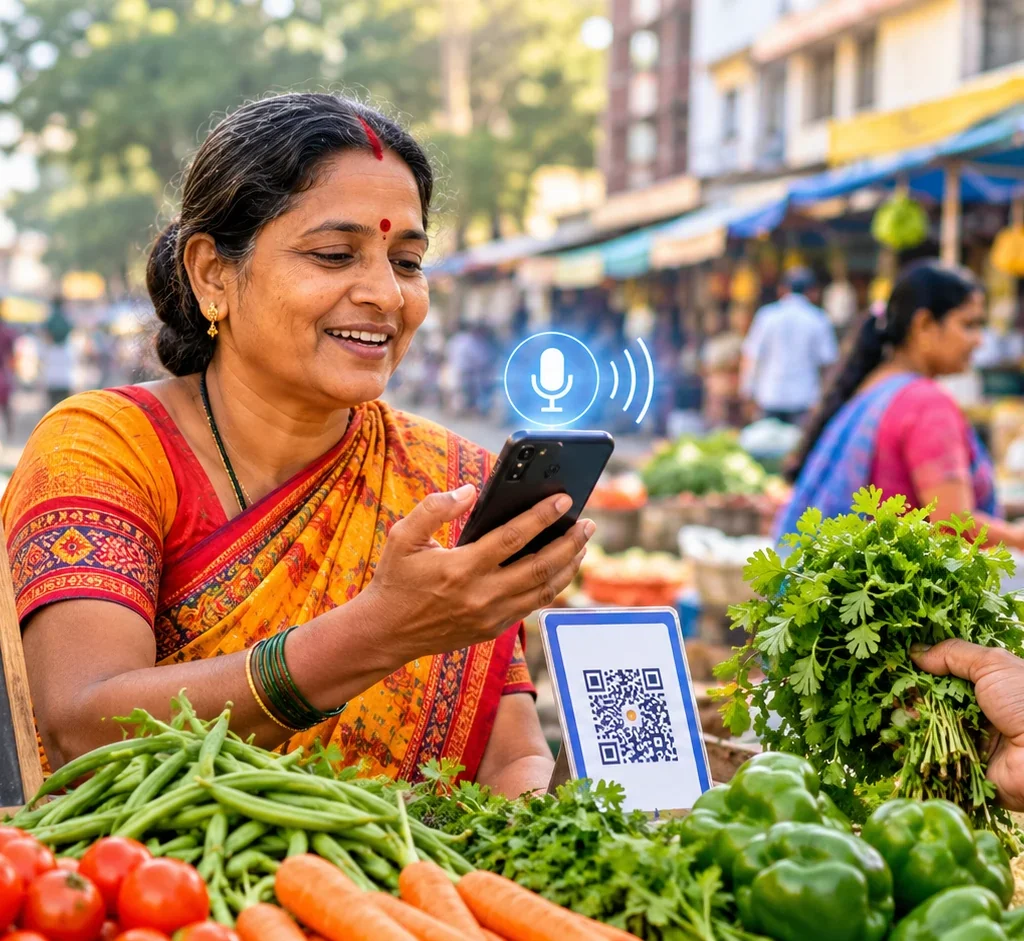
Now imagine that Meena has a simple AI assistant on her mobile phone. She speaks to it in Hindi. It helps her record sales, calculate profits and plan tomorrow’s purchases.
This is an example of how AI for informal economies could change everyday business life.
The informal economy includes millions of people who work outside many formal business systems. They include street vendors, farmers, tailors, domestic workers, repair workers and small shopkeepers.
These people are important to society. Yet many have limited access to banking, business training, technology and financial support.
Artificial intelligence (AI) could help close some of these gaps. But can it really make a difference by 2027?
The answer depends on how affordable, simple and trustworthy these tools become.
Table of Contents
1. What Makes Informal Economies Different?
An informal business is not automatically an illegal business. It may be a small activity that operates without some of the formal registration, employment protection or business records found in larger companies.
Think about a roadside tea seller. The seller may have regular customers, daily sales and a good income. However, there may be no proper record of daily expenses or monthly profit.
Common challenges include:
- Limited banking: Some workers cannot easily obtain affordable loans.
- Poor records: Sales and expenses may be written in notebooks or remembered.
- Unstable income: Earnings can change with weather, seasons and customer demand.
- Language barriers: Many digital tools are difficult to use in local languages.
- Limited training: Business owners may not know how to use modern technology.
- Lack of protection: Many workers have limited access to social security and workplace protection.
Traditional business software is often made for companies with computers, trained staff and regular internet access.
Informal workers need something different: simple tools that work on affordable phones and solve everyday problems.
2. How AI for Informal Economies Could Change 2027
AI does not always need a large computer or a costly machine. Some AI services can work through a mobile phone, voice messages or simple applications.
Here are seven useful possibilities.
A. Voice-based AI assistants
A worker may not know how to type a long message. But speaking is easy.
A street vendor could say:
“Today I sold vegetables worth ₹2,000. My purchase cost was ₹1,400.”
An AI assistant could organise these figures and calculate the difference.
This can save time and reduce the need for complicated bookkeeping.
B. Local-language translation
A small business owner may speak Hindi, Bengali, Bhojpuri or another local language.
AI translation tools can help them understand customer messages, write product descriptions and communicate with people who speak different languages.
This could help local businesses reach more customers.
C. Better stock planning
Buying too much stock can cause losses. Buying too little can mean losing customers.
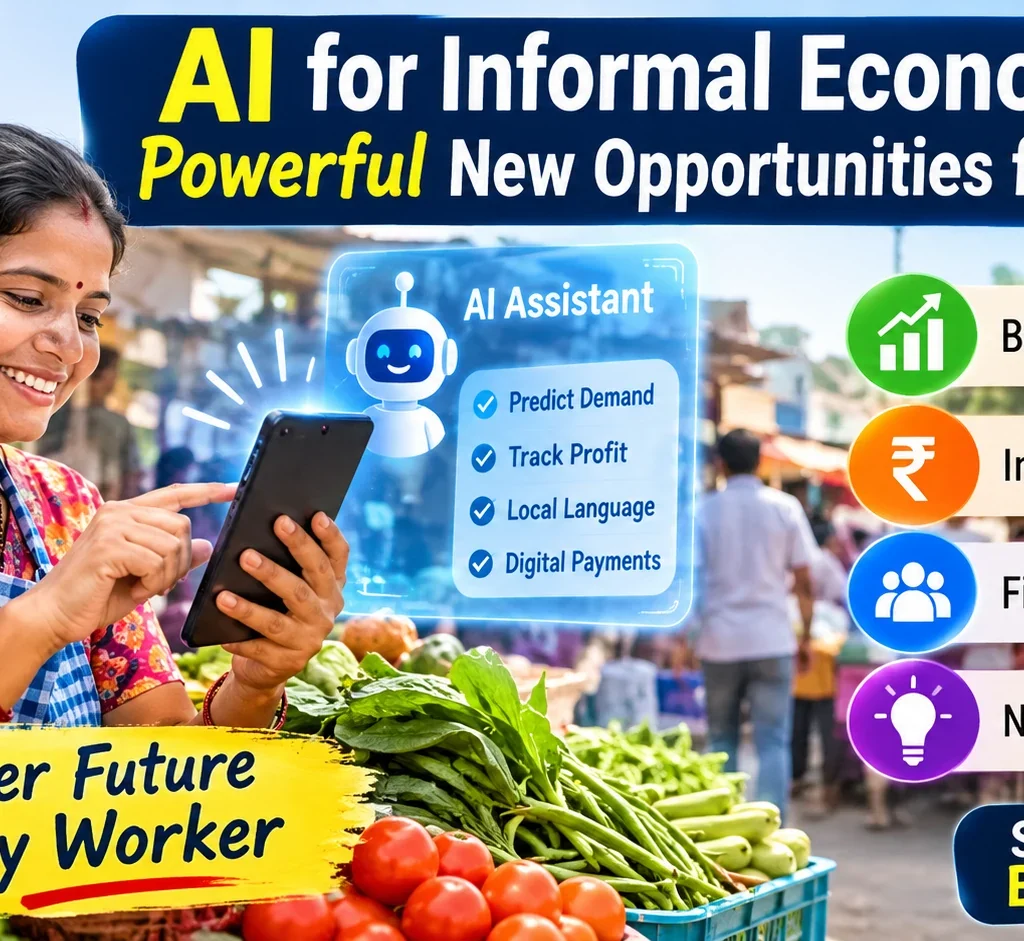
AI tools may study previous sales and help estimate future demand.
For example, a vegetable seller could use past sales and local weather information to plan purchases.
However, predictions are not always correct. Sudden rain, festivals and price changes can affect demand.
D. Simple bookkeeping
AI can help organise daily income, expenses, customer payments and outstanding amounts.
A tailor could record every order by voice instead of writing everything in a notebook.
This creates a clearer picture of business performance.
E. Financial inclusion
Financial inclusion means giving people fair access to useful financial services.
With proper consent, organised digital records may help small business owners explain their business activity when applying for financial services.
However, digital records do not guarantee a loan. Banks must still check income, repayment ability and other risks.
F. Affordable marketing
A home-based food seller may not have money to hire a marketing expert.
AI can help prepare:
- Product descriptions.
- Festival offers.
- Simple advertisements.
- Customer messages.
- Social media posts.
The business owner can then review and publish the content.
G. Learning new skills
AI can act as a simple teacher.
A small business owner can ask questions about pricing, customer service, saving money and business planning.
Learning becomes easier when explanations are available in familiar languages.
3. Six Real-Life Business Examples
The following are illustrative examples, not verified case studies.
1. A vegetable seller
A seller records daily purchases and sales. AI organises the information and shows which products sell quickly.
The seller can use this information to avoid buying too much stock.
2. A local tailor
A tailor receives many orders through phone calls and messages. An AI assistant helps organise customer names, measurements, delivery dates and design preferences.
This reduces confusion and missed orders.
3. A small farmer
A farmer asks an AI tool about crop diseases in a local language. The tool can explain possible causes and suggest questions to ask an agricultural expert.
AI should not replace a qualified agricultural adviser, especially when crop treatment or pesticide use is involved.
4. A home-based food business
A woman selling homemade snacks records the cost of flour, oil, spices, packaging and delivery.
AI helps prepare a simple cost sheet. She can understand whether her selling price covers all expenses.
5. A street vendor
A vendor uses digital transaction records along with cash records to understand daily sales.
AI can help prepare weekly summaries and identify changes in business activity.
6. An independent repair worker
A mobile repair worker receives customer enquiries in different languages.
AI translation helps explain repair costs, expected delivery dates and service details.
In each example, AI does not run the business. It helps the owner make better decisions.
4. The 5A Framework for Inclusive AI
Technology companies often focus on what AI can do. But an equally important question is whether ordinary workers can actually use it.
A useful approach is the 5A Framework for Inclusive AI.
| Principle | What it means | Practical example |
|---|---|---|
| Accessibility | Easy to use | Voice-based tools |
| Affordability | Low cost | Free or low-cost services |
| Adaptability | Fits local needs | Regional language support |
| Accountability | Protects users | Clear data and privacy rules |
| Adoption | Provides training | Local workshops |
Governments can support digital education and affordable internet.
Technology companies can build tools for local languages and low-cost phones.
Banks can explore fair ways to assess small businesses without depending only on traditional paperwork.
Community groups can teach workers how to use AI safely.
The five principles must work together. An affordable tool is not useful if people cannot understand it or trust it.
5. Traditional Business vs AI-Assisted Business
The biggest difference is not that AI replaces people. It is that AI can reduce some routine work.
| Traditional method | AI-assisted method |
|---|---|
| Manual sales records | Organised digital records |
| Guessing future demand | Data-based estimates |
| Manual translation | AI language support |
| Handwritten customer lists | Digital customer records |
| Basic marketing knowledge | AI-assisted advertisements |
| Repeated calculations | Faster calculations |
Consider a small shopkeeper who spends 30 minutes checking daily sales.
An AI tool may prepare a summary in less time, provided the records are entered correctly.
But the shopkeeper still needs to check the figures and make the final decision.
AI is an assistant, not an owner.
6. What the Evidence Tells Us
The need for inclusive technology is not based on imagination alone.
According to the United Nations Sustainable Development Goals Report 2025, 57.8% of the world’s employed population was in informal employment in 2024. This represented more than half of the global workforce.
This figure shows why technology designed only for large companies cannot meet everyone’s needs.
Connectivity is another challenge. The International Telecommunication Union estimated that 6.3 billion people, or 76% of the world’s population, were online in 2026. Around 2 billion people remained offline.
Being online also does not mean that everyone has the skills, money or devices needed to use AI.
India offers an important example of how digital services can grow.
According to official Indian government data, UPI processed approximately 24,161.69 crore transactions in financial year 2025–26. This shows the large scale of India’s digital payment system.
However, digital payments and AI are not the same thing. A person who can receive a UPI payment may still need help with bookkeeping, digital safety and business planning.
The World Bank’s Global Findex 2025 report also provides important information about financial access, digital payments and differences between population groups.
The lesson is simple: digital infrastructure creates opportunities, but people also need affordable tools, training and protection.
7. The Hidden Risks Nobody Should Ignore
AI offers useful possibilities, but it also creates risks.
Privacy problems: Business records may contain personal information. Users should understand where their information goes.
Digital fraud: Fake payment messages, false links and online scams can cause financial losses.
Wrong answers: AI may give incorrect business, financial or farming advice. Important decisions need human checking.
Language problems: AI may misunderstand local words, accents and regional expressions.
High costs: Paid subscriptions may be too expensive for low-income workers.
Job changes: Some routine tasks may become automated. Workers may need new skills.
Unfair decisions: If lenders use poor or biased data, AI-based systems may treat some people unfairly.
A responsible system must protect users. No worker should have to surrender unnecessary personal information just to access a basic digital service.
8. Four Common Misconceptions
Myth 1: AI is only for large companies.
Reality: Some AI tools can support small businesses with writing, translation, calculations and planning.
Myth 2: Everyone needs an expensive smartphone.
Reality: Simple voice tools and shared digital services may help people with limited resources. However, access to a suitable device is still necessary for many services.
Myth 3: Digital payments guarantee financial security.
Reality: Digital payments can make transactions easier, but they do not guarantee savings, loans or protection from fraud.
Myth 4: AI will remove all informal jobs.
Reality: AI may change some tasks, but many jobs depend on human skills, trust, physical work and local knowledge.
9. What Should Happen Next?
The future of AI for informal economies depends on practical action.
Workers: Start with one simple task, such as recording sales or preparing customer messages. Check AI results before using them.
Small business owners: Keep basic records of purchases, sales and expenses. Never depend entirely on an AI-generated profit calculation.
Technology companies: Develop affordable tools that work in local languages and on basic devices.
Governments: Improve internet access, digital education, worker protection and safe financial services.
Banks: Make financial services easier to understand and assess customers fairly.
Educational institutions: Teach basic digital skills, AI awareness and online safety.
The goal should not be to make every street vendor an expert in technology. The goal should be to make technology useful to every street vendor.
10. What Does the Future Hold in 2027?
In 2027, the most useful AI tools may not be the most advanced or expensive ones.
They may be simple assistants that help a farmer understand market information, a tailor organise orders or a street vendor calculate daily profits.
But this future is not guaranteed.
It will depend on affordable internet, reliable services, local-language support, fair rules and public trust.
Most importantly, success should be measured through real improvements.
Are workers saving time? Are business records becoming more accurate? Are costs falling? Are workers earning more? Are they safer from fraud?
These questions matter more than the number of AI applications downloaded.
Frequently Asked Questions
1. What is AI for informal economies?
It means using artificial intelligence to help people and small businesses working outside many formal business systems. Examples include street vendors, farmers, tailors and independent workers.
2. How can AI help street vendors?
AI can help record sales, calculate expenses, estimate stock needs, translate messages and prepare simple advertisements.
3. Can informal workers use AI without advanced digital skills?
Yes. Voice-based tools and simple applications can make AI easier to use. Basic training is still important.
4. Can AI support small businesses in rural India?
Yes. It may help with local-language learning, farming information, business records and customer communication. Reliable internet and accurate local information are important.
5. Can AI improve financial inclusion?
It may help people organise business records and understand financial services. However, AI alone cannot guarantee access to credit or banking.
6. What are the biggest risks?
Privacy loss, digital fraud, incorrect advice, high costs and unfair automated decisions are important risks.
7. Will AI replace informal workers?
AI may change some tasks, but it is unlikely to replace every job. Human judgement, local knowledge and personal relationships remain valuable.
8. What is the future of AI for informal economies in 2027?
The future could bring more local-language assistants, better business tools and easier access to information. Progress will depend on affordability, safety and digital skills.
Conclusion: A Better Future Must Include Everyone
Return to Meena, the vegetable seller.
She does not need a complicated computer system. She needs a simple tool that helps her understand sales, manage expenses and serve customers better.
That is the real promise of AI for informal economies.
Artificial intelligence cannot solve every problem faced by informal workers. It cannot replace fair wages, safe working conditions, social protection or access to affordable finance.
But it can help make useful knowledge and business tools available to people who have often been left behind.
The true success of AI in 2027 will not be measured only by faster machines or smarter software.
It will also be measured by whether an ordinary worker can build a better life with its help.
The future of AI should not belong only to those who own technology. It should create opportunities for those who have been left outside the digital economy.