

Introduction: The Problem Inside Every Package
Imagine ordering a small mobile phone accessory online. It arrives in a large cardboard box. Inside the box, you find plastic wrapping, bubble sheets, a plastic pouch and another small plastic cover.
The product is tiny, but its packaging is several times larger.
What happens to all that packaging after you open the box?
Most customers throw it away. Some packaging goes for recycling, but much of it ends up in landfills, drains, rivers and oceans.
This simple example shows why plastic pollution and responsible product-packaging have become important issues for modern businesses.
Packaging protects products, makes transportation easier and helps companies attract customers. However, careless packaging creates waste that can remain in the environment for many years.
The solution is not to stop using packaging. Businesses need packaging that protects products while creating less waste.
This is where responsible product packaging becomes important.
For a modern business, sustainability is no longer just about planting trees or making attractive environmental promises. It also means examining everyday decisions, including the materials used to pack and deliver products.
This article explains the problem in simple language and explores practical solutions that businesses, manufacturers, retailers and customers can use.

1. Understanding Plastic Pollution
Plastic is useful because it is light, strong, cheap and easy to shape.
Companies use it to pack food, medicines, cosmetics, electronic goods and household products.
But plastic has one major weakness: many plastic products do not break down quickly in nature.
When plastic waste is not collected and managed properly, it can:
- Block drains and increase the risk of urban flooding.
- Harm animals that swallow plastic or become trapped in it.
- Enter rivers and oceans.
- Break into tiny pieces called microplastics.
- Damage natural habitats and affect wildlife.
Plastic pollution is not only an environmental problem. It is also a business management problem.
Companies must think about the complete life of their packaging, from the raw material stage to its final disposal.
According to the OECD’s Global Plastics Outlook, only around 9% of plastic waste was ultimately recycled globally in 2019, after accounting for recycling losses. This shows why recycling alone cannot solve the problem. OECD
Table of Contents
2. Why Product Packaging Creates So Much Waste
Not all plastic pollution comes from packaging, but packaging is an important part of the problem.
Consider the products we use every day:
- Bottled water.
- Food delivery containers.
- Shampoo bottles.
- Online shopping parcels.
- Biscuit wrappers.
- Milk and juice packets.
- Cosmetic containers.
Many of these products are used for only a few minutes, while their packaging remains in the waste system for much longer.
Three common business practices make the situation worse.
Unnecessary packaging
Some companies use more packaging than a product actually needs.
A small product may be packed inside a large box with several layers of plastic.
This increases material costs, transport weight and waste.
Difficult-to-recycle packaging
Some packages combine different materials, such as plastic, metal and paper.
These materials can be difficult to separate. As a result, recycling becomes more expensive or technically difficult.
Single-use packaging
Single-use packaging is designed to be used once and then discarded.
Examples include disposable cups, food wrappers and some delivery containers.
The United Nations Environment Programme has highlighted the importance of examining the complete life cycle of single-use products and promoting reusable systems where suitable. wedocs.unep.org
3. What Is Responsible Product Packaging?
Responsible product packaging means designing and using packaging that protects a product while reducing harm to the environment.
It considers three important questions:
- Does the packaging use unnecessary material?
- Can the packaging be reused or recycled?
- What happens to it after the customer opens the product?
A responsible packaging system does not simply replace every plastic item with paper. It chooses materials by considering their complete environmental impact.
For example, paper packaging may be a good choice for some dry products. However, it may not be suitable for products that need strong protection against moisture.
Similarly, reusable plastic containers may be better than disposable alternatives when they are used many times and an effective return system exists.
The goal is to make better decisions, not simply to change the material.
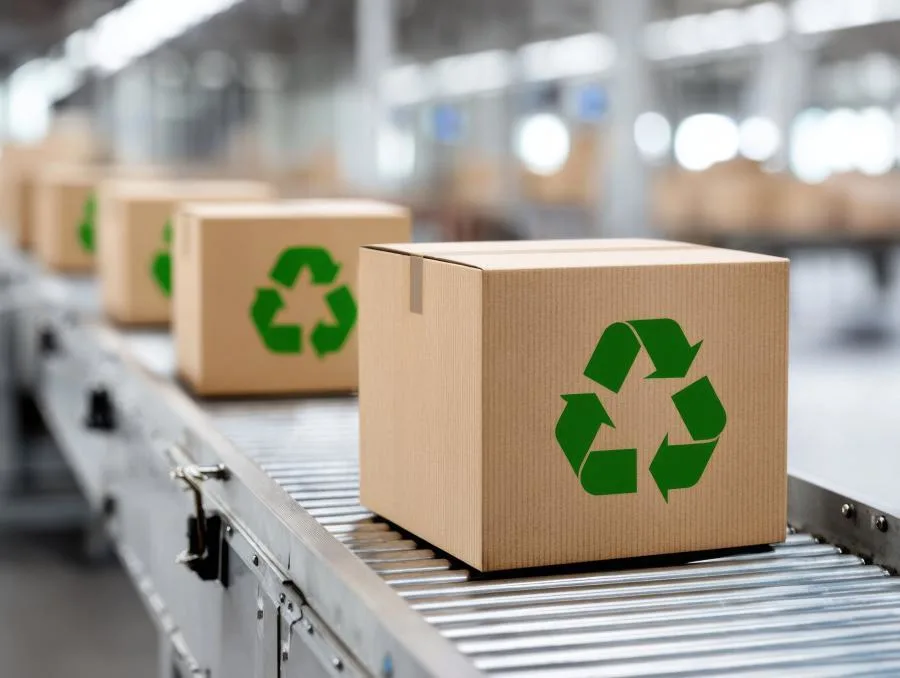
4. Seven Smart Ways to Reduce Packaging Pollution
Emballages.com — L’autorité dans l’emballage
1. Reduce packaging at the source
The easiest waste to manage is the waste that is never created.
Businesses should first examine whether every packaging layer is necessary.
For example, an online seller may replace a large box with a properly sized cardboard package.
This simple change can:
- Reduce packaging material.
- Lower storage requirements.
- Save transportation space.
- Reduce waste disposal costs.
Management lesson: Before spending money on recycling, examine whether the business can avoid producing unnecessary waste.
2. Choose recyclable materials
Businesses should select packaging materials that can be collected and recycled in their actual markets.
Common options include:
- Recyclable cardboard.
- Paper packaging.
- Suitable glass containers.
- Recyclable metal packaging.
- Certain recyclable plastic materials.
However, a recyclable label does not guarantee that the package will actually be recycled.
Local collection facilities, sorting systems and recycling markets matter.
A package made from several inseparable materials may create difficulties even when each material is recyclable separately.
Therefore, businesses should design packaging with recycling in mind.
3. Introduce reusable packaging
Reusable packaging can reduce waste when customers or businesses use it repeatedly.
For example, a restaurant may introduce a deposit-based food container system.
Customers pay a small refundable deposit when they receive the container. They return it after use and get their deposit back.
The restaurant cleans the container and uses it again.
This approach requires:
- A reliable return system.
- Proper cleaning facilities.
- Durable containers.
- Customer participation.
- Transport and storage planning.
Reuse is not automatically better in every situation. The container must be used enough times to justify the resources needed to manufacture, wash and transport it.
4. Use recycled materials
Another useful approach is to include recycled material in new packaging.
For example, a company may use recycled plastic in suitable bottles or recycled paper in cardboard boxes.
This can reduce demand for newly produced raw materials.
However, businesses must maintain product safety and quality.
Food and medicine packaging require particular care because materials must meet applicable safety standards.
The important lesson is that recycled content should be used where it is technically suitable and legally permitted.
5. Explore alternative packaging carefully
Some businesses are exploring alternatives such as:
- Moulded fibre packaging.
- Agricultural waste-based packaging.
- Compostable packaging.
- Paper-based protective materials.
- Reusable cloth bags.
These alternatives can be useful, but they are not perfect solutions.
For instance, compostable packaging may require specific industrial composting conditions. If it is thrown into an ordinary landfill or mixed with conventional plastic recycling, its environmental benefits may be lost.
Similarly, paper packaging can require water, energy and land resources.
Businesses should compare alternatives through life-cycle assessment rather than assuming that a material is environmentally friendly simply because it is labelled natural or biodegradable.
6. Build a better supply chain
Packaging waste is not only created inside factories.
It can also arise during storage, transportation, delivery and retail operations.
Businesses should work with suppliers to:
- Avoid unnecessary plastic wrapping.
- Use standard package sizes.
- Reduce damaged products.
- Improve transportation arrangements.
- Introduce reusable transport boxes where practical.
- Track packaging materials across the supply chain.
A good supply chain reduces both environmental waste and operating costs.
7. Educate customers
Even well-designed packaging can become waste if customers do not know how to dispose of it.
Businesses should provide simple instructions.
For example:
- Remove the cap before recycling if local instructions require it.
- Keep paper and plastic separate.
- Return reusable containers to the seller.
- Use designated collection points.
- Follow local waste segregation rules.
Clear information printed on packaging can help customers make better decisions.
The key management insight: Responsible packaging requires cooperation between manufacturers, suppliers, retailers, waste managers and consumers.
5. Real-World Example: How a Food Delivery Business Can Change
Consider a hypothetical food delivery company called FreshBite.
It delivers 1,000 meals every day.
Initially, it uses disposable plastic containers, plastic cutlery, small plastic sauce packets and several layers of wrapping.
After examining its waste, management discovers that many customers do not need disposable cutlery.
The company introduces a practical improvement programme.
¿Tu Restaurante es Ecológico pero tu Empaque No? Hora de Solucionarlo
Step 1: Remove unnecessary items
Customers can choose whether they need disposable cutlery.
Step 2: Improve container selection
The company selects packaging that protects food and is compatible with local waste management facilities.
Step 3: Introduce reusable containers
In selected neighbourhoods, regular customers can return durable food containers.
Step 4: Train employees
Staff learn how to pack meals using fewer materials without damaging food quality.
Step 5: Measure the results
The company records:
- Packaging material used per meal.
- Packaging cost per order.
- Number of returned containers.
- Customer complaints.
- Food damage and leakage.
- Waste collected for recycling.
After three months, management compares the results with the original situation.
This example is illustrative, not a report of an actual company.
It demonstrates an important business principle: environmental improvements should be measured alongside cost, quality and customer satisfaction.
A company should not claim success merely because it has changed its packaging colour or printed a green logo on its boxes.
It must show measurable improvement.
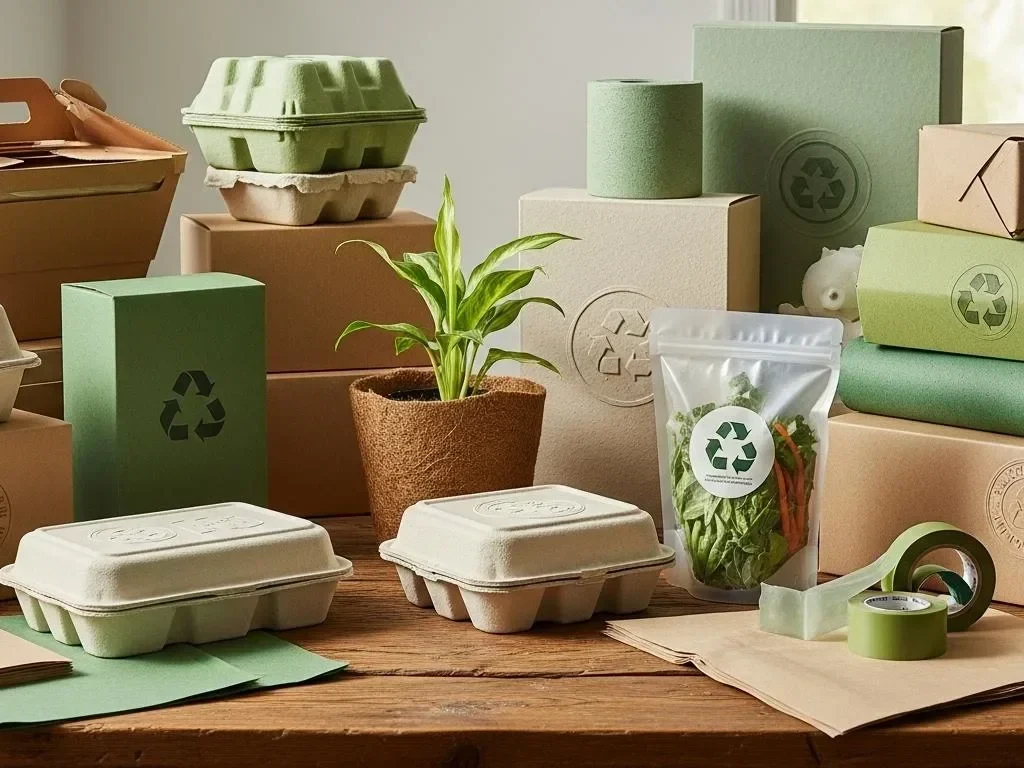
6. The Business Benefits of Responsible Packaging
Coesia: Joint forces for a more sustainable e-commerce | Coesia
Responsible packaging is not only an environmental decision. It can also support business performance.
Lower operating costs
Using less packaging may reduce purchasing, storage and transportation expenses.
However, businesses must calculate the total cost, including any new equipment or supplier charges.
Better customer trust
Customers increasingly notice how companies treat the environment.
Honest packaging practices can strengthen a company’s reputation.
But false environmental claims can damage trust.
Stronger brand value
Companies that take genuine action on waste can build a stronger identity.
Responsible packaging can become part of a company’s long-term business strategy.
Better risk management
Governments are introducing rules to improve waste management and make businesses responsible for packaging waste.
Companies that monitor regulations and improve their systems can reduce the risk of non-compliance.
New business opportunities
Sustainable packaging can create opportunities for new suppliers, recycling businesses, reusable delivery systems and packaging innovation.
The challenge is to make these solutions practical, safe and affordable.
7. India’s Approach: Extended Producer Responsibility
India has introduced rules to improve plastic waste management.
An important concept is Extended Producer Responsibility (EPR).
In simple words, EPR means that businesses involved in producing, importing or selling covered products must take responsibility for managing the plastic packaging waste associated with them, according to applicable rules.
The Plastic Waste Management Rules and their amendments provide the framework for these responsibilities.
The Central Pollution Control Board operates a centralised portal for relevant registration and compliance activities.
The framework covers important areas such as:
- Reuse of plastic packaging.
- Recycling.
- Use of recycled plastic content.
- End-of-life management.
Central Pollution Control Board+2
For businesses in India, this is an important management issue.
They should identify their legal category, understand the applicable obligations, maintain accurate packaging records and check current CPCB and State Pollution Control Board requirements.
Small businesses should not assume that every rule applies to them in the same way. Applicability and exemptions depend on the relevant legal provisions.
The larger lesson is clear: packaging management is becoming a matter of business accountability, not merely a voluntary environmental activity.
8. Why Recycling Alone Is Not Enough
Many companies promote recycling as their main environmental solution.
Recycling is important, but it has limitations.
Some plastic materials are difficult to recycle. Some become contaminated with food or other waste. Some are too costly to collect and process.
Furthermore, recycling requires energy, transport, sorting facilities and suitable markets for recycled materials.
This is why businesses should follow a sensible order of action:
The responsible packaging hierarchy
- RefuseAvoid unnecessary packaging and materials that serve no useful purpose.
- ReduceUse only the quantity of material needed to protect the product.
- ReuseDesign systems that allow packaging to be used again safely.
- RecycleChoose materials that can be collected and processed effectively.
- Recover or dispose responsiblyManage remaining waste according to applicable environmental rules.
This approach helps businesses focus on preventing waste rather than dealing with it after it has been created.
9. Common Mistakes Businesses Should Avoid
Even companies with good intentions can make poor packaging decisions.
Here are five mistakes worth avoiding.
Mistake 1: Believing paper is always better than plastic.
Paper also has environmental costs. The right choice depends on the product, production process, transportation and disposal system.
Mistake 2: Trusting every green label.
Words such as eco-friendly, natural and biodegradable do not automatically prove that packaging is environmentally safe.
Businesses should ask suppliers for recognised certifications and supporting evidence.
Mistake 3: Ignoring product protection.
Packaging must protect the product. If poor packaging causes food spoilage or product damage, the environmental cost may become greater.
Mistake 4: Treating recycling as the complete solution.
Reducing unnecessary packaging and promoting reuse should receive attention alongside recycling.
Mistake 5: Making unsupported environmental claims.
A business should not claim that its packaging is 100% sustainable without reliable evidence.
Honest communication is better than attractive but misleading environmental advertising.
10. How Managers Can Build a Responsible Packaging Strategy
A manager does not need to change the entire packaging system in one day.
A practical five-step plan can make the process easier.
| Step | Management action | Performance measure |
|---|---|---|
| 1 | Audit existing packaging | Total packaging weight |
| 2 | Identify unnecessary materials | Waste avoided |
| 3 | Test better alternatives | Product damage rate |
| 4 | Work with suppliers | Recycled or reusable content |
| 5 | Review performance | Cost and waste reduction |
Managers should also establish clear targets.
For example:
- Reduce packaging weight per product.
- Increase reusable packaging returns.
- Improve the proportion of packaging that is actually recycled.
- Reduce unnecessary secondary packaging.
- Improve customer understanding of disposal instructions.
Targets should be based on a reliable starting measurement.
A business should measure progress regularly rather than publish impressive environmental claims without evidence.
11. The Future of Responsible Product Packaging
В Казахстане будут производить экоупаковку из пластика и камыша
Packaging is changing as businesses explore new materials, technologies and delivery systems.
Several developments deserve attention.
Smart packaging: Digital information and QR codes can help customers understand packaging materials, recycling instructions and product information.
Advanced material design: Researchers and manufacturers are developing materials that may offer better protection with fewer resources.
Refill systems: Customers can refill certain products instead of buying a completely new package every time.
Reusable delivery systems: Businesses can introduce returnable containers and packaging for selected delivery routes.
Better waste tracking: Digital systems can help companies measure packaging use, collection and recycling performance.
However, new technology is not automatically sustainable. Businesses must examine its cost, energy use, durability and real environmental benefits.
The best innovation is one that solves a genuine problem and works in the real world.
Conclusion: Better Packaging Means Better Business
Plastic pollution cannot be solved by governments alone. Businesses, manufacturers, retailers and customers all have important roles to play.
Every unnecessary wrapper, oversized box and disposable container represents a decision that can be reconsidered.
Responsible product packaging gives companies an opportunity to reduce waste, improve resource efficiency and build customer confidence.
The solution is not to remove all plastic without thinking. Some products need strong, safe and hygienic packaging. The real challenge is to use the right material, in the right quantity, with a responsible plan for what happens after use.
For managers, the first step is simple: examine existing packaging, measure the waste and identify practical improvements.
A successful business should not measure its performance only by how many products it sells. It should also consider the resources it uses and the waste it leaves behind.
Better packaging is not just an environmental choice. It is a smarter way to manage a business.
Frequently Asked Questions (FAQs)
1. What is plastic pollution?
Plastic pollution occurs when plastic waste accumulates in the environment and harms land, water, wildlife and ecosystems.
2. What is responsible product packaging?
It means designing packaging that protects products while reducing unnecessary material use, waste and environmental harm.
3. How can businesses reduce plastic packaging?
Businesses can reduce unnecessary packaging, introduce reusable containers, choose suitable recyclable materials and work with responsible suppliers.
4. Is paper packaging always better than plastic?
No. Paper production also uses natural resources, water and energy. The better option depends on the product and its complete life cycle.
5. What is Extended Producer Responsibility (EPR)?
EPR makes certain producers, importers and brand owners responsible for managing the plastic packaging waste covered by applicable regulations.
6. Can biodegradable plastic solve plastic pollution?
Not completely. Some biodegradable materials need specific conditions to break down properly. Certification and suitable waste-processing facilities are important.
7. Why should small businesses adopt sustainable packaging?
It can help small businesses reduce material waste, improve efficiency, build customer trust and prepare for changing environmental expectations.
8. What is the biggest challenge in responsible packaging?
One major challenge is creating packaging that is affordable, protects products, meets safety requirements and can be properly reused or recycled.