
Two Shops, One Road, Different Futures
Illustrative example.
Meena runs a small grain shop in a village. Her customers trust her. Her prices are fair. Her shelves are always full.
One day her supplier offers a better price on double stock before the festival season. Meena needs ₹80,000 for three weeks. She walks to the bank.
The officer asks for her credit history, income papers and sales records. Meena has none. Everything runs on cash and a notebook. The bank says no. A moneylender says yes, at a very high interest rate. She walks away from the deal.
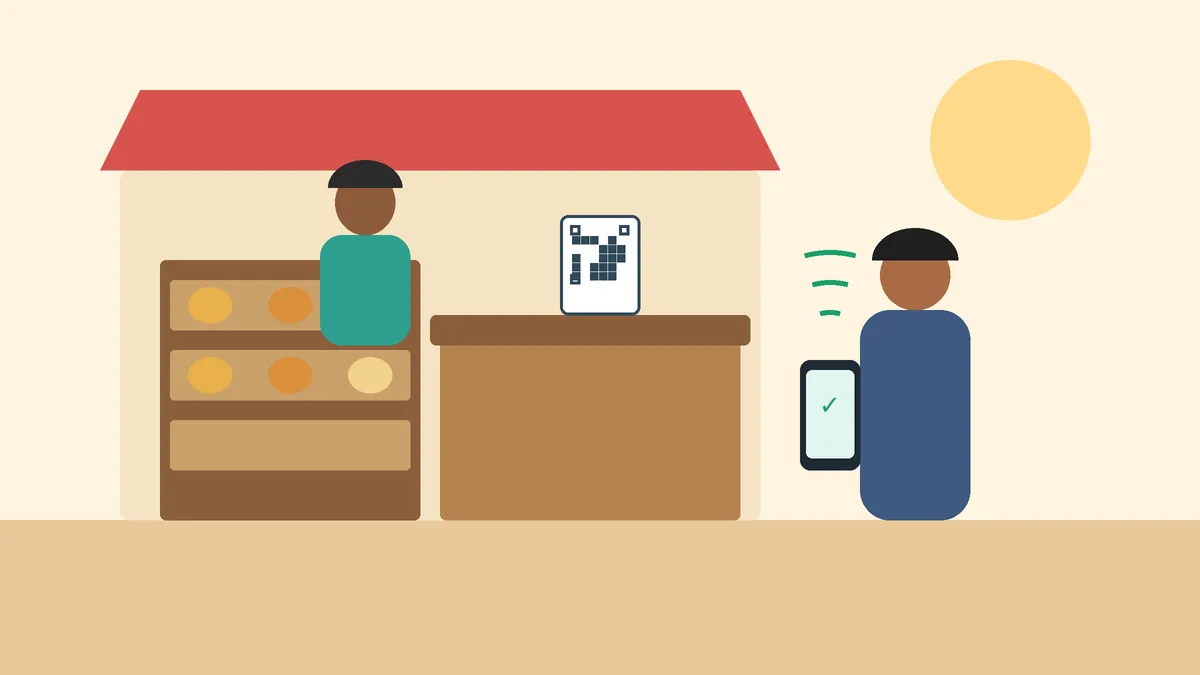
Across the road, Raju sells similar goods. He takes UPI payments, keeps a bank record, and gets a small loan in two days. Six months later, his shop is bigger.
Meena was not less talented. She was less connected. That gap is the heart of financial inclusion and access to banking or credit. It touches owners, workers, suppliers and local economies, so it is a management problem, not only a banking problem.
Table of Contents
The Hidden Barrier Behind Financial Exclusion
Financial exclusion means people cannot use useful, affordable financial services. Usually it is many small walls, not one big one:
- Papers: address proof, income proof and a credit record that many people never had.
- Distance: the nearest branch may be a long, costly trip away.
- Cost: minimum balances, fees and hidden charges.
- Knowledge: fear of forms, rules and loan terms.
Rural families, daily wage workers, women entrepreneurs and cash based tiny businesses feel it most.
Owning an account does not mean you are included. An account is a door. Using it for saving, payments and credit is walking through. Many people hold the key and never enter.
Financial Inclusion and Access to Banking or Credit: Why It Matters
Good financial access changes how people make decisions.
- Saving: A safe account protects money from theft and loss.
- Emergencies: Savings or a fair loan stop a medical bill from becoming a crisis.
- Growth and jobs: Credit buys stock and tools, and growing businesses hire people.
There is a management angle too. Employers who pay wages into accounts reduce cash risk. Companies that pay small suppliers digitally and on time help them qualify for loans.
Independent insight 1: A payment record is a business asset, just like inventory. Every digital sale quietly builds proof that the business is real.
Banking Access vs Credit Access
These services are linked but not the same.
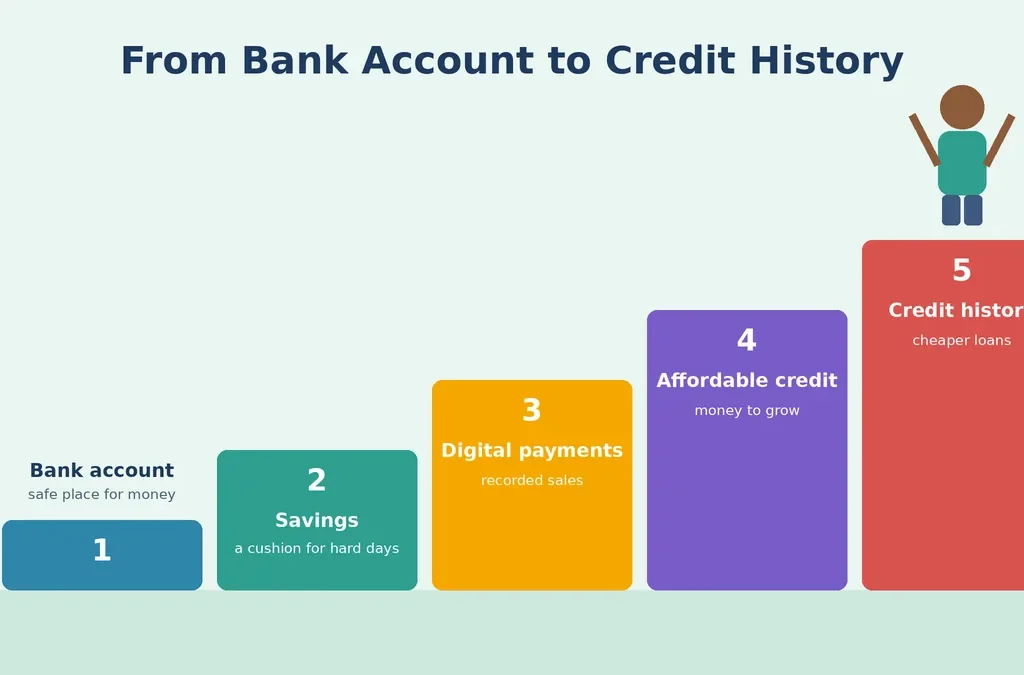
| Service | What it gives you | What it needs |
|---|---|---|
| Bank account | A safe place for money | ID and basic papers |
| Savings facility | Growth and a safety cushion | Regular deposits |
| Digital payments | Fast, recorded transactions | A phone and some trust |
| Affordable credit | Money for growth or emergencies | Proof of ability to repay |
| Credit history | Proof you repay on time | Years of recorded behaviour |
Think of it as a ladder, not a menu. Payments create records. Records build a credit history. A credit history makes loans cheaper. Meena was stuck because she had no records for the bank to read.
Independent insight 2: Credit is mostly a trust problem. Lenders do not only ask “Can you repay?” They ask “Can I see proof?”
The 5A Framework for Better Financial Inclusion
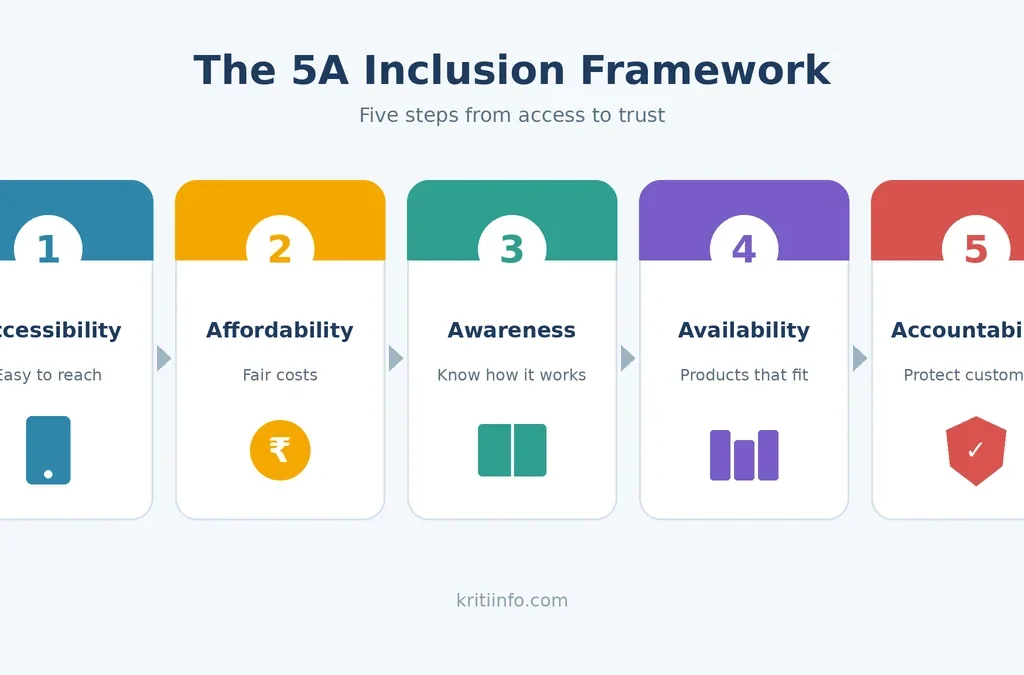
Here is a simple framework anyone can use. We call it the 5A Inclusion Framework.
- Accessibility: Make services easy to reach, on a phone or through a nearby agent.
- Affordability: Cut needless fees and keep borrowing costs fair.
- Awareness: Teach people how accounts, interest and fraud work, in their own language.
- Availability: Offer products that fit real lives, such as small savings, flexible repayment and small business loans.
- Accountability: Protect customers with clear terms, fair collection, privacy and quick complaint handling.
Who does what? Banks simplify documents and price fairly. Governments build digital identity, payment systems and consumer protection. Businesses pay wages and suppliers digitally. Fintech companies reach remote users but lend responsibly. Communities, such as self-help groups, build trust.
Independent insight 3: Most programmes stop at the first A. Access without affordability, or credit without accountability, can hurt people.
A Real World Style Example: Meena’s Journey
Illustrative example. Not real data.
Let us return to Meena, this time over two years.
Start, cash only. Meena keeps sales in a notebook and money in a tin box. Saving is hard and customer payments are slow.
Month 3, digital start. A local bank agent helps her open a basic account. She puts a UPI QR code at her counter.
Month 6, learning. A short financial literacy session teaches her to separate shop money from home money. She records daily sales.
Month 12, first loan. With a year of payment records, a lender offers a small loan matched to her sales. She buys festival stock and repays on time.
Year 2, credibility. Her repayment record builds a credit history, and her next loan costs less.
Challenges that remain. Her network sometimes drops. A fraud caller tries to get her OTP. A slow season makes one repayment tight. Inclusion helps, but risks remain, so awareness and consumer protection matter.
Technology: Opportunity and Risk
- Mobile banking and UPI: Instant phone payments. NPCI runs UPI and publishes official data.
- Aadhaar enabled payments: Let people withdraw cash or check balances through local agents.
- Digital lending and alternative scoring: Fast small loans, using payment history when no formal credit record exists.
- Artificial intelligence: Models can spot cash flow patterns, but they learn from past data.
The risks are real: digital fraud, misuse of personal data, algorithmic bias that quietly repeats old unfairness, and exclusion of people without phones or digital skills. Technology widens the road. It does not guarantee everyone can drive on it.
Access Is Not the Same as Empowerment
Opening millions of accounts is a big achievement. But there are three different goals:
- Access: You can get an account.
- Usage: You use it regularly.
- Well-being: Your finances reduce stress and help you reach your goals.
Real inclusion needs affordable services, suitable products, fair credit, protection, awareness and trust. People return to institutions that treat them fairly. They go back to cash when they feel cheated.
Data Interpretation and Evidence
Numbers help us see what is real. Here are three verified examples, with what each one actually measures.
1. Account ownership in India, 2024. The World Bank’s Global Findex 2025 reports that about 89% of adults in India have a financial account. It comes from nationally representative adult surveys and measures ownership, not use. Globally, 79% of adults have an account, up from 51% in 2011.
2. Inactive accounts in India, 2024. The same report finds that 16% of Indian account owners have an inactive account, against 4% on average in other low and middle income economies. This is the “door versus walking through” problem in numbers.
3. India’s own measurement: RBI Financial Inclusion Index. The Reserve Bank of India reports its FI-Index at 70.0 for March 2026, up from 67.0 in March 2025. The index runs from 0 (complete exclusion) to 100 (full inclusion) and combines Access, Usage and Quality. RBI said the rise came mainly from higher usage, which is encouraging.
Bonus: Jan Dhan. As of 19 August 2026, Ministry of Finance data (PMJDY progress) shows about 59.09 crore accounts. An RTI reply reported by The Tribune put inoperative accounts at 15.37 crore and zero balance accounts at 5.72 crore (12 August 2026). Accounts have spread widely. Active use is the next challenge.
Limits of the data: Surveys use samples, index scores blend many parts, and some people hold several accounts. Read each number as a guide, not a verdict. The IMF also publishes access data for comparing countries.
Advantages and Limitations
Advantages: better savings habits, easier and safer payments, productive credit for businesses, wider economic participation and stronger resilience in emergencies.
Limitations and risks: overborrowing, high interest rates, hidden charges, digital fraud, data privacy risks, poor financial literacy, unequal access to technology, and loan defaults from irresponsible lending.
Responsible inclusion matters more than loan volume. Pushing loans to people who cannot repay them is not inclusion. It is a trap.
Common Misconceptions
“Everyone with a bank account is financially included.” No. An unused account gives little benefit.
“Financial inclusion means loans for everyone.” No. It means suitable, affordable services. Sometimes savings help more than a loan.
“Digital banking solves exclusion automatically.” No. It helps only people with phones, networks, skills and trust.
“More credit always means better results.” No. Credit beyond repayment ability harms households and businesses.
What Should Readers Do Next?
Individuals: Open and actively use a suitable account. Read loan terms and total interest before signing. Borrow only what you need. Never share OTPs or PINs.
Small business owners: Record every sale and expense. Separate business and personal money. Accept digital payments to build a track record. Compare lenders and borrow within your repayment ability.
Managers and organisations: Pay wages and suppliers through accounts, run short money awareness sessions and learn the barriers your staff and vendors face. Related reading on kritiinfo.com: Employee Surveillance Versus Trust on why trust and fair data use matter, and Reviewing Managerial Role by AI on AI supported decisions.
Financial institutions: Be transparent about fees, design simple low cost products, strengthen complaint handling and privacy, and serve rural areas. For governance lessons, see Why Internal Misconduct Hurts.
Conclusion
Financial inclusion and access to banking or credit is about fairness and growth. Meena and Raju, our illustrative pair, had similar skills. Only one had the tools to use them. When more people can save, pay and borrow safely, more businesses grow and more households stay stable.
The goal is not more accounts or more loans. It is more people using affordable, trusted services to build better lives. Use the 5A Framework as a checklist in your business or organisation.
Frequently Asked Questions
1. What is financial inclusion? It means everyone can use useful, affordable financial services such as accounts, savings, payments, credit and insurance, and use them safely, not just hold them on paper.
2. Why is access to banking important? Banking gives money a safe place, simple payments and a recorded history. These help people save, handle emergencies and later qualify for loans. Without them, many rely on cash and costly informal lenders.
3. How does financial inclusion help small businesses? It lets owners take digital payments, track sales and show records to lenders. That can lead to affordable loans for stock and growth, and better records improve daily decisions.
4. What is the difference between banking access and credit access? Banking access means you can hold and move money. Credit access means you can borrow at fair cost. Banking usually comes first, because payment and savings records help lenders trust you.
5. How does digital banking improve financial inclusion? Phones and payment apps reach people far from branches, cut costs and create records. Fraud, weak networks and low digital skills can still keep people out.
6. What are the biggest barriers to financial inclusion? Common barriers are missing documents, distance, high costs, low financial knowledge, lack of trust and limited phone access. Women and low income households often face several together.
7. Can financial inclusion reduce poverty? It can help, but it is not a cure alone. Safe savings, fair credit and better payments improve stability and opportunity. Results also depend on jobs, skills and protection from harmful lending.
8. What role should managers and financial institutions play? Managers can pay digitally, teach money basics and support suppliers. Institutions should keep fees clear, products simple, data safe and complaints fairly handled.