

The Day a Factory Floor Burned
Conflict-Sensitive Management: On 18 July 2012, the Maruti Suzuki plant in Manesar, Haryana, saw one of the darkest days in Indian industry. The company’s own press release says General Manager Awanish Kumar Dev was burnt to death by a mob of workers inside the plant. Nearly a hundred managers and supervisors were hurt. Three days later, the company declared a lockout.
Reports from that time describe a plant under strain for months. Production had been hit by unrest in late 2011. A new workers’ union had been formed in early 2012. Workers spoke about rude supervisors and pay gaps between permanent and contract staff. The company said the dispute began over a suspended worker. Each side tells the story differently, and the full truth is still argued about.
The aftermath was heavy. According to Business Today, the plant stayed shut for over a month and 500 workers were dismissed. Later, a court gave life sentences to 13 workers. Nothing excuses violence. This article does not pick a side.
It asks a quieter question. When tension builds for months, what can managers notice early? That question is the heart of conflict-sensitive management.
Table of Contents
What Is Conflict-Sensitive Management?
Conflict-sensitive management means studying the tensions around you before you decide, so your decisions do not make them worse. It also means using decisions to reduce tension where you can.
The idea grew in the world of aid and peacebuilding. A UNDP report describes it as understanding how your work and the conflict around it affect each other, then acting so you do not add to the conflict.
Think of a doctor. A good doctor does not only treat the pain you describe. She asks about your history first, because a medicine that helps one patient can harm another. Conflict-sensitive management is that habit, applied to decisions.
Here is the key difference. Solving a quarrel fixes one problem. Conflict-sensitive management checks whether your own choices, like a transfer, a new target, or a pay change, are quietly creating the next quarrel.
Why Governance Needs Conflict Sensitivity
Governance is how an organisation makes decisions and answers for them. Rules are only the start. Good governance also needs trust.
People accept hard decisions when they believe the process was fair. They resist even good decisions when they feel ignored. So responsible governance needs five things working together:
- Leaders who explain their reasons.
- Decisions that are open to questions.
- A real chance for affected people to speak.
- Someone who is accountable when things go wrong.
- Regular checks on what the decision actually did.
Take away conflict awareness, and a policy can look perfect on paper and still break a workplace. The OECD guidance on responsible business conduct says due diligence should be ongoing and informed by talking with stakeholders. That is conflict sensitivity in official language.
Conflict Management vs Conflict-Sensitive Management
Both matter. They do different jobs.
| Point | Conflict management | Conflict-sensitive management |
|---|---|---|
| Purpose | Settle a dispute that exists | Avoid creating or worsening disputes |
| Timing | After tension appears | Before, during and after decisions |
| Decision making | Focused on the people in the dispute | Looks at the wider setting and history |
| Stakeholders | Mostly the two sides | Everyone the decision touches |
| Risk awareness | Reacts to visible risk | Searches for hidden risk |
| Long term result | Peace on one issue | Stronger trust and fewer repeat problems |
Where is each one useful? When two colleagues are shouting today, you need conflict management now. When you plan a restructure next month, you need conflict sensitivity. A strong organisation uses both. Neither one is enough alone.
A Six Step Tension Check for Managers
This is an author developed practical framework. It is not an established model from any institution. I call it the Six Step Tension Check.
1. Understand the history. Ask what happened here before. A new shift rule means something different in a place that has seen layoffs. Example: before changing leave rules, read old complaints from the last two years.
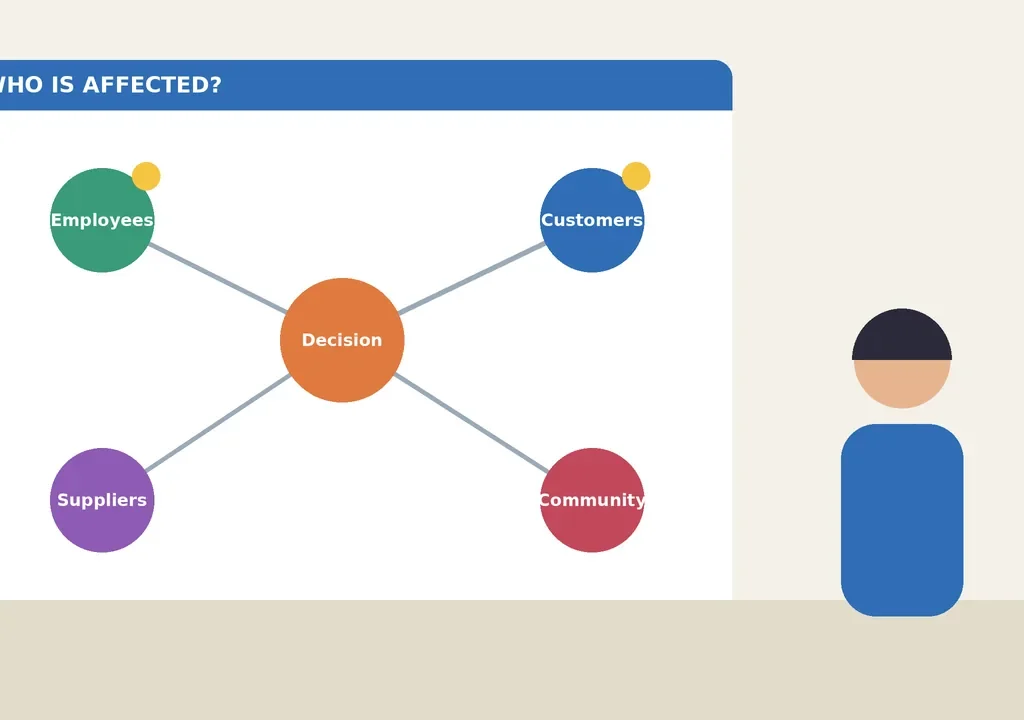
2. Map people and power. List who is affected and who has a voice. Notice who has none. Example: a delivery company lists riders, dispatchers, customers and shop owners, and sees that riders have the least say.
3. Spot the tension points. Look for money, workload, status, respect and fairness. Example: two teams share one budget, so any cut will feel like a fight.
4. Test the decision on each group. Ask how each group will feel and what they may do. Example: before a new sales target, ask how it lands on new staff versus senior staff.
5. Consult and adjust. Listen before the final call, and change the plan if you learn something real. Example: a school asks teachers about timetable changes and moves exams to a better week.
6. Monitor and learn. Check results after launch. Keep a simple feedback channel. Example: a monthly ten minute review of complaints, absences and exits.
An Illustrative Example: Automation and Fear
This is a made up scenario to explain the ideas. It is not a real company.
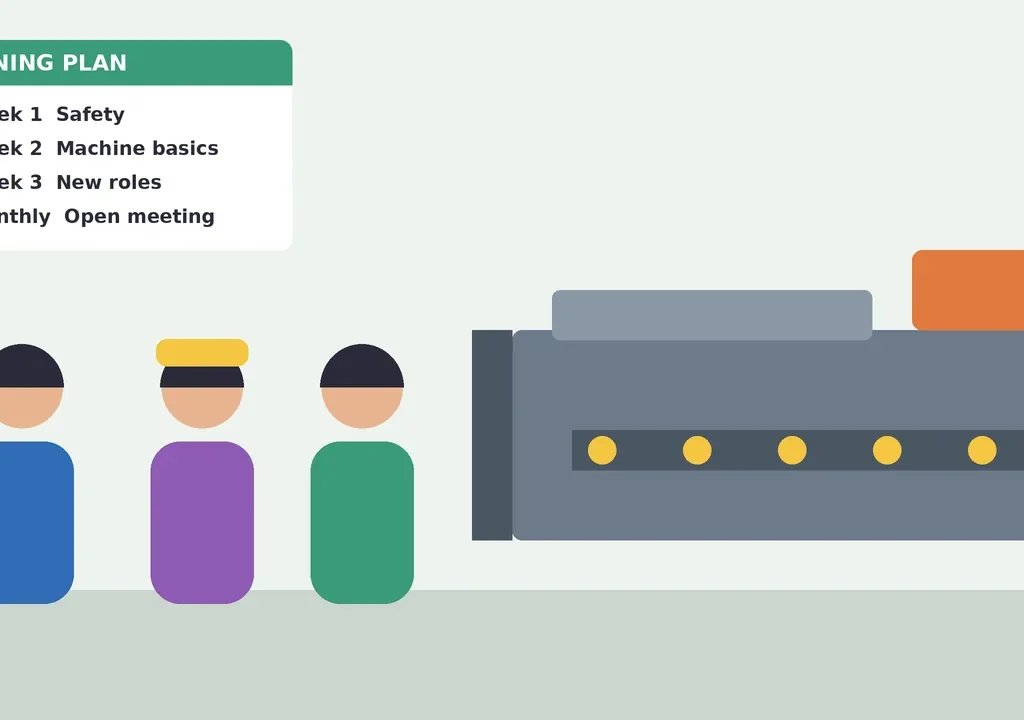
A packaging company plans to bring in machines on its main line. Workers have heard rumours of job cuts.
Approach one, no sensitivity. Management announces the machines by email on a Friday. No one explains what happens to jobs. Rumours spread over the weekend. The best workers start looking elsewhere. Supervisors hear angry questions they cannot answer. Output drops, and trust falls with it.
Approach two, conflict sensitive. Management first studies the plant. It finds that fear of job loss is the main tension, and that older workers worry most. It meets worker representatives early. It shares a clear plan: no job cuts in the first year, paid training for machine work, and fair rules for who moves to new roles. It explains what is still uncertain. It holds a monthly meeting to hear problems.
The second path takes more time at the start. But it protects trust, keeps skills in the company, and lowers the chance of a sudden crisis. Workers may still dislike the change. The difference is that they understand it, and they were heard.
An Expert View: It Is a Skill, Not a Fire Drill
Many people treat conflict sensitivity as something to use only in a crisis. That is a mistake. It is a regular management skill, like budgeting.
Managers often create tension without meaning to:
- Unequal resources. One team gets new laptops while another waits.
- Poor communication. Staff hear about changes from rumours.
- Culture gaps. A joke that is friendly in one group sounds rude in another.
- Exclusion. Contract staff are left out of meetings and benefits.
- Hidden decisions. Nobody can see why someone was promoted.
None of these look like conflict at first. Each one slowly builds distrust. A useful habit is simple: before you announce, ask who will hear this first, and how.
What the Evidence Says
Here is what the research shows, and what it does not.
Workplace conflict is common and costly. A 2008 CPP Global Human Capital Report surveyed thousands of workers in nine countries. It found that 85 percent dealt with conflict to some degree. Employees spent 2.1 hours a week on it worldwide and 2.8 hours in the United States, which the report put at about $359 billion in paid hours. In the US, 81 percent also saw some positive outcomes from conflict.
What it tells us: conflict takes real time, and it is not always bad. What it does not prove: it does not show that conflict sensitivity saves this money. The data is from 2008, is self reported, and was commissioned by a company that sells assessment tools. The dollar figure uses 2008 wages.
Companies often lack the skill. International Alert’s 2005 guidance for extractive industries says many companies lack the ability to understand conflict and their own influence on it. That is a finding from one sector, but the lesson travels well to other workplaces.
People misunderstand the idea. The UNDP report above notes that some development workers took conflict sensitivity to mean avoiding conflict, which is wrong.
Business Today also counted at least six “labour homicides” in four years before October 2012, though one HR leader it quoted saw them as isolated cases. Treat that as a warning sign, not proof of a pattern.
Benefits and Limits
Benefits: stronger trust, better decisions, fewer unintended harms, earlier risk warnings, healthier relationships, and an organisation that adapts faster.
Limits: it takes extra time. Information is never complete. Stakeholders want different things. Some people resist change however fair it is. Power gaps can silence honest voices. And results are hard to measure, because a crisis that never happened leaves no number. It cannot remove every conflict. It can lower the odds and the damage.
Common Misconceptions
- “It means avoiding every disagreement.” No. It means choosing disagreements wisely, and not creating avoidable ones.
- “Consultation means everyone must agree.” No. You listen, you explain, and then you decide. People can disagree and still trust the process.
- “A fair decision satisfies everyone.” No. Fair decisions still disappoint some people. Fairness is about the process.
- “Conflict is always harmful.” No. Healthy debate improves ideas.
- “A written policy guarantees resilience.” No. A policy no one trusts will not hold in a crisis.
What Should Managers Do Next?
Before any big decision, ask:
- Who will be affected?
- Whose interests might be missed?
- Could this raise existing tensions?
- Have we heard different views?
- Is the decision open and fair?
- How will we track its effects?
Your action plan: this week, pick one upcoming decision. Run the six questions. In week two, talk to two groups you usually skip. In week three, adjust the plan and explain why. In week four, review what changed.
Conclusion
Resilient organisations do not wait for conflict to knock. They read their surroundings, notice risks early, listen to people, and decide with care. That is the quiet strength of conflict-sensitive management. Start with your next decision, and ask who it touches before you announce it.
Frequently Asked Questions
What is conflict-sensitive management? It is a way of managing where you study tensions first, so your decisions do not create or worsen conflict.
How does it support good governance? It makes decisions fairer and more open, because affected people are heard and results are checked.
How is it different from conflict management? Conflict management solves a dispute that already exists. Conflict sensitivity looks ahead and checks how your own choices may cause disputes.
How can managers spot conflict risks early? Watch for rising complaints, absences, silence in meetings, and rumours. Ask people directly, and read the history.
Can it improve workplace trust? Often, yes. People trust leaders who explain decisions and listen. There is no guarantee, and trust builds slowly.
What role does consultation play? It gives you better information and gives people a fair say. It does not mean everyone must agree.
How can we measure its impact? Track simple signals before and after a decision: complaints, turnover, absences, and survey answers. These show trends, not proof.