
Introduction: When a City Becomes Too Expensive
Every morning at 5:15 AM, while the city streets are still dark, Arjun steps out of his cramped rented room on the far edge of a fast growing metropolis. He works as a skilled technician in a busy central factory. His wife, Meera, runs a small tailoring service from home, and their two children study at a nearby government school. On paper, their family has a steady income and a hopeful future.
Yet every month feels like a quiet emergency. Their landlord just raised the rent by twenty percent. Because affordable homes near Arjun’s factory disappeared years ago, the family moved thirty kilometres outside the city centre. Now Arjun spends three hours a day in crowded buses, paying nearly a fifth of his wages just to reach work. Meera loses customers because delivery vans rarely visit their poorly paved neighbourhood. By the time Arjun returns at night, his children are already asleep.
This story is a fictional composite based on daily realities faced by millions of urban workers across rapidly expanding cities. It raises one urgent question: Can a working family afford to live in the very city where its members work and contribute to its growth?
When a city pushes out the people who clean its streets, build its offices, teach its children, and run its factories, the problem is no longer just a personal budget struggle. It is a failure of affordable housing and urban management. Building cheap rooms is never enough. True progress requires managing land, public money, transport, utilities, and social needs as one connected system.
Table of Contents
Why Affordable Housing Matters
A stable, reasonably priced home acts like the foundation of a strong building. When that foundation is secure, families, businesses, and the wider economy grow stronger together.
- Household income and savings: When a family spends thirty percent or less of its monthly pay on rent or a home loan, money remains for nutritious food, medicine, and small savings. Those savings protect families from sudden emergencies.
- Employment and productivity: Workers who live close to their workplaces arrive on time, feel less tired, and stay healthier. Employers enjoy lower staff turnover and higher daily output.
- Education and children’s development: Children who do not have to move every year when rents rise stay in the same school, keep their friends, and study in quieter, safer rooms.
- Public health and safety: Clean water, proper toilets, fresh air, and uncrowded rooms reduce lung infections, waterborne diseases, and daily mental stress.
- Social equality and financial security: Fair housing policies ensure that cities belong to teachers, nurses, shopkeepers, and factory workers, not only to wealthy investors.
- Local business growth: Families who are not drained by high rent spend money at neighbourhood groceries, clinics, repair shops, and local markets.
The Hidden Costs of Poor Urban Management
When city leaders allow rapid growth without careful planning, one small mistake triggers a chain of expensive problems across the entire city.
- Rising rents and overcrowding: When new homes do not match population growth, landlords raise prices. Lower income families squeeze into tiny, poorly ventilated rooms.
- Informal settlements and insecure housing: Priced out of formal neighbourhoods, workers build makeshift shelters on vacant land or flood zones without legal ownership or protection from eviction.
- Long commuting distances: Pushing working families to distant outskirts forces millions of people to travel dozens of kilometres every day.
- Pressure on water, electricity, sanitation, and roads: Unplanned neighbourhoods grow faster than pipes, power lines, and sewage networks, leading to frequent outages and overflowing drains.
- Traffic congestion and pollution: Longer commutes put more motorbikes, cars, and buses on narrow roads, worsening air quality and wasting fuel.
- Unequal access to schools, hospitals, and employment: Families trapped on the outer edges of a city live far from good hospitals, colleges, and higher paying jobs, locking poverty across generations.
Affordable Housing and Urban Management: The Real Challenge
City administrators face tough choices every single day. In growing cities, central land is scarce and expensive. Private builders naturally prefer luxury apartments because high end buyers bring bigger profits. Meanwhile, construction materials, skilled labour, and borrowing costs keep rising.
Municipal governments also operate with limited tax budgets. They must divide public money among roads, water supply, waste collection, schools, hospitals, and housing. Strict land rules and slow building approvals can further delay new projects for years.
To save money, some authorities buy cheap land far outside the city and build thousands of low cost apartments there. On paper, the housing target looks achieved. In reality, those distant colonies often lack buses, clinics, schools, and nearby jobs. Families either refuse to move in or spend all their rent savings on transport. A cheap house in the wrong place never creates truly affordable living.
Smart Solutions for Better Cities
No single policy can fix every city’s housing shortage. Successful cities combine several practical tools tailored to local needs.
1. Well Planned Public and Social Housing
Governments directly fund or subsidise homes for low and middle income residents. This keeps rents stable during market booms, though it requires steady public budgets and strict maintenance to prevent buildings from decaying.
2. Affordable Rental Housing
Many young workers and migrant families need flexible places to rent rather than homes to buy. Legal rental protection and purpose built rental complexes help mobile workers live near job hubs, provided landlords and tenants follow clear, fair rules.
3. Public Private Partnerships with Transparent Accountability
Cities can offer private developers extra building rights or public land if the developers reserve a share of homes for lower income families. This brings private capital into social goals, though contracts must include strict price caps and quality inspections.
4. Mixed Income Neighbourhoods
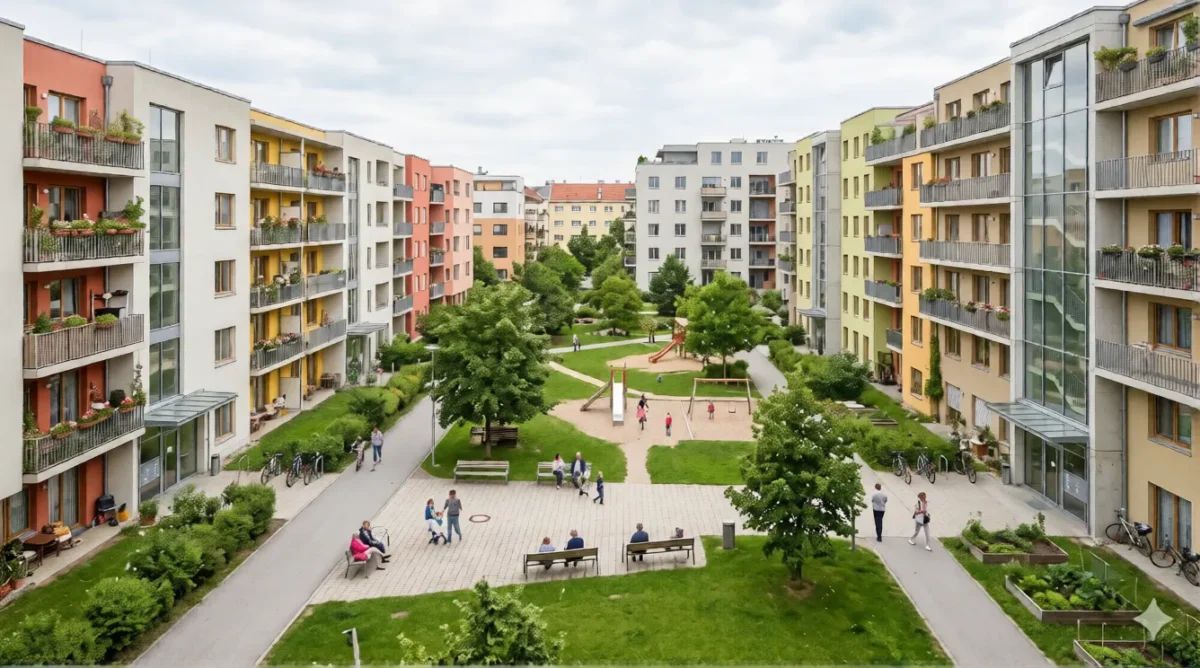
Blending affordable apartments with middle and higher income homes prevents poor areas from becoming isolated. Everyone shares the same parks, schools, and bus routes, though planners must manage local resistance and design buildings sensitively.
5. Better Public Transport and Transit Oriented Development
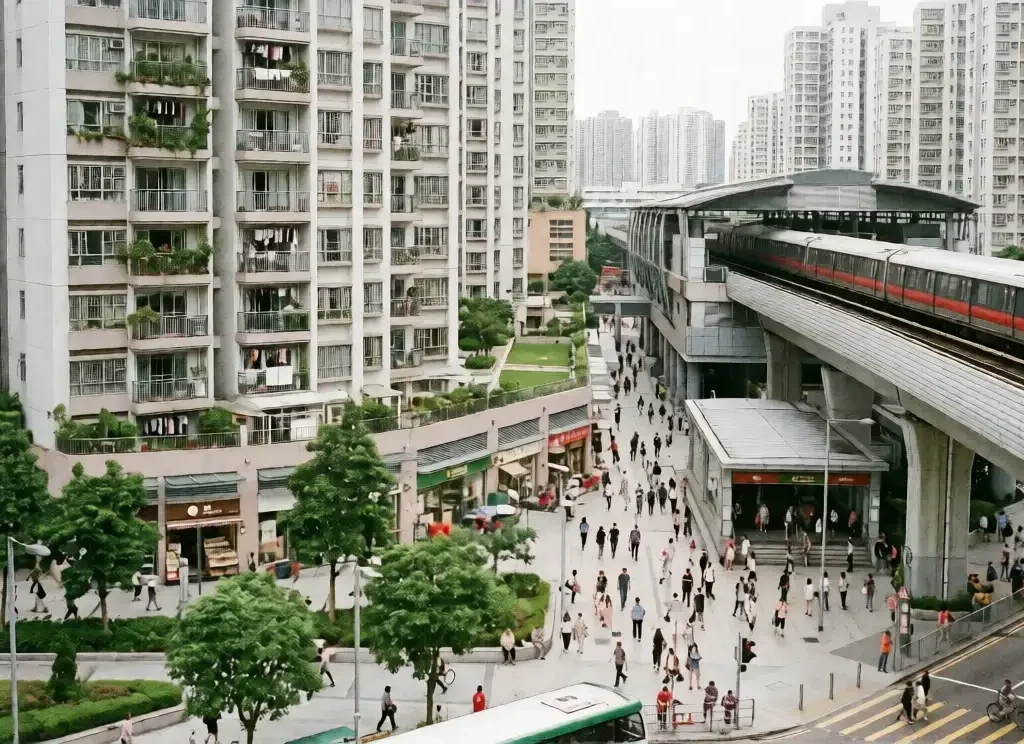
Building high density affordable homes near metro stations and rapid bus corridors cuts travel time and pollution. This approach works best when transport lines and housing zones are planned together from the start.
6. Redevelopment and Upgrading of Existing Settlements
Instead of demolishing informal neighbourhoods and pushing residents away, cities can upgrade existing settlements with paved lanes, clean water pipes, toilets, and legal land titles while protecting residents from forced displacement.
7. Transparent Land Use Planning and Efficient Approval Systems
Digital building permits, clear zoning maps, and predictable timelines lower construction risks. Faster approvals reduce developer borrowing costs, which helps keep final home prices lower.
8. Sustainable and Climate Resilient Construction
Using heat reflective roofs, rainwater harvesting, good natural ventilation, and flood safe foundations protects low income families from extreme weather while lowering monthly electricity and water bills.
Original Comparison: Two Different Urban Development Models
Cities generally follow one of two paths when expanding. The table below compares building houses first against planning homes and city services together.
| Comparison area | Housing first (Model A) | Integrated planning (Model B) |
| Cost | Lower upfront land and building cost, followed by heavy future expenses to extend pipes, wires, and roads. | Higher initial investment in land, utilities, and transit, but much lower long term repair and expansion costs. |
| Transport | Residents face long, expensive commutes because bus and rail lines arrive years later, if at all. | Homes sit near public transit corridors, keeping daily travel fast, cheap, and predictable. |
| Public services | Severe shortages of clean water, sewage treatment, clinics, and schools during the early years. | Water, power, waste systems, schools, and health centres open alongside new housing blocks. |
| Social impact | Risk of isolating lower income families far from city life, creating deep social divisions. | Mixed neighbourhoods promote equal opportunity, community trust, and shared civic spaces. |
| Long term results | High vacancy rates, neglected buildings, and growing traffic congestion across the region. | Stable property values, healthier residents, lower emissions, and stronger economic productivity. |
Both models face practical limits. Model A often appeals to leaders under pressure to deliver quick housing numbers within a single election cycle. Model B produces far healthier cities, yet it requires coordination across transport, water, land, and finance departments that often work separately.
A Practical Framework for Affordable Urban Development
To help leaders turn good intentions into daily action, this article introduces an original management tool called The SMART CITY Housing Framework.
- S — Study local housing needs and population growth: Collect accurate data on household incomes, family sizes, migrant arrivals, and rent pressures before choosing where and what to build.
- M — Map available land, jobs, transport, and public services: Identify underused public land near factories, offices, schools, and transit routes so new homes sit close to daily opportunities.
- A — Align housing construction with infrastructure investment: Release building approvals only alongside funded plans for water supply, drainage, electricity, clinics, and public buses.
- R — Review affordability, rental pressure, and social impact: Measure whether families actually spend less than thirty percent of their income on housing and transport combined, and adjust subsidies when market prices shift.
- T — Track results through transparent data and public accountability: Publish open dashboards showing construction progress, beneficiary selection, maintenance budgets, and resident satisfaction.
Each group in a city plays a clear role in using this framework. Municipal authorities lead land mapping and service alignment. Private developers and financial institutions design cost efficient buildings and fair home loans. Employers share workforce location data to guide transit planning, while local communities review plans and report service gaps early.
Real World Examples and Lessons
Vienna, Austria: Long Term Social Rental Stability
Vienna faced severe housing shortages and overcrowding in the early twentieth century. Instead of relying solely on private real estate, the city government steadily bought land, built municipal apartments, and funded limited profit housing associations. Today, around 220,000 municipal flats and roughly 200,000 subsidised dwellings form the backbone of Vienna’s housing system, housing well over half the city’s residents. Rents stay predictable, and middle income families live alongside working class neighbours. However, newcomers without two years of local residency face waiting periods, and maintaining older buildings requires continuous public funding. Other cities can learn that treating rental housing as permanent public infrastructure prevents runaway rent spikes.
Singapore: Integrated Town Planning and Home Ownership
In the 1960s, Singapore struggled with widespread slums and severe overcrowding. The government established the Housing and Development Board (HDB) with strong land acquisition powers and connected housing directly to national pension savings and mass transit lines. According to HDB Key Statistics for 2025/2026, 75.7 percent of Singapore’s resident population lives in HDB flats, with 72.7 percent residing in owner occupied public flats. Every HDB town includes schools, clinics, markets, parks, and train stations within walking distance. Limitations include strict eligibility rules, lease decay on older 99 year flats, and rising resale prices in popular districts. The core lesson is clear: housing succeeds when planned together with jobs, savings, and public transport.
India: Pradhan Mantri Awas Yojana — Urban (PMAY-U)
Rapid urban migration across Indian cities created a massive shortage of safe homes for economically weaker sections and low income groups. Launched in 2015 by the Ministry of Housing and Urban Affairs, PMAY-U combined four approaches: slum redevelopment, credit linked loan subsidies, public private partnerships, and financial aid for families building their own homes, later adding Affordable Rental Housing Complexes for migrant workers. Official MoHUA data up to September 2026 records 127.68 lakh houses sanctioned and 99.07 lakh houses completed nationwide, alongside new approvals under PMAY-U 2.0. While the scale of construction is historic, independent urban studies note ongoing challenges in inner city land availability, last mile transport links at peripheral sites, and rental supply for informal workers.
What the Data Really Tells Us
Reliable global and national figures show why housing management deserves urgent attention:
- Verified Global Facts: According to the UN-Habitat World Cities Report 2026, up to 3.4 billion people worldwide lack access to adequate housing, 1.13 billion people live in informal settlements, and 44 percent of global renters pay unaffordable rents. Meanwhile, World Bank Urban Development indicators show that 57.83 percent of the world’s population (4.75 billion people) lived in urban areas in 2025, and cities generate 80 percent of global GDP.
- Verified Regional and Country Data: In the 2026 UN-Habitat assessment based on 2023 global housing indicators, the average global house price to income ratio reached 11.2 to 11.7, while major Indian cities recorded ratios of 14.3 in Mumbai and 10.1 in Delhi. Across OECD countries, roughly one in three low income tenant households spends more than forty percent of disposable income on housing costs.
- Estimates and Projections: UN-Habitat projects that climate related hazards could damage or destroy 167 million homes globally by 2040, while meeting global affordable housing needs requires an estimated US$3 to 4 trillion per year through 2030.
- Evidence Gaps and Interpretation: Standard housing data often measures only rent or loan payments while ignoring daily transport bills. In many developing cities, informal cash rents go unrecorded in official surveys. Even with that gap, the available numbers prove one clear lesson: when house prices exceed ten times a family’s annual income, ordinary workers cannot buy or rent safely without coordinated public policy.
Advantages and Limitations
Well managed affordable housing delivers wide benefits. It lifts family living standards, protects public health, reduces traffic congestion, widens access to schools and jobs, and boosts overall city productivity. Businesses also gain a more reliable workforce.
At the same time, urban managers must guard against serious risks. Public budgets can run dry mid project. Weak oversight can lead to poor construction quality, corruption in flat allocation, or legal disputes over land ownership. Poorly planned slum redevelopment can also uproot families from their existing livelihoods if temporary housing and fair compensation are ignored. Honest governance and community participation remain essential to prevent these failures.
One Common Misconception
Many people believe that affordable housing simply means building the cheapest possible four walls and a roof. That misunderstanding causes costly policy mistakes.
Consider two families earning the same modest wage. Family One moves into a very cheap apartment forty kilometres outside the city, where water tankers arrive irregularly and a two way bus commute costs a quarter of their monthly pay. Family Two lives in a slightly higher rent apartment near a metro station with piped water, a government clinic, and a local school. Family Two spends less total money each month, stays healthier, and saves two hours every day. True affordability combines housing cost, transport expense, utility access, safety, and proximity to jobs.
What Should Readers and City Managers Do Next?
- For citizens: Calculate combined housing and transport expenses before choosing a home, learn about local housing grants or tenant protections, and attend municipal ward meetings to voice neighbourhood needs.
- For businesses: Consider public transit access when choosing office or factory locations, offer housing allowances or commuter passes, and partner with local authorities on worker housing near industrial zones. Strong operational planning and ethical leadership help companies support both employee wellbeing and long term productivity.
- For developers: Focus on durable, energy efficient construction near transit lines rather than isolated low cost land, and maintain transparent pricing and timely delivery.
- For city administrators: Upgrade land records, speed up digital building permits, link housing approvals directly to water and transport budgets, and publish open progress data.
- For policymakers: Judge housing schemes by occupancy rates, commute times, utility quality, and household financial relief rather than counting empty buildings alone.
Conclusion: Better Housing, Stronger Cities
Think back to Arjun and Meera at the start of our story. Imagine how their lives change when their city connects housing with transport and public services. Instead of a three hour daily commute, Arjun takes a twenty minute train ride from an affordable mixed income neighbourhood to his factory. Meera opens a thriving tailoring shop on a paved, busy street, and their children walk safely to a well funded school nearby.
Great cities are not measured only by glass skyscrapers or luxury malls. A truly successful city makes it possible for ordinary working families to live near opportunity, not merely travel miles each day to serve wealth. When leaders treat affordable housing and urban management as one unified mission, every family gains a fair chance to build a secure future.
If you could change one housing or transport rule in your city today, what would make the biggest difference for working families?