
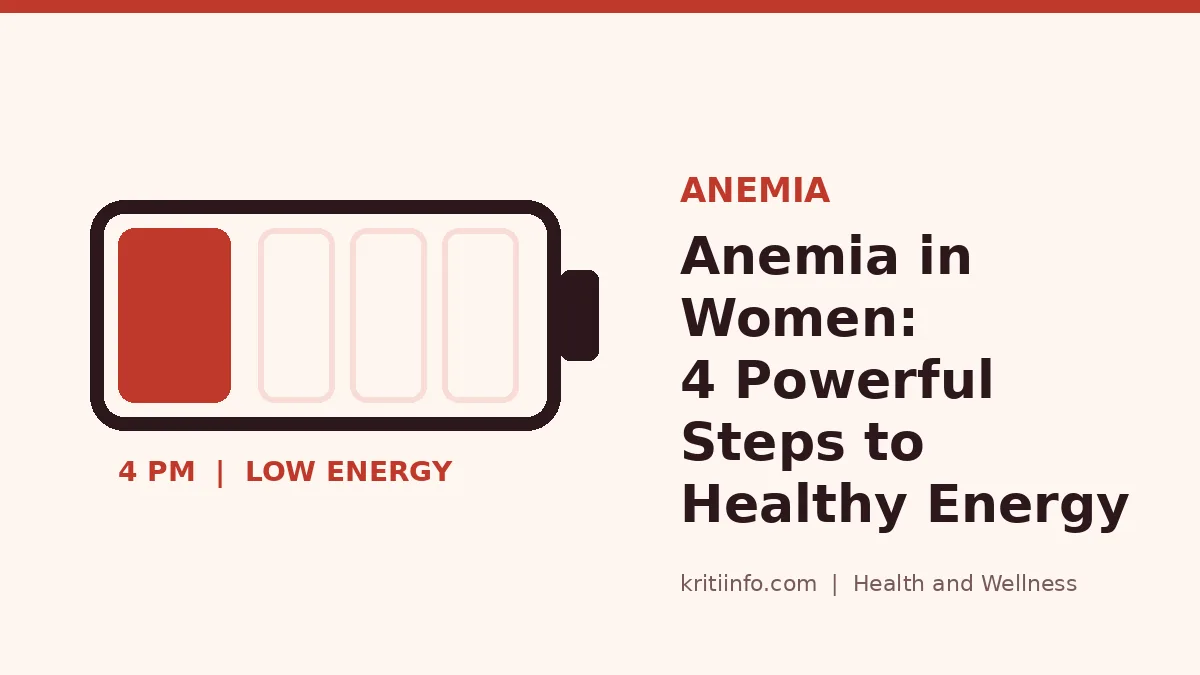
Neha, 31, is a marketing manager. By 4 pm her eyes burn and her legs feel heavy. One flight of stairs makes her heart race. Friends say, “You are just stressed,” so she drinks more coffee and pushes harder.
Neha is a fictional character, but her story is real for millions of women. Tiredness looks normal, and that is why anemia hides so well.
Tired working woman resting her head on her desk at 4 pm
Table of Contents
What Is Anemia? Think of Delivery Trucks
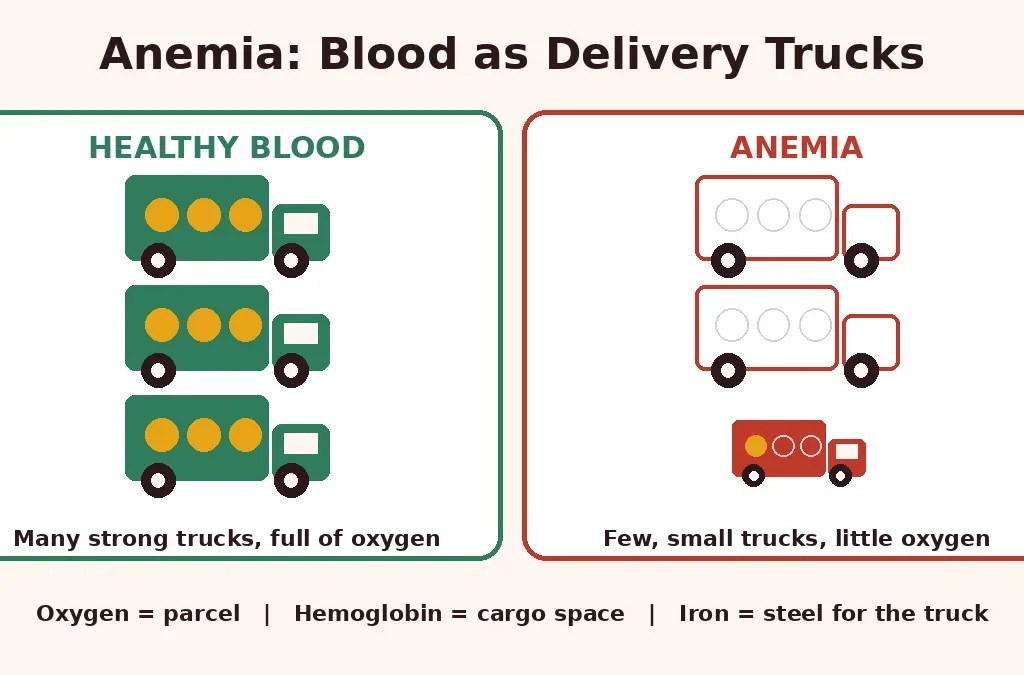
Anemia means your blood cannot carry enough oxygen. Picture red blood cells as delivery trucks. Oxygen is the parcel. Hemoglobin is the cargo space inside each truck. Iron is the steel used to build it.
Too few trucks, or small and weak trucks, and parcels reach your brain, heart and muscles late. You feel tired, dizzy and breathless.
Doctors check hemoglobin with a blood test. The WHO definition, as cited by FAO, says anemia begins below 12 g/dL in non pregnant women and below 11 g/dL in pregnancy.
Case File: The Ice Clue
Fictional story, built on real medical facts.
Every night at 10, Neha opens the freezer. Not for ice cream. For ice. She crunches a full tray while her husband laughs.
Her last blood report said “normal.” Her hemoglobin sat just above the line, and nobody had checked her iron stores.
Then her cousin, a nurse, heard the crunching and went quiet. “Neha, craving ice can be a clue.”
The craving has a name: pica, a strong urge to eat ice, clay or paper. The NHS lists it as a less common sign of iron deficiency anemia.
Here is the twist. Iron stores can run low before hemoglobin falls. The body spends its savings first.
The Numbers, and What They Mean
- World, 2023: 30.7% of women aged 15 to 49 had anemia. It was 35.5% in pregnant women and 30.5% in non pregnant women (WHO).
- India, 2019 to 2021: 57% of women aged 15 to 49 were anemic, up from 53% in 2015 to 2016 (NFHS-5, via the Ministry of Health).
- Pregnant women in India: 52.2%, up from 50.4% (NFHS fact sheets).
- Girls aged 15 to 19: reported at 59%, up from 54%.
- State gap: from 25.8% in Lakshadweep to 92.8% in Ladakh.
What do these numbers tell us? First, India’s rate is almost double the world average. A woman in India is more likely than not to be anemic. One caution: NFHS uses finger prick blood, so do not compare it too tightly with WHO model estimates.
Second, the rate rose even as more pregnant women received iron and folic acid tablets. That suggests tablets alone are not enough. Causes differ: poor diet, heavy periods, worms, B12 shortage and inherited blood conditions.
Third, the huge gap between states shows that food, income and access to care matter as much as biology.
Globally, WHO says the rate is stuck near 30.7%, against 27.6% in 2012. The world is off track to halve it.
Why Women Are More at Risk
Women lose iron every month through periods. Pregnancy needs more iron because blood volume grows and the baby builds its own stores. Breastfeeding adds demand. Teen girls need iron for growth just as periods begin.
Daily life adds pressure. Some women eat last or eat less at home. Busy mothers and working women skip check ups. Clinics can be far away. Diets without meat, fish or eggs can be low in B12 and give iron that is harder to absorb.
To see how your monthly cycle shapes your energy, read our guide on female infradian rhythms and hormonal cycles.
Indian iron rich foods: lentils, spinach, sesame, dates and lemon
Major Causes
- Too little iron in food, or poor absorption
- Heavy periods, which the NHS names among the most common causes, along with pregnancy
- Pregnancy and breastfeeding
- Vitamin B12 shortage, from a diet with no animal foods or poor gut absorption
- Folate shortage, from few greens and pulses, or pregnancy demand
- Hidden bleeding from piles, ulcers or regular painkillers such as ibuprofen
- Worm infections and gut problems that block absorption
- Long term illness, or inherited conditions such as thalassemia
Long stomach trouble or black stools deserve attention. Our article on dyspepsia clues explains when to worry.
Early Warning Signs
- Constant tiredness, even after rest
- Breathlessness on stairs, fast heartbeat
- Headaches and dizziness
- Pale skin and cold hands
- Spoon shaped nails, sore mouth corners
- More hair fall
- Cravings for ice, clay or chalk
- Tingling feet or poor memory, more typical of B12 shortage
It may not be anemia. Thyroid problems, poor sleep, depression, diabetes, kidney disease and stress also cause tiredness. Never self diagnose. A simple blood test tells them apart.
Iron Deficiency vs B12 Deficiency Anemia
Main types include iron deficiency (most common), B12 deficiency, folate deficiency, anemia of long term disease, inherited types such as thalassemia, and rare bone marrow problems. Two are often confused:
| Iron deficiency | B12 deficiency | |
|---|---|---|
| Core problem | Not enough iron to build hemoglobin | Not enough B12 to make healthy red cells |
| Common causes | Heavy periods, pregnancy, poor diet, hidden bleeding | No animal foods, poor gut absorption, some long term medicines |
| Red cell size on CBC | Usually small | Usually large |
| Special clues | Ice craving, hair fall, spoon nails | Tingling, numb feet, memory trouble, sore smooth tongue |
| Key tests | CBC, ferritin | CBC, B12 level, often folate |
| Treatment direction | Find and stop the loss; iron by mouth or drip as advised | B12 injections or tablets as advised; fix the cause |
Iron tablets do not cure B12 anemia, and delay can let nerve symptoms worsen.
Why the Cause Matters More Than the Pill
Think of a bucket with a hole. Pouring in iron without fixing the hole works only for a while. The hole may be heavy periods, piles, an ulcer or poor absorption.
Here is another trap. Thalassemia trait can also show small red cells on a report, just like iron deficiency. Iron will not fix it, and extra iron is not harmless. It can cause side effects and is harmful in iron overload conditions. The NHS also warns that an iron overdose can be fatal in young children, so keep tablets locked away.
So the smartest question for your doctor is not “Which iron tablet?” It is “Why am I anemic?”
The SPOT Framework: 4 Steps to Act
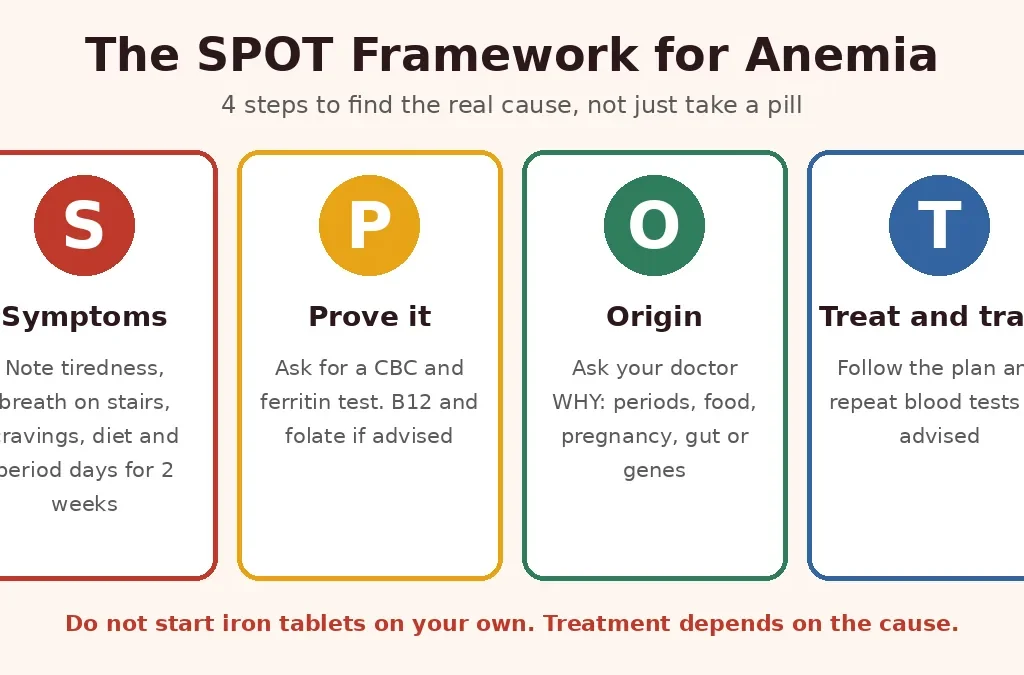
S: Symptoms. For two weeks, note tiredness, breathlessness, cravings, diet, painkillers and period days, including pads used each day.
P: Prove it with tests. Ask for a CBC (hemoglobin, red cell count and size). Ferritin shows iron stores. Doctors may add B12, folate, a blood smear, stool tests or checks for inherited conditions.
O: Origin. Ask why the numbers are low: periods, food, pregnancy, gut, bleeding or genes.
T: Treat and track. Follow the plan, finish the course and repeat blood tests as advised.
Four step SPOT framework infographic for anemia in women
Neha’s Case Solved
Her CBC showed small red cells. Ferritin was low. Her periods lasted eight days with large clots. The doctor asked about stomach bleeding and found no signs. She treated the heavy bleeding, the real cause, and took iron prescribed for her.
Neha also added lentils with lemon and moved her tea away from meals. Her energy improved over weeks. Her blood was rechecked months later, because refilling iron stores takes time.
Treatment and Food: What Helps, Where It Falls Short
- Food: safe and best for prevention. But it is slow and cannot fix heavy ongoing blood loss or moderate to severe anemia alone.
- Supplements: work well for iron deficiency. But they can cause constipation, nausea and dark stools, and the NHS says tablets are often taken for about six months. A doctor should choose the type and dose.
- Iron by drip: for people who cannot tolerate or absorb tablets, under medical care.
- Screening: finds anemia early. But hemoglobin alone can miss low iron stores, which is why ferritin matters.
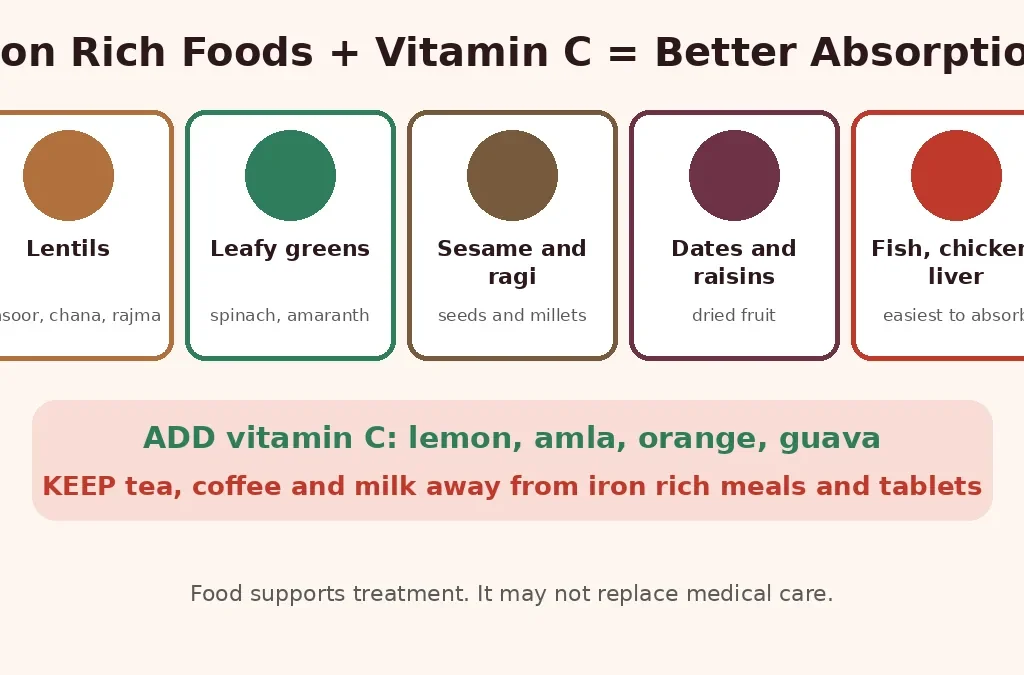
Iron rich foods: lentils, chickpeas, rajma, spinach and other greens, sesame, ragi, dates, raisins, fortified cereals, and for non vegetarians fish, chicken and liver. Iron from meat is absorbed more easily than iron from plants.
Absorption tips: add vitamin C such as lemon, amla, orange or guava. Keep tea, coffee and milk away from iron rich meals and tablets. Whole grains hold phytic acid, which also lowers absorption.
Two Myths to Drop
Myth 1: Every tired woman has anemia. Many conditions cause fatigue. Test, do not guess.
Myth 2: Iron rich food cures all anemia. Food helps, but B12 shortage, bleeding and inherited conditions need medical care.
When Anemia Needs Urgent Care
Go to emergency care for chest pain, fainting, severe breathlessness at rest, a very fast heartbeat, black or bloody stools, vomiting blood, or bleeding that soaks a pad every hour for several hours. In pregnancy, get checked quickly for severe tiredness, dizziness or breathlessness.
Prevention and the Long View
Eat iron, B12 and folate sources daily. Treat worms and bleeding early. Get checked if your periods are heavy, you plan a pregnancy, or you eat no animal foods.
India’s Anemia Mukt Bharat programme, known as 6x6x6, targets six age groups, including adolescent girls, women and pregnant women. Untreated iron deficiency anemia can raise infection risk, strain the heart and increase pregnancy complications, says the NHS. For safer pregnancies and babies, see our piece on reducing newborn mortality.
What to Do This Week
- Start your SPOT notes today.
- Book a CBC and ferritin test with a doctor.
- Add one iron meal and one vitamin C food daily.
- Do not start iron tablets on your own.
FAQs
What are the first signs of anemia in women? Tiredness, breathlessness, fast heartbeat, headaches and pale skin. Mild anemia may show nothing.
Can heavy periods cause anemia? Yes. Repeated heavy bleeding drains iron faster than food refills it. Tell your doctor if periods last over seven days.
Which foods help improve iron levels? Lentils, greens, sesame, ragi, dates, fish and liver, eaten with vitamin C. Food supports treatment but may not replace it.
Is anemia common in pregnancy? Yes. It affected 35.5% of pregnant women worldwide in 2023 and 52.2% in India (NFHS-5). Doctors usually screen and advise supplements.
Can anemia cause hair loss? Hair loss is a less common symptom, says the NHS. Thyroid problems, stress and childbirth also cause it, so test first.
How is anemia diagnosed? With a CBC and ferritin test, plus B12, folate or other tests when needed.
How long does treatment take? Hemoglobin often improves in weeks, but iron stores need months. Your doctor decides the length.
When should a woman see a doctor? When tiredness lasts weeks, periods are heavy, you are pregnant, or you notice any warning sign above.
This article is for education, not diagnosis. Treatment and doses depend on your cause and health, so consult a qualified doctor.