

Meera and Arjun brought their baby girl home on a warm October day. She slept a lot and looked a little yellow. “Normal newborn jaundice,” the nurse had said.
By day 18, the yellow had not gone. While changing a nappy, Meera noticed the stool was the colour of pale clay. Arjun shrugged. “Babies are all different. Let us wait a few days.”
Their neighbour, a retired nurse, glanced at the nappy. “Show this to a doctor today,” she said.
This guide to uncommon infant and newborn problems helps you tell normal from worrying. But first, one question: why did she say a few days could matter so much?
Table of Contents
What Makes a Newborn Problem Uncommon?
Common problems, like a blocked nose or mild jaundice, are covered in our guide to common infant and newborn problems. Uncommon problems affect only a small number of babies and are harder to spot for three reasons.
- Newborns cannot speak. They “talk” through feeding, breathing, skin colour, movement and sleep.
- Many babies look healthy at birth. Signs can appear days or weeks later.
- Early signs, like sleepiness, look like normal baby behaviour.
Early recognition matters because treatment works best when it starts early.
Eight Uncommon Infant and Newborn Problems
1. Congenital hypothyroidism
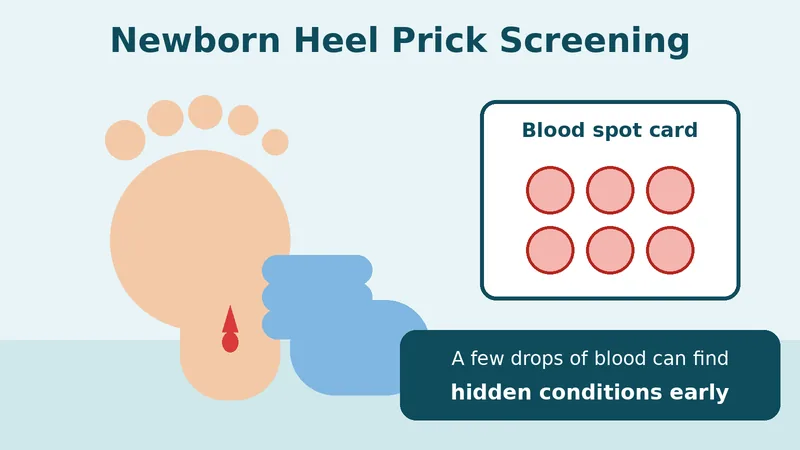
The thyroid gland, a small gland in the neck, makes too little hormone. The hormone is needed for brain growth. Later signs include deep sleepiness, poor feeding, constipation, a large tongue and jaundice that lingers. A heel prick blood test finds it. Treatment is a daily thyroid tablet. Starting within about two weeks of birth gives the best chance of normal growth and learning.
2. Congenital heart defects
Nearly 1 in 100 babies is born with a heart defect, and about 1 in 4 of those is “critical”, meaning surgery or a procedure is needed in the first year. Watch for: fast breathing, blue lips, sweating or tiring during feeds, and poor weight gain. A painless oxygen test called pulse oximetry is done before discharge in many hospitals. A pass does not rule out every heart problem.
3. Biliary atresia
The bile ducts, small tubes that carry bile from the liver, are blocked or missing. It affects roughly 1 in 5,000 to 20,000 babies worldwide, most often in Asia. Watch for: yellow skin lasting beyond two weeks, pale or clay coloured stools and dark urine. Doctors use blood tests and scans. The Kasai surgery works best before about 60 days of age. Some children still need a liver transplant later.
4. Hirschsprung disease
Part of the bowel lacks nerve cells, so it cannot push stool forward. About 1 in 5,000 babies has it. Watch for: no first stool within 48 hours in a full term baby, a swollen belly and green or brown vomit. A bowel biopsy, a tiny tissue sample, confirms it. Treatment is surgery. Delay raises the risk of enterocolitis, a serious bowel infection that needs urgent hospital care.
5. Congenital adrenal hyperplasia
This inherited condition stops the adrenal glands from making enough of certain hormones. It affects roughly 1 in 15,000 babies in many screening programmes. The “salt losing” type can look fine at birth, then cause poor feeding, vomiting, sleepiness and weight loss in the first weeks. Shock can follow. Some girls have unusual looking genitals at birth. A screening blood test helps. Treatment is lifelong hormone medicine from a children’s hormone specialist.
6. Congenital diaphragmatic hernia
The diaphragm is the muscle between chest and belly. A hole lets belly organs move into the chest and stops the lungs growing fully. About 1 in 3,000 babies in the United States has it. Often it is seen on pregnancy scans. If not, breathing trouble starts soon after birth. Delivery should be planned at a hospital with a newborn intensive care unit (NICU), and surgery repairs the hole soon after birth.
7. Neonatal herpes
This rare but serious infection usually passes from a mother carrying the herpes virus during birth, and sometimes through a kiss from someone with a cold sore. Watch for: blisters, fever or a low temperature, unusual sleepiness, poor feeding or seizures in the first weeks. Some babies show no blisters. Treatment is antiviral medicine through a vein in hospital. Left untreated, the form that spreads through the body is often deadly. Tell your doctor if you have ever had genital herpes.
8. Neonatal seizures
These are bursts of abnormal electrical activity in the brain, affecting about 1 to 5 in 1,000 full term babies and more preterm babies. Signs are often subtle: staring, eyes turning to one side, lip smacking, pedalling legs or pauses in breathing. Harmless jitters usually stop when a limb is gently held, but seizure movements often do not. Do not rely on this alone. A brain wave test (EEG) confirms seizures, and doctors treat the cause, such as low sugar, infection or lack of oxygen.
Important: one symptom does not mean your baby has any of these conditions. Only a doctor can tell.
Normal or Worrying? A Quick Comparison
Many uncommon infant and newborn problems begin with signs that look ordinary. Compare:
| What you notice | Often normal | Needs a doctor |
|---|---|---|
| Sleepiness | Sleeps most of the day but wakes for feeds | Hard to wake, floppy, or misses feeds |
| Yellow skin | Mild yellow after day 2, fading by 2 weeks | Yellow in the first 24 hours, or lasting past 2 weeks |
| Breathing | Short pauses, then normal breathing | Grunting, ribs pulling in, blue lips or long pauses (emergency) |
| Feeding | Some spit up, about 8 to 12 feeds a day | Refuses feeds, weak suck, green vomit, few wet nappies |
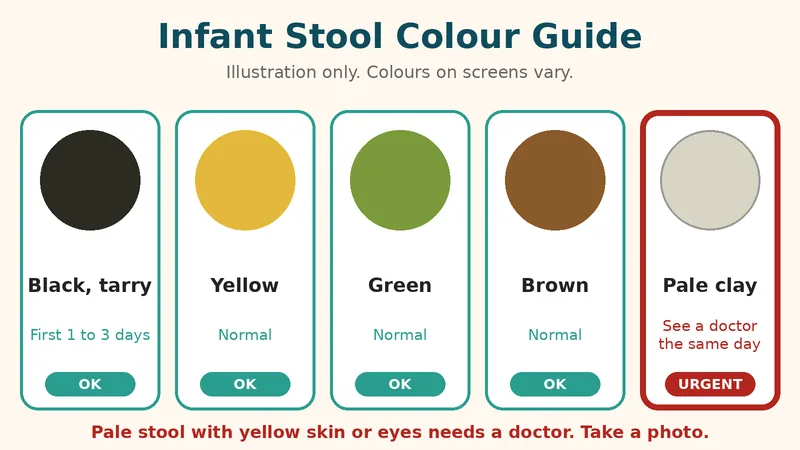
| Stool colour | Black at first, then green or yellow | Pale, white or clay coloured |
| Movements | Brief jitters that stop when held | Repeated jerks, staring or lip smacking that continue |
This table helps you observe. It cannot replace an examination.
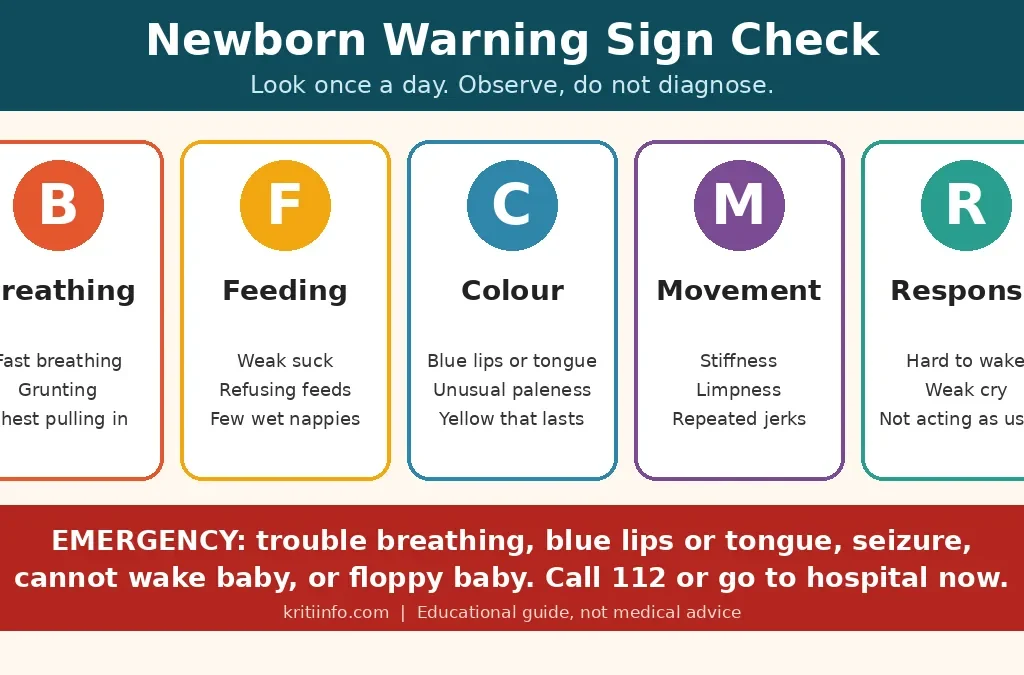
The Newborn Warning Sign Check: B F C M R
Use this five point check once a day, and any time something feels wrong. It is for observation, not diagnosis.
- B, Breathing: fast breathing, grunting, chest pulling inward.
- F, Feeding: weak suck, refusing feeds, fewer wet nappies, signs of dehydration.
- C, Colour: blue lips or tongue, unusual paleness, yellow that lasts.
- M, Movement: stiffness, limpness, repeated jerks.
- R, Response: hard to wake, not alert, weak cry, not behaving as usual.
Emergency signs: trouble breathing, blue lips or tongue, a seizure, a baby who cannot be woken, or a floppy baby. Call 112 or go to the nearest emergency facility now.
What the Numbers Say
Global
- In US states that required pulse oximetry screening, early infant deaths from critical heart defects fell by 33%.
- In a Taiwan stool colour card programme, babies having the Kasai operation before 60 days rose from 60% in 2004 to 74.3% in 2005.
- Where screening is routine in high income countries, congenital hypothyroidism is found in about 1 in 3,000 to 4,000 babies.
India
- A meta analysis of Indian studies found about 1 in 1,031 babies with congenital hypothyroidism in non endemic regions, higher than in many countries.
- It also found only Chandigarh, Goa and Kerala had sustained screening. In 2026, Delhi and Karnataka announced expanded screening and the Health Ministry released RBSK 2.0 guidelines. Access still depends on your state and hospital.
- One Indian hospital review reported an average age of 103 days at biliary atresia surgery, past the best window.
These are study estimates, not national counts.
Two Illustrative Examples
Both are invented scenarios, not real patient histories.
Example A: The feeding problem. Riya is nine days old. She refuses feeds, vomits and sleeps far more than usual. Her parents think she is just tired. They should not wait, because poor feeding with heavy sleepiness warns of infection, adrenal disease or heart problems. A B F C M R check shows she is hard to wake, with few wet nappies. That needs emergency care now.
Example B: The unusual stool colour. Aarav is three weeks old with yellow eyes and clay coloured stools. His father says stools change colour often. But normal stools are yellow, green or brown. Pale stools with jaundice can mean bile is not reaching the gut. The family should see a doctor the same day, show a photo of the stool and ask whether a liver blood test is needed. Kasai surgery works best before about 60 days, so each week counts.
Early Detection: Gains and Limits
Gains: earlier diagnosis, timely treatment, fewer avoidable complications, better follow up and better informed families.
Limits
- Routine screening does not cover every condition, and some problems appear after the test.
- Tests can give false positive or false negative results. A normal heart oxygen test can still miss a defect.
- Access to NICUs and specialists varies across India.
- Doctors often need extra tests to confirm a diagnosis.
Five Myths, Corrected
- “Every newborn problem is visible at birth.” No. Adrenal disease, bile duct blockage and thyroid problems often show up days or weeks later.
- “A normal screening result guarantees perfect health.” No test finds everything. A baby who passes a heart oxygen test can still have a heart defect.
- “Persistent jaundice is always harmless.” No. Jaundice lasting beyond two weeks, with pale stools or dark urine, needs checking.
- “Unusual movements are always baby reflexes.” Many are normal, but repeated jerks, staring or lip smacking need a doctor.
- “Wait a few days and see.” Not for refusing feeds, blue colour, fever, low temperature or a floppy baby. See also our safe sleep guide.
What Parents Should Do Next
- Attend every newborn checkup with your paediatrician and keep all medical records.
- Ask which screening tests were done (heel prick, heart oxygen test, hearing), keep the results and follow up any abnormal one at once.
- Do the B F C M R check daily. Our newborn care guide covers the daily routine.
- Watch stool colour and wet nappies. Take a photo of anything unusual.
- Never give medicines, drops or home remedies without a doctor’s advice.
- Know your nearest hospital with a newborn unit. For breathing trouble, blue lips or tongue, seizures or a baby who cannot be woken, go to emergency care at once.
FAQs
1. What are uncommon infant and newborn problems? Health conditions that affect few babies and are easy to miss, such as biliary atresia.
2. Which rare conditions can affect newborns? Heart defects, Hirschsprung disease, adrenal hyperplasia, diaphragmatic hernia, neonatal herpes and neonatal seizures.
3. How can parents spot unusual symptoms? Use the B F C M R check daily, watch stool colour and call a doctor if something changes.
4. What are the warning signs of serious newborn illness? Trouble breathing, blue lips, refusing feeds, high or low temperature, a seizure, floppiness or being hard to wake.
5. Can newborn screening detect every condition? No. Programmes cover selected conditions, and results can be falsely normal or falsely abnormal.
6. Why can jaundice become dangerous? Very high bilirubin can harm the brain, and jaundice with pale stools can signal a liver problem. Jaundice in the first 24 hours or past two weeks needs checking.
7. When should parents consult a neonatologist? With breathing trouble, poor feeding with sleepiness, an abnormal screening result, or when a doctor advises it.
8. Can uncommon newborn conditions be treated? Many can, and outcomes are usually best when treatment starts early.
Conclusion
Uncommon infant and newborn problems are rare, and most babies are healthy. Observe daily, trust your worry and ask early. For Meera and Arjun, the real question was never “is this normal?” but “who should see this today?”
Disclaimer: This article is for education only. It cannot replace advice, diagnosis or treatment from a qualified doctor.