
It is 3 a.m. Your baby is five days old. Under the lamp, the skin looks a little yellow. The crying will not stop. Learning about Common Infant & Newborn Problems is the fastest way to turn fear into a plan. Most problems are mild. A few are not, and they can grow fast.
This guide shows you what is normal, what needs a baby doctor (paediatrician), and what needs help right now.
This article does not replace a doctor’s check.
Why Newborns Face Health Problems
A newborn is like a house just built. The lights work, but the wiring is still being tested:
- Immune system. Babies borrow some protection from the mother, but their own defences are young. Germs adults ignore can spread fast.
- Gut. The valve at the top of the stomach is loose, so milk often comes back up.
- Nose and lungs. Babies breathe mostly through the nose. A tiny nose with a little mucus sounds very loud.
- Liver. A young liver clears a yellow substance called bilirubin slowly. This causes jaundice.
- Brain and nerves. Babies do not know day from night yet.
- Skin. It is thin and reacts to wetness and rubbing.
A normal adjustment usually comes with a baby who feeds well, wakes easily, and slowly improves. A medical problem often brings poor feeding, unusual sleepiness, hard breathing, fever, or symptoms that keep getting worse.
Table of Contents
12 Common Infant & Newborn Problems and What to Do
1. Newborn Jaundice
Skin and eyes turn yellow because bilirubin builds up. The NHS says jaundice in babies is common and usually harmless. It often fades within about two weeks, or three weeks for babies born early.
At home: Feed 8 to 12 times a day and wake a sleepy baby for feeds. Check colour in daylight. On brown or dark skin, look at the eyes, gums, and palms.
See a doctor if: yellow colour shows in the first 24 hours, gets deeper, spreads, stools look pale, urine looks dark, the baby is very sleepy, or yellow colour lasts beyond two weeks.
2. Infant Colic and Crying
Colic means long crying spells in an otherwise healthy baby. It often starts around two to three weeks and fades by three to four months. The cause is unknown.
At home: Hold, rock, walk, or play soft white noise. Take turns with another adult. If overwhelmed, place baby safely on the back in the crib and take a short break. Never shake a baby.
See a doctor if: crying comes with fever, vomiting, blood in stool, a swollen belly, weak or high pitched cry, or refusing feeds. Call it colic only after a doctor rules out other causes.
3. Feeding Difficulties
Causes include a shallow latch or a sleepy baby. Signs are very short feeds, painful nipples, or few wet diapers.
At home: Feed on hunger cues. Try skin to skin contact. Ask a lactation counsellor early. Mix formula exactly as the label says, never weaker or stronger.
See a doctor if: baby refuses feeds, sucks weakly, or has fewer wet diapers than usual.

4. Reflux and Spit Up
Many babies spit up often yet stay happy and gain weight.
At home: Offer smaller, more frequent feeds. Burp baby and hold them upright briefly after feeding. Never prop baby on a slope for sleep.
See a doctor if: vomit is green or yellow green, has blood, shoots out with force, or baby is not gaining weight, refuses feeds, or seems in pain.
5. Constipation and Gut Discomfort
Grunting and a red face are normal. Constipation means hard, dry, painful stools. Breastfed babies may pass soft stools less often and be fine.
At home: If using formula, check the mixing. Ask your doctor before giving water, juice, or any remedy.
See a doctor if: stools are hard like pellets, have blood, the belly is swollen, or baby vomits and feeds poorly.
6. Diaper Rash and Newborn Skin Conditions
Wetness and rubbing cause red, sore skin. Peeling skin and tiny baby pimples are usually harmless.
At home: Change diapers often, clean gently with water, and let skin air dry. A pharmacist or doctor can suggest a barrier cream.
See a doctor if: you see blisters or open sores, the rash spreads beyond the diaper area, baby has fever, or it does not improve after a few days.
7. Cradle Cap
Yellow, greasy, scaly scalp patches. Poor cleaning does not cause it, and it is not harmful.
At home: Wash gently and use a soft brush. Ask a doctor or pharmacist before using oils.
See a doctor if: the skin is red, cracked, oozing, or spreads to the face or body.
8. Baby Sleep Problems
Newborns sleep in short pieces and wake for feeds. This is normal.
At home: Keep days bright and nights dim. Follow the safe sleep rules below.
See a doctor if: baby is very hard to wake, floppy, or sleeps through feeds and has fewer wet diapers.
9. Nasal Congestion and Mild Breathing Symptoms
Sneezing and a stuffy nose are common. A doctor may suggest saline nose drops, and smoke must be avoided.
See a doctor urgently if: breathing is fast, ribs pull in with each breath, baby grunts, nostrils flare, or feeding is hard because of breathing.
10. Newborn Infections and Fever
A sick newborn may not look “sick” in the usual way. Watch for poor feeding, extra sleepiness, irritability, or a hot or cold body.
A temperature of 38°C (100.4°F) or higher in a baby under three months needs medical assessment right away. Do not give any medicine unless a doctor tells you to. The NHS explains fever in children in more detail.
11. Umbilical Cord Care
The cord stump dries and falls off within a few weeks.
At home: Keep it clean and dry. Fold the diaper below it. Do not apply powder, oil, or home pastes.
See a doctor if: redness spreads, there is pus, a bad smell, bleeding that will not stop, fever, or the stump is still attached after a few weeks.
12. Dehydration and Poor Weight Gain
Babies lose a little weight at first and usually regain it by about two weeks.
Signs: fewer wet diapers, dark urine, dry mouth, no tears when crying, a sunken soft spot on the head, or unusual sleepiness.
At home: Feed more often and count wet diapers.
See a doctor the same day if: any of these signs appear. Seek urgent care if baby is very sleepy or has had no wet diaper for many hours.
Normal or Not? Read the Whole Baby
One symptom rarely tells the story. Age, feeding, and general condition matter more.
| What you see | Usually fine when | Get checked when |
|---|---|---|
| Spit up | Baby feeds happily and gains weight | Vomit is green, bloody, or forceful |
| Crying | Baby settles with holding or feeding | Cry is weak or high pitched, or baby refuses feeds |
| Yellow skin | Starts day 2 to 3 and fades | Starts in first 24 hours or keeps deepening |
| Noisy nose | Breathing looks calm | Ribs pull in or baby grunts |
Emergency Signs: Get Help Now
Go to the nearest emergency service if you see:
- Trouble breathing
- Blue or grey lips or skin
- A baby who cannot be woken or does not respond
- Seizures (jerking or stiffening movements)
- Fever of 38°C (100.4°F) or higher in a baby under three months
The 5 Step Baby Watch
This simple routine turns worry into action.
- Observe. Notice feeding, breathing, crying, temperature, and behaviour.
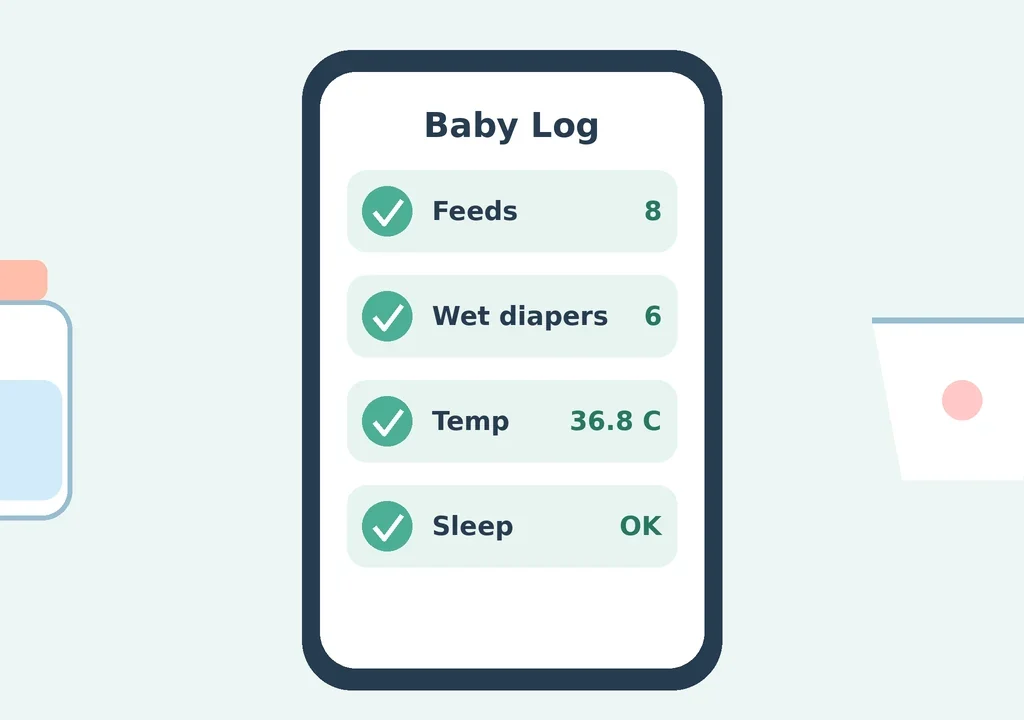
- Record. Write down feeds, wet diapers, temperature, and symptoms with times.
- Assess. Ask: is it mild, getting worse, or dangerous? Use the emergency list above.
- Consult. Call your paediatrician when something worries you. Share your notes.
- Act. Follow medical advice. Go to emergency care when red flags appear.
An Illustrative Story: The “Good Baby” Who Slept Too Much
This is an imagined scenario, not a real case.
Asha and Vikram brought their son home on day three. By day four, friends called him a “good baby” because he slept for hours.
Asha was not sure. His face looked a little yellow, but the room was dim. He had skipped a feed. She noted on her phone: five feeds since last night, one wet diaper this morning.
Alone, each fact seemed small. Together, they made a pattern.
She carried him to the window. The yellow reached his chest. She called the paediatrician and read out her notes. The doctor asked them to come in that day.
In this imagined story, the baby is checked, his bilirubin is measured, and feeding support begins. The lesson: sleepy, yellow, and feeding poorly is one pattern that deserves a call.
Five Common Misconceptions
- “Every crying baby has colic.” No. Crying can signal hunger, pain, or illness.
- “All newborn jaundice is harmless.” Most is mild. Early, deepening, or long lasting jaundice needs a check.
- “Frequent spit up means serious disease.” Often not, if baby is happy and gaining weight.
- “A newborn with fever can be watched at home.” Not under three months.
- “Traditional remedies are always safe.” No. Never give honey to a baby under one year. Do not give gripe water, herbal mixtures, or unprescribed medicines.
Home Watching: Strengths and Limits
Parents know their baby best. But home checks cannot measure bilirubin, listen to the lungs, or find an infection. Online articles, including this one, cannot examine your baby. Use them to ask better questions.
Everyday Prevention
- Breastfeed exclusively for about six months when possible. The World Health Organization recommends this, with solid foods added at six months.
- Prepare formula exactly as directed, with clean bottles.
- Wash hands before touching your baby.
- Follow the American Academy of Pediatrics safe sleep guidance. Put baby on the back, on a firm, flat, separate surface, with no loose bedding, pillows, or soft toys.
- Complete vaccines on time.
- Keep the cord clean and dry.
- Attend growth checks and doctor visits.
- Don’t leave the child alone
What to Do Next
- Keep your paediatrician’s number handy for 3 a.m.
- Start a simple feeding and diaper log in the first week.
- Share the emergency signs with caregivers.
Frequently Asked Questions
1. What are the most common health problems in newborn babies? Jaundice, feeding trouble, colic, reflux, diaper rash, stuffy nose, and cord problems.
2. When should parents worry about newborn jaundice? If it starts in the first 24 hours, deepens, comes with poor feeding or sleepiness, or lasts beyond two weeks.
3. Is frequent crying normal in newborns? Some crying is normal. Get help if it comes with fever, vomiting, poor feeding, or a weak or very high pitched cry.
4. How can parents identify dehydration in infants? Fewer wet diapers, dark urine, dry mouth, no tears, a sunken soft spot, and unusual sleepiness.
5. When is a newborn’s fever dangerous? A temperature of 38°C (100.4°F) or higher in a baby under three months needs urgent medical assessment.
6. Why does a newborn spit up after feeding? The valve at the top of the stomach is still loose. It is usually harmless if baby gains weight and feeds well.
7. How can parents protect newborns from infections? Wash hands, keep sick visitors away, breastfeed when possible, avoid smoke, and keep vaccines on time.
8. When should a baby be taken to a paediatrician? When feeding, breathing, sleep, colour, or wet diapers change worryingly. Go straight to emergency care for red flag signs.
Conclusion
Understanding Common Infant & Newborn Problems does not mean worrying about everything. It means knowing what is usual, what needs a call, and what needs help right now. Your eyes and your notes are valuable. A doctor’s examination is essential when warning signs appear.
Save this guide, share it with other caregivers, and ask a qualified healthcare professional whenever you are unsure.