
Imagine a parent noticing that their child has not passed stool for several days. The child complains of stomach discomfort, becomes irritable, avoids the toilet and seems unusually quiet. Many parents wonder whether this is just a passing digestive problem or a sign that needs medical attention.
Constipation is common in childhood, but it should not be ignored when it becomes painful, repeated or affects daily life. Understanding the signs early can protect a child’s physical comfort, confidence and emotional wellbeing. This article explains constipation in simple language and gives parents, caregivers, teachers and teenagers practical steps to support healthy bowel habits.
Table of Contents
What Is Constipation?
Constipation means bowel movements are difficult, uncomfortable or less frequent than usual for that child. It may involve hard, dry or lumpy stools, pain while passing stool, straining, or a feeling that the bowel has not emptied completely. The National Institute of Diabetes and Digestive and Kidney Diseases (NIDDK) describes childhood constipation as fewer than two bowel movements a week, hard or painful stools, or difficulty passing stool.
Bowel frequency naturally varies. Some children pass stool once or twice a day, while others go every second or third day. Frequency alone does not always mean constipation. A child who passes stool every two days but has soft, painless stools may be perfectly healthy. In contrast, a child who passes stool daily but strains painfully and produces small hard pieces may still need support.
Normal variation becomes more concerning when discomfort, hard stools, avoidance of the toilet or repeated symptoms continue over time. Constipation is not a reflection of poor parenting or a child being “difficult.” It is a common health issue that can usually improve with the right combination of habits and, when needed, medical care.
Why Do Children and Teenagers Develop Constipation?
Constipation often develops when several small factors combine. A child may eat less fibre, drink less water, become less active and begin ignoring the urge to use the toilet. Each factor can make stools harder, slower or more uncomfortable.
Common contributors include:
- Low fibre intake: Refined foods, white bread, chips, biscuits and sugary snacks may crowd out fruits, vegetables, whole grains, beans and lentils.
- Not enough fluids: Water helps keep stool softer. Fibre works best when a child drinks enough fluids.
- Low physical activity: Movement supports normal bowel function, especially in children who spend long hours sitting.
- Ignoring the urge to pass stool: Children may avoid school toilets, feel embarrassed, be too busy playing, or delay going because of discomfort.
- Toilet-training pressure: Toddlers may withhold stool if they feel scared, rushed, punished or pressured during toilet training.
- Routine changes: Starting school, travel, illness, a new sibling or family stress can disrupt regular toilet habits.
- Emotional stress: Anxiety can affect digestion and make children more likely to avoid the bathroom.
- Medicines and medical conditions: Some medicines and certain health conditions can contribute. A clinician should assess persistent or unusual symptoms.
These causes often interact. For example, a child eats less fibre, becomes mildly constipated, experiences a painful bowel movement, then starts holding stool in. The problem can grow quietly over weeks.
Recognising the Warning Signs
Common signs of constipation include:
- Hard, dry, pellet-like or very large stools.
- Pain, crying or straining during bowel movements.
- Stomach pain, bloating or cramps.
- Avoiding the toilet or asking not to go.
- Withholding behaviour, such as crossing legs, clenching buttocks, standing on tiptoes or doing unusual “dance-like” movements.
- Small amounts of liquid stool or stool marks in underwear, which can happen when hard stool remains in the bowel and softer stool leaks around it.
Occasional difficulty is different from persistent constipation. A single hard stool after travel, illness or a change in diet may settle with healthy habits. But symptoms that continue, worsen, or interfere with school, sleep, eating or play deserve medical assessment.
Constipation in Different Age Groups
| Age group | What influences bowel health | Important point |
|---|---|---|
| Infants and newborns | Milk feeding, introduction of solids, illness and development | Do not use adult remedies, laxatives or home treatments without professional advice. |
| Toddlers and preschool children | Toilet training, food preferences, independence and routine changes | Gentle, pressure-free toilet habits are especially important. |
| School-age children | School toilets, busy schedules, privacy concerns and physical activity | Fear of using unfamiliar toilets can lead to stool withholding. |
| Teenagers | Irregular meals, stress, dieting, low water intake and busy routines | Constipation can be overlooked because teens may feel embarrassed to discuss it. |
Infants need individualised advice from a paediatric clinician or child-health professional. A baby who has not passed the first stool within the first 48 hours after term birth, or who has constipation from birth or the first few weeks of life, needs prompt medical assessment.
The Science Behind Constipation
Food travels through the digestive system, and the large intestine absorbs water from remaining waste. When stool moves too slowly, the intestine has more time to remove water. The stool becomes harder, drier and more difficult to pass.
This can create a painful cycle:
Painful bowel movement → fear of passing stool → withholding → stool stays longer → harder stool → more pain.
A child may not consciously decide to “hold it in.” They may cross their legs, hide, clench their body or refuse the toilet because they remember pain. NIDDK notes that stool withholding is one of the most common causes of constipation in children.
Over time, the rectum can stretch as it holds stool. This may reduce the normal urge to go, making the problem harder to break. This is why supportive treatment and consistent toilet habits matter, not only dietary changes.
A Practical Framework for Better Digestive Health
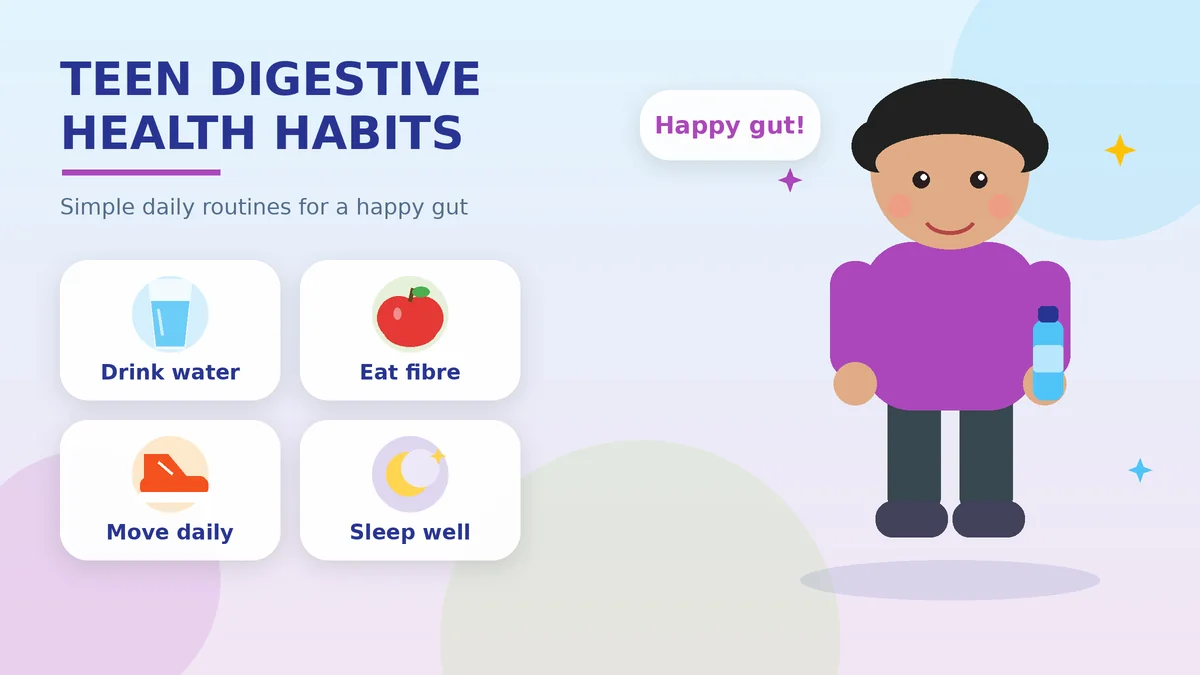
Use this simple five-step framework: Fibre, Fluids, Movement, Routine and Observation.
Fibre
Offer age-appropriate fibre-rich foods such as fruits, vegetables, whole grains, beans and lentils. Increase fibre gradually, because a sudden large increase can cause gas or bloating.
Fluids
Encourage water regularly through the day. Fluid needs vary with age, activity, weather and health, so a healthcare professional can guide families who are unsure.
Movement
Daily play, walking, cycling, sports or active games support overall health and bowel function. Even a short walk after meals can become a helpful family routine.
Routine
Encourage a relaxed toilet visit after meals, when the natural bowel reflex is often stronger. Allow enough time, keep the experience calm and avoid punishment or pressure.
Observation
Notice stool frequency, consistency, pain, appetite, abdominal discomfort and toilet avoidance. A simple stool diary for one or two weeks can help a clinician understand the pattern.
Diet and routine can help many children, but they may not be enough for established constipation. Persistent symptoms need professional assessment rather than repeated home remedies.
Foods That Support Healthy Bowel Movements
No single food is a guaranteed cure. However, a balanced diet can support comfortable bowel movements when combined with enough fluids and regular activity.
Helpful options include:
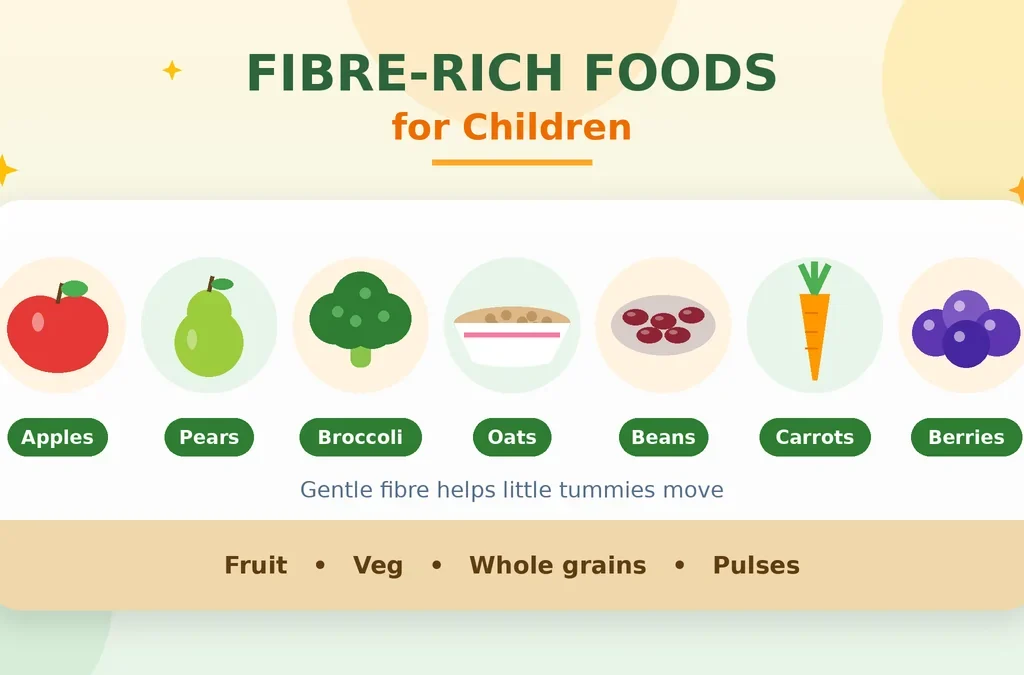
- Whole grains such as oats, whole-wheat bread, brown rice and whole-grain cereals.
- Vegetables such as carrots, peas, broccoli, spinach and beans.
- Fruits such as pears, apples, prunes and berries.
- Beans, lentils and chickpeas.
- Nuts and seeds where safe for the child’s age and allergy history.
Increase fibre slowly and pair it with fluids. For example, add fruit to breakfast, offer vegetables at lunch, and include beans or lentils in dinner a few times a week. Avoid forcing a child to eat; pressure around food can create stress and make mealtimes unpleasant.
When Should Parents Consult a Doctor?
Seek medical advice if constipation lasts more than about two weeks without improvement, keeps returning, or affects a child’s daily life. Mayo Clinic advises medical review when constipation continues beyond two weeks or occurs with fever, poor eating, blood in stool, abdominal swelling, weight loss or pain during bowel movements.mayoclinic
Seek urgent medical care for:
- Severe or persistent abdominal pain.
- Significant abdominal swelling, especially with vomiting.
- Vomiting, particularly green vomiting.
- Blood in the stool or bleeding from the anus.
- Poor weight gain or unexplained weight loss.
- Fever or signs of serious illness.
- Constipation beginning in the newborn period.
- Delayed passage of the first stool after birth.
NICE states that children or young people with red-flag symptoms should not simply be treated for constipation; they need urgent referral to an appropriate healthcare professional.
Treatment and Medical Management
Treatment depends on the child’s age, symptoms, severity and possible underlying cause. A clinician may recommend dietary and behavioural changes, a regular toilet routine, and sometimes stool-softening medicines or laxatives when appropriate.
Do not give laxatives, enemas, herbal remedies or adult medicines to a child without advice from a qualified healthcare professional. The correct medicine, dose and duration vary by age and situation. Follow-up is important because constipation can return if treatment stops too early or the withholding cycle continues.
Occasional Difficulty or Persistent Constipation?
| Aspect | Occasional bowel difficulty | Persistent constipation |
|---|---|---|
| Duration | Short-lived | Continues or repeatedly returns |
| Stool | May temporarily become hard | Often hard, dry, painful or difficult to pass |
| Discomfort | Usually temporary | May affect school, sleep, appetite and play |
| Management | Healthy habits and observation | May require clinical assessment and treatment |
| Attention | Monitor symptoms | Seek professional guidance |
Duration alone does not diagnose constipation. A clinician considers symptoms, stool pattern, growth, medicines, diet, toilet habits and physical examination.
A Fictional Real-World Example
Consider a fictional eight-year-old, Aarav. After a painful bowel movement at school, he begins avoiding the school toilet. He holds stool in during the day, becomes less willing to use the bathroom at home, and starts complaining of stomach aches.
Over several weeks, his stools become harder and more painful. He begins crossing his legs and asking to leave activities. His parents initially think he is being stubborn, but a calm conversation reveals that he is afraid of pain.
His parents respond by removing blame, creating a relaxed after-breakfast toilet routine, offering water and fibre-rich meals, encouraging active play, and arranging a medical consultation. This fictional example shows how a small painful experience can become a cycle of withholding and worsening constipation. It is an illustration, not a real patient case or medical evidence.
Expert Interpretation
Constipation is not always caused by eating too little fibre. Stool withholding, painful bowel movements, developmental factors, stress and, less commonly, underlying medical conditions can all contribute.
Treating only diet may not solve the problem if a child is afraid to pass stool. Effective care often needs to address both the stool itself and the child’s fear, routine and confidence. This is established medical understanding; the best plan for an individual child should come from a qualified clinician.
What the Evidence Suggests
Functional constipation is common worldwide, but estimates vary because studies use different definitions, age groups and countries. A 2025 systematic review of European children reported that the worldwide prevalence of functional constipation in children ranged from 0.5% to 32.2%, with a pooled estimate of 9.5%.onlinelibrary.wiley
This does not mean that nearly one in ten children in every classroom has constipation at the same time. It means that, across many studies, functional constipation is a frequent childhood condition. The wide range reflects differences in research methods, definitions and populations. What matters most for an individual child is the pattern of symptoms and whether they are improving.
Advantages and Limitations
Healthy bowel habits can improve comfort, confidence, nutrition and participation in daily activities. Fibre, fluids, movement and calm toilet routines are useful preventive measures for many children.
However, they have limits. A child with severe, long-lasting or complicated constipation may need clinician-directed treatment. Lifestyle changes should support medical care, not replace it when medical care is needed.
Common Misconceptions
- “Every child must pass stool daily.” Many healthy children do not. Stool consistency, comfort and the child’s usual pattern matter more than a fixed daily rule.
- “Constipation always means too little water.” Fluids matter, but withholding stool, low fibre, stress, routine changes and medical factors can also contribute.niddk.nih
- “Children always outgrow it.” Some children improve naturally, but persistent constipation can continue or return without support.
- “Laxatives are always dangerous.” When prescribed or advised by a clinician, laxatives can be an important part of treatment. They should not be used without professional guidance.niddk.nih
- “A child who passes stool regularly cannot be constipated.” A child may pass small amounts while hard stool remains in the bowel. Leakage or soiling can sometimes be a sign of this problem.
What Parents Should Do Next
- Observe bowel movements, pain, appetite and toilet avoidance.
- Offer balanced, fibre-rich meals.
- Encourage appropriate fluids.
- Create a relaxed toilet routine, especially after meals.
- Support daily movement and play.
- Avoid punishment, shame or pressure.
- Seek medical advice for persistent symptoms or warning signs.
FAQ
What causes constipation in children?
Common causes include stool withholding, low fibre, inadequate fluids, low activity, routine changes, stress and sometimes medicines or medical conditions.niddk.nih
How long can a child go without passing stool?
It varies by age and individual pattern. Persistent constipation, pain, hard stools or warning symptoms need medical advice rather than waiting for a fixed number of days.
Which foods help relieve constipation in children?
Fruits, vegetables, whole grains, beans and lentils can support bowel health, especially when paired with enough fluids. No food is a guaranteed cure.niddk.nih
Can dehydration cause constipation in teenagers?
Yes. Not drinking enough fluids can contribute to harder stools, particularly when fibre intake is low or activity is high.
When should parents worry about constipation?
Seek prompt medical advice for blood in stool, severe pain, swelling, vomiting, fever, weight loss, poor growth or symptoms that do not improve.
Is constipation common during toilet training?
Yes. Pressure, fear or painful stools can lead toddlers to withhold stool. A calm, encouraging approach is important.
Can untreated constipation cause long-term problems?
It can become persistent, painful and affect confidence, toileting and daily activities. Early support can reduce these problems.
Conclusion
Constipation in children and teenagers is common, but it deserves attention when it becomes painful, repeated or disruptive. The most useful approach combines fibre-rich food, adequate fluids, movement, relaxed toilet routines and careful observation.
Parents should respond with patience rather than blame. When symptoms persist or warning signs appear, timely medical assessment can identify the cause and prevent the withholding cycle from becoming entrenched. Small, consistent steps can make a meaningful difference to a child’s digestive health and comfort.