
Picture a typical evening in an ordinary apartment. Fourteen-year-old Aarav (a composite example based on common family patterns) finishes his homework at 6:00 PM. Without thinking, he reaches for his phone. Two hours vanish into short videos and online games. By bedtime, his eyes feel tired, yet his mind refuses to switch off. He wakes up sluggish, struggles to focus in morning classes, and feels irritable over small things.
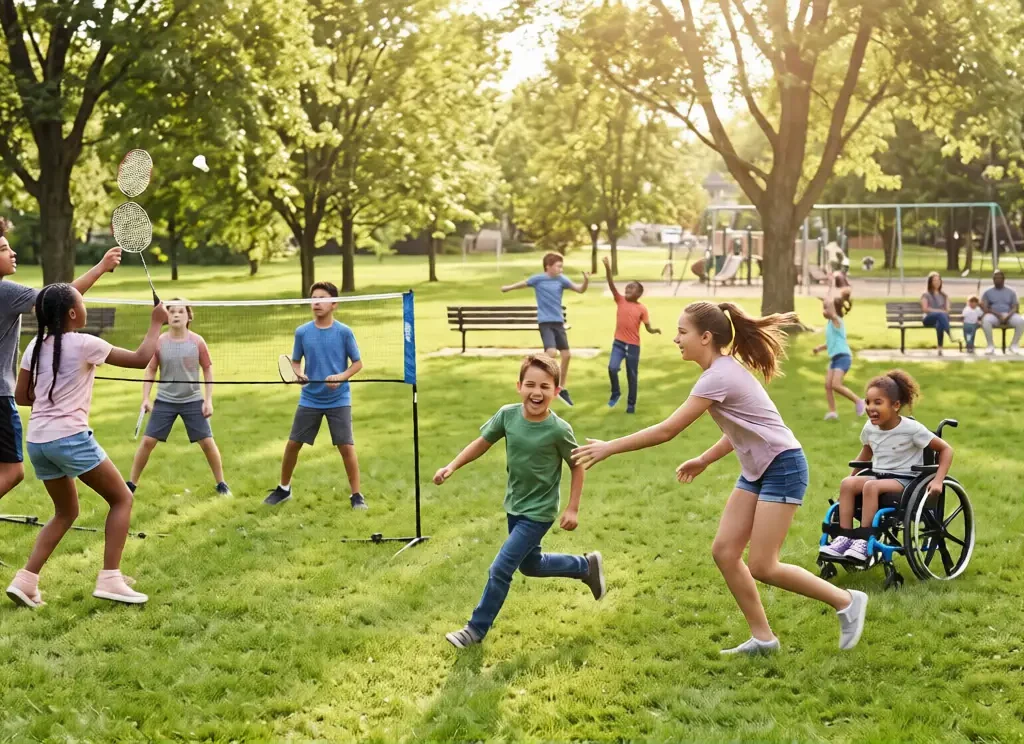
One afternoon, his neighbor invites him to join a casual evening game of badminton in the housing society courtyard. There are no coaches, no scoreboards, and no pressure. Just thirty minutes of running, laughing, and hitting a shuttlecock. Within three weeks of playing four evenings a week, Aarav notices a quiet shift. He falls asleep faster. His afternoon fatigue fades. Even his mood during exam weeks feels steadier.
Why did thirty minutes of simple movement change so much? The answer lies in how Exercise shapes a growing body and brain.
Table of Contents
What Does Fitness Really Mean?
Many people hear the word Fitness and immediately picture marathon runners, gym weights, or Olympic athletes. That picture stops thousands of families from even trying.
In simple words, Fitness is your body’s ability to carry out daily tasks with energy, strength, and alertness, without getting overly tired. It is different from overall health. Overall health includes everything from immunity and nutrition to emotional balance and freedom from illness. Physical fitness is one core pillar that holds up that overall health.
A child does not need to win medals or have visible muscles to be fit. If a child can walk briskly up stairs without gasping, carry a school bag comfortably, play outdoors with friends, and recover energy after a good night’s sleep, they are building strong physical fitness.
Why Children and Teenagers Need Regular Movement
Growing bodies are not just smaller versions of adult bodies. Children and teenagers go through rapid physical and brain changes that respond directly to movement.
- Stronger Bones and Muscles: Childhood and adolescence are the primary years when the body builds peak bone density. Weight-bearing movement like jumping and running signals bones to grow thicker and stronger.
- Heart and Lung Endurance: Active play trains the heart muscle to pump blood efficiently and helps the lungs deliver oxygen to growing tissues.
- Sharper Brain Function: According to the Centers for Disease Control and Prevention (CDC), regular physical activity improves memory, attention, and classroom performance in school-aged youth.
- Emotional Well-Being and Confidence: Movement triggers natural brain chemicals that ease stress and anxious feelings. Learning a new physical skill, like riding a bicycle or completing a dance routine, builds genuine self-belief.
- Social Skills and Teamwork: Group games teach young people how to share, follow rules, handle losing gracefully, and encourage others.
Children vs. Teenagers: Different Ages, Different Needs
Parents often make the mistake of treating a seven-year-old and a sixteen-year-old the same way.
- Younger Children (Ages 5 to 11): Kids in this stage learn best through short bursts of unstructured play. Their attention spans are shorter, so games like tag, hopscotch, climbing playground structures, and swimming work far better than strict exercise drills.
- Teenagers (Ages 12 to 17): During puberty, rapid growth spurts can temporarily affect balance and coordination. Teenagers also face heavy academic pressure and self-consciousness about their changing bodies. Teens usually prefer choice, social connection with peers, and purposeful movement like cycling, brisk walking with music, yoga, martial arts, or team sports.
Understanding Different Types of Physical Activity
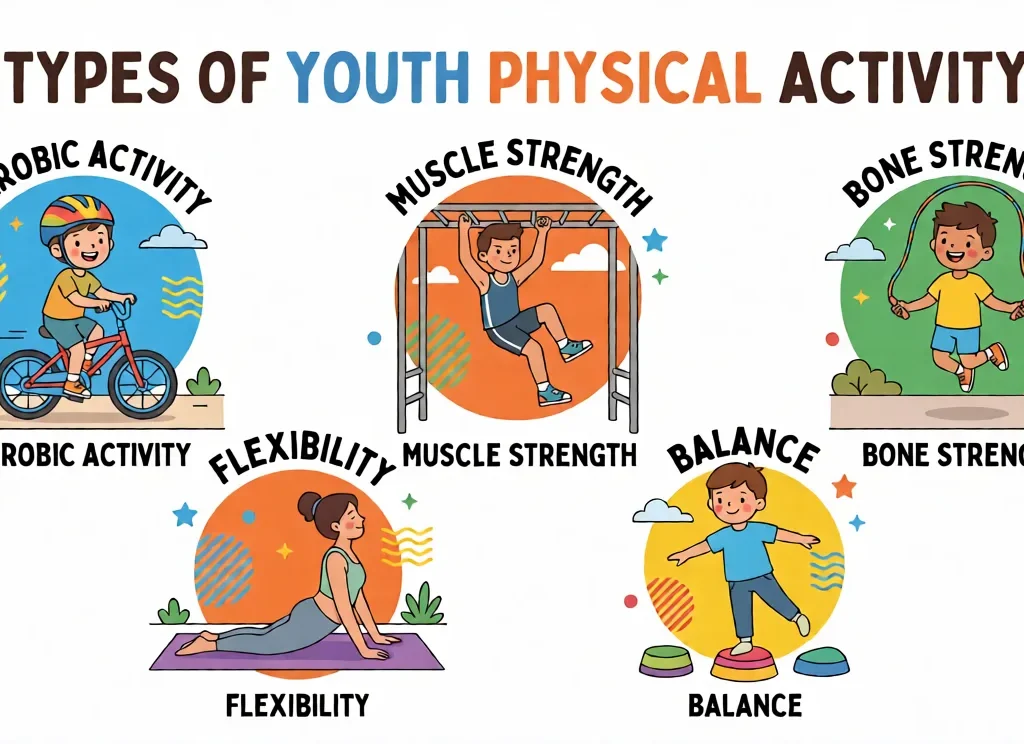
To grow well, young bodies need a mix of five movement types. You can recognize them easily in everyday life:
- Aerobic Activity: Any movement that makes the heart beat faster and breathing deeper, such as brisk walking, cycling, swimming, dancing, or chasing a football.
- Muscle-Strengthening Activity: Movements that make muscles work harder than usual, such as climbing trees or monkey bars, tug-of-war, push-ups, or carrying groceries.
- Bone-Strengthening Activity: Activities where feet or hands strike the ground and create safe impact, such as skipping rope, hopping, basketball, and running.
- Flexibility: Stretching muscles and moving joints smoothly, seen in yoga, gymnastics, or reaching high to catch a ball.
- Balance and Coordination: Controlling body position while moving or standing still, practiced through skating, cycling, hopscotch, or martial arts.
- Non-aerobic activity: Exercise exhaling & making the heart beat faster
Organised Sports vs. Everyday Physical Activity
Families often wonder whether they must enroll their child in a paid sports academy. Both organised sports and everyday movement have clear strengths and limits.
| Feature | Organised Sports (Coaching, Clubs, School Teams) | Everyday Physical Activity (Free Play, Walking, Chores) |
| Structure | Scheduled practices, rules, and skill coaching. | Flexible, self-paced, and fits into daily routines. |
| Social Benefit | Builds deep team loyalty and discipline. | Encourages inclusive, low-pressure neighborhood friendships. |
| Cost & Access | Often requires fees, gear, and travel time. | Free or very low cost; accessible almost anywhere. |
| Main Limitation | Risk of intense pressure, burnout, or sitting on the bench. | May lack structured skill progression if not varied. |
The healthiest approach blends both. Even if a child never joins a formal team, daily active play and walking can deliver full health benefits.
What Global Data Tells Us About Youth Activity
Health agencies worldwide recommend a clear daily target. Both the World Health Organization (WHO) and the CDC state that children and adolescents aged 5 to 17 should get an average of at least 60 minutes of moderate-to-vigorous physical activity every day, including muscle and bone strengthening at least three days a week.
Yet global data reveals a worrying gap. According to WHO surveillance reports, more than 80% of school-going adolescents globally do not meet this 60-minute daily standard, and roughly one in four adolescents report zero active days in an entire week. Data from the 2022 India Report Card on Physical Activity for Children and Adolescents similarly notes that nearly half of Indian youth fall short of daily movement targets, with adolescent girls facing steeper drops in active play.
What do these numbers actually mean? They do not mean young people are lazy. They show that modern schedules—long school hours, evening tuition, heavy traffic, shrinking playgrounds, and endless screen entertainment—have quietly engineered movement out of childhood.
The STEP Practical Fitness Framework for Families
You do not need an hour-long gym session to hit 60 minutes. Activity adds up across the day. Families can follow the simple STEP Framework:
- S – Split the 60 Minutes: Break movement into three 20-minute blocks. Walk briskly to school or the bus stop (20 minutes), play actively during school recess (20 minutes), and cycle, dance, or play outdoors in the evening (20 minutes).
- T – Trade Sitting for Standing: Interrupt long study or screen sessions every 45 minutes. Five minutes of stretching, stair climbing, or helping with household chores resets posture and circulation.
- E – Explore Weather-Proof Options: When heat, monsoon rain, or air pollution keeps kids indoors, switch to skipping rope, indoor obstacle courses, yoga flows, stair workouts, or energetic family dance sessions.
- P – Progress by Energy, Not Weight: Never measure a child’s progress with a bathroom scale or mirror. Instead, notice positive signs: better mood after school, deeper sleep, improved stamina during play, and excitement to move.
Food, Sleep, and Recovery: The Hidden Partners
Physical Fitness cannot thrive on movement alone. Three daily habits fuel a growing body:
- Balanced Nutrition and Hydration: Active kids need steady fuel from whole grains, pulses, eggs, dairy, nuts, fruits, and vegetables. Water should always be the primary drink before, during, and after play, rather than sugary sodas or packaged energy drinks.
- Restorative Sleep: Muscles repair and growth hormones release primarily during deep sleep. According to the American Academy of Pediatrics (AAP), children aged 6 to 12 need 9 to 12 hours of sleep, while teenagers aged 13 to 18 need 8 to 10 hours each night.
- Rest Days: Growing bodies need recovery. Taking one or two lighter days each week prevents exhaustion and protects developing joints.
(Related reading on Kriti Info: Explore how daily routines support healthy development in our guide on Childhood Obesity: 6 Powerful Habits for Healthier Kids.)
Technology: Friend or Enemy?
Screens are one of the biggest drivers of sitting time, yet technology does not have to be the enemy of an active life.
Used poorly, phones and gaming consoles steal hours of outdoor sunlight and face-to-face friendship. Used wisely, technology can spark movement. Free dance tutorials, beginner yoga videos, step-counter challenges among family members, and outdoor geocaching games can motivate reluctant teenagers to get off the sofa.
The golden rule for families is simple: let technology start the movement, never replace real-world play. Keep recreational screen time under two hours a day outside of schoolwork, and keep bedrooms screen-free at night.
Common Fitness Mistakes Parents and Teens Should Avoid
Even well-meaning adults can accidentally turn kids away from exercise. Watch out for these common pitfalls:
- Forcing One Activity: If a teenager hates cricket or running laps, forcing them builds resentment. Let them sample swimming, cycling, badminton, skating, or dancing until something clicks.
- Comparing Siblings or Peers: Every child develops coordination and speed on a different timeline. Comparison damages confidence.
- Training Like Adults: Heavy weightlifting with poor technique or intense daily endurance drills without rest can injure growing bones and growth plates.
- Ignoring Pain: Soreness after new activity is normal, but sharp joint pain, limping, dizziness, or chest tightness is never something to “push through.”
- Using Exercise as Punishment: Making a child run laps or do push-ups for misbehaving teaches them that movement is a penalty rather than a joy.
When to Seek Medical Advice: Before starting vigorous sports—or anytime a child experiences shortness of breath out of proportion to effort, fainting, persistent joint pain, or manages a condition like asthma or diabetes—consult a qualified pediatrician. Children with physical or developmental disabilities deserve adapted, inclusive activities designed with medical guidance so they can enjoy every benefit of movement safely. (You can also read our guide on Asthma in Children: Powerful Steps Toward Easier Breathing for safe activity tips.)
Making Fitness Easy at Home and School
Lasting habits grow when home and school environments make movement the natural choice:
- At Home: Keep simple, low-cost gear visible near the door—a skipping rope, a football, or badminton rackets. Plan weekend family walks instead of always driving short distances.
- At School: Teachers can add two-minute movement breaks between long lessons, protect physical education periods from being replaced by exam prep, and organize non-competitive play games where every student participates regardless of athletic skill.
Frequently Asked Questions (FAQs)
1. How much physical activity do children and teenagers really need each day? Health authorities like the WHO and CDC recommend at least 60 minutes of moderate-to-vigorous movement every day for ages 5 to 17. This does not have to happen all at once; three 20-minute bursts of active play, walking, or cycling work just as well.
2. Is organised sport necessary for good Fitness? No. While team sports teach great social skills, everyday activities like brisk walking, cycling, dancing, swimming, and playground games provide the exact same heart, bone, and mental health benefits without extra cost or pressure.
3. Can regular physical activity improve a teenager’s mental well-being and grades? Yes. Physical activity reduces stress hormones, improves sleep quality, and boosts blood flow to brain regions responsible for focus, memory, and emotional regulation.
4. How can parents motivate an inactive teenager who prefers screens? Avoid lecturing about health risks. Instead, offer choices, invite them to pick a playlist for an evening walk, encourage active outings with their friends, or join them in a casual game without judging their skill level.
5. Are strength exercises safe for children and teens? Yes, when done safely. Bodyweight exercises like squats, push-ups, climbing, and resistance bands build strong muscles and protect joints. Avoid maximal heavy lifting and always prioritize proper form and adult supervision.
6. What indoor activities work well when outdoor air quality or weather is poor? Skipping rope, stair climbing, yoga, shadow boxing, indoor dance workouts, and bodyweight circuits require minimal space and zero expensive equipment while keeping heart rates up.
7. Should children take protein powders or fitness supplements? No. Growing children and teenagers can meet all their nutritional needs through regular, balanced home meals. Unregulated supplements can carry health risks and are unnecessary for youth.
Conclusion: Building an Active Approach to Life
True Fitness during childhood and adolescence has nothing to do with six-pack abs, trophies, or outrunning classmates. It is about helping young people feel strong, capable, energized, and comfortable inside their own bodies. When movement feels joyful rather than forced, children carry that habit effortlessly into adulthood.
Your Next Step Today: Sit down with your child or teenager tonight and pick one enjoyable 20-minute activity—an evening walk, a family dance song, a cycle ride, or a casual game in the park—and put it on tomorrow’s schedule. Start small, keep it fun, and let movement become the best part of their day.