

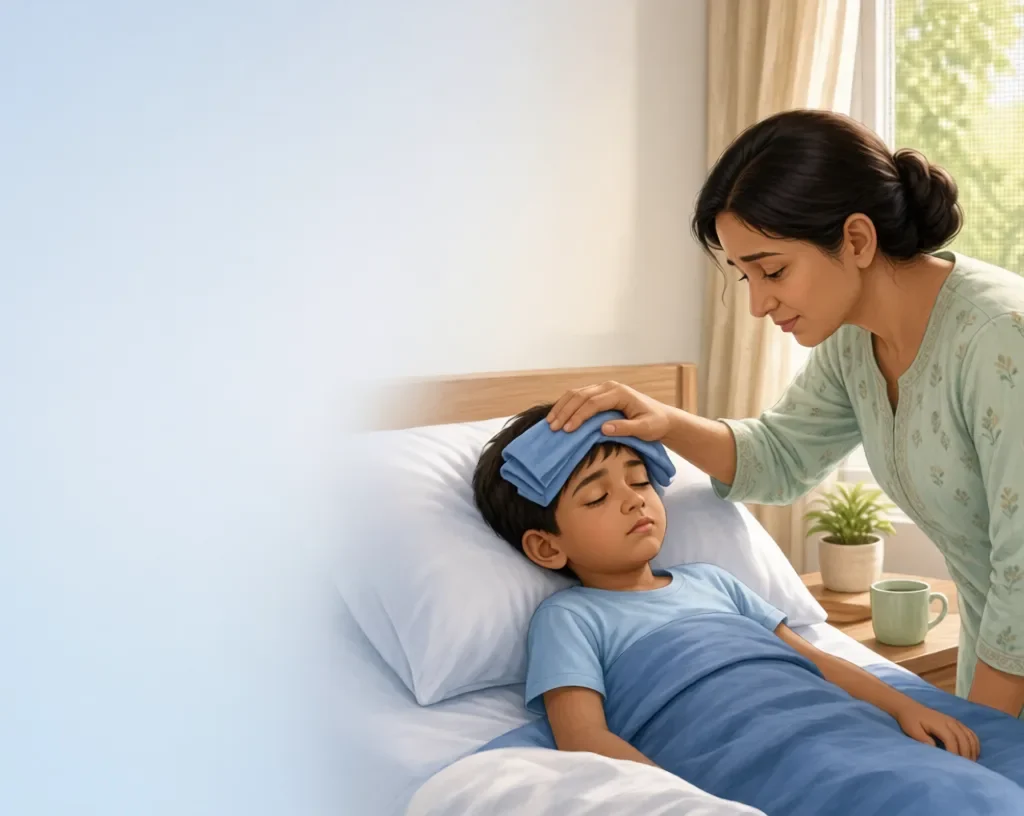
Day four. A seven year old boy named Aarav sits up in bed and says he feels better. His fever has gone. His mother smiles, relieved. She thinks the worst is over.
Then, that evening, he complains of a sharp pain in his belly. He vomits twice. His hands feel cool. He is quieter than usual, but she tells herself he is just tired.
What happens next depends on one decision. We will come back to it. First, let us understand why child and severe dengue needs every parent’s attention.
Table of Contents
What Is Dengue, and Why Are Children Different?
Dengue is a viral infection spread by the bite of infected mosquitoes, mainly the Aedes aegypti. According to the World Health Organization (WHO), about half of the world’s population is at risk, with an estimated 100 to 400 million infections each year.
Most people have no symptoms or mild ones. Most recover in one to two weeks. A small number develop severe dengue, which can be fatal.
Children need special attention for a simple reason. They cannot always describe how they feel. A toddler cannot say “my stomach hurts in a strange way.” A child may only become quiet, sleepy or cranky. Parents must read the signs for them.
Ordinary Dengue vs Severe Dengue
Here is a clear way to compare the two.
| Uncomplicated dengue | Severe dengue | |
|---|---|---|
| Fever | High fever for a few days | Danger signs often appear as fever falls |
| Typical symptoms | Headache, pain behind the eyes, body aches, nausea, rash | Severe belly pain, repeated vomiting, rapid breathing, bleeding |
| Child’s behaviour | Tired but responds normally | Very sleepy, restless or weak |
| Skin | Normal or flushed | Pale, cold or clammy |
| Usual care | Rest, fluids, doctor guided monitoring | Hospital care, often urgent |
| Outlook | Most recover in one to two weeks | Serious, but early care greatly lowers risk |
The key difference is not how high the fever is. It is what happens to the body’s fluids and blood vessels, and how the child behaves.
Early Symptoms and Warning Signs
WHO lists these early symptoms: high fever, severe headache, pain behind the eyes, muscle and joint pain, nausea, vomiting, swollen glands and rash. They usually begin 4 to 10 days after the bite and last 2 to 7 days.
Danger signs of severe dengue often come after the fever has gone:
- Severe belly pain
- Vomiting that does not stop
- Fast breathing
- Bleeding from the gums or nose
- Blood in vomit or stool
- Unusual sleepiness, weakness or restlessness
- Pale, cold or clammy skin
- Intense thirst
If you see any of these, go to a hospital now. Do not wait for the morning.
Why Falling Fever Can Be a Trap
Many parents relax when the thermometer shows a normal number. With dengue, that moment needs extra care. WHO notes that the symptoms of severe dengue often appear after the fever has gone away. Fluid can leak out of blood vessels, and the child can worsen quickly.
So the rule is simple: a falling fever is not proof of recovery. Watch the child, not just the thermometer. Is the child drinking, passing urine, playing a little, and responding normally?
How Doctors Assess and Manage Severe Dengue
There is no specific medicine for dengue. Care focuses on watching the child closely and supporting the body. India’s National Centre for Vector Borne Diseases Control (NCVBDC) publishes national clinical guidelines that doctors follow.
In general, doctors:
- Examine the child and look for warning signs.
- Run blood tests as needed.
- Monitor fluid balance and vital signs.
- Give fluids and other treatment in a way suited to that child.
This is why home treatment of severe dengue is unsafe. Fluid decisions are delicate. Too little can be dangerous, and so can too much. Only a clinician should decide.
Hydration, Recovery and Prevention
Hydration: WHO advises resting and drinking plenty of fluids. If your doctor has said your child can be managed at home, follow their exact advice on what to give and how often. Do not guess amounts.
Medicines: WHO says paracetamol can ease pain. It also says to avoid aspirin and ibuprofen because they can raise the risk of bleeding. Ask your doctor before giving any medicine.
Recovery: Tiredness can last for several weeks. Keep follow up visits.
Prevention: The mosquitoes that spread dengue bite during the day. WHO suggests:
- Cover arms and legs with clothing.
- Use repellents with DEET, picaridin or IR3535, as advised for the child’s age.
- Use window screens and mosquito nets.
- Cover, empty and clean water storage containers every week.
- Remove stagnant water from buckets, coolers, tyres and pots.
A vaccine called QDenga exists, but WHO says it is recommended only for ages 6 to 16 in high transmission settings and is licensed only in some countries. Ask your paediatrician about local advice.
How One Sign Changes Everything (Illustrative Example)
This example is hypothetical.
Back to Aarav. His mother remembers a school notice about dengue warning signs. Belly pain after the fever falls. Vomiting. Cool hands. She stops waiting and takes him to the hospital that night.
Doctors check him and start monitoring. Because he arrived early, treatment began before he became critically unwell. The lesson is not about one hero decision. It is that recognising one warning sign early gives doctors more time to help.
What the Numbers Mean for Families
WHO reports that dengue cases rose from 505,430 in 2000 to 14.6 million in 2024. More than 12,000 dengue related deaths were reported in 2024. WHO also says many mild cases go unreported, so the true count is higher.
What does this mean for you? Dengue is no longer a rare problem. It is widespread, and it spreads in towns and cities. WHO also states that people who catch dengue a second time have a higher risk of severe disease, so a child who had dengue before still needs protection.
Home Observation: Advantages and Limitations
Advantages: You know your child best. You notice changes in mood, appetite and energy. Simple records of drinking, urine and temperature help doctors.
Limitations: Home observation cannot see inside the body. It cannot measure blood changes or replace tests. It must never delay emergency care.
Prevention measures (nets, repellents, clearing water) reduce risk but cannot remove it. Medical monitoring is the safest option once warning signs appear, though it depends on reaching a facility in time.
Common Myths and Mistakes
Myth 1: “The fever is gone, so my child is safe.” Fact: Severe signs often appear after the fever falls.
Myth 2: “Any painkiller is fine.” Fact: WHO advises avoiding aspirin and ibuprofen. Paracetamol is the usual choice, with a doctor’s guidance.
Myth 3: “Wait for the test result before going to hospital.” Fact: Warning signs matter more than waiting for a report. Go when you see them.
Myth 4: “A home remedy can cure severe dengue.” Fact: WHO states there is no specific treatment for dengue. Early medical care is what lowers deaths.
A Simple Action Guide for Parents
Before medical care
- Keep your child resting and drinking, as the doctor advises.
- Write down fever times, fluids taken and urine passed.
- Know your nearest hospital with paediatric care.
During medical care
- Share your notes and when the fever fell.
- Ask which warning signs to watch for.
- Do not give medicines the doctor has not approved.
After medical care
- Expect tiredness for weeks.
- Attend follow up visits.
- Clear mosquito breeding sites at home.
When to Seek Emergency Care Immediately
Go to the nearest hospital straight away if your child has severe belly pain, constant vomiting, bleeding, breathing trouble, extreme sleepiness or restlessness, or cold, clammy skin. Do not wait to see if it improves.
Your Safe Action Checklist
- Learn the danger signs above.
- Watch closely after the fever falls.
- Avoid aspirin and ibuprofen.
- Contact a doctor early, not late.
- Clear standing water every week.
- Use repellents and nets.
FAQs
1. How is severe dengue in children different from normal dengue? Normal dengue usually means fever, aches and rash. Severe dengue involves danger signs such as severe belly pain, repeated vomiting, bleeding and fast breathing.
2. When does severe dengue usually appear? Often after the fever has gone away, according to WHO. This is why close watching matters.
3. Can I give my child ibuprofen for dengue fever? WHO advises avoiding ibuprofen and aspirin, since they can raise bleeding risk. Ask your doctor before giving any medicine.
4. Is there a cure for dengue? There is no specific treatment. Early detection and proper medical care greatly lower the risk of death from severe dengue.
5. How can I protect my child from dengue? Prevent daytime mosquito bites, clean water containers every week, and remove standing water. Ask your doctor about vaccine advice in your area.
Conclusion
Severe dengue can look like a harmless recovery. That is what makes it dangerous, and what makes parents so powerful. You do not need medical training to notice belly pain, repeated vomiting, bleeding, drowsiness or cold skin.
Remember three things: watch your child after the fever falls, avoid self treatment, and go to hospital early when warning signs appear. If you are unsure, seek care. This article is for information only and does not replace a doctor’s advice.