
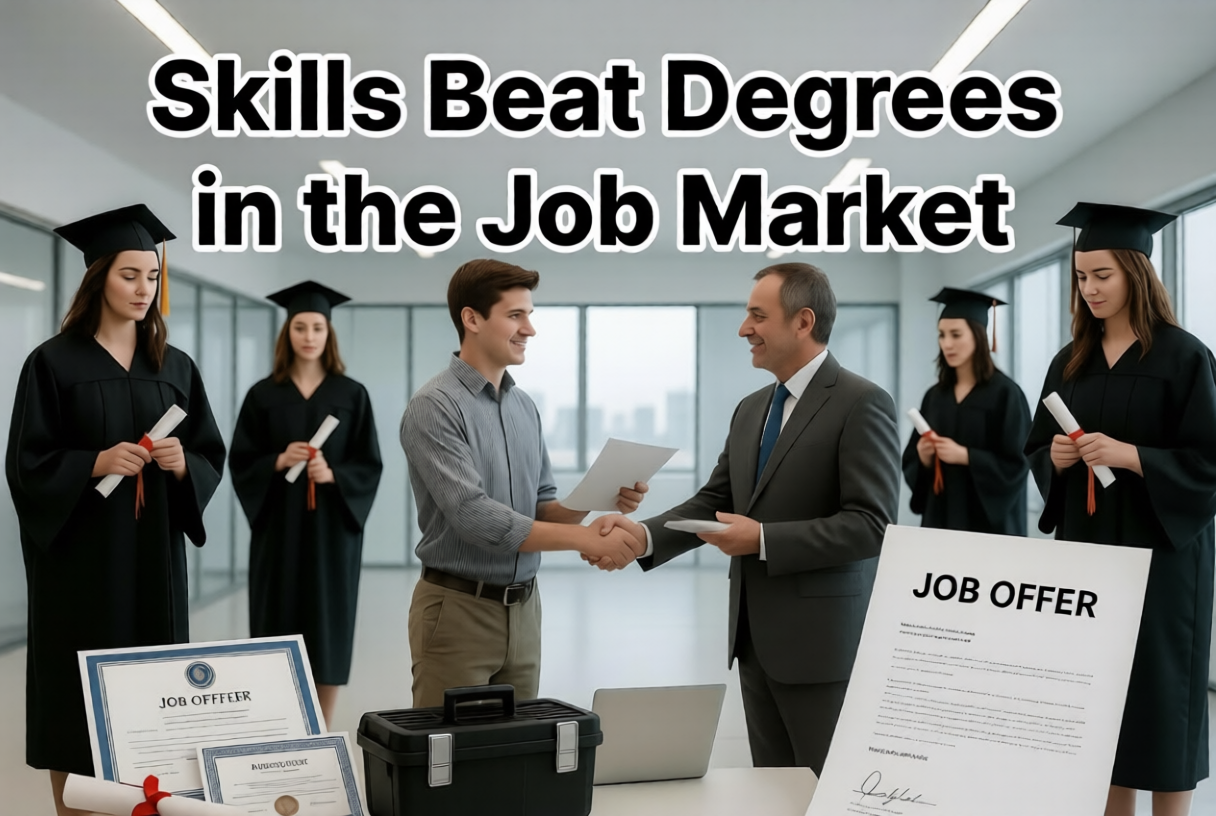
Imagine waking up every morning, sending out dozens of tailored resumes, and watching them vanish into a digital black hole. For millions worldwide, this isn’t a temporary setback—it is a daily, exhausting reality. Unemployment remains one of the most pressing economic and social challenges of our generation, fracturing communities and stifling human potential.
At the center of this crisis lies a critical question that every job seeker, parent, and employer is asking: is a traditional degree or skill acquisition the true key to unlocking modern career success? At kritiinfo.com, we believe that understanding this dynamic is the first step toward transforming our global workforce and building lasting economic resilience.
What Is the Problem of Unemployment?
To tackle a crisis effectively, we must first understand its true nature. In simple terms, unemployment occurs when individuals who are actively seeking work are unable to find a job. However, it is far more than just a statistical metric on a government report; it is a profound human challenge.
Economists categorize this issue into several distinct forms:
- Frictional Unemployment: This happens when people are temporarily between jobs or entering the workforce for the first time.
- Structural Unemployment: A deeper issue where a permanent mismatch occurs between the skills workers possess and the jobs available.
- Cyclical Unemployment: Driven by economic downturns and recessions, where overall demand for goods and services drops.
When someone loses their livelihood, the impact ripples outward. For individuals, it erodes self-confidence and brings financial insecurity. Families face immense stress, often forcing hard compromises on healthcare and education. For businesses, high unemployment means reduced consumer spending, which stalls growth. Ultimately, entire economies suffer from lost productivity and increased strain on public welfare systems, making the hunt for effective solutions a top priority.
Why Is Unemployment Rising?
Despite technological breakthroughs and expanding global markets, finding a stable job feels harder than ever for many. This paradox is driven by several intersecting factors:
- The Rapid Rise of Automation and AI: Technology is shifting the goalposts overnight. Tasks that once required human hands or minds are now automated, leaving workers stranded if they cannot adapt.
- The Skills Mismatch: Educational institutions often remain anchored to outdated curricula. They graduate millions of students who possess theoretical knowledge but lack the practical capabilities needed in the modern workplace.
- Economic Slowdowns and Educational Gaps: Global market instabilities, coupled with uneven access to quality education, widen the divide between the privileged and the marginalized.
This environment has intensified the classic debate regarding a university degree or skill mastery. Historically, a college diploma was a guaranteed ticket to a secure corporate career. Today, however, many graduates find themselves highly credentialed yet completely unemployable, sparking a crucial conversation about what employers truly value.
How 7 Smart Solutions Can Reduce Unemployment
To move from stagnation to growth, we need actionable, strategic, and evidence-based solutions. Here are seven proven strategies that can reshape the employment landscape.
Solution 1: Modern Skill-Based Education
Traditional education systems must shift their focus from rote memorization to active capability. While a university foundation offers valuable context, curriculum designs must place practical execution on equal footing with academic theory.
To implement this, schools and universities should weave certifications, coding bootcamps, and data literacy directly into their core programs. For instance, progressive institutions now allow students to earn micro-credentials alongside their traditional studies. This integration bridges the gap between a formal degree or skill validation, ensuring that when a student graduates, they possess the tangible capabilities required to contribute to a team from day one.
Solution 2: Strong Industry-Academic Collaboration
A major driver of structural unemployment is that universities often operate in a vacuum, completely isolated from real-world market demands.
The remedy lies in building strong, reliable partnerships between corporate leaders and academic boards. Industries must actively help design university coursework, fund research labs, and offer structured internship programs. In countries like Germany, the “dual education system” pairs classroom study with real-world on-the-job training. This approach proves that combining a formal degree or skill development ensures students cultivate the precise capabilities companies are actively searching for.
[Academic Theory] <---> [Industry Partnership] ---> [Job-Ready Graduate]
Solution 3: Entrepreneurship and Startup Support
We cannot rely solely on existing corporations to absorb the growing workforce; we must empower individuals to create their own opportunities.
Governments and private investors can foster innovation by offering accessible seed funding, reducing bureaucratic red tape, and establishing business incubators. When an individual chooses to start a business, the focus shifts away from whether they hold a formal degree or skill certification. Instead, their success rests on their practical ability to solve problems, create value, and eventually hire others, directly shrinking local unemployment lines.
Solution 4: Digital Economy Opportunities
The modern digital landscape offers unprecedented avenues for employment, breaking down geographical barriers and opening global markets to local talent.
Expanding internet infrastructure and providing affordable digital devices allows individuals to tap into remote work, freelance platforms, and the creator economy. Whether someone is looking to master digital marketing, web development, or remote project management, the primary barrier to entry is rarely a formal credential. In the global freelance marketplace, a demonstrated digital degree or skill portfolio speaks far louder than a piece of parchment from an elite university.
Solution 5: Vocational and Technical Training
For decades, society has mistakenly stigmatized vocational paths, steering every young adult toward a standard four-year college track regardless of their aptitudes.
Revitalizing vocational schools and technical institutes provides a direct pathway to stable, high-paying jobs in fields like advanced manufacturing, green energy, and healthcare. These programs focus entirely on practical mastery. When evaluating technical roles, employers care very little about an applicant’s academic degree or skill alignment is what matters, as a certified electrician or precision technician brings immediate, specialized value to the table.

Solution 6: Government Employment Initiatives
While the private sector drives long-term economic growth, public policy plays a vital role in stabilizing the job market during transitions.
Governments can design strategic tax incentives for businesses that invest heavily in workforce training, or fund large-scale public infrastructure projects that create immediate jobs. By subsidizing continuous learning programs, public policy can help mid-career professionals pivot into growing fields. This public support ensures that workers do not have to choose between keeping their old degree or skill upgrading, allowing them to remain competitive in a shifting market.
Solution 7: Lifelong Learning and Adaptability
The concept of a single, lifelong career is a relic of the past. Today, professionals must view their education as a continuous, evolving journey.
Professionals should intentionally dedicate time each week to learn new tools, study emerging industry trends, and earn relevant certifications. This mindset shifts our perspective on professional worth. The modern economy rewards those who understand that a past degree or skill acquisition is not a lifetime guarantee of relevance. Continuous upskilling ensures you remain an indispensable asset, regardless of economic shifts.
Table of Contents
Case Study: Balancing Credentials and Competence
Consider the story of Sarah, a bright young woman who graduated with honors, earning a bachelor’s degree in media communications. Armed with her credential, she assumed her transition into the professional world would be seamless. Instead, she faced a year of polite rejection letters because she lacked hands-on experience with modern data analytics and digital ad platforms.
Realizing that her qualification alone wasn’t enough, Sarah changed her approach. She enrolled in an intensive, three-month digital marketing bootcamp, where she managed real ad spend for local non-profits and earned industry-recognized certifications.
By combining her academic background with practical expertise, Sarah transformed her resume. Within six weeks of completing her training, a respected digital agency hired her as a strategist. Sarah’s journey demonstrates that you do not have to choose between a formal degree or skill development; rather, combining both creates an unstoppable competitive advantage.
Expert Insights into the Future Workforce
As we look toward the horizon, the metrics of employability are undergoing a profound evolution. Forward-thinking human resource leaders are moving away from rigid credential checks in favor of capability-based hiring practices.
Traditional Hiring:  [Resume Screening] -> [Degree Verification] -> [Interview]
Modern Trend:        [Skill Assessment] -> [Portfolio Review]    -> [Capability Match]
In emerging sectors like artificial intelligence, renewable energy, and biotechnology, the pace of change outstrips traditional textbook publication cycles. Industry insiders note that while a university credential proves an applicant’s discipline and foundational knowledge, practical expertise confirms they can solve real-world problems immediately. This shifting trend underscores why balancing your degree or skill portfolio is essential for long-term career resilience.
Common Mistakes Job Seekers Make
Many motivated professionals inadvertently extend their period of unemployment by clinging to outdated job-hunting strategies. Recognizing and correcting these missteps can dramatically shorten your job search.
- Relying Solely on Academic Qualifications: Believing that a diploma alone guarantees employment is a common trap. Without practical application, a resume will struggle to stand out.
- Neglecting Professional Networking: Research shows that a vast majority of job openings are filled through professional connections rather than online job boards. Staying isolated reduces your visibility.
- Ignoring Soft Skills: Technical capability is vital, but a lack of emotional intelligence, clear communication, and adaptability will quickly stall your progress during interviews.
- Failing to Customize Applications: Sending identical, generic resumes to dozens of employers suggests a lack of genuine interest. Tailoring your application to highlight how your degree or skill sets align with the company’s specific needs yields far better results.
Your 90-Day Employability Action Plan
If you are currently navigating a career transition or struggling to find work, here is a practical, step-by-step roadmap to revitalize your professional profile over the next three months.
  Days 1-30             Days 31-60            Days 61-90
+-------------------+ +-------------------+ +-------------------+
|  Audit & Target   | | Build Portfolio   | | Strategic Network |
|  Identify gaps    | | Earn certificates | | Conduct outreach  |
|  Select new tool  | | Launch project    | | Apply with intent |
+-------------------+ +-------------------+ +-------------------+
Days 1–30: Audit and Target
- Analyze your target industry: Review twenty current job postings in your desired field and note the recurring software, tools, and methodologies requested.
- Identify gaps: Compare these market demands with your current qualifications to pinpoint where your profile falls short.
- Select your learning focus: Choose one specific tool or methodology to master over the next month, balancing your existing degree or skill foundation.
Days 31–60: Build and Document
- Earn a specialized certification: Enroll in a respected, practical course via platforms like Coursera, Udemy, or specialized industry academies.
- Launch a tangible project: Apply what you are learning by building a personal website, writing an industry analysis, or volunteering for a local non-profit.
- Update your digital presence: Showcase this project clearly on your LinkedIn profile, focusing on your updated degree or skill combination.
Days 61–90: Connect and Apply
- Conduct informational interviews: Reach out to three mid-level professionals in your target field each week to learn about their daily work and build connections.
- Tailor your applications: Apply to fewer positions, but spend time customizing each resume to explicitly prove how your capabilities solve that specific employer’s pain points.
- Refine your interview narrative: Practice explaining how your academic background and practical expertise work together to make you a well-rounded candidate.
Frequently Asked Questions
What is the main cause of unemployment?
Unemployment is primarily driven by an economic mismatch between the types of jobs available and the skills or locations of the workforce. This challenge is further compounded by technological automation, global economic shifts, and educational curricula that fail to keep pace with modern workplace realities.
Is a degree or skill more important today?
Neither should be pursued in complete isolation. A university qualification provides essential foundational knowledge, critical thinking, and credibility, while practical competence ensures you can execute tasks effectively on day one. Long-term professional success comes from blending both assets.
How can students improve their employability before graduating?
Students can stand out by pursuing internships, working on real-world freelance projects, and earning specialized technical certifications alongside their university studies. This proactive approach ensures their academic background is backed by clear, practical capability.
Can vocational training reduce global unemployment?
Yes, expanding access to high-quality vocational education is an exceptionally effective way to address structural unemployment. It provides direct, streamlined training for high-demand technical roles, allowing individuals to enter the workforce quickly without the burden of a four-year program.
What industries are creating the most jobs right now?
Substantial job growth is concentrated in technology (specifically artificial intelligence and data science), green energy, healthcare, e-commerce logistics, and digital content creation. Focusing your career development on these expanding sectors can significantly reduce your unemployment risk.
How does technology affect long-term employment trends?
Technology acts as both a disruptor and a creator of opportunities. While automation displaces routine, repetitive tasks, it simultaneously creates entirely new industries and job roles that require advanced technical expertise, problem-solving, and adaptability.
What role should governments play in reducing unemployment?
Governments can build a more resilient economy by funding accessible upskilling programs, offering tax incentives to businesses that train their staff, modernizing public education frameworks, and investing in sustainable infrastructure projects that generate clean jobs.
How can unemployed individuals stay motivated during a long search?
Maintaining momentum requires setting small, controllable daily goals, such as mastering a specific software tool or connecting with a new professional peer. Viewing this time as an opportunity for strategic personal growth helps maintain your confidence and sharpens your professional edge.
Content Blueprint & Backlink Architecture
To offer maximum value, we recommend integrating these contextual link references across your digital library to guide readers toward related, high-quality content.
Internal Link Strategies for kritiinfo.com
- Career Development: Link to your comprehensive guides on building a professional resume and mastering modern job interview strategies.
- Technology Trends: Cross-reference your deep-dive articles tracking the impact of artificial intelligence and automation on corporate workforces.
- Personal Growth: Connect readers to your actionable tutorials focused on building professional confidence and setting clear career milestones.
External Authority References
- Review global employment trends and policy frameworks on the International Labour Organization (ILO) platform.
- Explore comprehensive development data and economic outlook reports via the World Bank.
- Analyze education standards and future workforce readiness insights curated by the World Economic Forum (WEF).
Conclusion
The evolving global economy is making it clear that the future of work isn’t a simple choice between a formal degree or skill acquisition. True professional security belongs to those who learn to combine the structural benefits of education with continuous, adaptable expertise.
By embracing lifelong learning, pursuing targeted personal development, and matching your credentials with real-world capability, you can confidently navigate shifting job markets. True security comes from your commitment to grow, adapt, and build meaningful solutions for the challenges of tomorrow.