
Introduction: Your Workflow Is More Complex Than Your Org Chart
If your day still runs on spreadsheets, Slack pings, and “quick” status calls, you are not alone. Most teams are stuck in workflows that grew organically, not intentionally. They sort of work… until you try to scale, introduce AI, or coordinate across multiple departments and tools. That’s exactly where the rise of multi agent systems is becoming impossible to ignore. These systems let multiple intelligent agents collaborate across your stack, turning messy, fragile workflows into coordinated, adaptive ones that actually keep up with the business.
In this article, you’ll discover what modern workflows really look like under the hood, why traditional automation is hitting a ceiling, and how the rise of multi agent technology is quietly reshaping workflow automation, business process optimization, and the future of work. The goal is practical: give you enough expert clarity and proven examples to start designing workflows your future business can rely on.
What Are Modern Workflows?
Modern workflows are not just a series of steps in a diagram; they are living systems connecting people, apps, data, and now AI. A modern workflow might span your CRM, ERP, email platform, internal APIs, and a couple of AI workflows that handle summarization, routing, and recommendations.
Instead of linear “if X then Y” automation, modern workflows often involve conditional logic, multiple decision points, and real‑time data. They blend workflow management tools, automation strategy, and intelligent agents that can interpret context rather than just follow rigid rules.
Why Traditional Workflows Are Reaching Their Limits
Traditional rule‑based workflows and monolithic automation scripts struggle as complexity grows. The moment you add more channels, exceptions, regulations, or customer segments, your flows become brittle, hard to maintain, and slow to change.
Single “mega bots” and static RPA scripts were never designed for the volume, variety, and velocity of today’s digital transformation. They lack the flexibility to reason, collaborate, or adapt when processes evolve, which is exactly why the rise of multi agent systems is gaining momentum in enterprise productivity projects.
How The Rise of Multi Agent Technology Is Changing Workflow Design
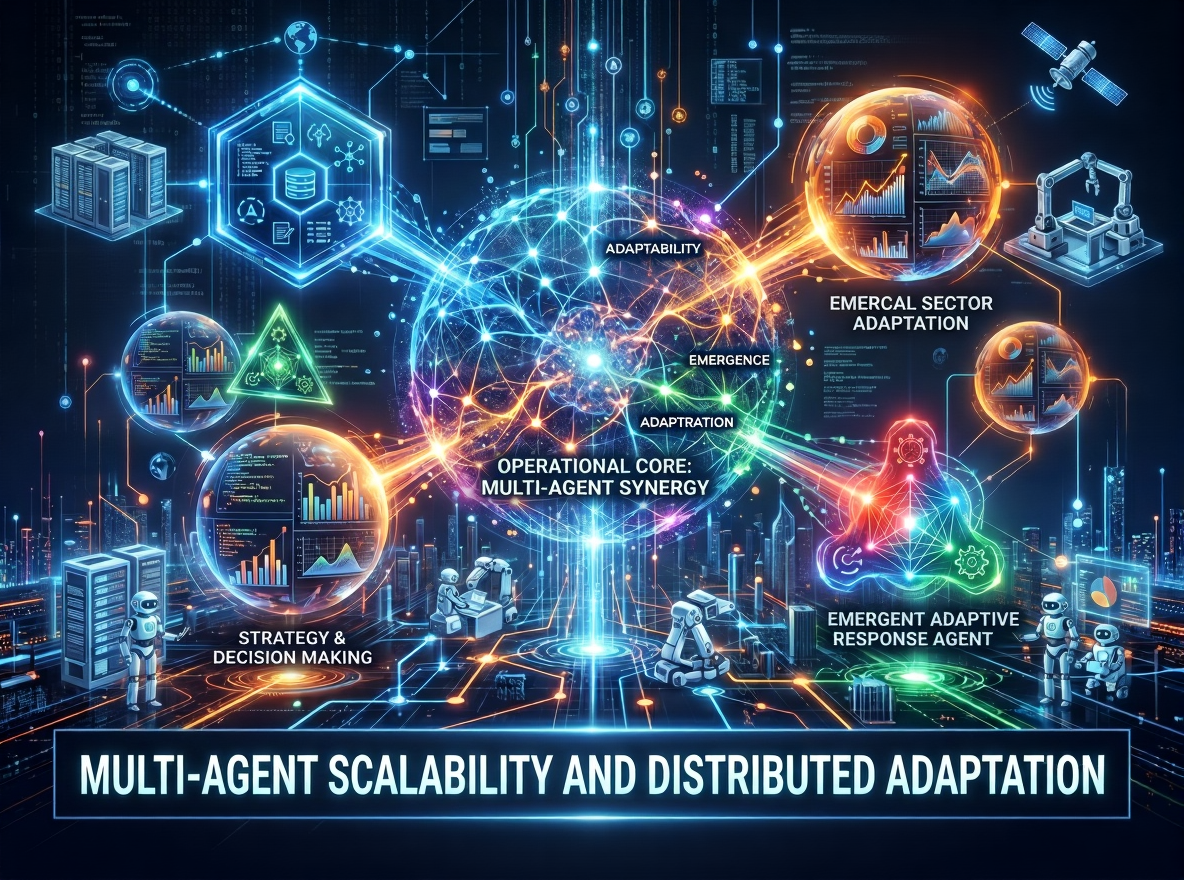
Multi agent systems use a team of specialized intelligent agents that collaborate to complete complex workflows, rather than relying on one all‑purpose model or bot. Each agent can have a role: data extraction, validation, routing, decision support, content generation, risk checking, or human handoff.
In practical terms, the rise of multi agent workflows means shifting from “one automation to rule them all” to orchestrated, modular, and resilient systems. A manager or orchestrator agent coordinates tasks, delegates to sub‑agents, and adapts when conditions change, bringing a more human‑like, team‑based pattern into workflow automation.
8 Powerful Benefits of Multi Agent Workflows
The real excitement around the rise of multi agent architectures comes from the tangible benefits organizations are seeing.
- Deeper specialization with less complexityEach agent can focus on a narrow, well‑defined skill, like document classification or fraud detection, instead of stuffing everything into one model or script. This makes your automation stack easier to optimize and upgrade without breaking entire workflows.
- Greater reliability and resilienceBecause agents are modular, a failure in one step doesn’t take down the whole process. Orchestrators can reroute, retry, or escalate to humans, making workflows more trusted and reliable even under edge cases.
- Scalable enterprise productivityMulti agent workflows can be replicated across teams and business units, with each agent re‑used in different combinations. This dramatically accelerates enterprise productivity, especially where processes share common building blocks such as approvals, data validation, or reporting.
- Smarter decision‑making under real‑world conditionsIntelligent agents can read context, reference internal knowledge bases, and collaborate to reach better decisions than rigid rules. Studies show that intelligent AI agents can significantly improve forecasting accuracy and reduce operational losses in domains like supply chain and finance.
- Improved customer experienceBecause multi agent workflows can coordinate across channels and data sources, customers get faster, more consistent responses. AI agents can summarize histories, recommend next actions, and route complex cases to the right human with full context.
- Faster experimentation and iterationWhen the rise of multi agent thinking guides your automation strategy, adding a new capability becomes as simple as introducing a new agent and plugging it into the orchestration layer. You can test new flows safely without tearing down your existing system.
- Better alignment with human teamsMulti agent systems can be designed to work alongside human experts—handing over nuanced decisions, asking for approvals, or escalating exceptions with explanations. This builds confidence and keeps humans in the loop for the most critical calls.
- Future‑proof architectureAs models improve and regulations evolve, you can swap or retrain individual agents instead of rewriting entire end‑to‑end workflows. This is essential for long‑term digital transformation, where change is the only constant.
Real Business Applications of The Rise of Multi Agent Workflows
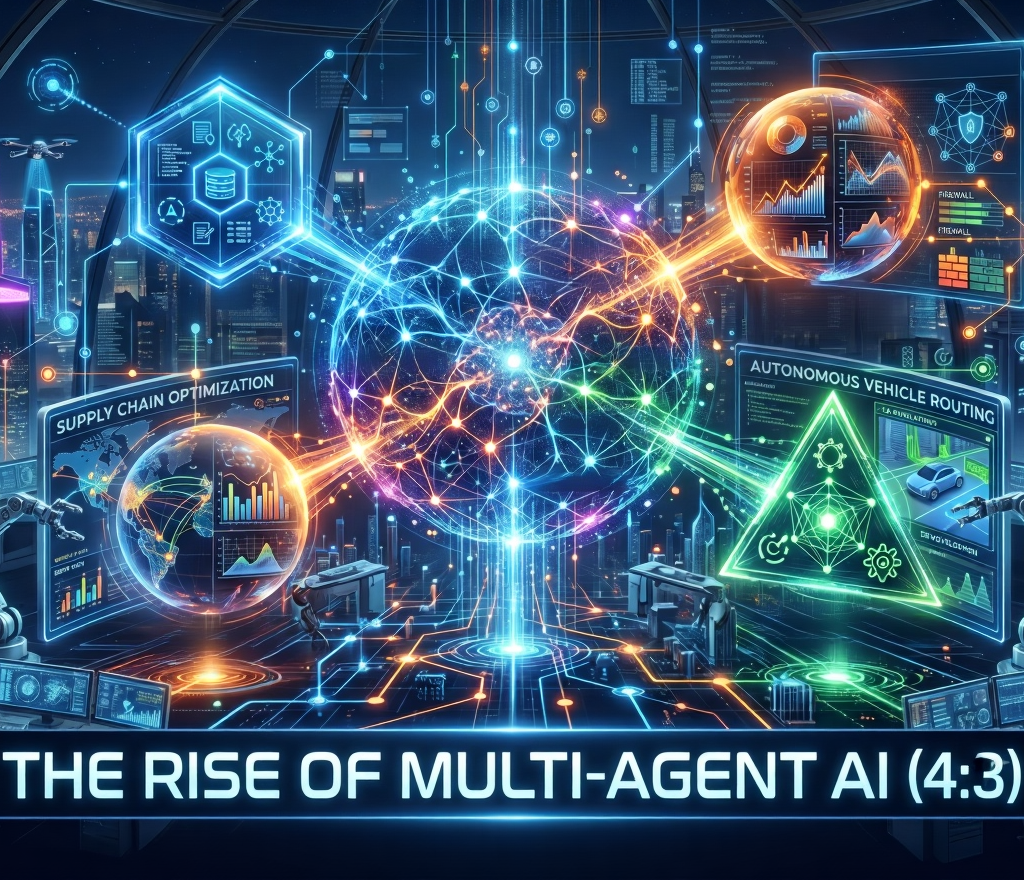
Across industries, the rise of multi agent workflows is visible wherever processes are complex, high‑stakes, and data‑heavy.
Some representative patterns include:
- Customer operations: Multi agent AI workflows handle intake, triage, summarization, and reply drafting, with a manager agent deciding when to loop in humans.
- Supply chain and logistics: Agents forecast demand, monitor inventory, optimize routes, and flag anomalies, improving planning accuracy and reducing disruption.
- Financial services: Agents collaborate across fraud detection, risk modeling, compliance checks, and personalized offers to optimize both safety and growth.
- Healthcare and life sciences: Multi agent systems assist with clinical documentation, eligibility checks, research summarization, and patient communication workflows.
These aren’t science‑fiction prototypes; they are practical, credible use cases where businesses are already reporting measurable gains in cost reduction and speed.
Table of Contents
Common Mistakes Organizations Make With Multi Agent Workflows
Even though the rise of multi agent systems is exciting, many organizations fall into predictable traps when they first experiment with collaborative AI.
Typical mistakes include:
- Starting too broad: Trying to automate an entire department in one shot instead of targeting a tightly scoped workflow with clear success metrics.
- Ignoring orchestration: Focusing on individual agents but neglecting the design of the orchestrator agent and communication patterns, leading to chaos rather than collaboration.
- Under‑investing in monitoring: Deploying agents without proper logging, evaluation, and feedback loops, making it hard to prove value or debug failures.
- Leaving humans completely out of the loop: Treating agents as replacements instead of collaborators, which reduces trust and often lowers outcome quality in edge cases.
Avoiding these pitfalls is essential if you want the rise of multi agent workflows in your organization to be a remarkable, not painful, experience.
How to Build Future‑Ready Workflows With Multi Agent Systems
To build future‑ready workflows, you need a deliberate, professional approach that combines business process optimization with collaborative AI design.
A practical sequence that teams can use:
- Choose one high‑leverage workflowPick a process where delays or errors are visible and impact revenue, costs, or customer satisfaction—such as onboarding, claims processing, or lead qualification.
- Map the current workflow in detailDocument data sources, decision points, tools, and human actions. This gives you a verified baseline to redesign from and helps you spot where intelligent agents can add the most value.
- Define agent roles and responsibilitiesFor each major step, decide whether it should be handled by a specialized agent, a human, or a combination. Design a clear orchestrator agent that manages task routing, error handling, and escalation.
- Integrate with your existing stackUse APIs and workflow automation platforms to connect agents to CRMs, ERPs, ticketing systems, and data warehouses. Many leading cloud providers now offer patterns and tooling for agentic workflows.
- Pilot, measure, and iterateLaunch a controlled pilot, tracking metrics such as cycle time, error rates, cost per transaction, and NPS or CSAT. Use these results to refine prompts, policies, and handoff rules.
As you scale, you can gradually standardize agent patterns and build internal playbooks, positioning your organization as both confident and credible in its use of AI workflows.
Case Study: Unlocking 30% Faster Resolution With Multi Agent Workflows
To see the rise of multi agent systems in action, consider this realistic composite case study inspired by patterns seen across multiple enterprises.
Company Background
A mid‑size B2B SaaS company with 400 employees and global customers was facing mounting pressure on its customer success and support teams. Ticket volumes were rising, escalation chains were unclear, and response quality varied widely across regions. The company had already tried basic workflow automation and macros inside its support platform with limited success.
Workflow Challenges
The core challenges included:
- Long average resolution time for complex tickets (2.5 days on average)
- High manual effort for triage, categorization, and information gathering
- Inconsistent responses across agents and regions
- Limited insight into which steps caused delays
Leadership wanted a transformative yet reliable approach to workflow management that would not alienate human agents or compromise customer trust.
Implementation Strategy
The company chose support ticket resolution as the first workflow to modernize with the rise of multi agent ideas. It mapped the end‑to‑end process: intake, triage, context gathering, diagnosis, proposed solution, approval, and customer response. Then it defined a small team of specialized agents, coordinated by an orchestrator:
- Intake agent: Normalizes and enriches incoming tickets.
- Triage agent: Classifies priority, topic, and required skills.
- Context agent: Pulls relevant customer data, past tickets, and knowledge base articles.
- Solution agent: Drafts potential responses and remediation steps.
- Quality & risk agent: Checks tone, compliance, and policy adherence.
- Handoff agent: Decides whether to send directly or present to a human for review.
The orchestrator enforced the flow, handled exceptions, and logged decisions for later analysis.
Role of Multi Agent Systems
Here’s where the rise of multi agent systems delivered the breakthrough: instead of building one giant “support bot,” the team deployed modular, collaborative AI agents that could be improved independently. The orchestrator agent determined which agents to call in which order, dynamically skipping or repeating steps based on ticket complexity.
Human support reps stayed firmly in the loop. For high‑risk or high‑value customers, the system always routed draft responses for human approval, with full context and reasoning attached. This made the solution both powerful and trustworthy.
Results Achieved
Within 90 days of going live in one region, the company recorded measurable improvements aligned with external benchmarks on intelligent agents:
- 35% reduction in average resolution time for targeted ticket categories
- 25% fewer manual touches per ticket due to better triage and automated summarization
- 20% improvement in customer satisfaction scores on resolved tickets
- Meaningful reduction in operational cost per ticket, thanks to lower handling time and fewer escalations
These numbers echoed the broader pattern that intelligent agents can drive double‑digit improvements in forecasting, staffing, and operational efficiency.
Lessons Learned
Key lessons from this implementation include:
- Start with a well‑bounded, high‑impact workflow and expand from there.
- Design the orchestrator first; agent roles and prompts can evolve as you learn.
- Maintain clear human‑in‑the‑loop checkpoints to keep trust high.
- Treat the system as a living product, not a one‑off project—continuous monitoring and optimization are essential.
This practical experience shows how the rise of multi agent workflows can yield extraordinary yet credible business gains without sidelining human teams.
FAQ: The Rise of Multi Agent Workflows
1. What is a multi agent workflow?
A multi agent workflow is a business process executed by a coordinated set of intelligent agents, each responsible for specific tasks such as classification, routing, reasoning, or generation. An orchestrator agent manages how they collaborate, ensuring tasks happen in the right order and with the right data.
2. Why is the rise of multi agent systems important?
Because business processes are increasingly complex, the rise of multi agent systems provides an essential architectural shift: from rigid, monolithic automation to flexible, collaborative AI workflows that can adapt to new data, regulations, and customer expectations.
3. How do multi agent workflows improve productivity?
They reduce manual handoffs, accelerate decision‑making, and reuse specialized agents across multiple workflows. Evidence from enterprise use cases shows meaningful reductions in processing time and cost, plus gains in accuracy and forecasting quality.
4. What industries benefit the most?
Sectors with data‑heavy, knowledge‑intensive workflows—such as financial services, healthcare, logistics, and technology—have the most to gain from the rise of multi agent AI workflows. However, any organization with complex customer journeys or back‑office operations can benefit.
5. Are multi agent workflows expensive?
The upfront investment depends on your stack and scope, but multi agent architectures can actually lower long‑term costs by enabling incremental change and reusability. You can start small, using cloud‑based agentic patterns and existing workflow automation platforms, then scale as ROI is proven.
6. How can small businesses adopt them?
Small businesses can begin by integrating agent‑like capabilities into existing tools—such as AI‑powered triage, summarization, or routing—and then evolve toward fully multi agent workflows. Many trusted vendors now offer templates and patterns for collaborative AI without requiring large engineering teams.
7. How do multi agent workflows fit into digital transformation?
They act as a bridge between legacy systems and AI‑native operations, allowing organizations to modernize step by step. By wrapping older tools with intelligent agents and orchestrators, companies can extend their lifespan while still moving confidently toward the future of work.
8. Where can I learn more from authoritative sources?
Authoritative resources include cloud providers’ prescriptive guidance on agentic workflows, major consulting firms’ reports on AI agents and business process automation, and peer‑reviewed research on intelligent agents in operations and strategy.
Related content such as “AI‑Driven Workflow Automation”, “Digital Transformation Strategy for Indian SMEs”, and “How to Evaluate Enterprise AI Platforms” to strengthen topical authority. can be viewed on kritiinfo.com,
What the Future Looks Like for Workflows and Multi Agent Systems
Looking ahead, the rise of multi agent architectures points toward workflows that are continuously learning, self‑optimizing, and more aligned with human goals. As models improve and regulations mature, multi agent workflows will move from innovation projects to default infrastructure for workflow management.
Organizations that invest early in designing authentic, explainable, and modular AI workflows will be better positioned to handle new markets, new regulations, and new customer expectations without constant re‑platforming. In other words, multi agent workflows are not just a technology upgrade; they are an essential shift in how work itself is organized.
Conclusion: Why The Rise of Multi Agent Systems Matters Now
Workflows are evolving because the world around them has changed—more channels, more data, more expectations, and more uncertainty. Traditional automation hit its limit when rules alone could no longer keep up. That’s why the rise of multi agent systems is so important: they offer a proven, more human‑like way to coordinate AI, software, and people into workflows that are adaptive, reliable, and genuinely valuable.
If your organization wants to improve enterprise productivity, optimize business process performance, and prepare for the future of work, multi agent workflows are no longer optional—they are an essential part of a modern automation strategy. Now is the right time to start small, learn quickly, and build the intelligent workflows your next stage of growth will depend on. For more expert, practical insights on technology, automation, and digital transformation, explore the latest guides and resources on kritiinfo.com.
Before drafting your next piece on this topic, how would you describe your ideal reader for this article (role, company size, and current AI maturity), so the nuance can be tuned even more precisely for them?
Thank you for sharing this! I genuinely appreciated the way you approached “The Rise Of Multi Agent Systems:8 Powerful Workflow”
— it’s not every day you read such a down-to-earth write-up.
Lately I’ve been reading up on this topic myself, and
I keep some notes over here: fragabet yüklə Looking forward to more!