
The Fall That Should Not Have Broken a Bone
Aarav is seven. He hops off the last stair, lands awkwardly and hears a small snap. An X ray shows a broken thighbone. His parents are stunned. It was one hop.
Then the doctor asks a quiet question: has he broken a bone before? He has. His forearm broke last year when he slid off a sofa.
Two small accidents. Two real fractures. Doctors treat that pattern as a clue, and the search for an answer often leads to what many people call fragile bone disorder.
Table of Contents
What Is Fragile Bone Disorder?
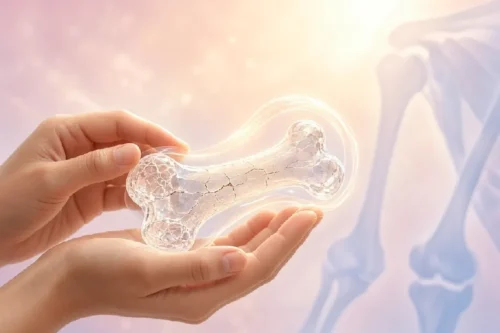
“Fragile bone disorder” is everyday language, not a formal medical term. It is most often used for osteogenesis imperfecta (OI), also called brittle bone disease. The name means imperfect bone formation.
OI is a genetic condition present from birth. Its main feature is fractures caused by very little force, as Great Ormond Street Hospital explains.
One caution matters. Most childhood fractures are ordinary. Children fall, bones heal. OI is rare, and a single fracture does not point to it. Other conditions can also weaken bones, so a careful diagnosis matters.
Why Are Some Children’s Bones So Fragile?
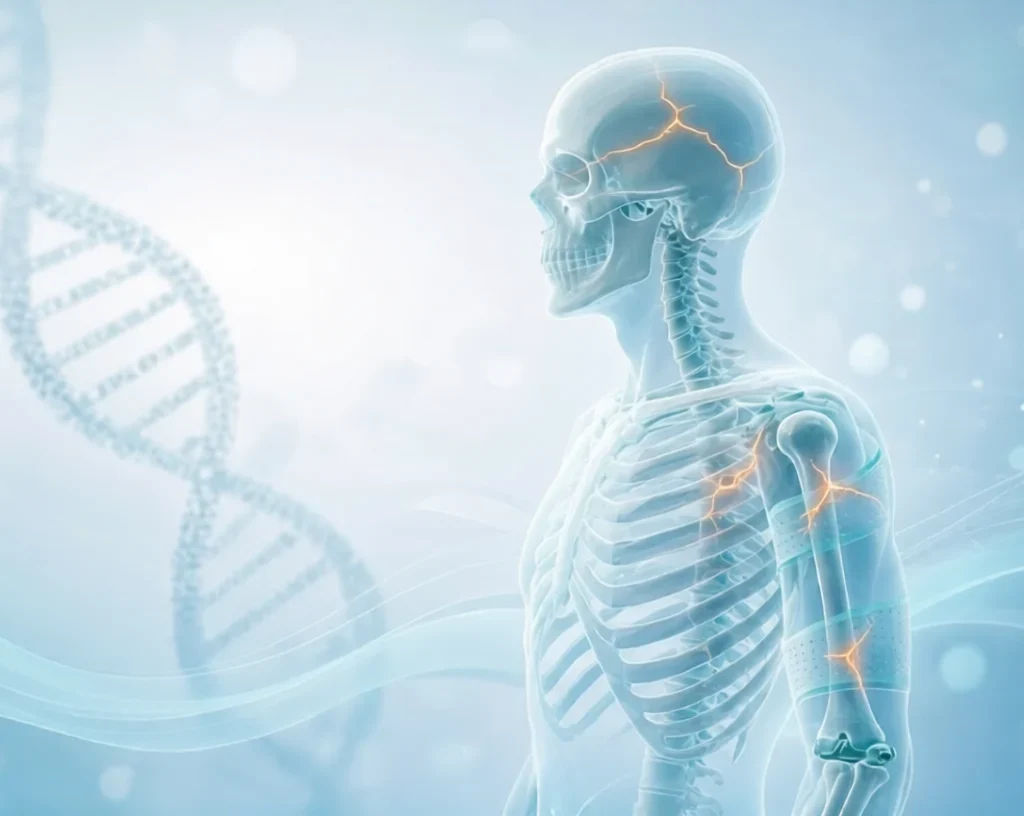
Calcium is only part of the story. Picture reinforced concrete. Minerals like calcium are the concrete, hard but able to crack. Collagen, a protein, is the steel mesh inside. It gives bone toughness and flexibility.
In OI, that mesh is missing, reduced or of low quality. The bone can hold plenty of mineral and still break easily.
The genes behind it. Changes in two genes, COL1A1 and COL1A2, cause about 90 percent of cases, according to MedlinePlus Genetics. They carry the instructions for type I collagen. In some milder forms the body makes less collagen, though it is normal. In other forms the collagen itself is faulty.
Inherited or new. With these genes, one altered copy is enough to cause the condition. Yet many babies with severe forms have no family history, because their genetic change is new. Less often, OI is passed on through other genes in a recessive pattern.
Why severity differs. The kind of change, and where it sits, shapes the outcome. Severity can differ even within one family.
Important Signs and Symptoms
Doctors may notice:
- Fractures from minor knocks
- Bowed or shortened bones, and sometimes shorter height
- Whites of the eyes that look blue or grey in some children
- Dentinogenesis imperfecta, meaning discoloured or fragile teeth
- Loose joints, muscle weakness and tiredness
- Hearing loss, usually later, often in adult years
- Spine curve (scoliosis) and, in severe forms, breathing difficulty
No child has every feature. Many have only a few.
Types and Levels of Severity
Doctors still widely use the Sillence classification. A 2016 clinical review notes it remains the most useful guide in patient care, even as newer systems list types by gene.
| Type | Severity | What doctors often see |
|---|---|---|
| I | Mild | Fewer fractures, little deformity |
| II | Very severe | Serious breathing problems, often life threatening around birth |
| III | Severe | Frequent fractures, deformity, short height |
| IV | Moderate | Fractures with milder deformity |
| V onward | Variable | Rarer forms, many linked to other genes |
This is a map, not a prediction. A child’s own doctors describe that child’s path.
Fragile Bones Compared: OI, Rickets and Ordinary Fractures
| Osteogenesis imperfecta | Rickets | Ordinary fracture | |
|---|---|---|---|
| Core problem | Faulty or scarce collagen | Soft bone from too little vitamin D, calcium or phosphate | Healthy bone meets strong force |
| Cause | Genetic | Nutritional or metabolic | Accident |
| Pattern | Repeated fractures, little force | Bowed legs, slow growth, bone pain | One break that matches the injury |
| Main care | Specialist team, long term | Correcting the deficiency | Cast or surgery, then healing |
Good nutrition supports every child’s bones, but extra calcium cannot repair faulty collagen. These conditions are not interchangeable.
Care follows the same logic. Medicines can improve bone strength. Therapy, surgery and daily adaptations protect movement and independence. Neither replaces the other.
Diagnosis: How Do Doctors Identify the Condition?
Only qualified clinicians can diagnose OI. They combine:
- Medical and family history, including how each fracture happened
- Physical examination of bones, joints, eyes, teeth and hearing
- X rays and, in suitable children, bone density scans
- Genetic testing, which can confirm the type
At Great Ormond Street, OI remains a clinical diagnosis, meaning doctors weigh all the evidence. Doctors also look for other causes of repeated fractures first.
Treatment and Long Term Management
There is no cure. Treatment protects bones, eases symptoms and supports independence. The Osteogenesis Imperfecta Foundation recommends a multidisciplinary approach, meaning several specialists working together: paediatric and orthopaedic doctors, physiotherapists and occupational therapists, dental and hearing teams, dietitians, counsellors and, in selected cases, surgeons.
Some children are offered bisphosphonates, medicines that slow bone loss. A clinical review found they increase bone mass and may reduce fractures, yet the response is less robust than in common osteoporosis. Some children never need them. Doses and timing belong to the specialist, never to a website.
Everyday Life: Helping Children Live Better
A child with OI is not helpless. Families and schools can help by:
- Choosing safer activities, such as swimming and adapted games, as the therapist advises
- Making classrooms and toilets easy to reach
- Planning sports lessons with the child instead of excluding them
- Sharing a simple care plan with teachers
- Protecting friendships, because confidence grows through belonging
What the Numbers Really Say
MedlinePlus Genetics estimates OI affects about 1 in 10,000 to 20,000 people worldwide. Treat that as an estimate. Studies differ because mild cases can go unnoticed, diagnosis methods vary and countries count differently.
The 90 percent figure has a limit too. It means most cases involve two collagen genes, so about one in ten families need a broader search. It cannot predict how severe one child’s condition will be.
Common Misconceptions
Myth: Every fragile bone problem is OI. Fact: Rickets, other genetic conditions and ordinary injuries also exist.
Myth: Every fracture means OI. Fact: Most childhood fractures are not caused by OI.
Myth: Children with OI cannot join daily activities. Fact: Many take part with the right support.
Myth: It always comes from a parent. Fact: New genetic changes cause many severe cases.
Myth: Treatment ends all future fractures. Fact: It lowers risk for many children, yet fractures can still happen.
A Hypothetical Care Journey
Fictional example, not a real case.
Back to Aarav. His parents bring both fracture records. They ask: did we do something wrong? The doctor says no, and explains why the pattern needs a closer look.
After examination, X rays and a specialist review, a team confirms a milder form of OI. Aarav starts physiotherapy, gets a school care plan and has regular dental and hearing checks. The diagnosis does not remove every risk. It gives everyone a plan.
A Parent’s Practical Guide: What Should You Do Next?
- Notice. Repeated fractures, fractures from small bumps, bowed limbs, grey or blue eye whites or fragile teeth deserve attention.
- Record. Write down dates, injuries and family history. Keep X ray reports.
- Consult. See a qualified paediatrician, who may refer you to a bone or genetics specialist.
- Follow the plan. Attend every review and ask questions.
- Support. Keep up therapy, school involvement and emotional care.
Seek urgent care for severe pain, swelling, a bent limb, a child who will not move or bear weight on a limb, or any injury to the head, neck or back. Never try to diagnose OI at home.
What Readers Should Do Next
Seek assessment when signs appear, keep records in one folder, ask specialists about your child’s type and daily activity, and support confidence and participation. This article is educational and cannot replace advice from your child’s doctor.
Frequently Asked Questions
1. What is a fragile bone disorder in children? It is an everyday phrase, usually meaning osteogenesis imperfecta, a genetic condition where bones break easily. It is also called brittle bone disease.
2. What causes fragile bones in children? In OI, gene changes, most often in COL1A1 and COL1A2, affect collagen. Other conditions, such as rickets, weaken bones by different routes.
3. Can a child be born with osteogenesis imperfecta? Yes. It is present from birth, though signs may appear later.
4. How is brittle bone disease diagnosed? Doctors use history, examination and X rays, and sometimes bone scans and genetic tests.
5. Can children with OI live active lives? Is there a cure? Many are active with specialist care, therapy and adapted activities. There is no cure, but treatment supports strength and independence.
6. When should parents consult a doctor about repeated fractures? Soon, after a second unexplained or low force fracture. Go urgently for a severe injury.
Conclusion
Aarav’s two small falls looked like bad luck. They were a clue. A fragile bone disorder is not a parenting failure or a sentence for a child. It is a medical puzzle with real answers: an accurate diagnosis, a skilled specialist team, steady family support and schools that make room for every child.
Parents who understand the difference between an ordinary injury and an underlying bone condition act sooner and ask better questions. That knowledge helps a child grow up stronger.