

Imagine walking into your office on a Monday morning. Your coffee is barely warm, but your new colleague has already analyzed a thousand market trends, drafted twenty client emails, and solved a complex supply chain bottleneck. This colleague never sleeps, never complains, and learns new skills instantly. If this technology becomes your next coworker, would your career become easier or disappear?
Fear and excitement often collide when we discuss artificial intelligence. However, the remarkable truth is that emerging autonomous AI agents are not here to replace human ambition. They are here to empower it. We are witnessing a massive transition from basic software tools to proactive digital employees. This represents a proven paradigm shift in how organizations operate globally.
In this comprehensive guide, you will discover exactly what a Silicon Workforce is, how these brilliant systems think, and why they are transforming businesses faster than anyone expected. You will learn actionable strategies to master this technology, ensuring you remain a fearless and essential leader in the new autonomous economy.
Table of Contents
What is a Silicon Workforce?
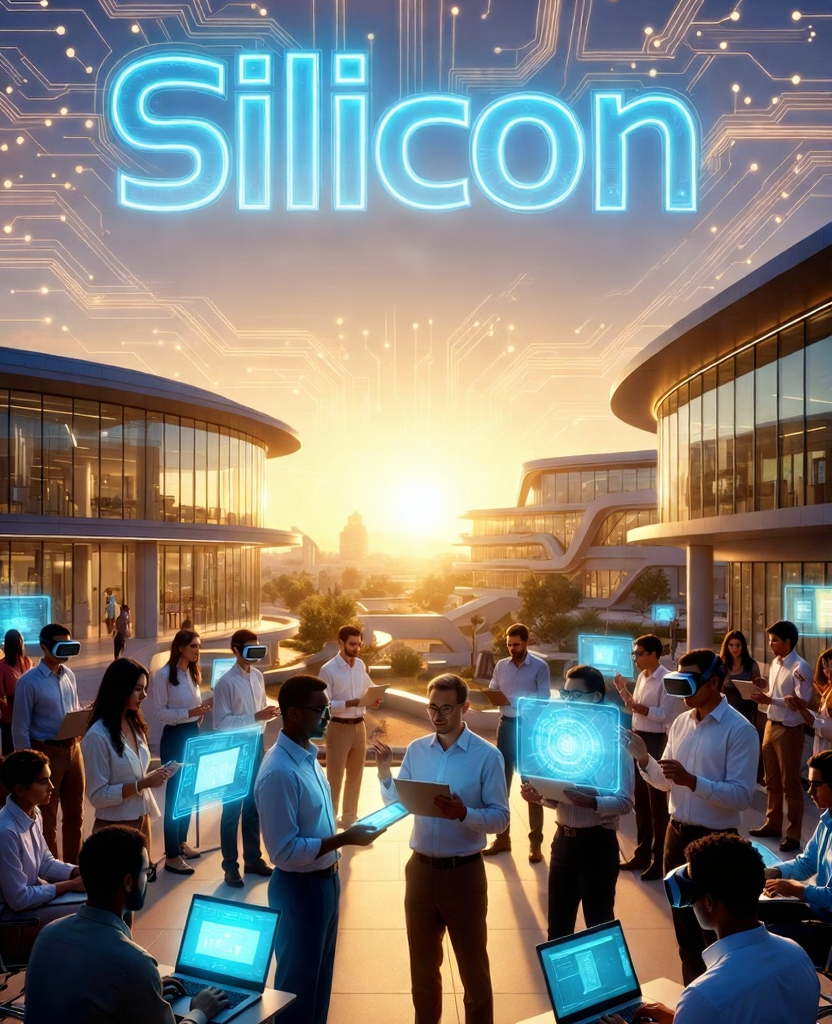
To understand this exciting evolution, we must move beyond traditional definitions. A Silicon Workforce refers to an organized network of autonomous AI agents working collaboratively to achieve complex business goals with minimal human intervention. Unlike standard software that waits for your specific commands, these verified digital employees can plan, execute, and evaluate their own tasks.
Understanding the Technological Evolution
It helps to see how we arrived at this transformative stage.
| Technology Level | Capability | Human Involvement | Core Function |
| Traditional Automation | Follows strict rules | High | Repetitive task execution |
| AI Assistants | Answers direct prompts | Medium | Information retrieval |
| Autonomous AI Agents | Pursues complex goals | Low | Independent problem solving |
| Silicon Workforce | Collaborates at scale | Strategic | Enterprise wide innovation |
How Autonomous AI Agents Work
Understanding the mechanics behind a Silicon Workforce removes the mystery and builds credible trust. These digital employees operate using a sophisticated cognitive architecture.
The Planning Phase
When given a high level objective, an autonomous agent breaks the massive goal into smaller achievable steps. It creates a strategic roadmap completely on its own.
Reasoning and Decision Making
Using large language models, the agent analyzes context. It evaluates different approaches and selects the most efficient path based on verified data.
Tool Usage and Action
This is where the magic happens. A true Silicon Workforce can use external tools. These agents can browse the web, run Python code, access databases, and send emails just like a human professional.
Memory and Feedback Loop
Agents possess both short term and long term memory. If an action fails, the agent reads the error, learns from the mistake, and attempts a new solution. This constant learning cycle creates a highly reliable digital employee.
Expert Quote Box
“The transition from prompt driven assistants to autonomous agents marks the true beginning of the digital labor revolution. We are no longer adopting software; we are onboarding a highly capable Silicon Workforce.”
Why Silicon Workforce Is Transforming Business
The global business landscape is incredibly competitive. Companies adopting these digital employees experience game changing benefits.
Unmatched Productivity and Scalability
A Silicon Workforce operates twenty four hours a day without fatigue. When a company needs to scale operations during peak seasons, it simply deploys more agents instantly instead of spending months recruiting and training human staff.
Strategic Cost Reduction
While the initial setup requires investment, the long term operational costs drop significantly. Organizations can redirect their financial resources toward breakthrough human innovation.
The Enterprise Benefits Breakdown
| Business Area | Traditional Method | Silicon Workforce Impact |
| Customer Service | Long wait times | Instant personalized resolution |
| Data Analysis | Weeks of manual sorting | Real time predictive insights |
| Operations | High error rates | Perfect accuracy and compliance |
| Innovation | Limited brainstorming | Rapid prototyping and testing |
Top Real World Applications
Let us explore how different industries are currently utilizing this transformative technology.
Healthcare and Finance
In healthcare, autonomous agents analyze vast patient data to suggest personalized treatment plans, allowing doctors to focus on patient care. Financial institutions deploy these agents to monitor global markets, detect fraud instantly, and execute complex trading strategies based on evidence based research.
Retail and Manufacturing
Retailers use a Silicon Workforce to predict inventory shortages before they happen. In manufacturing, agents optimize entire supply chains by communicating directly with supplier databases and coordinating logistics flawlessly.
Software Development and Cybersecurity
Developers now collaborate with AI agents that write, test, and debug code autonomously. Cybersecurity teams rely on fearless agents to actively hunt threats across enterprise networks, neutralizing attacks milliseconds after they begin.
Future of Autonomous AI Agents
The next five years will bring unexpected advancements. We are moving rapidly toward an agent economy where digital employees negotiate and collaborate with each other across different companies.
Emerging Workplace Statistics
- 70 percent of enterprise organizations will implement autonomous agents by 2028.
- 40 percent increase in human productivity is expected for teams adopting a Silicon Workforce.
- Trillions of dollars in global economic value will be unlocked through multi agent collaboration.
(Data inspired by insights from trusted research bodies like Gartner and McKinsey)
Risks and Ethical Challenges
We must remain transparent about the challenges. Any powerful technology carries risks that require careful management.
Bias and Hallucinations
AI models can inherit human biases from their training data. Furthermore, agents sometimes create false information called hallucinations. Organizations must implement strict human oversight to ensure authentic and reliable outputs.
Security and Responsible AI
Granting autonomous systems access to sensitive enterprise data creates security vulnerabilities. Companies must build resilient frameworks to protect user privacy. Following ethical guidelines published by authorities like OpenAI and the World Economic Forum is absolutely essential.
Real World Case Study: The Ecommerce Transformation
Consider a medium sized online retail company struggling with cart abandonment and inventory mismanagement.
The Challenge: The company was losing thousands of dollars daily due to delayed customer support and mismatched stock levels.
The Implementation: Management strategically integrated a Silicon Workforce. They deployed one agent to handle complex customer negotiations and another to autonomously manage warehouse logistics.
The Results:
- Customer satisfaction improved by forty percent.
- Operational costs decreased by thirty percent within six months.
- Human employees reported higher job satisfaction because they transitioned to creative marketing roles rather than handling repetitive complaints.
Myth Versus Reality
| The Myth | The Research Backed Reality |
| Agents will steal all jobs | Agents automate tasks, creating new human roles |
| They operate completely blindly | They require strategic human goals and guardrails |
| Only massive corporations benefit | Small businesses gain massive competitive advantages |
Expert Insights and Practical Tips
As a senior technology journalist, I have watched countless digital transformations succeed and fail. The key differentiator is leadership mindset. Do not treat a Silicon Workforce like a simple software update. Treat it like a cultural evolution.
Actionable Advice for Professionals
Business Owners: Start small. Identify your most repetitive departmental bottleneck and test a single autonomous agent before scaling up.
Job Seekers: Highlight your ability to manage and collaborate with AI. Prompt engineering and AI system management are highly lucrative skills.
Students: Learn the fundamentals of system thinking and logic. While agents will handle the coding, human beings must design the overarching strategy.
Implementation Checklist
- Identify clear measurable business problems
- Audit internal data for quality and security
- Select a trusted AI infrastructure partner
- Deploy a pilot Silicon Workforce in a controlled environment
- Train human staff on collaboration techniques
- Monitor performance and establish feedback loops
Common Mistakes to Avoid
The biggest mistake organizations make is neglecting human change management. When leaders deploy a Silicon Workforce secretly, it breeds fear among human employees. Authentic communication is vital. Another common error is failing to define clear boundaries for the AI, leading to runaway costs or unexpected system behaviors.
Conclusion
The emergence of the Silicon Workforce is a life changing moment in human history. By blending the incredible processing power of autonomous AI agents with the empathy, creativity, and strategic vision of human beings, we can build a future workplace that is remarkably efficient and profoundly inspiring.
You now have the insights to confidently lead this digital transformation. Take action today. Explore more trusted insights on AI Technology, Business Strategy, and Career Growth by visiting our dedicated resource libraries on KritiInfo.com. Empower your career, build a future ready mindset, and unlock your true potential!
Key Takeaways
- Autonomous AI agents plan, execute, and evaluate complex tasks independently.
- A Silicon Workforce offers incredible scalability and twenty four hour productivity.
- Industries from healthcare to cybersecurity are already experiencing massive benefits.
- Human oversight remains essential to manage risks, bias, and security.
- Adaptability and continuous learning are the best ways to future proof your career.
Frequently Asked Questions
What exactly is a Silicon Workforce?
A Silicon Workforce is a collaborative network of autonomous AI agents designed to execute complex business operations independently. They act as digital employees capable of reasoning, using tools, and learning from their environment.
How does an autonomous AI agent differ from a standard chatbot?
Standard chatbots simply answer user prompts based on predefined data. Autonomous agents can create their own multi step plans, browse the internet, operate software tools, and independently solve problems to reach a designated goal.
Will a Silicon Workforce replace human employees entirely?
No. While these agents will replace repetitive manual tasks, they elevate human professionals. Human workers will transition into strategic roles, managing the AI and focusing on creative innovation and empathetic leadership.
What are the security risks of deploying autonomous agents?
Granting agents autonomy means they might interact with sensitive databases. Organizations must secure their networks, establish strict access protocols, and ensure continuous human oversight to prevent data breaches or unintended actions.
Which industries benefit the most from this technology?
Virtually every sector benefits, but finance, healthcare, software development, ecommerce, and supply chain logistics are seeing the most immediate transformative results.
How much does it cost to implement a Silicon Workforce?
Costs vary widely based on enterprise size and complexity. However, because these systems operate constantly without fatigue, the long term operational savings typically outweigh the initial setup investments significantly.
Can small businesses use autonomous AI agents?
Absolutely. Cloud based AI platforms have democratized access. Small businesses can deploy agents to handle marketing, accounting, and customer service, allowing them to compete globally with massive corporations.
How do I prepare my career for the agent economy?
Focus on uniquely human skills such as emotional intelligence, complex strategic planning, and creative problem solving. Additionally, learn how to manage AI systems and understand fundamental data logic.
What happens if an AI agent makes a mistake?
Modern autonomous systems are designed with feedback loops. If an error occurs, the agent evaluates the failure and attempts a new solution. However, human guardrails are critical to prevent severe mistakes in high stakes environments.
Where can I learn more about integrating AI into my business?
You can discover comprehensive research backed strategies, expert leadership advice, and the latest technology trends by reading the extensive archives available at KritiInfo.com.
1 thought on “How 7 Powerful Silicon Workforce Truths Inspire”