
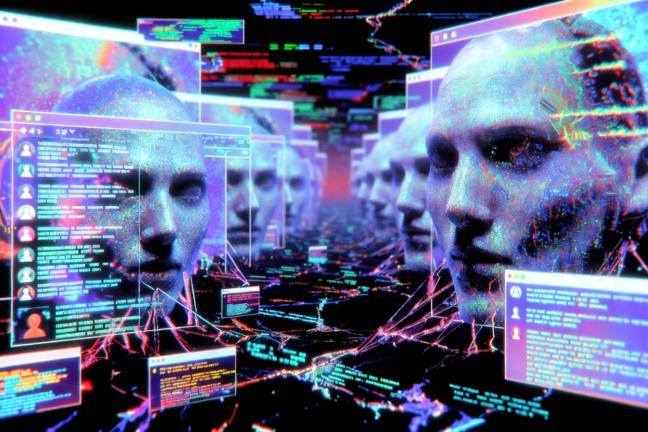
The Internet Feels Different Now. You’re Not Imagining It.
You open your browser. You scroll through a news article, a product review, a Reddit thread. Something feels… off. The words are fluent. The opinions are plentiful. The engagement numbers are impressive. But somewhere in the back of your mind, a quiet question surfaces: Is any of this real?
That feeling is not paranoia. It is perception catching up to reality.
Welcome to the Dead Internet — > a digital world increasingly populated not by curious humans sharing genuine experiences, but by automated systems producing synthetic content at industrial scale. And at the heart of this transformation is a phenomenon that researchers and technologists are only beginning to grapple with: synthetic hallucinations.
This is not science fiction. This is the internet you are using right now.
What Is the Dead Internet Theory?
The Dead Internet Theory first emerged in underground forums around 2021, proposed by users who noticed something unsettling: organic human interaction on the internet seemed to be quietly dying, replaced by bots, algorithmic amplification, and artificially generated content designed to simulate human presence.
At its core, the theory argues that a significant portion of internet traffic, social media engagement, and online content is no longer produced by real people. Instead, it is manufactured — by AI systems, bot networks, content farms, and engagement manipulation tools — to create the illusion of a living, breathing digital community.
Sounds extreme? Consider this: according to research from Imperva, nearly half of all internet traffic in recent years has been non-human. Bots browsing, bots clicking, bots commenting. The humans, in many spaces, are already the minority.
The Dead Internet Theory is no longer just a conspiracy. It is a framework for understanding a genuinely broken digital ecosystem.
Synthetic Hallucinations Are Reshaping the Content Landscape
Modern AI language models are extraordinarily capable. They can write articles, generate reviews, simulate conversations, and produce social media posts indistinguishable from human writing. But they also do something peculiar: they hallucinate. They confidently generate false information, fabricated citations, and invented facts — and they do so with the same fluency and authority as when they are correct.
Synthetic hallucinations are AI-generated outputs that appear credible but contain distorted, invented, or entirely false information. They are not bugs in the traditional sense. They are an emergent property of how large language models work — pattern completion at massive scale, without genuine understanding.
Now imagine those hallucinations being published at scale across thousands of websites, social media accounts, and comment sections. Imagine them being indexed by search engines, shared by real users who assume they are reading factual content, and cited by other AI systems that then amplify the errors further.
This is not a hypothetical. This is already happening across the web — and it is accelerating.
AI Spam, Fake Engagement, and the Algorithm Problem
The economic incentives driving the Dead Internet are straightforward and alarming.
Content farms have discovered that AI-generated articles — even ones riddled with synthetic hallucinations — can rank in search engines, attract advertising revenue, and generate clicks before anyone notices the quality problem. Social media platforms reward engagement, and bots are extraordinarily efficient at generating engagement. Algorithms, built to surface “popular” content, cannot reliably distinguish between genuine human interest and manufactured signals.
The result is a feedback loop: AI-generated content attracts bot engagement, which signals algorithmic amplification, which drives real human eyeballs to synthetic content, which earns revenue, which funds more AI-generated content.
Businesses are buying fake followers to appear credible. Brands are flooding review platforms with AI-written testimonials. Political actors are deploying bot networks to manufacture consensus around fringe positions. And search engines are increasingly serving pages where the “author” does not exist, the “research” was hallucinated, and the “sources” lead nowhere.
The internet is not dead. But large parts of it have been quietly colonized.
A Real Case Study: The AI Content Farm Collapse of 2023
In 2023, a revealing investigation by NewsGuard identified over 400 websites producing AI-generated misinformation at scale — many of them ranking prominently in search results. These sites, which NewsGuard termed “Unreliable Artificial Intelligence-Generated News” (UAIN) sites, published dozens of articles per day on topics ranging from health to politics, filled with synthetic hallucinations presented as verified fact.
One site analyzed in the investigation had published fabricated quotes attributed to real public figures, invented statistics about medical treatments, and fictional news events — all written in polished, professional-sounding prose.
Advertisers were unknowingly funding these sites through programmatic ad networks. Real readers were sharing the articles on social media. And search engines were indexing the content alongside legitimate journalism.
The investigation triggered significant conversation in the SEO and publishing industries, but the underlying problem — that synthetic hallucinations are economically profitable and algorithmically rewarded — remains structurally unsolved.
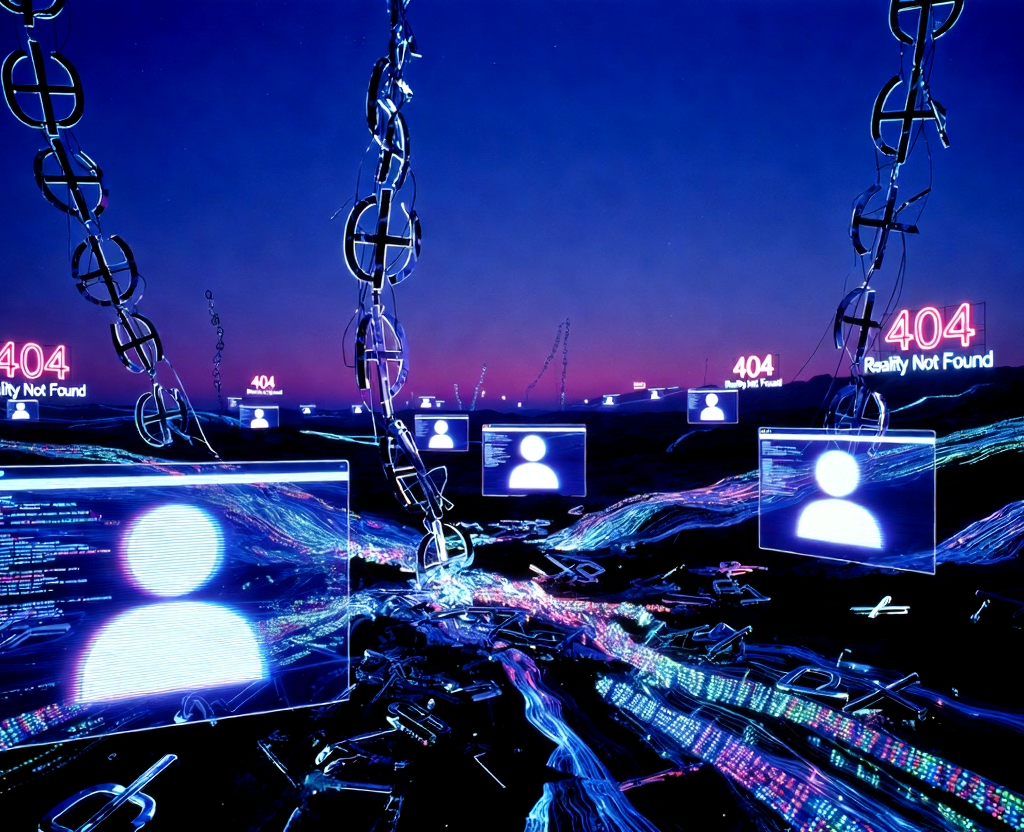
Who Gets Hurt? The Real Costs Are Enormous
The Dead Internet and its synthetic hallucinations do not just pollute search results. They cause real, measurable harm across multiple sectors.
For businesses, fake reviews and AI-generated competitive content distort markets. A small restaurant competing against hundreds of AI-fabricated five-star reviews faces an authenticity deficit it cannot overcome.
For journalists and creators, the devaluation of human-written content is existential. When AI can produce ten articles in the time it takes a skilled writer to research one, and when algorithms cannot reliably reward the better work, the economics of quality journalism collapse.
For SEO professionals, synthetic hallucinations have weaponized content marketing. Entire SEO strategies now rest on AI-generated pages that may contain confident misinformation — creating liability risks alongside the ranking risks.
For public trust, the damage is perhaps most severe. When people cannot reliably distinguish real information from synthetic hallucinations, epistemic trust in institutions — media, government, science — erodes. Research from the Pew Research Center (pewresearch.org) has consistently shown that trust in online information is declining sharply, particularly among younger users who are simultaneously the most online and the most exposed to AI-generated content.
Stanford Internet Observatory (io.stanford.edu) and the MIT Media Lab (media.mit.edu) have both published research documenting how AI-generated misinformation spreads faster and more durably than corrections — a dynamic that synthetic hallucinations exploit perfectly.
How to Spot Authentic Human Content Online
You are not powerless in this environment. Here is what to look for.
Specificity is a strong signal. Human writers make specific, verifiable claims grounded in personal experience. AI-generated content tends toward confident generality — it sounds authoritative but avoids the granular details that only direct knowledge produces.
Check the author. Real bylines connect to real professional histories — LinkedIn profiles, portfolios, previous publications. A nameless “editorial team” or an author whose entire online existence began three months ago is a warning sign.
Trace the sources. Synthetic hallucinations frequently cite sources that do not exist, or real sources that do not say what the article claims. A thirty-second search can reveal whether a cited study is real.
Notice the emotional texture. Genuine human writing carries idiosyncratic voice, unexpected humor, personal stakes, and occasional rough edges. AI-generated content tends toward a particular polished smoothness — impressive but oddly affectless.
Use verification tools. Platforms like Originality.ai, GPTZero, and the Mozilla Foundation’s ongoing work on content provenance (foundation.mozilla.org) offer detection tools, though none are perfectly reliable yet.
What Can Actually Be Done?
The problem is structural, which means the solutions must be too.
For content creators and publishers: Invest in authentic, experience-driven content that AI cannot replicate — first-hand reporting, expert interviews, original data. Transparency about authorship and methodology builds the trust that synthetic content cannot manufacture.
For SEO and digital marketing professionals: Prioritize E-E-A-T (Experience, Expertise, Authoritativeness, Trustworthiness) principles not as a Google compliance exercise, but as a genuine content philosophy. Human expertise, properly documented, is increasingly the differentiator.
For platforms and search engines: Algorithmic reform that rewards verifiable authorship, source transparency, and content provenance is the only durable solution. The World Economic Forum (weforum.org) has flagged AI-generated misinformation as a top global risk — the pressure for platform accountability is growing.
For individual users: Develop digital literacy as a survival skill. Teaching people to interrogate sources, verify claims, and recognize the texture of synthetic hallucinations is not optional — it is as essential as teaching people to spot phishing emails was twenty years ago.
The future: Content provenance standards — cryptographic signatures that verify authorship and publication chain — represent the most promising long-term solution. Projects under development at major institutions aim to give every piece of content a verifiable digital fingerprint. The internet is not inevitably dead. But keeping it alive requires conscious, collective effort.
The Internet Is Still Worth Fighting For
Here is what matters most: behind every genuine article, every honest review, every real conversation online — there is a human being who chose to show up authentically in a space increasingly hostile to authenticity.
That choice is becoming an act of quiet courage.
Synthetic hallucinations will keep proliferating. The Dead Internet Theory will keep finding new evidence to support it. But the human impulse to connect, to share real experience, to tell true stories — that has not been automated yet.
The question is whether we build systems, habits, and norms that protect that impulse. Or whether we let the economics of synthetic content quietly crowd it out.
You are reading this because you care about the difference. That already matters.
Share this article if it made you think differently about the internet you use every day. And explore more on kritiinfo.com — where human insight still leads.
Frequently Asked Questions:-
1.What exactly are synthetic hallucinations in AI?
Synthetic hallucinations are outputs generated by AI language models that appear confident and fluent but contain false, fabricated, or distorted information. They arise because AI models predict plausible-sounding text based on patterns — not because they understand or verify facts. In a content ecosystem flooded with AI writing, synthetic hallucinations spread misinformation at unprecedented speed and scale.
2. Is the Dead Internet Theory actually true?
The Dead Internet Theory in its most extreme form — that humans are a small minority of internet users — is not fully verified. However, its core insight is well-supported: a significant and growing proportion of online content, traffic, and engagement is non-human or AI-generated. Studies consistently show bot traffic comprising 40–50% of web activity, and AI-generated content is accelerating across publishing, social media, and search.
3. How do synthetic hallucinations affect SEO and search rankings?
AI-generated content containing synthetic hallucinations can rank in search engines before quality issues are detected, earning ad revenue and attracting real clicks. This distorts search results, disadvantages authentic publishers, and creates environments where misinformation outranks verified information. Google’s E-E-A-T guidelines are partly a response to this threat, but enforcement remains imperfect.
4. Can businesses protect themselves from AI-generated fake reviews?
Partially. Businesses can report suspicious reviews to platforms, use review authentication services, and actively cultivate verified purchases from real customers. Building a strong, documented reputation through genuine customer relationships remains the most durable defense — synthetic hallucinations are harder to sustain against a record of real, verifiable human experience.
5. How can I tell if an article was written by AI?
Look for confident generalizations without specific detail, authors with thin or unverifiable online histories, sources that do not check out, and a certain smooth uniformity of tone. AI detection tools like GPTZero or Originality.ai provide additional signals, though no tool is infallible. Critical reading habits — asking “how does this writer know this?” — remain the most reliable filter.
6. What is the future of authentic content online?
The most promising direction is content provenance — verified, cryptographic authorship trails that travel with content across the web. Alongside this, platforms that reward demonstrated expertise and verifiable experience will create healthier incentive structures. Human creativity, first-hand experience, and genuine expertise will become more valuable as synthetic hallucinations proliferate — not less. The creators who invest in authentic, experience-driven work now are positioning themselves for a future where authenticity is the scarcest resource on the internet.
1 thought on “Dead Internet:Synthetic Hallucinations(2026)”