

Introduction
TinyML is quietly changing the way the world thinks about intelligent devices, and Local AI is the reason it feels so powerful right now. Instead of sending every tiny decision to the cloud, devices can think on their own, respond instantly, and protect data where it is created.
That shift matters more than most people realize. From a smart factory sensor that catches vibration changes before a machine fails to a wearable that notices a health anomaly in real time, Local AI is turning ordinary devices into trusted, reliable helpers.
What TinyML Really Means
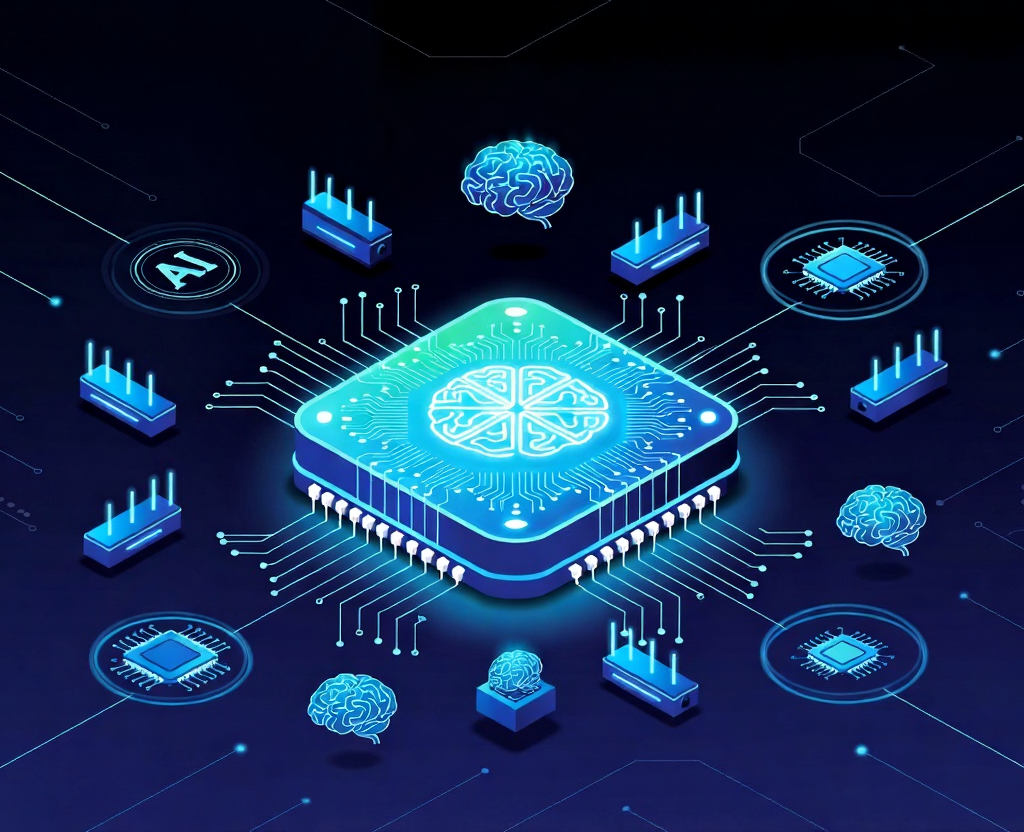
TinyML is machine learning designed to run on very small, low power devices such as microcontrollers and embedded systems. In simple terms, it brings intelligence closer to the sensor, so the device can act without waiting for a remote server.
This is why Local AI feels so practical. It is not about replacing the cloud completely; it is about putting the right kind of intelligence in the right place. For kritiinfo.com readers, that distinction matters because it is where innovation becomes usable, affordable, and scalable.
TinyML usually works best when a device needs to do one focused job well, such as keyword spotting, vibration monitoring, gesture detection, or anomaly detection. That narrow focus is exactly what makes Local AI so effective in the real world.
How Local AI Works Inside Tiny Devices
Once deployed, the device reads sensor data, processes it locally, and makes a decision in milliseconds. That is why Local AI is so valuable for real time AI processing in safety critical or latency sensitive situations.
A good mental model is this: cloud AI is like calling a specialist in another city, while Local AI is like having a trained expert standing right beside the machine. The second option is often faster, cheaper, and more reliable when the moment matters.
Why TinyML Rising Fast?
TinyML is gaining momentum because the world is full of connected devices that do not need giant models, but do need fast and private decisions. As edge computing expands, businesses want offline intelligence that keeps working even when networks are weak or unavailable.
There is also a trust factor. People are more comfortable with privacy focused AI when sensitive information stays on the device instead of traveling to a distant server. That is a major reason Local AI is becoming a strategic advantage in healthcare, consumer electronics, and industrial systems.
Another reason is cost. Sending constant data to the cloud consumes bandwidth, power, and money, while Local AI cuts those costs by doing more work at the edge. In practical terms, that means smarter devices with less dependency and more resilience.
Real World TinyML Users
TinyML is already showing up in everyday places, even when people do not notice it. Smart home systems can use local models for voice wake words, gesture detection, or occupancy sensing without always calling the cloud.
In agriculture, TinyML helps detect crop stress, soil conditions, and irrigation needs using low power machine learning on field devices. In healthcare, wearable devices can monitor signals locally and alert users faster when something looks wrong.
Industrial environments are another strong example. Sensors can listen for unusual vibration or sound patterns and warn teams about likely machine failure before downtime becomes expensive. That is the kind of Local AI that feels invisible until it saves a business a lot of money.
Privacy v/s Local AI
Privacy is one of the strongest arguments for Local AI. When data stays on the device, there is less exposure to breaches, fewer transmission risks, and less compliance friction. That is especially important for health, home, and workplace data.
It also improves user trust. A device that processes information locally feels more respectful, because it does not constantly ask to upload personal or operational details. For brands, that can become a meaningful differentiator.
Local AI does not remove every security concern, of course. Devices still need secure boot, signed updates, and strong firmware protection, but the privacy baseline is much better when sensitive data never leaves the edge. That is why privacy focused AI is becoming part of the buying decision, not just a technical feature.
Industries Changing Fast
Several industries are being reshaped by TinyML and Local AI at the same time. Healthcare uses it for portable monitoring, agriculture uses it for field intelligence, manufacturing uses it for predictive maintenance, and smart cities use it for efficient sensing.
Consumer electronics is moving quickly too. Earbuds, watches, appliances, and toys are becoming more responsive because embedded AI can recognize patterns on the device itself. That creates better experiences without forcing users into cloud dependency.
For businesses, the promise is bigger than automation. It is about building intelligent products that are more reliable, more private, and more future ready. In a crowded market, that combination can be a real competitive edge.
Challanges Developers Face
TinyML is powerful, but it is not effortless. Developers still have to manage memory limits, power budgets, limited processing capacity, and hardware compatibility issues. Those constraints shape every design choice.
Data quality is another challenge. A model that works in the lab may fail in the field if the training data does not reflect real conditions, noise, weather, movement, or human behavior. That is why practical testing matters so much.
Deployment and updates can also be tricky. Once thousands of devices are in the field, maintaining them securely becomes a strategic operational task, not just a technical one. The good news is that the ecosystem is improving fast, with better tools and more mature frameworks.
TinyML Tools And Resources
If you want to explore TinyML seriously, the most useful starting points are Google AI Edge LiteRT for Microcontrollers, TensorFlow Lite documentation, Edge Impulse, and ARM centered research and tooling. These resources help developers train, compress, and deploy models for constrained devices.
For broader perspective and industry storytelling, NVIDIA edge AI resources and MIT Technology Review are also useful for understanding where the market is heading and how the ecosystem is evolving. Google’s experiments and documentation are especially helpful for practical implementation paths.
For readers of kritiinfo.com, these references reinforce a simple truth: Local AI is no longer experimental curiosity. It is becoming a trusted engineering pattern for products that need speed, privacy, and low power behavior.
Case Study
A mid sized agricultural technology startup in South Asia wanted to help small farmers monitor soil stress without relying on unstable rural internet. The company deployed low cost field sensors powered by TinyML so the system could analyze moisture, temperature, and crop pattern changes directly on the device, which is a classic Local AI use case.
Instead of transmitting all raw readings to the cloud, the sensors filtered data locally and only sent alerts when the model detected meaningful risk. That reduced bandwidth use, lowered power needs, and made the system reliable even in areas with weak connectivity.
The practical result was not just technical success. Field teams could respond faster to irrigation issues, farmers felt more confident using the system, and maintenance became simpler because the devices were built to work offline first. This is the kind of realistic Local AI outcome that shows why TinyML is so valuable: it solves a real problem in a way people can actually live with.
Future Trends
The next wave of TinyML will likely be shaped by better AI chips, more efficient microcontrollers, and stronger edge computing platforms. As hardware improves, Local AI will handle more tasks with better accuracy and less energy.
We will also see more multimodal sensing, meaning one device may combine sound, motion, vibration, and environmental signals to make smarter decisions. That will expand TinyML from simple event detection into richer real world intelligence.
Another important trend is collaborative edge systems, where multiple devices share insights without sending everything to a central cloud. In that future, offline intelligence will feel less like a workaround and more like the default architecture for many products.
Practical Business Lessons
Businesses do not need to begin with a giant AI transformation to benefit from TinyML. The smartest approach is usually to start with one narrow, high value use case where latency, privacy, or power consumption matters most.
A few practical lessons stand out:
- Choose problems that need instant decisions.
- Use devices that can support efficient embedded AI.
- Train with real world data, not just ideal lab data.
- Prioritize secure updates and long term maintainability.
- Measure success by cost savings, uptime, user trust, or battery life.
For kritiinfo.com readers, this is where strategy meets execution. Local AI is strongest when it improves a real workflow instead of sounding futuristic in a presentation.
FAQ:
1>What is TinyML in simple words?
TinyML is machine learning that runs on very small devices like microcontrollers, sensors, and embedded systems. It lets devices make local decisions without always relying on the cloud.
2>Is TinyML the same as edge AI?
TinyML is a specialized form of edge AI focused on ultra low power and resource constrained devices. Edge AI is broader and can include more powerful edge hardware.
3>Why is Local AI important?
Local AI matters because it improves speed, privacy, reliability, and energy efficiency. It is especially useful when internet access is weak or when data is sensitive.
4>Which devices can run TinyML?
TinyML can run on microcontrollers and small embedded boards such as ARM Cortex M based devices and other low power chips. It is designed for systems with tight memory and compute limits.
5>What are the main uses of TinyML?
Common uses include keyword spotting, anomaly detection, gesture recognition, predictive maintenance, smart agriculture, and health monitoring. These are all strong examples of Local AI in action.
6>Is TinyML good for privacy?
Yes, because data can stay on the device instead of being sent to the cloud. That makes it a strong option for privacy focused AI applications.
7>What tools are used for TinyML development?
Popular tools include TensorFlow Lite for Microcontrollers, Google AI Edge LiteRT, Edge Impulse, and ARM related tooling. These tools help developers train and deploy efficient models for constrained hardware.
Conclusion
TinyML is not just another technology trend; it is a practical shift in how intelligent systems are built, deployed, and trusted. Local AI is helping devices become faster, safer, more private, and more dependable, which is exactly why its influence will keep growing.
For businesses, developers, and curious readers alike, the message is clear. The next generation of smart technology will not only live in the cloud, it will live inside the devices we use every day, quietly making them more useful and more human centered. That is the real promise of Local AI, and it is already happening.