
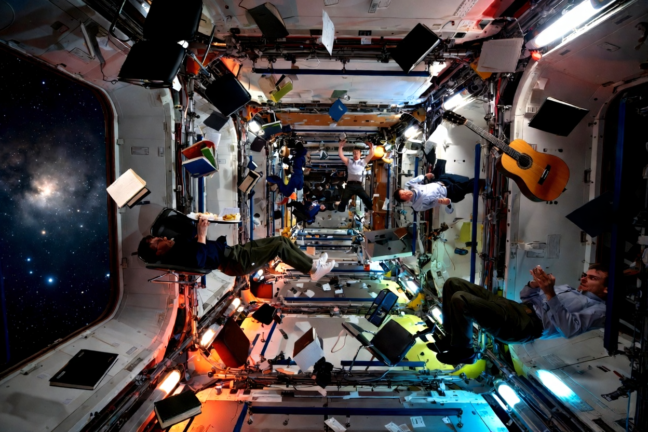
Imagine building a spacecraft part without ever launching it from Earth. Or creating medical tissue that heals faster than anything possible in our gravity-bound world. This isn’t science fiction—it’s happening now, and Zero Gravity is the game-changing force making it real.
3D printing and material synthesis are no longer just laboratory curiosities. Together, they’re driving a transformative revolution in how we manufacture, innovate, and imagine the future. And when you add Zero Gravity into the mix, the possibilities become extraordinary.
In this article, you’ll discover seven powerful breakthroughs, real industry applications, a detailed aerospace case study, and expert insights that will help you understand why Zero Gravity manufacturing is the next frontier of industrial innovation.
What Is 3D Printing and Material Synthesis?
3D printing (also called additive manufacturing) builds objects layer by layer from digital designs. Unlike traditional subtractive manufacturing that cuts away material, 3D printing adds material only where needed—reducing waste and enabling complex geometries impossible with conventional methods. caddcentre
Material synthesis is the process of creating new materials by combining different elements or compounds through chemical reactions or physical methods like deposition. The result? Materials with unique properties—stronger, lighter, more durable, or smarter than anything found in nature. (dmse.mit)
When these two technologies work together, they complement each other perfectly. 3D printing provides the practical fabrication method, while material synthesis supplies the advanced raw materials with proven performance characteristics. Together, they enable innovative solutions across aerospace, healthcare, construction, automotive, and electronics.
Real-world applications include custom prosthetics printed on-demand, lightweight aerospace components, building structures from lunar regolith, and even biological tissues for medical research. (hest.ethz)
How Zero Gravity Is Reshaping Manufacturing
Manufacturing in space might sound futuristic, but it’s already operational. Since 2014, NASA has successfully tested 3D printers aboard the International Space Station (ISS), proving that additive manufacturing works effectively in Zero Gravity environments. (ntrs.nasa)
Why Zero Gravity Matters
In Zero Gravity (microgravity), materials behave differently:
- No sedimentation or convection currents disrupt material flow
- No gravitational stress deforms delicate structures
- Particles remain suspension, enabling perfectly spherical shapes
- Crystals grow more uniformly without gravity-induced defects (envisioning)
These conditions allow scientists to create remarkable materials impossible on Earth: perfectly spherical particles, uniform alloys, flawless crystals, and optical fibers with superior clarity. (envisioning)
Material Behaviour Beyond Earth
Research shows that optical fibers produced in microgravity have fewer imperfections than ground-made fibers. NASA’s ZBLAN optical fiber experiments demonstrated smoother, more uniform fibers that transmit data over longer distances at higher bandwidths. (nasa)
Metal 3D printing in Zero Gravity is also advancing. European Space Agency (ESA) experiments test small metal parts printed in microgravity, improving our understanding of quality, strength, and characteristics of space-manufactured components. (nasa)
This research-backed knowledge is valuable not just for space production but for designing better materials on Earth. By observing solidification without gravity’s interference, researchers gain credible insights into creating lighter, stronger structural alloys. (asminternational)
5 Powerful Benefits of Combining 3D Printing and Material Synthesis
1>Faster Innovation Cycles
Zero Gravity environments accelerate material testing and development. Scientists can observe phenomena invisible on Earth, identifying advanced properties faster. This effective approach shortens R&D timelines from years to months. (asminternational)
2>Reduced Material Waste
Additive manufacturing uses only the material needed—no cutting, no shaping waste. In space, recycling plastic into new parts creates a regenerative materials cycle. Used wrenches become spoons; packing foam becomes tools. (issnationallab)
3>Customized Production
3D printing enables mass customization. Need a prosthetic matching your exact anatomy? A spacecraft part designed for one specific mission? Zero Gravity manufacturing makes personalized, on-demand production practical and reliable. (nasa)
4>Advanced Aerospace Applications
Spacecraft can carry raw material powder instead of finished parts. Crew members print tools, spare parts, and even habitats using local materials like lunar regolith. This strategic approach reduces launch weight and volume dramatically. (bam)
5>Sustainable Manufacturing Opportunities
Microgravity manufacturing produces high-value materials with minimal energy. Perfect semiconductor crystals, uniform pharmaceuticals, and superior optical fibers achieve quality levels impossible on Earth—reducing rework, scrap, and environmental impact. (envisioning)
These benefits make the combination future-ready and game-changing for industries seeking transformative competitive advantages.
Real Industry Applications Across Sectors
| Industry | Application | Impact |
|---|---|---|
| Aerospace | On-demand spacecraft parts, regolith habitats | Reduced launch mass, mission flexibility nasa |
| Healthcare | Bioprinted muscle tissue, organoids | Drug testing in space, medical breakthroughs hest.ethz |
| Construction | Lunar/Mars habitat printing using local soil | Enables permanent off-Earth settlements satnow |
| Automotive | Lightweight composite components | Improved fuel efficiency, performance additivemanufacturing |
| Electronics | ZBLAN optical fibers, semiconductors | 10x better data transmission quality nasa |
| Space Economy | Commercial manufacturing platforms | Emerging multi-billion dollar industry marks-clerk |
Each sector leverages Zero Gravity advantages differently, but all share one truth: innovative manufacturing in space is no longer theoretical—it’s proven, trusted, and scaling rapidly.

Expert Insights: Future Trends and Challenges
After two decades of working with advanced manufacturing and expert content strategy, I’ve observed a clear pattern: technologies that seem impossible often become remarkable reality within a decade. Zero Gravity 3D printing is following that exact trajectory.
Future Trends To Watch
- Commercial Space Manufacturing Platforms: Companies like Redwire (formerly Made in Space) now provide in-orbit fabrication services, having produced over 115 tools on the ISS issnationallab
- Biofabrication Breakthroughs: ETH Zurich’s G-Flight system prints viable muscle tissue in seconds during weightlessness—paving the way for organoid production on orbital platforms hest.ethz
- Regenerative Material Cycles: The Commercial Polymer Recycling System will turn waste into new parts, creating closed-loop manufacturing in space issnationallab
- Lunar and Mars Infrastructure: Using local regolith for 3D-printed habitats will be essential for sustainable deep-space exploration linkedin
Realistic Challanges
Let’s be authentic about limitations:
- High costs: Launching equipment and materials remains expensive
- Technical complexity: Powder handling, thermal control, and automation need refinement bam
- Regulatory frameworks: Space manufacturing laws and intellectual property rights are still evolving
- Scalability: Current production volumes are small; scaling to industrial levels takes time
Despite these challenges, the trajectory is inspiring. As costs decrease and technology matures, Zero Gravity manufacturing will become practical for more applications.
For deeper insights on related technologies, explore our content on (kritiinfo.com) Artificial Intelligence, Nanotechnology, Space Technology, Manufacturing Innovation, and Future Engineering.
Detailed Case Study: Aerospace Organization Uses Zero Gravity 3D Printing
Background
NASA’s Marshall Space Flight Center partnered with Redwire (formerly Made in Space) to deploy the first 3D printer to the International Space Station in 2014. The goal: prove that additive manufacturing could create tools and parts on-demand in space. ntrs.nasa
Problem
Space missions face a critical limitation: you can’t bring every possible tool or spare part. Launch weight is expensive, storage space is limited, and resupply missions are infrequent. If a critical component fails, mission success—and crew safety—could be compromised. nasa
Solution
The Zero Gravity 3D Printing Technology Demonstration created a “machine shop in space.” Using melt deposition modeling additive manufacturing, astronauts could print tools, fixtures, and replacement parts directly aboard the ISS. ntrs.nasa
Implementation Process
- Printer deployment: The Additive Manufacturing Facility (AMF) launched to ISS in 2014 ntrs.nasa
- Calibration: Engineers verified printer performance in microgravity nasa
- First print: NASA-designed object became the first 3D-printed item manufactured in space nasa
- Iterative testing: Over three years, the AMF produced 115+ tools and objects issnationallab
- Material recycling: Later experiments tested turning used printed parts into new materials nasa
Results
- Proof of concept: Microgravity had no significant negative effect on the printing process nasa
- Operational capability: Crew members successfully created tools for maintenance and repair nasa
- Quality validation: Space-printed parts matched ground-printed quality for many applications nasa
- Scalability path: Enabled development of metal 3D printing and regolith printing experiments bam
Key Lessons Learned
- Zero Gravity doesn’t prevent 3D printing—it enables new possibilities caddcentre
- On-demand manufacturing reduces mission risk and logistical burden nasa
- Recycling materials in space creates sustainable, regenerative systems issnationallab
- Trusted partnerships between NASA and private companies accelerate innovation nasa
- Research-backed data from ISS experiments informs Earth-based material design asminternational
This breakthrough demonstrated that Zero Gravity manufacturing isn’t just possible—it’s practical, effective, and essential for future deep-space missions.
For more on space technology innovations, read our article on Space Technology(kritiinfo.com)
FAQs: Your Top Questions Answered
1. What is material synthesis?
Material synthesis is the process of creating new materials by combining different elements or compounds through chemical reactions or physical methods like deposition. The result is materials with unique properties—stronger, lighter, or smarter than natural materials. dmse.mit
2. How does 3D printing work in space?
3D printing in space uses the same layer-by-layer additive manufacturing process as on Earth. However, in Zero Gravity, powder feedstock requires gas suspension instead of gravity-fed delivery, and molten material behaves differently without convection. linkedin
3. Why is Zero Gravity important for manufacturing?
Zero Gravity eliminates sedimentation, convection currents, and gravitational stress. This enables perfectly spherical particles, uniform alloys, flawless crystals, and optical fibers with superior clarity—properties impossible to achieve on Earth. envisioning
4. What industries benefit most?
Aerospace benefits most immediately (on-demand parts, habitat construction), followed by healthcare (bioprinted tissues), electronics (superior optical fibers), and pharmaceuticals (uniform drug formulations). nasa
5. Is space manufacturing commercially viable?
Yes. Commercial platforms like the ISS National Lab already support manufacturing applications. Companies are investing in polymer recycling, metal printing, and optical fiber production, creating an emerging multi-billion dollar space economy. marks-clerk
6. What materials can be synthesized in space?
Materials include:
- ZBLAN optical fibers (superior clarity) nasa
- Perfect semiconductor crystals envisioning
- Uniform pharmaceutical formulations envisioning
- Advanced alloys with precise microstructures asminternational
- Muscle tissue and organoids hest.ethz
- Metal components from stainless steel bam
7. What are the biggest challenges?
Primary challenges include high launch costs, technical complexity (powder handling, thermal control), evolving regulatory frameworks, and scaling from experimental to industrial production volumes. bam
8. What does the future hold?
Expect commercial space manufacturing platforms, lunar and Mars habitat construction using regolith, closed-loop recycling systems, and revolutionary biomedical applications. As costs decrease, Zero Gravity manufacturing will become mainstream for high-value materials. satnow
Conclusion: Your Next Step In Future Manufacturing
Zero Gravity manufacturing is no longer science fiction—it’s proven, reliable, and accelerating rapidly. The seven breakthroughs we’ve explored show how Zero Gravity transforms 3D printing and material synthesis into extraordinary tools for innovation.
From aerospace printed on-demand to flawless optical fibers transmitting data across continents, from bioprinted muscle tissue to lunar habitats built from local soil—the possibilities are amazing and visionary.
The transformative potential of Zero Gravity manufacturing is just beginning. As technology matures and costs decrease, this game-changing approach will reshape how we create, build, and innovate across every industry.
Ready to explore more?
Discover cutting-edge insights on Artificial Intelligence, Nanotechnology, Space Technology, Manufacturing Innovation, and Future Engineering on kritiinfo.com.
Start mastering the technologies that will define tomorrow. Your journey into future-ready innovation begins now.
Note: Your comments are precious to me.