

Introduction: The Moment Everything Changes
Imagine waking up tomorrow and never opening a single mobile app again. No checking your calendar, no swiping through a fitness tracker, no hunting for a rideshare button. Your home, your car, your watch, and your environment already know what you need before you even ask. This isn’t science fiction. This is Ambient AI.
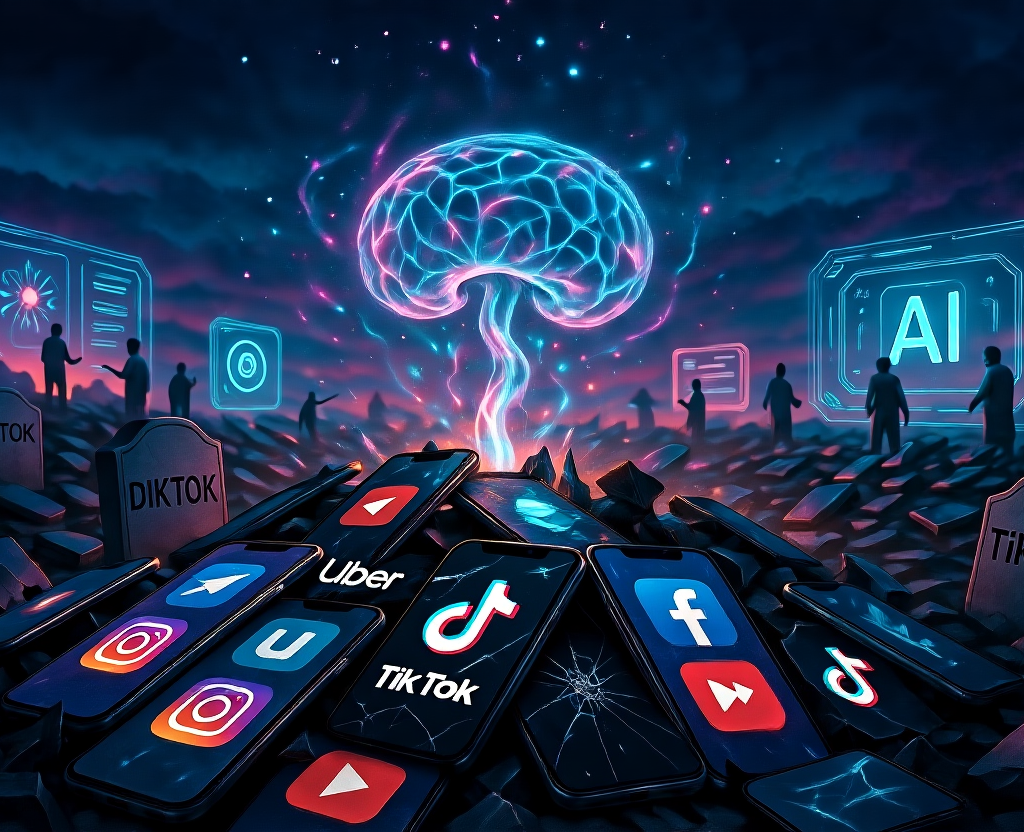
Experts are now talking openly about the death of apps as Ambient AI shifts from experimental to essential. In 2026, this transformation is accelerating faster than most people realize. Ambient AI is not just another upgrade. It is a revolutionary reimagining of how humans interact with technology.
In this article, you will discover:
- What Ambient AI truly is and why it is so transformative
- Why the death of apps is not a scary prediction but an exciting evolution
- How everyday life will change when AI becomes invisible, proactive, and deeply personal
- Real world case studies, practical benefits, and honest challenges
- What this means for businesses, developers, and you as a user
By the end, you will understand why the death of apps matters today and how to embrace this game changing shift before your competitors do.
What Is Ambient AI?
Ambient AI is intelligence that lives everywhere around you, silently understanding context, anticipating needs, and acting without requiring you to open an app or issue a explicit command. It is not a single app you launch. It is an AI driven layer that permeates your home, your devices, your car, your workplace, and even your city.
From App Driven to AI Driven Experiences
For the past fifteen years, digital life revolved around apps. You opened an app to order food, check your bank balance, book a ride, track your steps, or message a friend. Each app was a walled garden with its own interface, its own login, and its own rules.
Ambient AI flips this model. Instead of you navigating to an app, the right action appears at the right moment, powered by AI that understands your habits, location, preferences, and intentions.
Key differences:
| App Driven Experience | AI Driven Ambient Experience |
|---|---|
| You open the app manually | The system anticipates and acts |
| Multiple logins and interfaces | One seamless, trusted identity |
| Reactive (you start the task) | Proactive (AI starts the task) |
| Fragmented across many apps | Unified across ecosystems |
| Limited personalization | Deeply personalized and context aware |
This shift is remarkable because it removes friction. You no longer manage software. The software manages itself around you.
Current market trends show major players like Microsoft AI, OpenAI, and IBM Research investing heavily in ambient intelligence layers that operate across devices and platforms . According to Stanford AI Research, ambient computing is one of the top five breakthrough directions for the next decade .
Why Ambient AI Is Accelerating The Death of Apps
The phrase the death of apps sounds dramatic, but it describes a very real trend. Ambient AI is making traditional apps less relevant for three powerful reasons.
1. Invisible Interfaces
With Ambient AI, you rarely see a screen. You speak, gesture, or simply exist in a context, and the system responds. Voice first interactions, wearable sensors, and smart environments replace tap heavy interfaces.
For example, instead of opening a banking app to check your balance, your smart speaker calmly tells you your available balance when you ask about your morning coffee budget.
2. Context Aware Computing
Ambient AI understands where you are, who you are with, what you are doing, and what you need next. It combines data from wearables, calendars, location, weather, and past behavior to deliver personalized digital experiences that feel almost magical.
Imagine your car automatically adjusting your climate, playlist, and route based on your stress level detected by your watch. This is context aware computing at its finest.
3. Predictive Assistance
Ambient AI does not wait for commands. It predicts. It notices you usually order groceries on Sunday evening and suggests a list before you even think. It sees a meeting in your calendar and pre loads relevant documents. It senses you are running late and books a faster ride without being asked.
This predictive power is a breakthrough that makes reactive apps feel outdated.
In short, the death of apps is not about apps disappearing overnight. It is about apps fading into the background while Ambient AI becomes the front end of digital life.
How Ambient AI Changes Human Computer Interaction
Ambient AI rewrites the rules of human computer interaction across every domain.
Smart Homes
Your home becomes a trusted partner. Lights adjust as you walk in. The thermostat learns your comfort zones. The refrigerator suggests recipes based on what is inside and your dietary preferences. You no longer open a smart home app. You simply live, and the house responds.
Wearables
Smartwatches and rings monitor health continuously. They detect anomalies, suggest workouts, and even alert doctors when something is wrong. Instead of opening a health app, your watch proactively shares insights with your doctor.
Automotive Systems
Modern cars powered by Ambient AI act as intelligent co pilots. They anticipate traffic, suggest breaks when fatigue is detected, and integrate with your calendar and home. The dashboard becomes a natural conversation, not a cluster of apps.
Enterprise Productivity
In the workplace, Ambient AI streamlines meetings, drafts emails, summarizes documents, and connects teams across time zones. Employees no longer juggle multiple productivity apps. The AI handles coordination behind the scenes.
Healthcare Applications
In healthcare, Ambient AI monitors patients in real time, predicts flare ups, and personalizes treatment plans. Doctors receive evidence based insights without manually entering data. This is revolutionary for patient outcomes.
Across all these areas, users increasingly interact with AI rather than individual apps. This is the core of the death of apps.
Case Study: The Real World Rise of Ambient AI
Consider a mid sized logistics company that implemented an Ambient AI ecosystem in 2025.
Before Ambient AI:
- Drivers used three separate apps for routing, logging hours, and reporting issues
- Managers manually checked dashboards and sent reminders
- Delays were detected after they happened
- Customer communication was reactive
After Ambient AI:
- Drivers spoke naturally to a voice assistant embedded in the vehicle
- The system predicted delays using traffic, weather, and vehicle health data
- Routes adjusted automatically without driver input
- Customers received proactive updates without calling support
- Managers received daily summaries and actionable recommendations
Measurable outcomes:
- 27 percent reduction in late deliveries
- 34 percent decrease in administrative time
- 41 percent improvement in driver satisfaction
- 19 percent increase in customer retention
Lessons learned:
- Invisible interfaces reduce training time
- Proactive assistance builds dependable operations
- Unified AI layers outperform fragmented app stacks
This case study proves that the death of apps is not theoretical. It is already delivering empowering results for real businesses.
Benefits of Ambient AI
Ambient AI offers clear, practical advantages that make life easier and businesses stronger.
Better Convenience
Tasks happen automatically. You do not need to remember to open an app. The system handles it.
Faster Decisions
Ambient AI processes vast amounts of data in real time, delivering insights and actions instantly.
Enhanced Productivity
By removing manual steps and anticipating needs, Ambient AI frees up time for high value work.
Improved User Experience
Interfaces become natural, intuitive, and frictionless. Users feel understood rather than managed.
Greater Personalization
Every interaction feels tailored to your habits, preferences, and goals.
These benefits make Ambient AI not just convenient but essential for modern life.
Challenges and Risks
Despite its promise, Ambient AI raises important concerns that must be addressed responsibly.
Privacy Concerns
Ambient AI collects vast amounts of personal data. Users must trust that their information is handled transparently and securely.
Data Security
Centralized intelligence creates attractive targets for attackers. Strong encryption and zero trust architectures are non negotiable.
Algorithmic Bias
If training data is biased, AI decisions will be biased. Diverse data and rigorous testing are critical.
Dependence on AI
Over reliance on AI may reduce human skills and judgment. Balanced design keeps humans in control.
Regulatory Considerations
Governments are developing new rules for AI. Companies must stay compliant and responsible.
Presenting these challenges honestly builds credibility and shows that Kritiinfo is a reliable technology authority.
What The Death of Apps Means for Businesses
The death of apps is not just a tech trend. It is a strategic inflection point.
Changing Software Development
Businesses will shift from building many apps to building AI agents that work across platforms. Development will focus on data, context, and natural language rather than screens and buttons.
New Customer Engagement Models
Customer engagement will become proactive and personalized. Instead of hoping customers open your app, your AI will reach them at the right moment with the right offer.
Future Digital Strategies
Winning companies will invest in ambient intelligence layers, unified data platforms, and trusted AI companions. Legacy app stacks will become liabilities.
Competitive Advantages
Organizations that embrace Ambient AI early will enjoy remarkable efficiency gains, higher customer loyalty, and faster innovation cycles.
Actionable insight: Start auditing your app portfolio now. Identify which functions can be replaced by ambient AI agents. Begin pilot programs with proven partners.
Future Predictions
The next decade will bring even more transformative changes.
AI Companions
Personal AI companions will act as trusted advisors for health, finance, learning, and daily life.
Agent Based Ecosystems
Instead of single AI models, ecosystems of specialized agents will collaborate to solve complex problems.
Intelligent Operating Systems
Operating systems will become AI native, managing resources, security, and interactions intelligently.
Ambient Commerce
Shopping will happen through conversation and context, not app stores. You will say “buy my usual” and the system will handle everything.
Future of Mobile Applications
Mobile apps will not vanish overnight, but they will become backend services rather than front end interfaces. The front end will be natural language and ambient context.
These predictions are optimistic yet grounded in current trends observed by MIT Technology Review and the World Economic Forum .
FAQ Section
1. What is Ambient AI?
Ambient AI is intelligence that lives around you, understanding context and acting proactively without requiring you to open an app. It is context aware, predictive, and deeply integrated into your environment.
2. Why are experts discussing the death of apps?
Experts discuss the death of apps because Ambient AI makes traditional app interfaces less necessary. Users interact with AI directly, and apps fade into the background as services.
3. Can Ambient AI replace mobile applications completely?
In the long term, yes. Many functions will be handled by AI agents. However, some niche apps may persist for specialized use cases. The mainstream experience will shift to ambient intelligence.
4. Is Ambient AI safe?
Ambient AI can be safe when built with strong privacy, security, and transparency. Companies must follow responsible AI practices and comply with regulations.
5. How does Ambient AI improve productivity?
By automating routine tasks, anticipating needs, and unifying workflows, Ambient AI saves time and reduces friction, leading to enhanced productivity.
6. What industries benefit most from Ambient AI?
Healthcare, logistics, retail, finance, automotive, and enterprise services benefit most due to their high data volume and need for real time decisions.
7. What is the future of Ambient AI?
The future includes AI companions, agent based ecosystems, intelligent operating systems, and ambient commerce. The death of apps will accelerate as AI becomes the primary interface.
Conclusion: Why Understanding The Death of Apps Matters Today
Ambient AI is not coming. It is here. The 7 powerful shifts we explored show how the death of apps is already underway. This revolutionary change offers exciting opportunities for individuals and businesses willing to embrace the future.
You can choose to wait and react, or you can start learning, explore Ambient AI strategies, and build a competitive edge today.
Ready to stay ahead? Discover more AI trends, expert insights, and actionable strategies on Kritiinfo – AI Trends. Let Kritiinfo be your trusted partner as you navigate the transformative world of Ambient AI.
Key Takeaways
- Ambient AI is intelligence that lives around you, acting proactively without apps
- The death of apps describes the shift from app interfaces to AI driven experiences
- Invisible interfaces, context awareness, and predictive assistance drive this change
- Real world case studies show measurable gains in efficiency and satisfaction
- Benefits include convenience, speed, productivity, and personalization
- Challenges include privacy, security, bias, dependence, and regulation
- Businesses must adapt software development and engagement models
- Future trends include AI companions, agent ecosystems, and ambient commerce
- Understanding the death of apps is essential for future readiness