
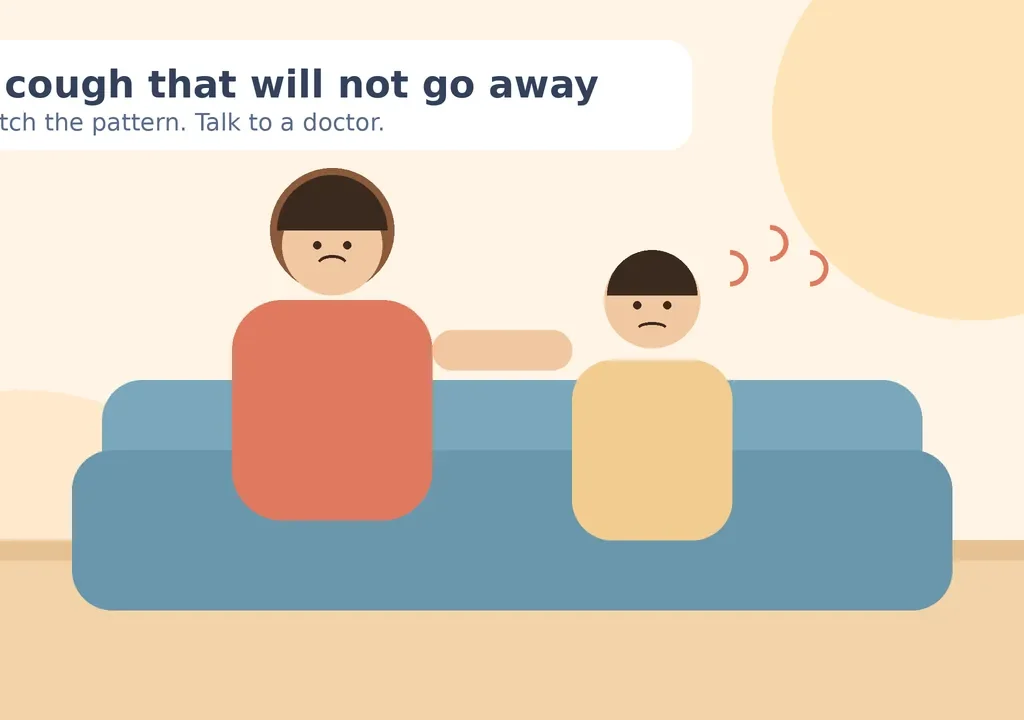
Aarav is 11. For ten days he has had a runny nose and a small cough. His mother thinks it is only a cold. His baby sister Meera is seven weeks old and has not had her first vaccine yet.
On day twelve, the cough changes. Aarav coughs again and again without a break. His face turns red. He vomits. Then he pulls in a long, noisy breath. That night, Meera stops breathing for a few seconds while she sleeps. She never coughs at all.
Nothing in this story is unusual. Whooping cough often starts like a cold, so families miss it. An older child can pass it to a baby, and the baby is the one in greatest danger. This guide explains how to spot it early, what to do, and how to protect your family.
What Is Whooping Cough?
Whooping cough is also called pertussis. It is a lung and throat infection caused by a germ named Bordetella pertussis (CDC). A bacterium is a tiny living germ.
The germ sticks inside the nose and throat. The airways swell and fill with thick mucus, and the body fights back with hard, fast coughs.
The name comes from the “whoop,” the deep noisy breath after a coughing fit. Some people call it the 100 day cough, because the cough can last for weeks or even months.
Table of Contents
How Does Whooping Cough Spread?
The germ travels in tiny drops of spit and mucus. They fly out when a sick person coughs, sneezes or even talks. Another person breathes them in.
Symptoms usually start 5 to 10 days after contact. Sometimes it takes up to three weeks (CDC). Without treatment, a person can spread whooping cough for about 21 days after the cough begins. After five days of the right antibiotic, they are usually no longer contagious, which means able to spread the infection.
The dangerous part is this. Many babies catch it from brothers, sisters, parents or caregivers who do not know they have it. Homes, classrooms, buses and crowded markets all give the germ a chance to travel.
Early Symptoms: The First Warning Signs
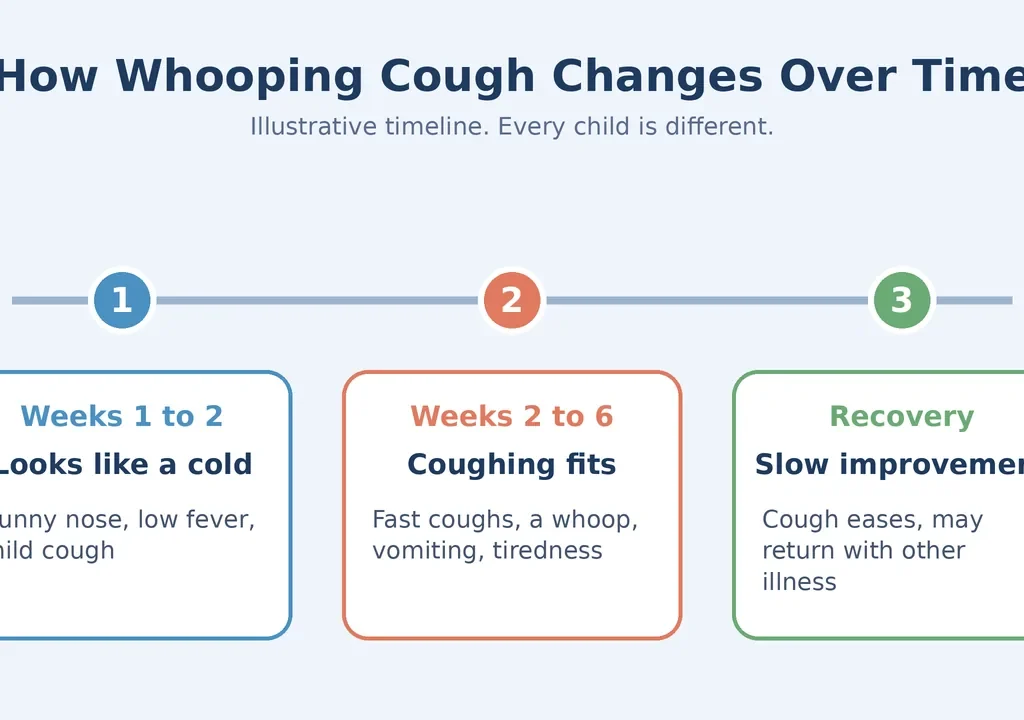
The first one to two weeks look like a common cold: a runny or blocked nose, a low fever and a mild cough that comes now and then. Even doctors may not tell it apart from a cold now.
Here is how the illness changes over time.
| Stage | What you may see | How it feels |
|---|---|---|
| Weeks 1 to 2 | Runny nose, low fever, mild cough | Like an ordinary cold |
| Weeks 2 to 6 | Fits of fast coughing, a whoop, vomiting | Tiring and scary |
| Recovery | Cough slowly eases but may come back with another illness | Can last for months |
When the Cough Becomes Serious
Now the cough comes in fits. A child may cough many times in a row before getting a breath. After the fit, they may gasp, make the whoop sound, vomit, or look worn out. Between fits, they may seem fine.
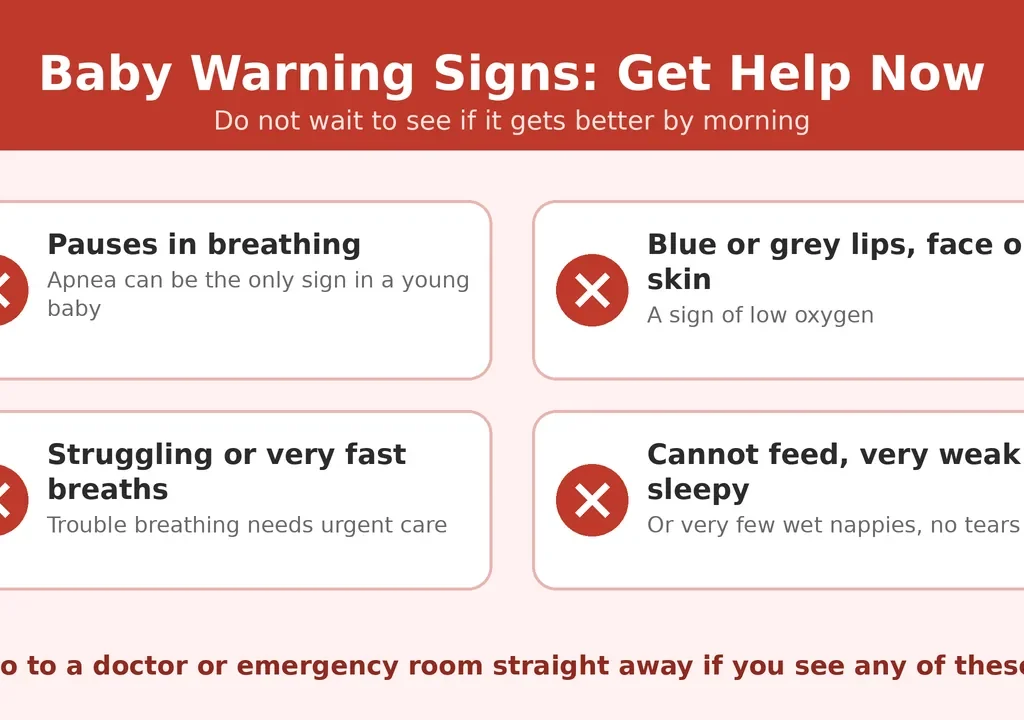
Go to a doctor or emergency room straight away if you see any of these:
- Trouble breathing, or fast, struggling breaths
- Pauses in breathing (called apnea)
- Blue or grey lips, face or skin
- A baby who cannot feed, or looks very weak or very sleepy
- Signs of dehydration, such as very few wet nappies or no tears
Why Infants Face Greater Risks
Babies have very small airways. A little mucus can block them. They also cannot finish their vaccines until several months old. In India, the first dose is given at six weeks.
Many young babies do not cough much, and some do not cough at all. Instead, they may stop breathing for a short time or turn blue. Babies are often too small and weak to make the whoop.
About 1 in 3 babies under one year old who get whooping cough need hospital care, according to the CDC. The younger the baby, the higher the risk. Possible problems include pneumonia (a lung infection), slow or stopped breathing, dehydration from poor feeding, seizures and, rarely, brain damage.
Children and Teenagers: Important Differences
| Age group | What it often looks like | Main risk |
|---|---|---|
| Babies under 1 year | Little or no cough, pauses in breathing, blue skin, poor feeding | Hospital care, breathing stops |
| Children 1 to 10 years | Classic coughing fits, whoop, vomiting | Weeks of poor sleep and school loss, more serious if unvaccinated |
| Teenagers | Long cough that may seem like a plain cough | Milder, but they can pass it to babies |
Teenagers usually recover well. Problems are often side effects of hard coughing, such as bruised or cracked ribs (Mayo Clinic). Pneumonia can also happen. The bigger worry is spreading it at home to a newborn.
Diagnosis and Treatment
A doctor listens to the cough, asks about sick contacts and checks vaccine records. A swab from the nose or throat can test for the germ. The test works best in the first four weeks of cough and before antibiotics begin. But doctors say treatment should not wait for test results (Massachusetts Department of Public Health).
Treatment is with antibiotics, medicines that kill bacteria. Starting early may make the illness less serious and helps stop spread. But antibiotics do not end the cough straight away. Recovery is slow. Very young babies, or children with severe illness, may need hospital care and support with feeding and breathing (PAHO).
Never start antibiotics or any medicine on your own. The right drug and amount depend on age and weight, and only a doctor can decide.
Vaccination: The Strongest Preventive Step
The vaccine is the best protection. It works well against serious illness, but it is not perfect. Health officials say it does not stop every infection, and protection fades over time (Massachusetts Department of Public Health). A vaccinated child who still gets sick usually has a milder illness.
India’s national schedule (from the Ministry of Health and Family Welfare and a 2026 government schedule document):
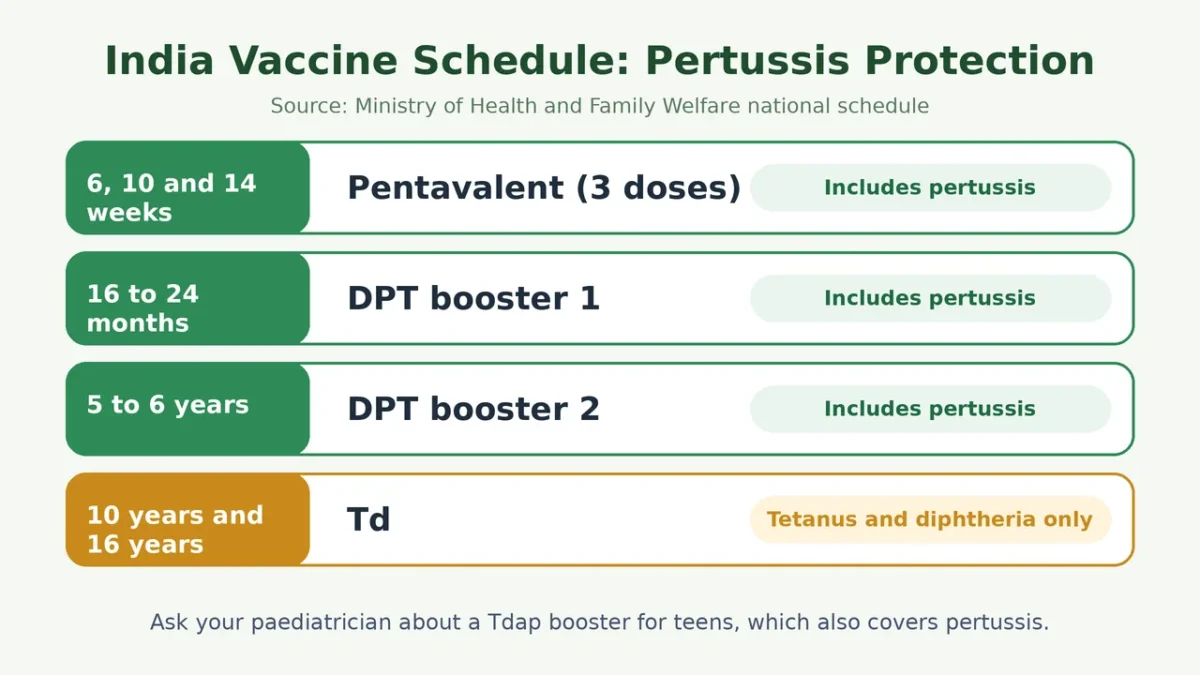
- Pentavalent vaccine at 6, 10 and 14 weeks
- DPT booster at 16 to 24 months
- Second DPT booster at 5 to 6 years
- Td at 10 and 16 years
One detail matters. The Td vaccine protects against tetanus and diphtheria, not whooping cough. Ask your paediatrician whether a Tdap booster, which also covers pertussis, is right for your teenager. Also ask your doctor about a Tdap dose in each pregnancy. The CDC recommends it in the third trimester to protect the newborn, and WHO says national programmes may consider it where infant illness is high.
What the Numbers Say
- Global (WHO figures via CDC): 941,565 cases were reported worldwide in 2024. CDC global page
- Global (WHO figures via PAHO): The count was 29,623 in 2021, 63,024 in 2022 and 158,910 in 2023. It fell during the COVID years and then rose again. PAHO
- India (WHO and UNICEF data, 2022, as reported by Medindia): 4,362 reported cases, down from 31,431 in 2000.
- South Asia (WHO and UNICEF, 2024): 92 per cent of infants received three DTP doses.
How to read these: reported cases are only the ones tested and counted. WHO experts have said that only a small share of real cases are reported. So a low number does not mean the disease is gone. Do not compare India’s figure with the global ones, because years and methods differ.
A Practical Family Protection Framework: The COUGH Check
Use these five steps when a child has a cough.
- C: Count the days. Note when the cough began. Write down any contact with a coughing person.
- O: Observe the breathing. Watch for fits, gasping, vomiting, colour change and pauses.
- U: Urgent signs first. Blue lips, struggling breaths or paused breathing mean emergency care now.
- G: Get a doctor’s check. Ask for an exam and test. Do not give medicine yourself.
- H: Halt the spread. Keep the child home until five days of antibiotics are done. Wash hands. Cover coughs. Keep them away from babies and pregnant women.
Real World Application: A School and Family Scenario (Illustrative)
This is a made up example to show the steps. It is not a real case.
Imagine a class 6 student with a cough for two weeks. Her teacher notices fits of coughing in lessons and calls her parents. The doctor suspects whooping cough and starts treatment. The school sends other parents a short, calm message without naming the child. A classmate’s mother remembers her newborn at home and calls her doctor the same day.
The school noticed early, shared simply, protected privacy and nudged families with babies to call a doctor.
Common Whooping Cough Myths and Mistakes
- Myth: Every sick child makes a whoop. Many babies and teens do not. Pauses in breathing may be the only clue in a baby.
- Myth: Vaccinated children cannot get it. They can, but they are usually less sick.
- Myth: Any long cough is whooping cough. Many illnesses cause long coughs. Only a doctor can tell.
- Myth: Antibiotics stop the cough at once. They mainly reduce spread and may soften the illness.
- Mistake: Sending a coughing teen to visit a newborn. Mild illness in an older child can be dangerous for a baby.
What Parents Should Do Next
If your child has symptoms: Call a doctor. If the child is a baby, call the same day. Use the COUGH Check, and go to the hospital if urgent signs appear.
If you learn of a possible exposure: Call your doctor, especially if you have a baby, a pregnant woman or a child with a long term health problem at home. The doctor may advise preventive antibiotics for close contacts (Mayo Clinic). Watch for symptoms for up to three weeks.
For prevention: Check the vaccine card now. Complete every dose on time. Ask about a Tdap booster for your teenager and about Tdap in pregnancy. Keep newborns away from anyone who is coughing.
Related reading: newborn care, common infant and newborn problems, diphtheria (same vaccine family) and why measles returned.
Conclusion
Whooping cough looks small at first and can turn serious fast, especially in babies. The best defence is simple: know the early signs, act on warning signs without delay, get a doctor’s care, finish every vaccine on time and keep newborns away from coughing visitors.
Frequently Asked Questions
1. Is whooping cough contagious? Yes, very. It spreads by coughing and sneezing. Without treatment, a person may spread it for about 21 days from when the cough starts.
2. How long does whooping cough last? The cough can last for weeks to months. Fits may return with other illnesses even after recovery.
3. Why does my baby not make the whoop sound? Babies often lack the strength to make it. They may only have pauses in breathing or look like they have a cold. Treat any pause or blue colour as an emergency.
4. Can teenagers and adults get it? Yes. Illness is usually milder, but they can spread it to babies.
5. Can a vaccinated child still get whooping cough? Yes. The vaccine is not perfect and protection fades, but illness is usually milder.
6. When should I go to the hospital? Go if there is trouble breathing, paused breathing, blue or grey skin, or if a baby cannot feed or seems very weak.
7. What should I do after contact with someone who has it? Call your doctor. Preventive antibiotics may be advised for close contacts, and the doctor will tell you what to watch for.
Medical disclaimer: This article is for education. It does not replace a doctor’s diagnosis or treatment. If your child is unwell, see a qualified healthcare professional. Information checked against public health sources on 20 November 2026.