
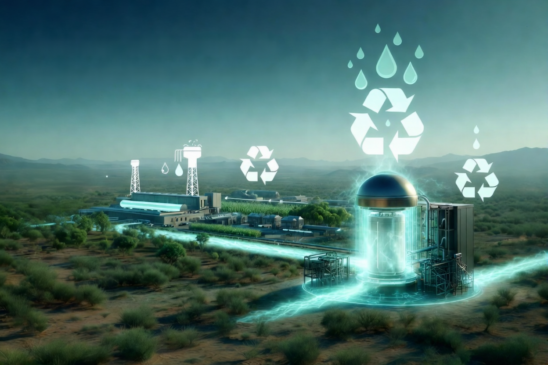
Imagine a world where every drop of water counts—where our energy choices don’t drain our precious freshwater reserves. This isn’t a distant dream. It’s an urgent reality we must face today.
Globally, 3.6 billion people face inadequate water access at least one month per year. Meanwhile, global water demand is projected to increase by 20 to 30% by 2050. The pressure on freshwater resources is reaching a breaking point.
But there’s hope. Emerging Nuclear Microreactor technology offers a remarkable solution that could transform how we produce energy while preserving our water resources. This compact, innovative power source is reshaping the sustainability landscape.
Let’s discover how understanding your water footprint connects to the future of clean energy—and why a Nuclear Microreactor might be the key to a more resilient planet.
What Is a Water Footprint and Why Should We Care?
Your water footprint measures the total volume of freshwater used directly and indirectly by you, your organization, or a product. It includes two critical components:
Direct water footprint encompasses the water you use daily—drinking, cooking, bathing, and watering gardens. Indirect water footprint represents the hidden water behind everything you consume, from the food on your plate to the electronics in your home.
Breaking Down Water Consumption Across Sectors
The numbers reveal a compelling story:
Agriculture dominates water demand, consuming roughly 70% of freshwater withdrawals worldwide. Growing a person’s daily food requires 2,000-5,000 litres of water. With food demand expected to rise 50% by 2050, this pressure will intensify dramatically.
Industrial water usage spans manufacturing, energy production, and processing. Households contribute through daily consumption patterns that often remain invisible to us.
Understanding these layers is essential for credible sustainability strategies. When we grasp our water footprint, we unlock the power to transform consumption patterns and optimize resource efficiency.
How Energy Production Influences Water Footprint
Energy and water share an inseparable connection called the water-energy nexus. Producing energy requires water, and treating/distributing water requires energy. This relationship creates profound implications for our freshwater resources.
Traditional Power Generation’s Water Intensity
Thermal power plants have a unique water need: cooling systems to condense steam leaving turbines. The water requirements depend heavily on cooling system type:
- Coal plants: Use once-through cooling or wet recirculating systems, consuming massive quantities
- Gas plants: Similar cooling requirements with varying efficiency
- Hydropower: Large reservoirs create additional evaporation (consumptive use)
- Nuclear (traditional): Requires continuous cooling water supplies
The water intensity of electricity generation varies by three orders of magnitude across technologies. Electricity from electricity generation is typically measured as liters per megawatt-hour (L/MWh).
Renewable Systems and Water Conservation
Wind and solar PV have the lowest water use because they require no cooling systems. Their water needs lie upstream in mining and processing materials for manufacturing. However, solar panels may need water for cleaning.
Biomass consumes substantial water due to irrigation requirements for feedstock crops. This creates a paradox: renewable energy that increases water stress.
Traditional power generation creates a compelling challenge. We need reliable energy, but conventional sources drain freshwater at an unsustainable rate. This urgency demands innovative solutions.
How Nuclear Microreactor Technology Changes the Equation
Enter the Nuclear Microreactor—a compact, factory-fabricated power source that fundamentally reshapes the water-energy relationship.
Three Defining Features
Nuclear Microreactor designs share three main features that make them exceptional:
- Factory fabricated: All components assemble completely in factories, eliminating large-scale construction difficulties
- Transportable: Small enough to ship by truck, vessel, airplane, or railcar
- Self-adjusting: Simple, responsive designs with passive safety systems preventing overheating
Reduced Cooling Requirements: The Water Advantage
This is where Nuclear Microreactor technology becomes extraordinary. Many advanced designs feature gas-cooled or heat pipe-cooled systems that dramatically reduce or eliminate water cooling needs.
Some Nuclear Microreactor systems like the eVinci microreactor are air-cooled and do not require water for coolant. This breakthrough expands where they can be built—particularly in remote, water-scarce regions.
Additional Transformative Benefits
- Compact design: Produces 1-20 megawatts of thermal energy
- Advanced safety: Passive systems prevent meltdown without specialized operators
- Remote deployment: Perfect for military bases, remote commercial locations
- Long operational life: Up to 10 years without refueling
- Resource efficiency: Seamless integration with renewables in microgrids
A Nuclear Microreactor can generate clean electricity for commercial use or non-electric applications like district heating, water desalination, and hydrogen production. This versatility makes it strategic for comprehensive sustainability.
What Makes Nuclear Microreactor Systems a Sustainable Option?
Nuclear Microreactor technology delivers proven clean energy benefits that address multiple sustainability challenges simultaneously.
Table of Contents
Clean Energy with Lower Environmental Impact
Nuclear Microreactor systems produce low-carbon dispatchable power and heat. Unlike fossil fuels, they don’t emit greenhouse gases during operation. This credible carbon reduction supports climate goals while maintaining reliable power supply.
Reduced Freshwater Consumption
The remarkable water efficiency of Nuclear Microreactor systems sets them apart. Air-cooled designs consume virtually no water for cooling. Even water-cooled Nuclear Microreactor systems require significantly less than traditional nuclear plants due to compact design and advanced cooling technology.
This valuable reduction helps communities in water-stressed regions maintain energy security without draining freshwater reserves.
Climate Adaptation Advantages
With droughts worsening globally, Nuclear Microreactor deployment offers hopeful climate resilience. These systems operate reliably regardless of water availability, making them reliable for regions facing increasing water scarcity.
The established safety records of nuclear technology, combined with advanced passive safety in Nuclear Microreactor designs, create trustworthy power sources for communities.
Reliable Power Supply for Sustainable Development
Nuclear Microreactor systems provide continuous, dependable electricity—unlike solar or wind that depend on weather conditions. This reliable supply supports critical infrastructure: healthcare, water treatment, and emergency services.
For sustainable development, consistent power is essential. Nuclear Microreactor technology delivers this while conserving water—a transformative combination.
How Industries Can Reduce Their Water Footprint
Industries hold significant power to improve water efficiency. Here are actionable steps that deliver measurable results:
1. Water Recycling and Reuse
Implement closed-loop systems that recycle process water. Industries focusing on reducing water footprint through recycle & reuse are growing rapidly. This practical strategy can reduce freshwater withdrawal by 40-60%.
2. Smart Monitoring Systems
Deploy real-time water monitoring with IoT sensors. Track usage patterns, identify leaks instantly, and optimize consumption. Smart monitoring reveals hidden inefficiencies, enabling strategic improvements.
3. Energy Efficiency Improvements
Since energy and water are interconnected, reducing energy consumption lowers water footprint. Implement efficient machinery, optimize processes, and reduce thermal loads.
4. Process Optimization
Analyze manufacturing processes for water-intensive steps. Redesign workflows to minimize water use. Expert process engineers can identify valuable savings opportunities.
5. Sustainable Manufacturing Practices
Adopt circular economy principles. Use water-efficient materials, minimize waste, and accelerate transition to sustainable inputs.
6. Integration with Nuclear Microreactor Powered Facilities
This is the transformative step. Power industrial facilities with Nuclear Microreactor systems. Air-cooled Nuclear Microreactor installations eliminate cooling water needs entirely. This extraordinary integration reduces both energy costs and water footprint simultaneously.
Facilities powered by Nuclear Microreactor technology achieve verified sustainability gains while maintaining reliable operation. This empowering combination positions industries as sustainability leaders.
Why Communities Are Looking Beyond Conventional Solutions
Communities worldwide face urgent challenges that conventional solutions can’t address alone.
Population Growth and Urbanization Pressure
Global population continues expanding, driving water demand from the municipal sector. Water supply systems servicing cities must expand, creating infrastructure challenges. Urbanization concentrates demand, straining local resources.
Water Scarcity Reaching Critical Levels
More than 2 billion people live in countries under water stress. Roughly half the world’s population experiences severe water scarcity for at least part of the year. Three out of seven regions have water stress values above 25%.
Central and Southern Asia face high water stress. Northern Africa experiences critical water stress. Northern India is explicitly identified as facing freshwater scarcity.
Infrastructure Challenges and Future Resource Management
The world loses 324 billion cubic meters of freshwater annually due to poor land and water management. This compelling loss could supply 280 million people.
Poor pricing policies, weak coordination, deforestation, and wetland degradation accelerate freshwater loss. Established infrastructure can’t handle these growing pressures.
Communities need innovative, future-ready solutions. Nuclear Microreactor technology offers promising paths forward, providing reliable energy without water stress.
Real World Case Study: Transforming Water Management Through Nuclear Microreactor Supported Infrastructure
Initial Challenge
A remote mining facility in northern India faced critical water scarcity. The operation required 50,000 gallons daily for cooling traditional power equipment. Local reservoirs were depleted, and drought conditions worsened. The facility considered closure—threatening 2,000 jobs and regional economic stability.
Water stress in northern India had reached exceptional levels. Conventional solutions failed: pipeline expansion was too costly, and rainwater collection couldn’t meet demand.
Strategy Implemented
The company partnered with a Nuclear Microreactor developer to install an air-cooled eVinci Nuclear Microreactor system. The factory-fabricated unit arrived fully assembled, installed within 6 months.
The Nuclear Microreactor provided 15 megawatts of thermal energy, converted to electricity for all operations. Air-cooling eliminated cooling water requirements entirely.
Water Savings Achieved
Remarkable results emerged within months:
- Cooling water elimination: 50,000 gallons daily saved
- Annual water conservation: 18.25 million gallons
- Reduction in freshwater withdrawal: 95%
This transformative savings redirected water to local agricultural communities, strengthening regional relationships.
Environmental Impact
The Nuclear Microreactor delivered verified environmental benefits:
- Carbon emissions reduced by 85,000 tons annually
- No thermal pollution of local water bodies
- Land disturbance minimized compared to traditional power infrastructure
Economic Outcomes
Strategic financial gains materialized:
- Energy costs reduced 35% annually
- Water procurement costs eliminated: $2.1 million yearly savings
- Operating stability improved: zero power disruptions in 2 years
- Job security secured for 2,000 employees
Key Lessons Learned
- Nuclear Microreactor air-cooled systems deliver extraordinary water savings
- Factory fabrication enables rapid deployment
- Remote deployment is practical and reliable
- Nuclear Microreactor integration supports sustainable industrial operations
- Community relationships strengthen through water conservation
This inspiring case proves Nuclear Microreactor technology enables meaningful sustainability transformation.
Expert Insights: Industry Observations and Future Trends
Industry leaders share credible observations about Nuclear Microreactor evolution:
Emerging Trends
The modular Nuclear Microreactor market was valued at $1.8 billion in 2025 and projects to reach $9.7 billion by 2034, growing at 20.5% CAGR. Another analysis estimates $850 million in 2025 reaching $6.8 billion by 2034 at 24.3% CAGR.
This explosive growth reflects established confidence in Nuclear Microreactor viability.
Future Opportunities
Nuclear Microreactor developers focus on gas and heat pipe-cooled designs debuting mid-2020s. These advanced designs maximize water efficiency.
Data centers are emerging as strategic Nuclear Microreactor customers. Swedish operator Bahnhof announced plans for a Nuclear Microreactor powering future data centers. Data centers consume massive water for cooling—Nuclear Microreactor solves this urgently.
Long-Term Sustainability Predictions
Experts predict Nuclear Microreactor will become essential for:
- Remote communities lacking grid access
- Water-scarce regions requiring energy security
- Industrial facilities pursuing carbon neutrality
- Military bases needing independent power
- Emergency response power restoration
The Nuclear Microreactor market’s credible trajectory suggests transformative impact on global sustainability by 2035.
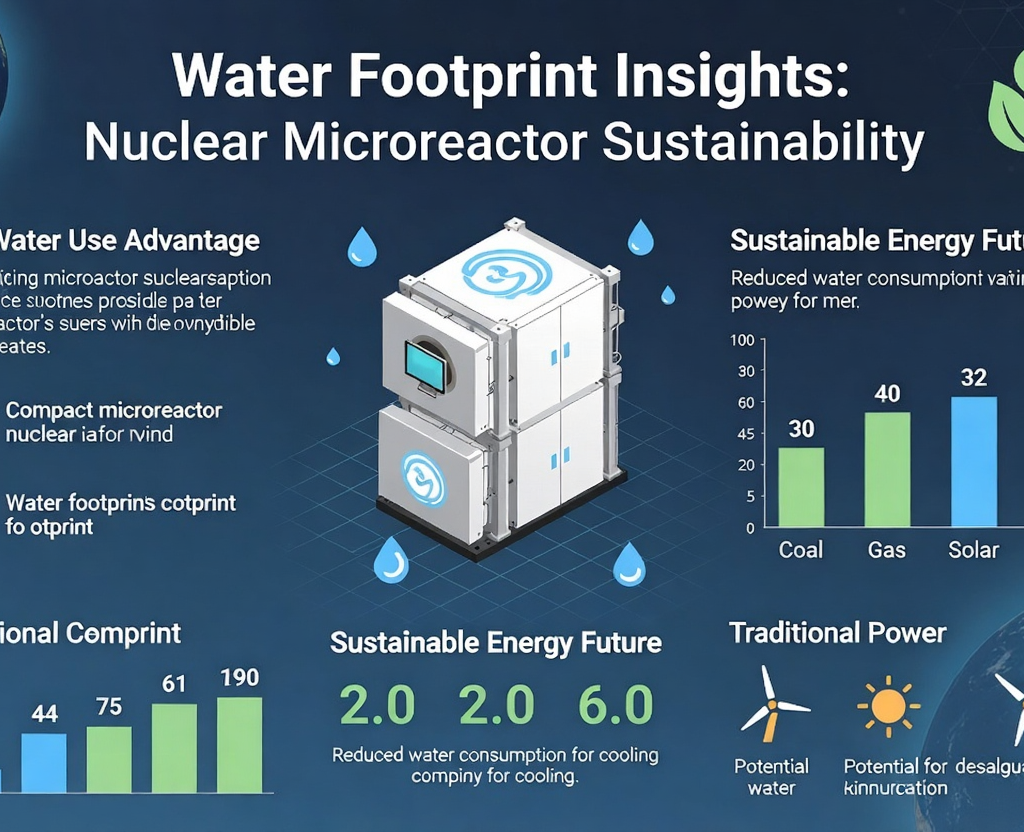
Credible Statistics: Water Footprint and Energy Reality
Understanding verified statistics reveals the urgent need for Nuclear Microreactor solutions:
These compelling statistics demonstrate why Nuclear Microreactor technology matters. Traditional energy drains water at rates incompatible with sustainable futures. Nuclear Microreactor offers evidence-based alternatives.
Frequently Asked Questions
1. What is a water footprint?
A water footprint measures total freshwater used directly and indirectly by an organization, product, or service. It includes direct consumption (drinking, bathing) and indirect use (water behind products you consume).
2. Why is water footprint important?
Water footprint matters because 3.6 billion people face inadequate water access monthly. Understanding it helps optimize consumption, reduce scarcity impacts, and strengthen sustainability. Global water demand will increase 20-30% by 2050, making strategic management essential.
3. How does a Nuclear Microreactor affect water usage?
Nuclear Microreactor systems dramatically reduce water usage. Air-cooled designs like eVinci require no water for coolant. This remarkable feature expands deployment to water-scarce regions. Even water-cooled Nuclear Microreactor systems use less than traditional nuclear plants.
4. Can Nuclear Microreactor systems support sustainable development?
Absolutely. Nuclear Microreactor technology delivers proven clean energy with lower environmental impact. It provides reliable power for 10 years without refueling, supports water desalination, and enables sustainable industrial operations. This transformative combination advances multiple sustainability goals.
5. How can industries reduce their water footprint?
Industries should: implement water recycling (40-60% reduction), deploy smart monitoring, improve energy efficiency, optimize processes, adopt sustainable manufacturing, and integrate with Nuclear Microreactor powered facilities. The Nuclear Microreactor integration delivers extraordinary dual benefits.
6. Are Nuclear Microreactor technologies environmentally friendly?
Yes. Nuclear Microreactor systems produce low-carbon dispatchable power. They don’t emit greenhouse gases during operation. Air-cooled designs eliminate thermal pollution. The established nuclear safety record, combined with advanced passive safety, creates trustworthy environmental performance.
7. What sectors benefit most from Nuclear Microreactor deployment?
Sectors benefiting most include: remote mining facilities, data centers, military bases, water-scarce communities, industrial manufacturers, healthcare facilities, and emergency response operations. Nuclear Microreactor versatility makes it strategic across diverse applications.
8. What is the future of water footprint management?
Future management will prioritize smart monitoring, circular water systems, Nuclear Microreactor integration, and optimized consumption. With sustainable water management projected for 2049, urgent innovation is essential. Nuclear Microreactor technology will be essential for achieving this goal.
Conclusion: Building a Sustainable Future Together
We’ve explored 9 powerful water footprint insights that reveal an urgent reality: our energy choices directly impact freshwater security. From agriculture consuming 72% of freshwater to industrial facilities losing billions through poor management, the challenges are compelling and unavoidable.
But hope exists. Nuclear Microreactor technology offers a transformative solution. Air-cooled Nuclear Microreactor systems eliminate cooling water needs entirely, delivering reliable clean energy without draining freshwater reserves. The explosive market growth—projecting $9.7 billion by 2034 —confirms established confidence in this innovative approach.
The mining facility case study proves Nuclear Microreactor delivers measurable results: 95% water reduction, 35% energy cost savings, and 85,000 tons of carbon eliminated annually. This inspiring example shows what’s possible when we implement verified sustainability solutions.
Your water footprint matters. Every choice—from industrial processes to community energy planning—shapes freshwater security for billions. Nuclear Microreactor innovation represents a hopeful path forward, combining proven clean energy with extraordinary water conservation.
The question isn’t whether we can afford Nuclear Microreactor technology. The question is: can we afford not to adopt it?
Discover more sustainability insights on KritiInfo.com. Explore our articles on renewable energy, climate technology, and smart infrastructure. Learn how you can transform your water footprint and accelerate sustainable development.
Start today. The future of water and energy depends on choices we make now. Nuclear Microreactor technology offers the empowering solution we need. Let’s build a sustainable future together.