
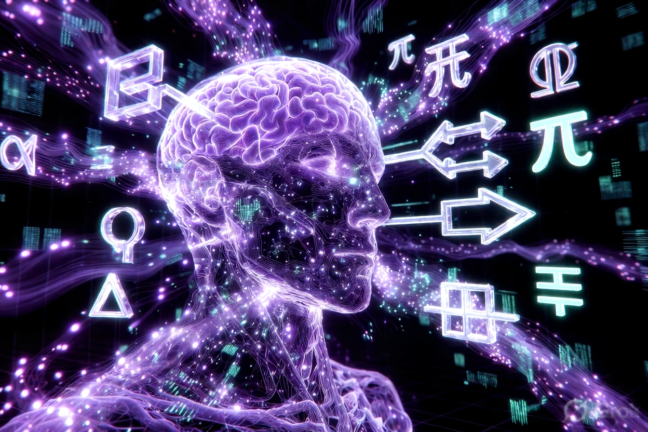
Artificial intelligence can write emails, summarize reports, and analyze images at impressive speed, yet many systems still struggle with one core capability: true logical reasoning . They often detect patterns well, but when a task demands rule based consistency, causal understanding, or stepwise deduction, their confidence can exceed their actual reliability .
That gap is exactly why Neuro Symbolic AI is drawing serious attention from researchers, enterprises, and product teams . By combining the learning strength of neural networks with the structure of symbolic reasoning, this hybrid approach aims to make AI systems more transparent, auditable, and capable of true logical reasoning in high stakes settings .
For businesses, this is not just an academic shift. It matters in healthcare diagnostics, financial risk review, cybersecurity policy enforcement, industrial decision support, and scientific discovery, where an answer is only useful when it is both accurate and explainable . In other words, Neuro Symbolic AI is gaining momentum because the next phase of AI is not only about generating outputs. It is about delivering true logical reasoning that people can trust .
What Is Neuro Symbolic AI
Neuro Symbolic AI is a hybrid AI approach that combines neural networks, which learn from data, with symbolic systems, which represent knowledge through rules, logic, and structured relationships . The goal is to bring together pattern recognition and true logical reasoning so machines can both learn from messy real world inputs and reason over them in a more disciplined way .
Historically, symbolic AI dominated early artificial intelligence because it could encode rules and support formal reasoning, but it struggled with uncertainty, noisy data, and scale . Neural networks later surged because they handled perception tasks such as language, vision, and speech far better, though they often acted like black boxes and did not naturally deliver true logical reasoning .
That contrast explains why the combination matters. Symbolic AI is strong at explicit logic and constraints, while neural models are strong at learning hidden patterns from data; together, they create a more practical path toward AI systems that can learn, explain, and reason with greater consistency . For a technology publication like kritiinfo.com, this makes Neuro Symbolic AI one of the most important developments within broader themes such as Artificial Intelligence, Machine Learning, Deep Learning, Explainable AI, and Data Science .
Why True Logical Reasoning Matters
The phrase true logical reasoning matters because many AI failures happen when systems produce fluent outputs without following valid rules, domain constraints, or causal chains . In enterprise environments, that can lead to hallucinated recommendations, compliance errors, weak diagnostics, or poor risk classification .
Reliable AI requires more than prediction. It requires systems that can justify outcomes, apply known rules consistently, and detect contradictions before they become costly decisions . That is why true logical reasoning is increasingly tied to explainability, governance, and trust in regulated industries .
This also affects user confidence. When an AI system can show which facts, rules, or relationships shaped an answer, teams are more likely to verify, approve, and deploy it in real workflows . In practical terms, true logical reasoning helps move AI from impressive demo to dependable business tool .
How Neuro Symbolic AI Works
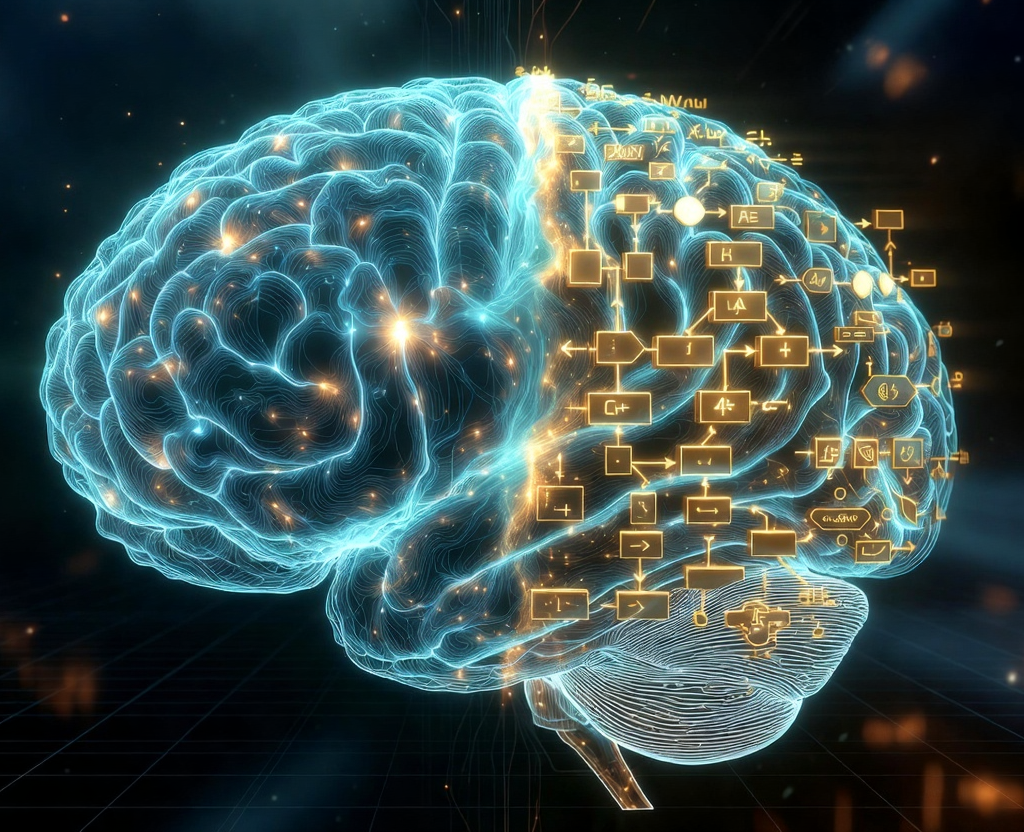
At a high level, Neuro Symbolic AI works by linking learned representations from neural models with symbolic structures such as rules, ontologies, graphs, or logic programs . The neural layer handles perception heavy tasks like extracting meaning from language, images, logs, or sensor data, while the symbolic layer organizes knowledge and supports true logical reasoning over that information .
Knowledge representation
Knowledge representation is the backbone of the symbolic side. Facts, concepts, relationships, and constraints are encoded in forms that a machine can inspect and apply repeatedly, which creates a stronger base for true logical reasoning than pure statistical association alone .
Reasoning engines
Reasoning engines apply rules, test logical consistency, and infer conclusions from structured knowledge . This is where true logical reasoning becomes operational, especially when the system must follow domain specific logic in healthcare pathways, fraud rules, or security policies .
Neural learning
The neural component learns from large volumes of unstructured data, which is essential because real world information rarely arrives in neat rule ready form . It can identify patterns, classify inputs, or extract entities and relationships that symbolic systems can then use for true logical reasoning .
Symbolic rules
Symbolic rules add discipline. They can encode compliance requirements, medical guidelines, business policies, or scientific constraints so the model is less likely to produce unsupported outputs . This is one of the most practical ways Neuro Symbolic AI improves true logical reasoning and reduces hallucination risk .
Training and inference
During training, developers may teach the neural system to align with symbolic constraints or use symbolic feedback to guide learning . During inference, the hybrid system can combine learned predictions with explicit rule checking, enabling answers that are not only likely, but also more consistent with true logical reasoning .
7 Powerful Benefits of Neuro Symbolic AI
1. Better accuracy in complex decisions
Neuro Symbolic AI can improve decision quality when tasks involve both pattern recognition and structured rules . That makes true logical reasoning more achievable in environments where pure deep learning may miss domain constraints or causal relationships .
2. Stronger transparency
Because symbolic components can expose the rules and relationships behind a result, teams gain a clearer view of why the system reached a conclusion . This transparency makes true logical reasoning easier to audit, explain, and improve over time .
3. Smarter learning from limited data
Rules and domain knowledge can compensate when labeled data is sparse or expensive . Instead of learning everything from scratch, the system can combine data driven learning with prior knowledge, which supports more efficient true logical reasoning in specialized domains .
4. Improved trust in regulated industries
Trust rises when AI is explainable, traceable, and aligned with explicit constraints . In finance, healthcare, and cybersecurity, true logical reasoning is valuable because stakeholders need to validate not only what the model predicts, but also whether the logic is defensible .
5. Faster decision support
Hybrid reasoning can narrow choices faster by combining learned detection with rule based filtering . That supports true logical reasoning in workflows where speed matters but blind automation is too risky, such as triage, fraud review, or operational alerts .
6. Enhanced safety and compliance
Symbolic constraints can act like guardrails around model behavior . This makes true logical reasoning especially useful in domains where safety rules, policy boundaries, or legal requirements cannot be treated as optional suggestions .
7. Future ready intelligence
Researchers and major labs increasingly view neuro symbolic methods as an important route toward more robust and general AI systems . While it is not a shortcut to AGI, it is one of the most credible pathways for scaling true logical reasoning beyond narrow benchmarks into practical, real world intelligence .
Table of Contents
Industries Being Transformed
Healthcare
Healthcare needs AI that can handle uncertainty while respecting clinical logic, documentation standards, and explainability requirements . A 2025 NIH indexed study on explainable diagnosis prediction used Logical Neural Networks to combine learning with interpretable reasoning, showing how neuro symbolic methods can support true logical reasoning in medical decision workflows .
Finance
Financial systems depend on policy checks, anomaly detection, fraud signals, and auditable decisions, which makes hybrid reasoning especially attractive . Neuro Symbolic AI can pair pattern recognition with rule enforcement, helping teams improve true logical reasoning in areas such as fraud detection, compliance monitoring, and risk review .
Cybersecurity
Cybersecurity teams often face high volume alerts, ambiguous signals, and constantly changing attack patterns . Neuro Symbolic AI can connect learned threat detection with explicit security rules and attack logic, which strengthens true logical reasoning when prioritizing incidents or enforcing policy .
Education
Education platforms can use hybrid AI to personalize learning while preserving curriculum logic and prerequisite sequencing . That makes true logical reasoning valuable for tutoring systems, learning diagnostics, and content recommendation engines that should explain why a learner is receiving a certain next step .
Manufacturing
Manufacturing environments rely on process constraints, equipment behavior, quality checks, and operational rules . Neuro Symbolic AI helps combine sensor driven prediction with explicit process knowledge, improving true logical reasoning in maintenance, inspection, and process optimization .
Scientific research
Science increasingly depends on systems that can detect patterns but also respect hypotheses, causal structure, and formal relationships . Neuro Symbolic AI is valuable here because true logical reasoning can help connect observations with structured scientific knowledge rather than stopping at surface correlation .
Case Study: Explainable Clinical Diagnosis Support
A practical case study can be built from recent healthcare research exploring explainable diagnosis prediction through neuro symbolic integration . It shows why true logical reasoning matters most when decisions affect patient care and expert review .
Challenge
Clinical prediction systems often identify patterns in patient data, but clinicians still need to understand why a result was produced and whether it aligns with medical logic . Traditional black box models can be difficult to trust in this setting because they may generate useful predictions without transparent true logical reasoning .
Solution
The study applied Logical Neural Networks, a neuro symbolic approach that integrates learning with interpretable logic structures . This design aimed to strengthen true logical reasoning by making relationships and decision pathways more visible to human reviewers .
Implementation
Patient information and diagnostic signals were processed through a framework that balanced learned patterns with logical reasoning mechanisms . Rather than relying solely on opaque statistical outputs, the system supported true logical reasoning through explainable rule aware prediction flows .
Results
The research highlighted the potential for explainable diagnosis prediction that is easier for experts to inspect and validate . That matters because true logical reasoning is especially valuable when clinicians must compare model outputs with medical evidence, not just accept a probability score .
Lessons learned
The biggest lesson is that adoption improves when AI systems speak the language of both data and logic . In healthcare and beyond, true logical reasoning becomes more practical when model performance is paired with transparent reasoning that experts can challenge, refine, and trust .
Key Challenges
Neuro Symbolic AI is promising, but it is not effortless to implement . In fact, many of the hardest problems appear exactly where teams try to move from research prototypes to production systems that deliver true logical reasoning at scale .
Scalability
Symbolic reasoning can become expensive as rules, entities, and relationships grow more complex . Maintaining true logical reasoning across large, dynamic environments remains a major engineering challenge .
Data quality
Hybrid systems still depend on high quality inputs . If the raw data is noisy or the symbolic knowledge base is flawed, true logical reasoning can break down because the logic layer is only as reliable as the knowledge it receives .
Computational complexity
Combining learning and reasoning can demand more computation than using either approach alone . That makes system design, optimization, and deployment architecture critical when scaling true logical reasoning into enterprise applications .
Integration barriers
Many organizations already have legacy machine learning pipelines, compliance systems, and fragmented data stacks . Adding a hybrid architecture for true logical reasoning often requires careful integration planning, cross functional coordination, and governance design .
Knowledge engineering challenges
Building and maintaining symbolic rules, ontologies, or structured knowledge graphs takes domain expertise and ongoing upkeep . True logical reasoning becomes far more effective when this layer is well designed, but that design work is often underestimated .
Future of Neuro Symbolic AI
The future of Neuro Symbolic AI looks especially strong in areas where explainability, safety, and auditable decision making are non negotiable . Researchers continue exploring architectures that better integrate neural learning with logic based constraints, and enterprises are increasingly interested in systems that offer both performance and true logical reasoning .
One major growth area is Explainable AI. As organizations face stricter expectations around accountability, hybrid systems that can support verified, transparent, and credible outcomes will likely become more attractive than black box automation alone . This is also where Neuro Symbolic AI connects naturally with topics such as Generative AI, Edge AI, Cybersecurity, and Machine Learning governance across enterprise stacks .
Autonomous systems are another exciting frontier. Whether in industrial robotics, adaptive software agents, or next generation decision support, true logical reasoning will be crucial for systems that must act with more independence while staying aligned with rules and goals . That is why many experts see neuro symbolic methods as a transformative and practical foundation for future ready AI rather than a passing research trend .
Practical Takeaways for Businesses and Developers
For leaders evaluating AI investments, Neuro Symbolic AI is most compelling when the problem demands accuracy, explainability, and policy alignment at the same time . If a workflow must demonstrate true logical reasoning rather than only high prediction scores, this approach deserves serious attention .
A useful starting checklist includes:
- Identify business processes where explainability is as important as automation .
- Map the rules, constraints, and domain knowledge that already exist inside the organization .
- Test where neural models fail to provide true logical reasoning on edge cases or regulated decisions .
- Pilot hybrid architectures in a narrow, measurable use case before scaling .
- Align AI, compliance, operations, and domain experts early in the implementation process .
For a publisher like kritiinfo.com, this topic also creates rich internal linking opportunities to articles on Artificial Intelligence, Explainable AI, Deep Learning, Machine Learning, Generative AI, Cybersecurity, and Data Science strategy. That editorial relevance matters because Neuro Symbolic AI sits at the center of where AI innovation, trust, and business value now intersect .
FAQs
What is Neuro Symbolic AI?
Neuro Symbolic AI is a hybrid approach that combines neural networks with symbolic reasoning methods such as rules, logic, and knowledge representation . Its goal is to improve learning, transparency, and true logical reasoning in AI systems .
How does Neuro Symbolic AI support true logical reasoning?
It supports true logical reasoning by pairing data driven learning with explicit rules, constraints, and structured relationships . This allows the system to detect patterns while also checking whether outputs align with logic and domain knowledge .
Why is Neuro Symbolic AI important?
It is important because many modern AI systems are powerful but not always explainable or logically consistent . Neuro Symbolic AI addresses that gap by making true logical reasoning more practical in real world, high stakes environments .
Can Neuro Symbolic AI reduce AI hallucinations?
It can help reduce hallucinations by applying symbolic rules and constraints that filter or challenge unsupported outputs . While it does not eliminate errors entirely, it can improve true logical reasoning and reliability compared with unconstrained models alone .
Which industries benefit most from Neuro Symbolic AI?
Healthcare, finance, cybersecurity, education, manufacturing, and scientific research are among the strongest candidates . These sectors often require explainable decisions and true logical reasoning rather than raw pattern detection alone .
Is Neuro Symbolic AI used today?
Yes, it is already being explored and applied in research and enterprise contexts, especially where transparency and auditable logic matter . Current usage is still evolving, but the momentum around true logical reasoning is clearly growing .
What are the biggest challenges in Neuro Symbolic AI?
The main challenges include scalability, knowledge engineering, integration complexity, computational cost, and data quality . Each of these can limit how effectively a system delivers true logical reasoning in production .
What is the future of Neuro Symbolic AI?
The field is likely to expand through explainable AI, enterprise automation, autonomous systems, and more robust general intelligence research . As organizations demand trustworthy AI, true logical reasoning will become a bigger competitive advantage rather than a niche feature .
Conclusion
Neuro Symbolic AI stands out because it addresses one of modern AI’s most persistent weaknesses: the gap between pattern recognition and true logical reasoning . By combining neural learning with symbolic structure, it offers a more reliable, transparent, and practical path for organizations that need AI they can actually defend .
For readers, researchers, and technology leaders, the message is clear. The future of AI will not be shaped by speed alone, but by systems that can reason, explain, and adapt with confidence. That is why now is the right time to explore more AI innovations, practical frameworks, and emerging technology insights on kritiinfo.com