
Imagine you have just finished a satisfying, colorful meal. The food (Prebiotics)travels down your digestive tract in what feels like a routine biological sequence. The stomach breaks down the proteins. The small intestine diligently absorbs the available vitamins and minerals. But the real story is just beginning in the profound darkness of your colon.
A hidden ecosystem awaits the leftovers. Trillions of microscopic bacteria are waiting in the shadows for the exact components your human enzymes could not digest. When these specific plant remnants finally arrive, a remarkable transformation begins. These microbes do not just consume the debris; they actively metabolize it into entirely new protective molecules.
What happens inside your gut when the right bacteria finally get the right food? The answer is a fascinating biological chain reaction that holds the key to incredible resilience, balanced immunity, and profound intestinal health.
Table of Contents
What Is Butyrate?
Prebiotics:Butyrate is a powerful short chain fatty acid produced exclusively through microbial fermentation in the lower gut. It is not a compound your body can easily manufacture on its own from scratch. Instead, human biology relies completely on a symbiotic relationship with the gut microbiome to secure this vital molecule.
Researchers are profoundly interested in this specific fatty acid because it serves as the primary energy source for colonocytes, which are the cells that line your colon. When these cells have abundant energy, they create a robust and impermeable barrier that keeps harmful pathogens out of your bloodstream. The established scientific understanding is that abundant butyrate production is a universal hallmark of a thriving, resilient digestive system.
What Are Prebiotic Fibers?
Before we dive into actionable dietary changes, we must firmly grasp the distinct nature of prebiotic fibers. Many health enthusiasts mistakenly confuse them with probiotics. Probiotics are the live beneficial bacteria themselves. Prebiotics are the precise, specialized fuel those living bacteria need to survive, compete, and multiply.
Not all dietary roughage is prebiotic. Some fibrous plant matter simply adds bulk to your stool and passes through the digestive tract largely unchanged. True prebiotic fibers are highly fermentable carbohydrates that selectively stimulate the growth and metabolic activity of your beneficial gut bacteria.
The Hidden Connection
The transformation from raw plant matter to protective short chain fatty acids is an elegant biological mechanism. When you consume fermentable carbohydrates, the material resists initial digestion in the stomach and small intestine. It eventually reaches the large intestine intact, where specific bacterial strains initiate a complex fermentation process.
This fermentation acts as a microscopic manufacturing plant operating around the clock. The bacteria systematically break down the tough chemical bonds of the plant material and release butyrate as a metabolic byproduct. This mechanism explains why your daily dietary choices have such a rapid and documented impact on your internal microbial landscape.
Best Easily Accessible Food Sources
When transitioning to a microbiome friendly lifestyle, a common and critical question arises. What are the best, easily accessible food sources of prebiotic fiber? Fortunately, the most effective therapeutic options are likely already sitting at your local grocery store.
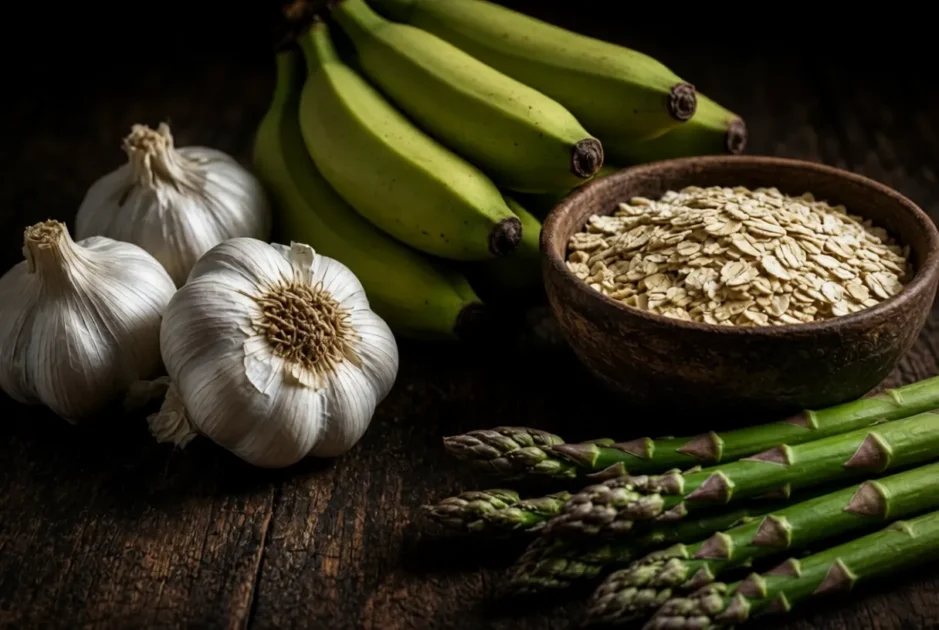
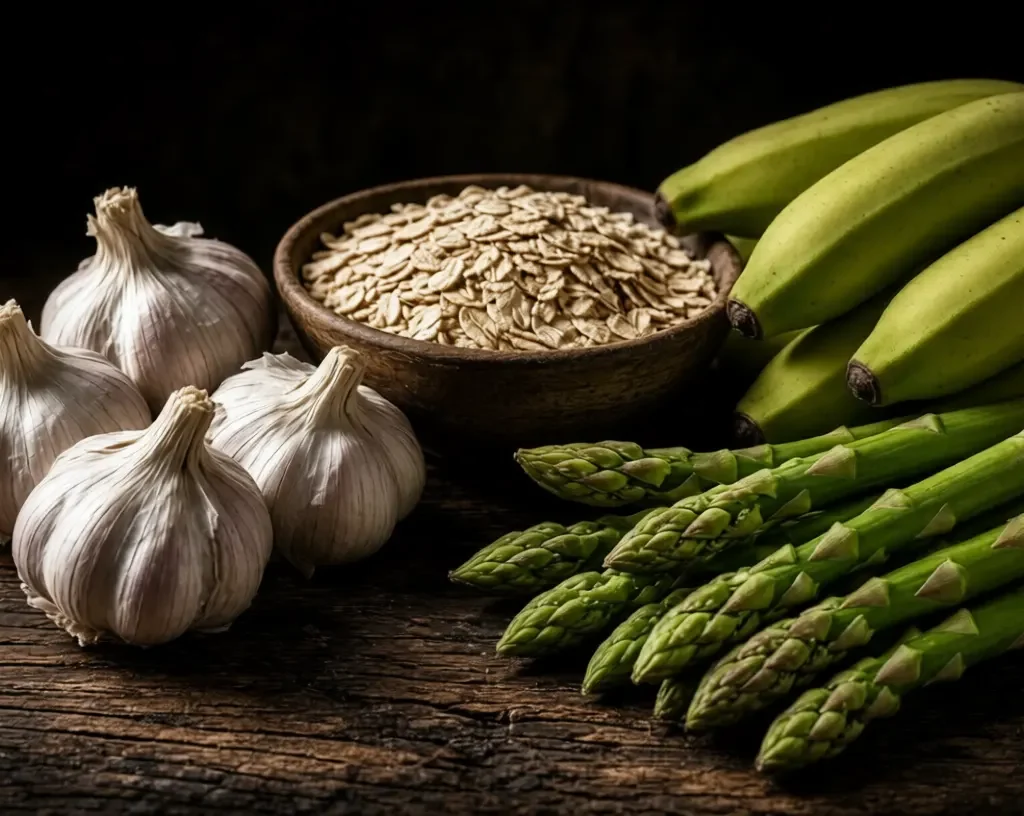
Onions and garlic are remarkable sources of inulin, a highly fermentable carbohydrate that beneficial bacteria absolutely love. Leeks share a similar chemical profile and provide exceptional microbial fuel for daily meals. Bananas, particularly when they are slightly green and unripe, offer a fantastic source of resistant material that effortlessly survives early digestion.
Oats and barley are incredibly rich in beta glucan, a specialized compound well documented for its metabolic benefits. Beans, lentils, and chickpeas provide a dense matrix of complex carbohydrates and galactooligosaccharides that sustain microbial fermentation for hours after a meal. Apples provide pectin, another excellent substrate for short chain fatty acid production. Asparagus and various whole grains round out a foundational diet, ensuring your microbiome receives a diverse botanical buffet.
The Resistant Starch Twist
There is a surprising twist in the established science of gut health involving resistant starch. This unique structural carbohydrate acts just like a fermentable fiber, but you can actually create more of it in your kitchen through simple food preparation techniques.
When you cook and then thoroughly cool starchy foods like potatoes or rice, their internal chemical structure changes dramatically. The starches tightly bind together and become highly resistant to human digestive enzymes. Adding cooled potatoes to a salad or eating leftover cooled rice provides a massive influx of premium fuel for your microbiome. You must always practice safe food handling and store these cooked foods properly in the refrigerator to prevent any harmful bacterial growth.
How to Increase Butyrate Production Through Food
Many people needlessly complicate nutrition, but increasing your short chain fatty acid levels is relatively straightforward. You must consistently and reliably feed your bacterial ecosystem. Patients and readers frequently ask, what are the best, easily accessible food sources of prebiotic fiber? The secret is to incorporate a wide variety of these specific foods across all your daily meals rather than relying on an expensive single supplement.
Start your morning with a warm bowl of oats generously topped with sliced apples. Include hearty lentils or chickpeas in your midday lunch routine. Sauté fresh garlic and onions as the savory flavor base for your evening dinner. This steady, calculated supply of fermentable material ensures that microbial fermentation continues uninterrupted throughout your day and night.
A Mini Case Study
Consider an illustrative educational example to understand how this intricate mechanism works in practice. Please note this is a hypothetical adult scenario meant solely to demonstrate biological concepts, not clinical evidence or a guaranteed medical outcome.
Imagine a person whose typical dietary pattern consists entirely of highly processed snacks, refined white bread, and commercial fast food. Their microbiome is severely starved of fermentable substrates. They decide to introduce dietary variety by slowly adding black beans, raw oats, mixed vegetables, and whole fruits over a period of eight weeks.
The expected biological rationale is a gradual shift in their microbial populations. The specific beneficial bacteria that thrive on these new foods begin to vigorously outcompete less desirable microbes. Consequently, their internal butyrate production increases, potentially improving their delicate intestinal barrier function. This gradual dietary change matters deeply, but individual results cannot be guaranteed because every human microbiome is entirely unique.
What Can Go Wrong?
While the metabolic benefits are well supported by emerging clinical evidence, you must proceed with deliberate caution. A sudden, massive increase in roughage can completely shock your sensitive digestive system.
If you rapidly increase your intake of these fermentable foods, you will almost certainly experience significant gas, severe bloating, and general abdominal discomfort. This happens because your current bacterial population is not yet equipped to handle the sudden workload of intense fermentation. The smartest approach is to increase your intake gradually over several weeks. Adequate fluid intake is also absolutely essential to help this bulky material move smoothly and comfortably through your system.
The Bigger Gut Health Picture And Prebiotics
While short chain fatty acids are undeniably vital to human health, they are just one single piece of a much larger biological puzzle. You should never treat one isolated molecule as the only measure of a healthy microbiome.
True physical resilience comes from immense dietary diversity and an optimized whole dietary pattern. Your gut microbiome also responds powerfully to your physical activity levels, chronic stress management, and nightly sleep quality. If you ever experience persistent or painful digestive symptoms, you should always seek appropriate medical care from a qualified healthcare professional rather than attempting to fix the issue solely with dietary adjustments.
Practical Action Section For Prebiotics
It is time to take immediate, practical steps toward better intestinal health and optimal microbial diversity. Start gradually and intentionally build your plate around diverse whole foods.
Experiment wisely with different colorful legumes and hearty whole grains. Listen to your body and appropriately adjust your portion sizes based on how you physically feel after eating. Make one positive change today, perhaps by adding a single serving of fresh asparagus or a slightly green banana to your morning routine. Whenever you wonder what are the best, easily accessible food sources of prebiotic fiber? Simply look for vibrant, whole plant foods that require actual chewing, preparation, and digestion.
FAQ For Prebiotics
What are the best, easily accessible food sources of prebiotic fiber? The most accessible and affordable options include onions, garlic, leeks, slightly green bananas, oats, barley, beans, lentils, chickpeas, apples, and asparagus. These staples provide diverse fermentable substrates required for a thriving gut microbiome.
How does prebiotic fiber increase butyrate production? Beneficial gut bacteria consume these indigestible carbohydrates through a natural metabolic process called fermentation. This microscopic chemical process directly yields protective short chain fatty acids as a highly beneficial byproduct.
Which everyday foods contain resistant starch? Resistant starch is naturally found in slightly green bananas and raw oats. You can also proactively form it by cooking and completely cooling starchy foods like potatoes, white rice, and pasta before consuming them.
How quickly can a new diet affect the gut microbiome? Scientific understanding indicates that the microbiome can begin shifting its composition within just a few days of a major dietary change. However, establishing a truly resilient and stable microbial community requires consistent long term dietary habits.
Can eating more fiber cause painful bloating? Yes, rapidly increasing your intake of fermentable carbohydrates can lead to excessive gas, bloating, and abdominal discomfort. You must add these foods gradually and drink plenty of fresh water to allow your digestive system to adapt safely.
Can commercial supplements replace fiber rich foods? While specialized supplements can provide isolated chemical compounds, they absolutely cannot replicate the immense physical and chemical diversity found in whole plant foods. A diverse whole dietary pattern is always the preferred and evidence based foundation for optimal gut health.
1 thought on “How 9 Remarkable Prebiotics Skyrocket Butyrate Production Naturally”