
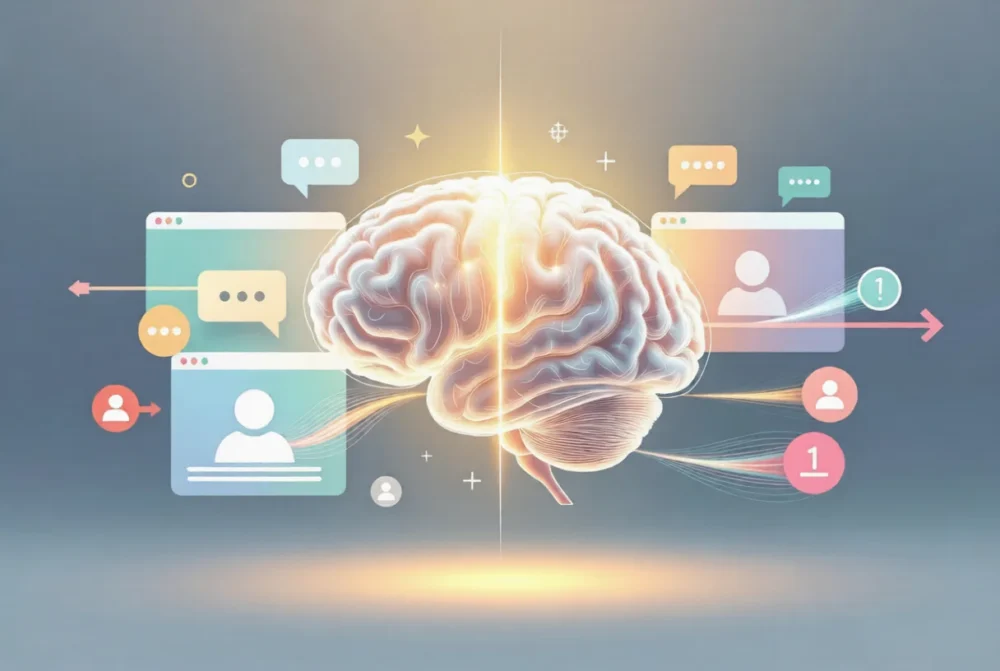
The Moment Every Screen Went Dark
Digital Dopamine:You wake up. The room feels heavy with an unfamiliar silence. You roll over and reach for the nightstand, your fingers expecting the cool, familiar glass of your smartphone. It is not there. You sit up and look around. The television reflects a dark room. Your laptop lid is closed, completely lifeless. No glowing notifications pulse in the corner. No phantom vibrations buzz against the wood.
At first, the quiet feels like a mistake. Your brain creates a crawling sense of urgency. You notice how your hand twitches, instinctively wanting to swipe, tap, or check a feed that simply does not exist right now. The silence stretches. Without a screen to absorb your immediate attention, you are forced to look at the shadows on the wall, to hear the distant hum of the refrigerator, and to sit alone with your own racing thoughts.
This is not a scene from a dystopian thriller. It is the beginning of a deliberate psychological experiment. When you unplug everything, you cross the threshold into understanding how deeply technology influences your daily behavior. This uncomfortable, revealing moment is the gateway into the fascinating world of Digital Dopamine Fasting Science.
Table of Contents
Why Your Hand Reaches for a Phone
That sudden urge to check a blank screen is not a personal failure. It is a deeply ingrained conditioned response. Behavioral psychology shows us that habits are built on a simple loop of cues, routines, and rewards. Your phone is the ultimate cue. A notification sound, a moment of boredom, or even just feeling slightly anxious triggers the routine of unlocking the screen.
When you remove the device entirely, the cues remain. You still feel bored. You still feel the mild anxiety of being disconnected. Your hand reaches for the phone because your brain is desperately trying to close the habit loop. Observing this automatic reaction is often surprising and deeply uncomfortable. It forces you to realize that your attention span has been hijacked by digital routines you no longer consciously control.
What Dopamine Really Does
To understand why smartphones are so hard to put down, we need to correct a massive popular misunderstanding. Social media often calls dopamine the “pleasure chemical.” That is scientifically inaccurate. Dopamine is not about pleasure. It is about anticipation, motivation, and reward prediction.
When a notification pops up, your brain releases dopamine to motivate you to check the message. It is the chemical of wanting, searching, and craving. If the reward is unpredictable—maybe it is an important email, or maybe it is just a spam alert—the dopamine spike is even higher. This intermittent reinforcement is the exact same psychological mechanism used in slot machines. Digital Dopamine Fasting Science looks specifically at how constant exposure to unpredictable digital rewards keeps our neural pathways in a permanent state of craving and anticipation.
The Digital Dopamine Fasting Science Explained
The term Digital Dopamine Fasting Science refers to the systematic study of what happens to human attention, motivation, and behavioral control when we intentionally remove hyperstimulating digital inputs.
This concept was popularized in Silicon Valley but has roots in established cognitive behavioral therapy techniques. The goal is not to eliminate dopamine, which is biologically impossible and highly dangerous. Instead, the science focuses on reducing the constant barrage of digital stimuli. By stepping away from endless scrolling and notification overload, you allow your brain time to recalibrate its reward prediction errors. You are essentially training your brain to stop seeking immediate, low effort digital stimulation and to find value in slower, more deliberate real world activities.
What Happens During a Total Screen Blackout
When you commit to a complete digital detox, your mind goes through a predictable series of psychological shifts. Scientific observations note changes across multiple cognitive areas:
- Attention: Your fragmented focus begins to consolidate, allowing you to sustain attention on single tasks for longer periods.
- Boredom: You experience a sharp, uncomfortable spike in boredom, followed eventually by a return of creative thinking.
- Habit awareness: You gain sudden, stark visibility into how often you use digital devices to avoid negative emotions.
- Impulse control: The urge to immediately seek distraction slowly weakens over several hours.
- Mental stimulation: Your baseline for what feels stimulating lowers, making everyday tasks feel more engaging.
While it will not cure medical conditions, stepping away from screens provides immediate relief from the relentless pressure of constant connectivity.
The First Hour Can Feel Surprisingly Difficult
If you attempt a total screen blackout, the first sixty minutes will likely test your resolve. The absence of digital input creates a temporary vacuum. Without short form content to digest, time seems to dilate. Five minutes can feel like twenty.
You might feel a sudden wave of anxiety, a phenomenon strongly linked to the fear of missing out. You may wonder if you received an urgent work email or an important text message. This emotional tension is completely normal. It is the sound of your brain adjusting to a sudden drop in rapid fire digital rewards. If you can sit with this discomfort without giving in, the anxiety eventually peaks and begins to subside.
What Your Brain May Be Learning
During this time away from screens, your brain is actively doing repair work. The principles of Digital Dopamine Fasting Science suggest that when you remove the constant cues of the smartphone, you disrupt the automatic habit loops.
Your neural pathways learn that boredom does not have to be instantly cured by a screen. You discover that you can tolerate silence. This process builds emotional resilience. By denying the brain its expected intermittent reinforcement, you begin to break the cycle of compulsive checking. Your attention, once shattered into tiny pieces by digital interruptions, slowly knits itself back together.
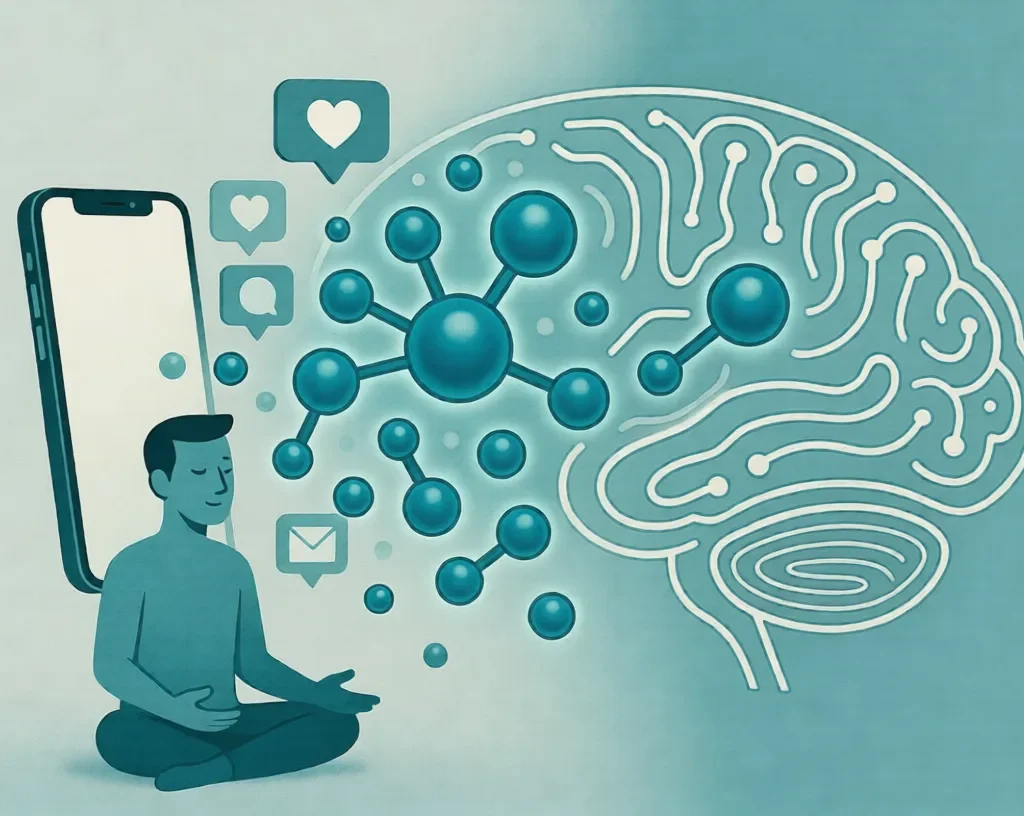
The Hidden Cost of Constant Digital Stimulation
We rarely notice the toll our devices take until we turn them off. The modern digital environment is engineered to capture and sell human attention. This business model relies on keeping you hooked. The hidden costs are severe:
- Attention fragmentation: Multitasking between apps destroys deep concentration.
- Notification overload: Constant buzzing keeps the nervous system in a mild state of fight or flight.
- Endless scrolling: Infinite feeds eliminate natural stopping cues, making it hard to disengage.
- Sleep routines: Blue light and late night content consumption severely disrupt melatonin production.
Tips: Read the KritiInfo.com guide to protecting your mental health in a hyperconnected workplace
A Real World Case Study
To ground these concepts in reliable evidence, we can look at a landmark study published in the Journal of the Association for Consumer Research by researchers at the University of Texas at Austin.
Who was studied: Nearly 800 smartphone users. What researchers examined: They tested how well participants could complete cognitive tasks requiring deep concentration when their smartphones were in different locations. The locations were on the desk face down, in their pocket, or in a completely different room. What happened: The participants whose phones were in another room significantly outperformed those whose phones were on the desk or in their pockets. What the findings suggest: The mere physical presence of a smartphone drains cognitive capacity. Even if the phone is off, part of your brain is actively working to ignore it, which consumes mental energy. What the research does NOT prove: It does not prove that smartphones cause permanent brain damage, nor does it suggest technology is inherently evil. It simply proves that physical proximity to digital devices reduces available cognitive resources.
This study perfectly illustrates why a total screen blackout is so powerful. Removing the device completely frees up mental bandwidth you did not even know you were losing.
For more insights into cognitive research, you can explore resources from the American Psychological Association.
What Digital Dopamine Fasting Science Gets Wrong
We must be transparent about the limitations of this trend. Social media influencers often claim that leaving your phone in a drawer for a weekend will “reset your dopamine receptors.” This is a profound misunderstanding of neurobiology.
Dopamine is necessary for movement, basic motivation, and survival. You cannot fast from a neurotransmitter. True Digital Dopamine Fasting Science is about behavior modification, not chemical deprivation. It is a psychological tool to break bad habits and reclaim your attention span, not a magical biological reset switch. Separating credible science from wellness myths is essential for genuine digital wellbeing.
How to Try a Total Screen Blackout Safely
If you want to experience the benefits of unplugging, you need a practical plan. Diving in without preparation usually leads to failure.
- Select a realistic period: Start with a specific block of time. Seven hours during a weekend day is an excellent goal.
- Keep essential emergency communication available: Let close family know you are stepping away. Use a basic landline or put your smartphone in a distant room with only emergency contacts allowed to ring through.
- Disable unnecessary notifications: Before the blackout, turn off all social media and news alerts.
- Plan analog activities: Have books, puzzles, ingredients for cooking, or walking shoes ready. Do not just sit in an empty room.
- Observe cravings without judging yourself: When you feel the urge to check a screen, acknowledge it calmly and let the feeling pass.
- Reflect and Rebuild: Write down how you felt during the quiet moments. Use this insight to build better habits when you turn the screens back on.
The 7 Hour Experiment
Here is a practical, research backed schedule to guide you through a 7 hour screen blackout.
Hour 1: The Disconnect Power down all devices. Put them in a drawer. Expect immediate restlessness. Go for a brisk walk to burn off the anxious energy of being disconnected.
Hour 2: The Boredom Peak You will feel tempted to cheat. Your brain will try to convince you that you need to check the weather or read an important email. Acknowledge the trick. Read a physical book or tidy a room.
Hour 3: The Senses Awaken The anxiety begins to lift. You will start noticing your physical surroundings more acutely. Listen to some music or engage in a tactile hobby like cooking or gardening.
Hour 4: Deep Focus Your fragmented attention span starts to heal. You can finally sit and read or engage in a complex task for an extended period without feeling the frantic need to look away.
Hour 5: Social Reconnection Have a real conversation with someone in your home, or invite a friend over for coffee. Notice how much better you listen when a phone is not sitting on the table between you.
Hour 6: Quiet Reflection Spend this hour doing absolutely nothing productive. Sit on a porch, stare out a window, or take a slow walk without a destination. Let your mind wander freely.
Hour 7: Intentional Return As the experiment ends, do not immediately flood your brain with social media. Turn on your devices slowly. Check only essential messages. Notice how loud and chaotic the digital world feels when you first return.
When a Screen Blackout Is Not Enough
For some individuals, a few hours away from screens will not solve the problem. If digital habits are causing severe distress, interfering with occupational duties, or destroying real world relationships, it may indicate a deeper behavioral addiction. In these cases, professional support from a cognitive behavioral therapist is highly recommended. A temporary screen detox is a powerful tool, but it is not a replacement for professional mental health care.
Your Phone Is Not the Enemy
The goal of exploring Digital Dopamine Fasting Science is never to demonize technology. Smartphones, laptops, and the internet are incredible tools that connect humanity and democratize information. The objective is simply to reclaim control.
By occasionally stepping into the quiet darkness of a screen blackout, you remind your brain who is actually in charge. You rebuild your attention span. You rediscover the joy of an uninterrupted thought. Technology makes an excellent servant but a terrible master. Choose to master your digital life today.
Frequently Asked Questions
What is Digital Dopamine Fasting Science? It is the behavioral practice of intentionally taking a break from stimulating digital activities like social media, gaming, and constant notifications to break compulsive habit loops and improve attention spans.
Does dopamine fasting actually reset dopamine? No. You cannot reset your brain chemicals by avoiding screens. However, you can successfully break psychological conditioning and reduce the compulsive need for constant digital stimulation.
Can a total screen blackout improve concentration? Yes. Removing the constant interruptions of digital devices allows your brain to practice sustained focus, which helps heal attention fragmentation over time.
How long should a digital detox last? Even small breaks are beneficial. A 7 hour experiment is a great starting point, though some people choose to disconnect for a full 24 hours over the weekend to deeply recharge.
Is avoiding smartphones completely necessary? Not necessarily. The goal is intentional use. If complete avoidance feels impossible, start by simply turning off all non essential notifications and keeping your phone out of the bedroom.
What should I do during a screen blackout? Engage in physical, analog activities. Read a book, cook a meal, exercise, spend time in nature, or have uninterrupted conversations with family and friends.
2 thoughts on “How 7 Powerful Hours of Total Screen Blackout Reveal the Digital Dopamine Fasting Science”