
Please verify all links before publishing.
Picture a Monday morning at a primary school. A teacher lines up her class for a photo and notices something small. A quiet boy in the third row used to stand level with his friends. Now he stands a little behind them. Nobody in his family has said a word about it.
Is he just a late bloomer? Or is his growth pattern trying to tell a story that adults are overlooking?
This is an illustrative example, but the question is real. Child growth is one of the quietest health signals a family has. It does not shout. It shows up slowly, in numbers and patterns that are easy to miss.
Table of Contents
Why Child Growth Is More Than Height and Weight
Height and weight are only the visible part. Child growth also reflects how well a child is eating, sleeping, healing and feeling. A growing child is a body that has enough fuel, enough rest and enough safety to build itself.
That is why doctors, nurses and school health teams track growth. They are not checking whether a child is “big” or “small”. They are checking whether the child is moving along a steady path.
What Child Growth Really Means
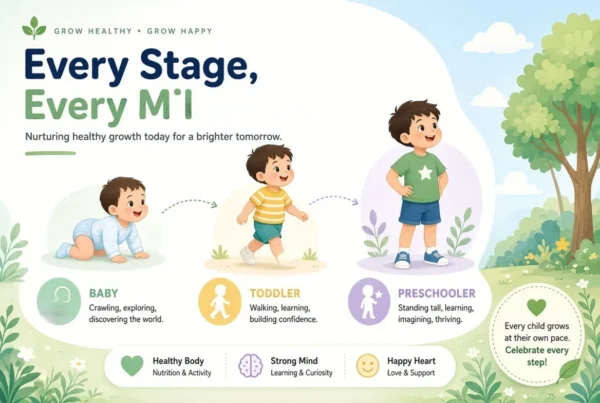
Think of growth as construction. Height, weight and head size (in babies) are the measurable parts of the building. Development is something different: it covers skills such as walking, talking, thinking and social behaviour.
The two are linked, but they are not the same. A child can be small and developing well. A child can be tall and need support with speech. Good health education keeps both ideas in view.
What Shapes Child Growth?
No single factor decides how a child grows. Several work together.
- Genetics. Parents’ heights strongly influence a child’s expected height range. Family patterns of early or late puberty matter too.
- Nutrition. Growth needs energy, protein, vitamins and minerals. Long term shortage can slow growth. The World Health Organization describes stunting as low height for age, often linked to poor nutrition and repeated infection.
- Sleep. Much of the body’s growth hormone release happens during deep sleep. Regular, sufficient sleep supports healthy development.
- Physical activity. Active play supports bone strength and muscle development.
- Illness. Frequent infections, chronic conditions, gut problems such as coeliac disease, and hormone problems can all affect growth.
- Emotional wellbeing. Chronic stress and neglect can affect a child’s health and development.
- Environment and income. Safe housing, clean water, healthcare access and food security shape growth across whole communities.
Normal Variation or Possible Concern? A Simple Comparison
Most online advice says “every child is different”. True, but not very helpful. Here is a more useful way to think: signal versus noise.
Noise is the small, natural wobble in measurements. A child may measure slightly differently from one clinic to another. Time of day, footwear and posture all change a reading.
Signal is a pattern that continues. It is a child who keeps drifting away from their own usual path over several measurements.
Compare them like this:
- Noise: one low reading after a cold or a poor week of eating. Signal: a downward drift across several checks.
- Noise: a child who is short but grows steadily, like a parent. Signal: a child who slows down compared with their own earlier pace.
- Noise: a temporary dip after illness, followed by recovery. Signal: no catch up after the illness has passed.
Short stature is a position on the chart. Growth faltering is a change in direction. The first is often normal. The second deserves a conversation with a professional.
A Practical Framework Parents Can Use
Try five steps: Observe, Measure, Compare over time, Understand context, Seek advice.
- Observe. Notice energy, appetite, sleep, mood and clothing fit.
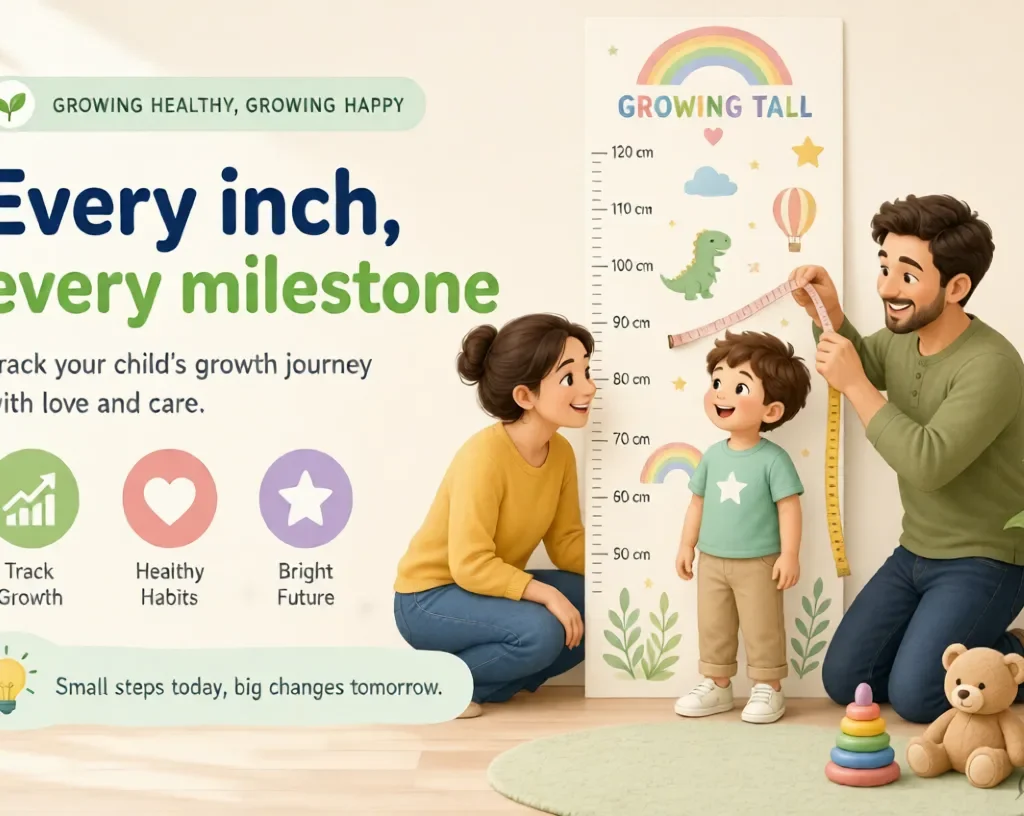
- Measure. Use the same method each time. Ideally, rely on measurements taken by trained staff at health visits or school checks.
- Compare over time. Look at the line, not the dot. One point has little meaning. Several points tell a story.
- Understand context. Consider age, sex, family height, puberty timing, recent illness, diet and stress.
- Seek advice. If a pattern persists or you feel worried, speak to a paediatrician, family doctor or health visitor.
Trends matter more than single numbers because children are not machines. Growth comes in spurts and pauses. A direction over months is more reliable than a snapshot.
Illustrative Example: Reading a Pattern Responsibly
This is a hypothetical example, not a real case.
Aarav is a made up eight year old. At his checks, his height sat around the middle of the chart. Over two years, his readings slowly slid toward a lower line. His parents were of average height. He had no obvious illness, but he was eating less at dinner and sleeping poorly.
A responsible parent would not panic, and would not ignore it either. They would write down the dates and measurements, share them with the child’s doctor, and describe appetite, sleep and any tummy trouble. The doctor could then check measurement accuracy, review history and decide whether tests are needed.
The key lesson: the family noticed a trend, gathered context and asked a professional. They did not diagnose anything at home.
Expert Interpretation: What Can We Understand, and What Needs a Clinician?
From a health education view, parents can reasonably understand a few things. Growth is individual. Direction matters. Context matters. A healthy lifestyle supports growth.
What requires assessment is the why. A slowdown could come from nutrition, a hidden illness, a hormone issue or something harmless. Charts cannot separate these causes. Only a clinical review, sometimes with examination and tests, can do that.
Uncertainty is normal here. Good clinicians often monitor for a period before drawing conclusions.
Reading Growth Charts and Percentiles
Growth charts compare a child with a reference group of the same age and sex.
- Percentile. A child on the 50th percentile for height is at the middle of the reference group. A child on the 25th is taller than 25 out of 100 children of the same age and sex. Neither is “better”.
- Growth velocity. This is how fast a child grows over time, such as centimetres per year. It often says more than one measurement.
- Age and sex. Boys and girls have different charts, and expected growth changes with age.
- Developmental context. Puberty timing, premature birth and medical conditions affect interpretation. Babies born early are usually assessed using corrected age.
The WHO Child Growth Standards describe how healthy, breastfed children grow under good conditions. The CDC recommends WHO charts for children under two years and CDC charts for ages two to nineteen in the United States. Always use the chart your local health service recommends.
A chart is a tool for asking better questions. It is not a diagnosis.
Real World Application
- Parents. Keep a simple growth diary. Bring it to appointments.
- Caregivers. Share notes on eating, sleep and illness with parents and doctors.
- Teachers. Notice changes in energy, concentration or physical appearance, and pass concerns to parents or the school nurse respectfully. Never label a child.
- Schools. Support regular height and weight checks where available, with privacy and kindness. Avoid public comparison.
- Primary care. Plot measurements over time, check technique, and consider the whole child before referral.
Advantages and Limitations of Monitoring
What monitoring can do:
- Spot slowing growth early.
- Support nutrition and health planning.
- Reassure families when growth is steady.
- Help doctors decide when to investigate.
What it cannot do:
- Diagnose a condition on its own.
- Explain the cause of a change.
- Predict final adult height exactly.
- Measure emotional wellbeing, learning or happiness.
Common Misconceptions About Child Growth
“Every child should reach the same height.” No. Genes, health and environment create natural differences.
“More food always means better growth.” Not really. Balanced nutrition matters. Overfeeding can lead to excess weight without improving height.
“Being shorter means poor health.” Not automatically. Many healthy children are on lower lines and grow steadily.
“A single measurement tells the whole story.” It does not. Trends matter more.
“Growth charts diagnose problems.” They highlight patterns that need context and professional review.
What Readers Should Do Next
- Ask your health provider how your child’s growth is tracked and what chart is used.
- Keep dates and measurements together, if you have them.
- Support steady habits: varied meals, regular sleep, active play and routine health checks.
- Speak to a healthcare professional if growth slows, if a child seems unwell, tired or unusually thin, or if you simply feel uneasy.
Avoid supplements or special diets for growth unless a clinician advises them.
Frequently Asked Questions About Child Growth
What is normal child growth? Normal growth is steady growth along a child’s own path, within a broad range for age and sex. Children do not all grow at the same speed.
Why do children grow at different rates? Genetics, nutrition, health, sleep and puberty timing all play a part. Growth also happens in spurts.
How is child growth monitored? By measuring height or length, weight and sometimes head size, then plotting the results on growth charts over time.
When might slow growth need medical attention? When a child keeps dropping away from their usual pattern, when growth slows across several visits, or when it comes with tiredness, poor appetite, frequent illness or other symptoms.
Does nutrition affect child growth? Yes. Long term poor nutrition can slow growth. Balanced, varied meals support healthy development.
Can sleep affect growth? Sleep supports growth and health. Chronic poor sleep is worth discussing with a doctor.
Are growth charts the same for every child? No. Charts differ by age, sex and sometimes by situation, such as premature birth or specific medical conditions.
Conclusion: A Pattern, Not a Number
Back to the teacher and the photo. The point was never to judge a boy for standing a little lower in the row. It was to notice, ask and understand.
Child growth is a pattern, not a single number. A calm eye on the trend, a kind approach to the child and timely advice from a professional will serve most families well. Most children grow just fine. The few who need help are best helped when someone simply paid attention.