
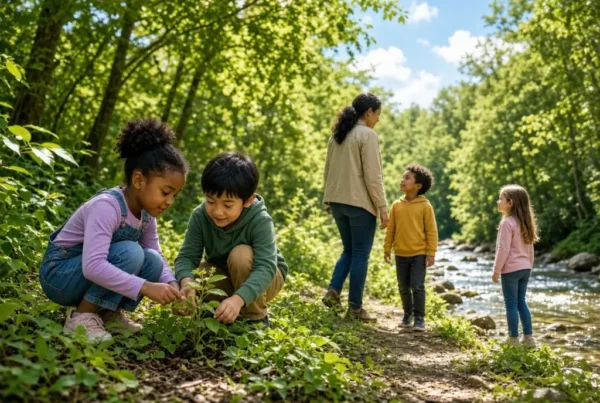
Mira is six. Every night around eleven, she starts to cough. It is a small, dry cough. By morning it fades.
Her parents try two syrups and a humidifier. The doctor listens to her chest and finds nothing alarming. Then comes a week at her grandmother’s house. The cough disappears. Two days after returning home, it is back.
What did the family miss? Why did the cough follow Mira home? Nothing looked wrong. The flat was clean, bright and tidy. Keep that question in mind. We will come back to it.
Because the biggest threat to child health is often not the loud one. It is the one people stop noticing.
Table of Contents
What “physical environment” really means
It is everything physical around a child. The air she breathes. The water she drinks. The walls, floors and bed she sleeps near. The street outside. The classroom. The playground.
Think of it as the background of childhood. Children do not choose it. They simply live inside it, hour after hour, year after year. That is exactly why it matters so much.
Why children are hit harder
Children are not small adults. Their bodies work differently.
They breathe faster, so they take in more air for their size. They drink more water for their weight. They play on floors, put hands in mouths and live close to the ground, where dust and chemicals settle. Their lungs, brains and immune systems are still developing.
The WHO puts it plainly: developing organs, smaller bodies and smaller airways make young children especially vulnerable to dirty air and water. A small exposure for an adult can be a bigger dose for a child.
Air, water and sanitation: the big three
Air. Smoke from cooking fires, traffic fumes, tobacco smoke and damp indoor air all irritate young lungs. The evidence here is strong. Repeated exposure raises the risk of chest infections and asthma.
Water. Unsafe water carries germs that cause diarrhoea. In a small child, diarrhoea can turn dangerous fast. Safe storage matters as much as safe sources. Clean water poured into a dirty container is no longer clean.
Sanitation. Toilets, handwashing and waste disposal break the chain that carries germs from one child to another. This is boring work. It saves more lives than almost anything else.
Heat, cold and wild weather
Children lose the ability to cool down faster than adults. Hot rooms, tin roofs, crowded buses and closed cars can become unsafe quickly. A parked car is never a safe place for a child, even for a few minutes.
Cold, damp housing matters too. It is linked with more breathing problems. And floods and storms bring contaminated water, injuries and disrupted schooling.
Climate patterns are shifting, so this section will only grow more relevant. Check heat warnings. Keep children hydrated. Shade is a health tool.
Noise, crowding and the street outside
This area is less clear cut, so let us be honest about the evidence.
Studies suggest that constant loud noise, such as traffic or aircraft, can affect sleep, attention and learning. Crowded homes make it easier for infections to spread and harder for a child to rest or study. Neighbourhoods without footpaths, lighting or green space can limit play, and play is how children build bodies and friendships.
These links are real, but individual results vary. Noise does not harm every child equally. Treat it as a risk to reduce, not a verdict.
Schools and playgrounds
A school is a child’s second home. Often the longer one.
Good schools have clean drinking water, working toilets, fresh air in classrooms, decent lighting and shade. Poor ones have blocked vents, overheated rooms, damp walls and dusty playgrounds.
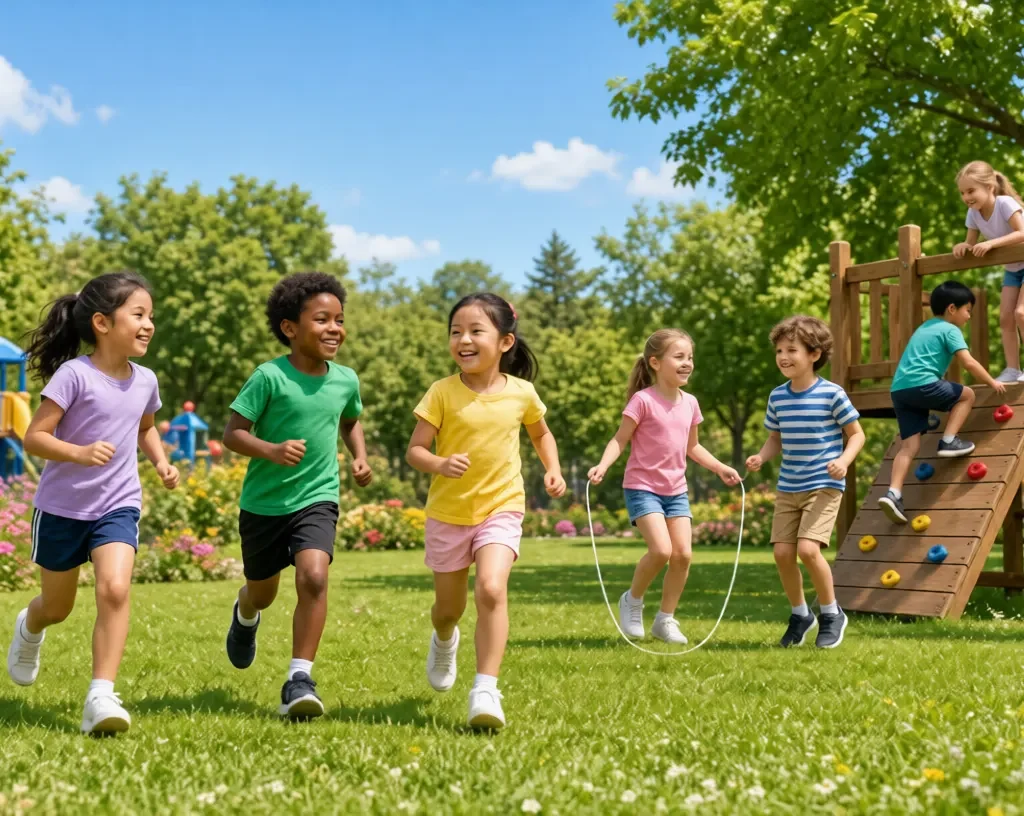
A safe playground has soft landing surfaces, shaded areas and equipment checked for sharp edges and heat. Open outdoor space is not a luxury. It supports physical activity, mood and focus.
The overlooked indoor risks
Cleaning sprays. Air fresheners. Pesticides. Old paint. Smoke from incense, mosquito coils or tobacco. Damp walls hiding mould.
Mould is a good example of what is known. Damp and mouldy homes are linked with more coughing, wheezing and asthma in children. Lead in old paint or dust is another known risk: even small amounts can affect a child’s developing brain.
Other worries, such as certain plastic additives or newer chemicals, are still under study. Here the honest answer is “we are not sure yet.” Sensible caution beats panic.
Obvious dangers versus hidden ones
| Obvious risk | Hidden risk | |
|---|---|---|
| Example | Open drain, heavy smoke, broken glass | Damp wall, stale air, lead dust, noise |
| How it feels | Alarming | Normal |
| Response | Quick action | Delayed or none |
| Pattern | Sudden harm | Slow, repeated, easy to blame on “just a cough” |
The hidden ones win by being boring. Familiarity quietly turns danger into furniture.
What the numbers mean for child health
The WHO estimated in 2017 that environmental risks contribute to about 1.7 million deaths a year among children under 5. That is more than 1 in 4 deaths in that age group. About 570,000 of those deaths are linked to respiratory infections tied to air pollution and second hand smoke, and about 361,000 to diarrhoea linked to unsafe water, poor sanitation and hygiene.
What does this mean for an ordinary family? Two things.
First, the biggest killers are not exotic. They are everyday: dirty air, unsafe water, poor sanitation. Second, the WHO says a large share of these deaths is preventable with known fixes, such as clean cooking fuel, safe water and better hygiene.
A caution: this figure is a global estimate from 2017, and it describes populations, not your child. It shows where the weight of evidence sits. It does not predict what will happen in your home.
A simple five step check
Here is a framework you can use at home, in a classroom or in a crèche. Call it See, Trace, Cut, Shield, Recheck.
See. Walk through the space slowly, at a child’s eye level. Look at walls, corners, cupboards, water containers, ventilation and floors. Smell the air.
Trace. Look for patterns. When does the cough start? Where is the child when it happens? Does it improve away from home or school? Patterns are clues. (Mira’s cough eased at her grandmother’s house. That was the clue.)
Cut. Remove or reduce the source. Fix the leak. Stop smoking indoors. Switch to safer cleaning products. Cover water containers.
Shield. Where you cannot remove a risk, add protection. Open windows, use fans, put a mat or screen in place, keep children out of the affected room.
Recheck. Come back in two weeks. Did things improve? If symptoms continue, speak to a doctor. Do not guess.
Putting it to work
At home: Ventilate during and after cooking. Keep damp surfaces dry. Store chemicals out of reach. Keep floors dust free with damp cloths.
In school: Teachers can open windows between lessons, report leaks, push for shaded areas and watch which children cough or tire in particular rooms.
In the community: Residents can press for clean water points, working drains, safer crossings and a shared green space. One family cannot fix a street. A group sometimes can.
What helps, and what limits it
Better environments are good for child health in practical ways: fewer infections, fewer sick days, better sleep and steadier learning. Many fixes also cost little: open a window, cover a bucket, wash hands.
But let us be realistic. Renters cannot always repair walls. Many families cannot move away from traffic or afford new stoves. Landlords delay. Local governments are slow.
So start with what is in reach. Do the cheap things first. Document problems. Ask landlords, schools and local offices in writing. Partial improvement still counts.
A common misconception
“If the home looks clean, it is safe.”
Not always. Clean surfaces tell you nothing about hidden damp, stale air, old paint dust or invisible fumes. Mira’s home was spotless. Cleanliness and safety are related, but they are not the same thing.
FAQs
1. How do I know if my child’s symptoms are environmental? Look for patterns. Symptoms that worsen at home or school, at certain times, and ease elsewhere are worth discussing with a doctor.
2. Is mould always dangerous? Not always, but damp and mould are linked with breathing problems in children. Fix the moisture first, then clean. Large areas may need professional help.
3. What is the cheapest improvement I can make today? Ventilation. Open windows when possible, especially while cooking and cleaning.
4. Are air purifiers necessary? Not for everyone. Removing the source and ventilating come first. Purifiers can help in some situations but are not a substitute.
5. How much does noise really matter? Evidence suggests chronic loud noise can affect sleep and attention. Impact varies between children. Quiet sleeping spaces are a sensible goal.
6. What can teachers do without a budget? Open windows, report leaks, rearrange seating away from noise, add shade, and watch for patterns among students.
7. When should I see a doctor? If symptoms persist, return often, or involve breathing difficulty, seek medical advice. Do not rely on an article, including this one.
What to do today
Pick one room. Your child’s bedroom is a good start. Spend ten minutes there. Look behind furniture. Smell the air. Check windows and any damp patches. Write down one thing to fix this week. That is enough.
Back to Mira
Remember the cough that followed her home? Her father finally moved the wardrobe. Behind it was a dark, damp patch on the wall, quietly spreading for months. No one had seen it because no one had looked behind the furniture. (This is the scenario’s imagined ending, not a reported case.)
The lesson is simple. A child’s environment is not merely the place where childhood happens. It can quietly shape how that childhood unfolds.
So look again at the spaces your child lives in. You may not need to change everything. You may only need to notice what has become invisible. That is where better child health often begins.